 |
Subscribe / Renew |
 |
Contact Us |
| ► Subscribe to our Free Weekly Newsletter | |

Construction Bids
| home | Welcome, sign in or click here to subscribe. | login |


 print print  email to a friend email to a friend  reprints add to mydjc reprints add to mydjc |  |
 |
May 29, 2025

Kim
|

Adkinson
|
As college campuses strive to meet decarbonization goals while expanding facilities as efficiently and cost-consciously as possible, university decision-makers are increasingly considering mass timber as a viable construction material. Given its inherent environmental and speed-to-market advantages, mass timber utilization has accelerated in recent years, including here in the Pacific Northwest, and for good reason.
Last fall, Mortenson delivered Kaiser Borsari Hall, a 60,000-square-foot, $53 million mass-timber facility on the campus of Western Washington University in Bellingham. The project is the U.S.’s first mass timber STEM building to pursue Zero Energy and Zero Carbon Certifications. After collecting 12 months of operational data, it will officially receive certification through the International Living Future Institute’s rigorous sustainable design standards as an alternative pathway to Washington State’s LEED Silver minimum requirement.
A LIVING LABORATORY
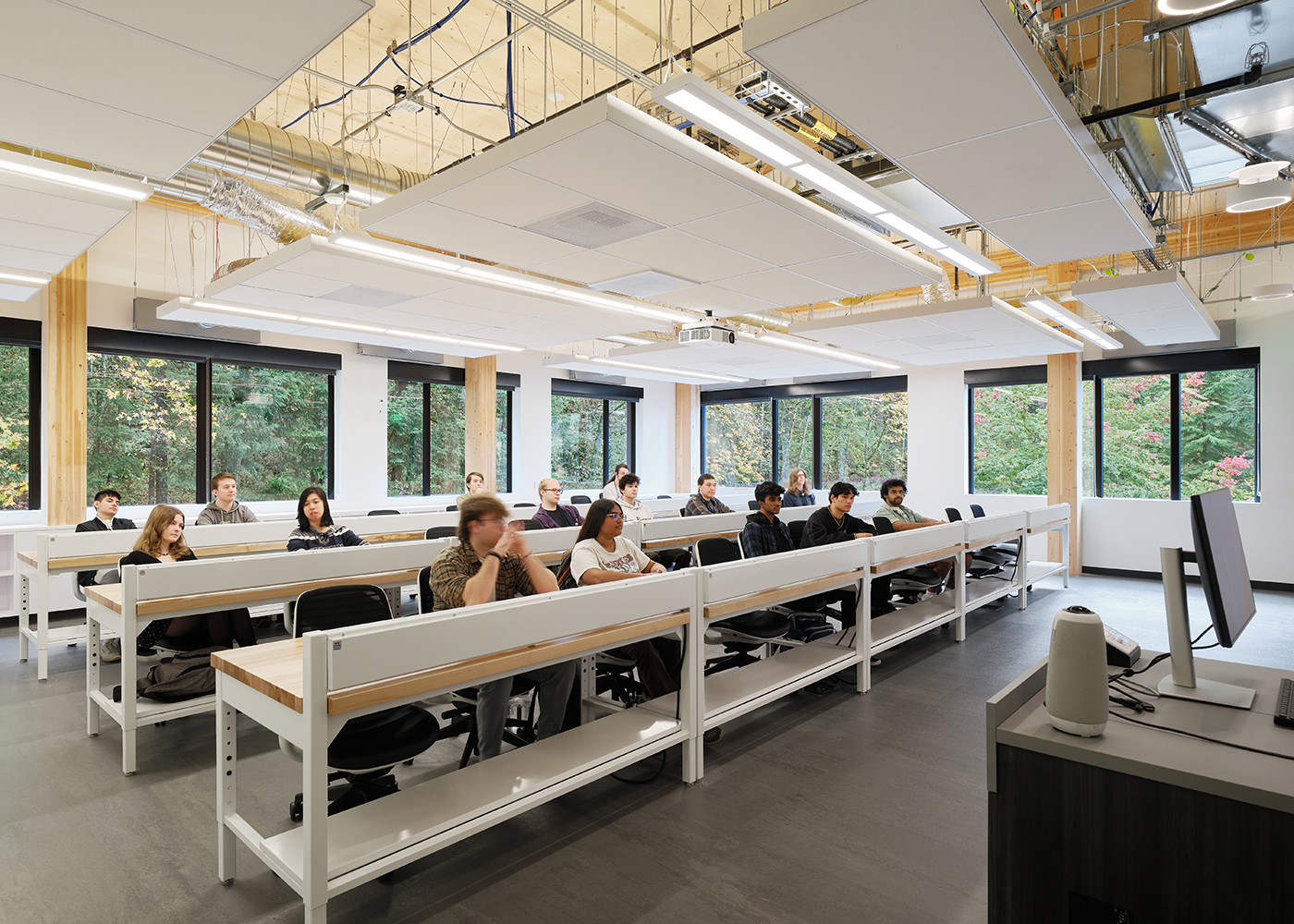
Designed by Perkins&Will’s Seattle studio, the new electrical engineering and computer science facility combines the electrical, computer engineering and energy studies departments into a single standalone facility. It creates multidisciplinary learning environments with state-of-the-art teaching and collaboration spaces, research labs, and administrative offices in a “living laboratory” to inspire the next generation of innovators.
During the project’s design, WWU’s aspirational sustainability certification goals quickly became foundational to the team’s execution, where Mortenson and our partners dove into determining pathways to reduce the building’s operational and embodied carbon.
MASS TIMBER FOR DECARBONIZATION
Like WWU, many other higher-ed institutions have started investigating the use of mass timber as a step towards decarbonization. This exceptionally sustainable and renewable resource decreases reliance on carbon-intensive materials such as concrete and steel. Additional benefits include faster structural construction, reduced need for interior finishes, and the visual aesthetic of exposed timber.
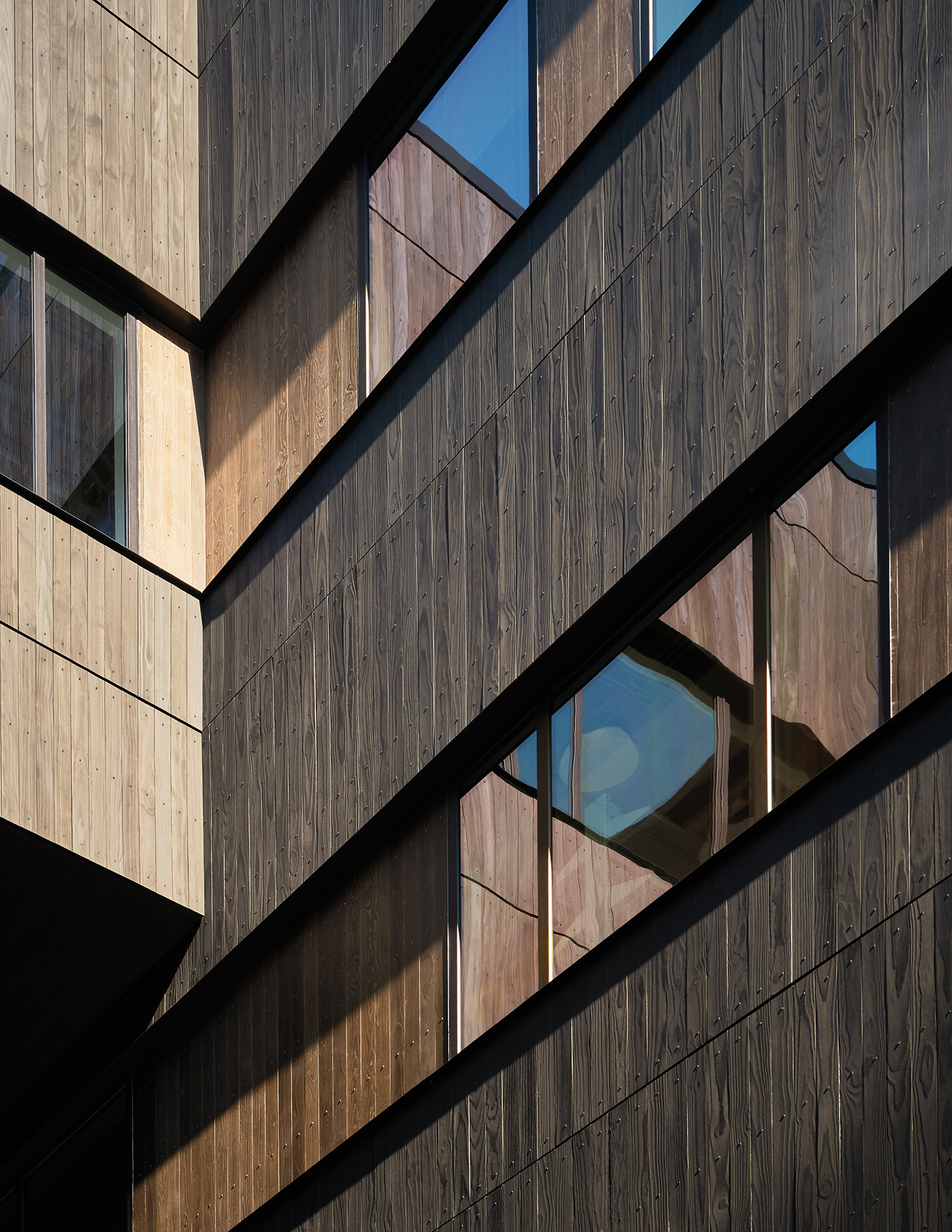
Mass timber is available in various forms, including glue-laminated timber (glulam) and cross-laminated timber (CLT), used in many of today’s sustainable commercial and public-sector buildings. The timber used for the WWU project is sustainably harvested within 600 miles of the site, ensuring sustainable forestry practices and minimal transportation emissions. The team realized further carbon and cost savings through the lightweight mass timber structure that minimized the concrete required for the building’s foundations.
Mass timber typically allows for a faster, more efficient construction process, mainly because the material is prefabricated off-site. According to Construction Today Magazine, the “controlled environment of a factory allows for precision cutting in mass timber elements, eliminating the need for extensive on-site modifications,” an essential factor in reducing waste and other bottom-line impacts.
Some studies show that mass timber projects are built 25 percent faster than concrete while accommodating MEP installation much earlier than traditionally built projects. This enables general contractors and clients to compress building timelines and minimize disruption to students, professors, and the higher education learning experience.
NATURAL WOOD FOR WELL-BEING
Once a mass timber project is finished, its biophilic design — underscored by the use of natural wood elements exposed throughout the structure — creates a calm aesthetic that has been shown to enhance the engagement of students and their instructors. The Wood Products Council’s Biophilic Design LookBook cites biophilic design as boosting “occupant well-being through connection to nature and the use of natural elements like daylight, plants, water, and exposed wood,” helping to reduce stress and raise productivity.
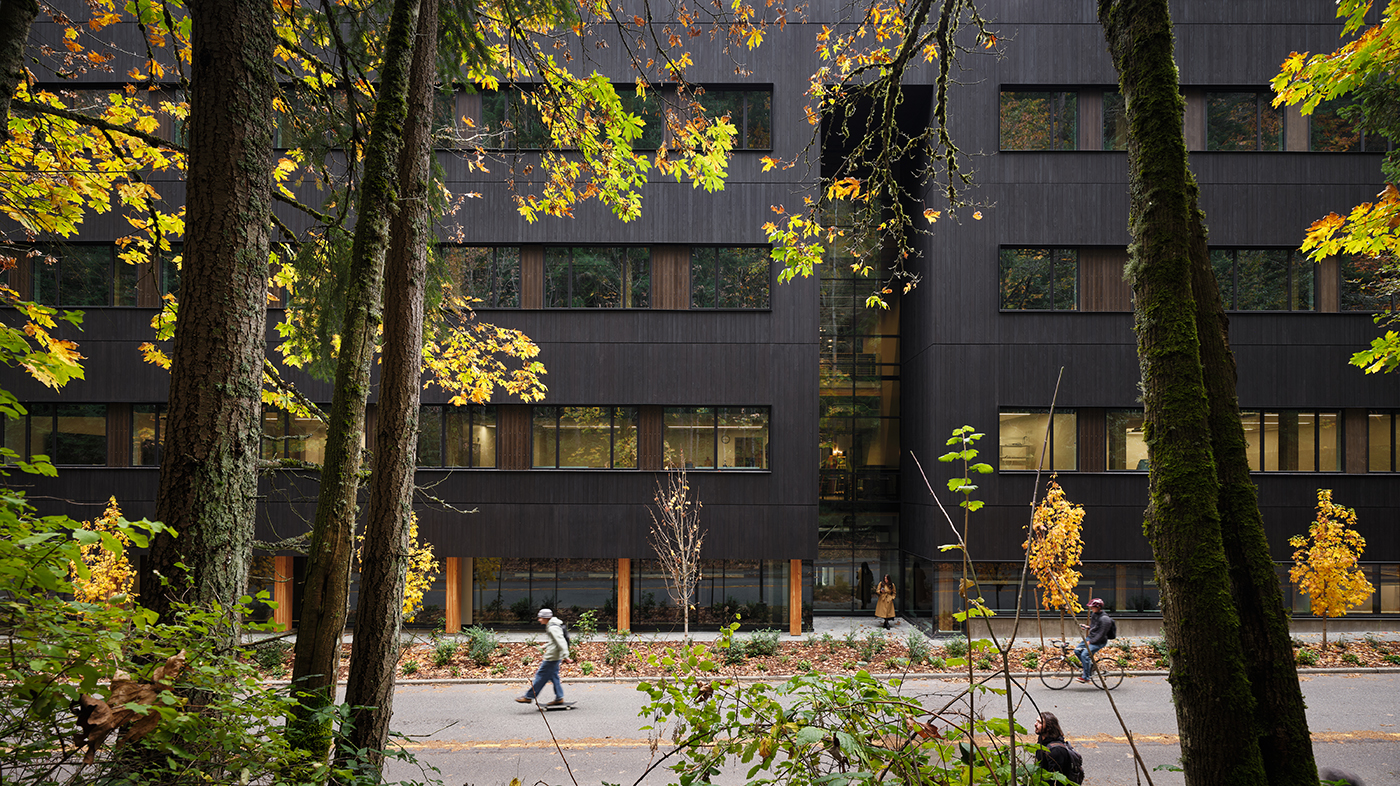
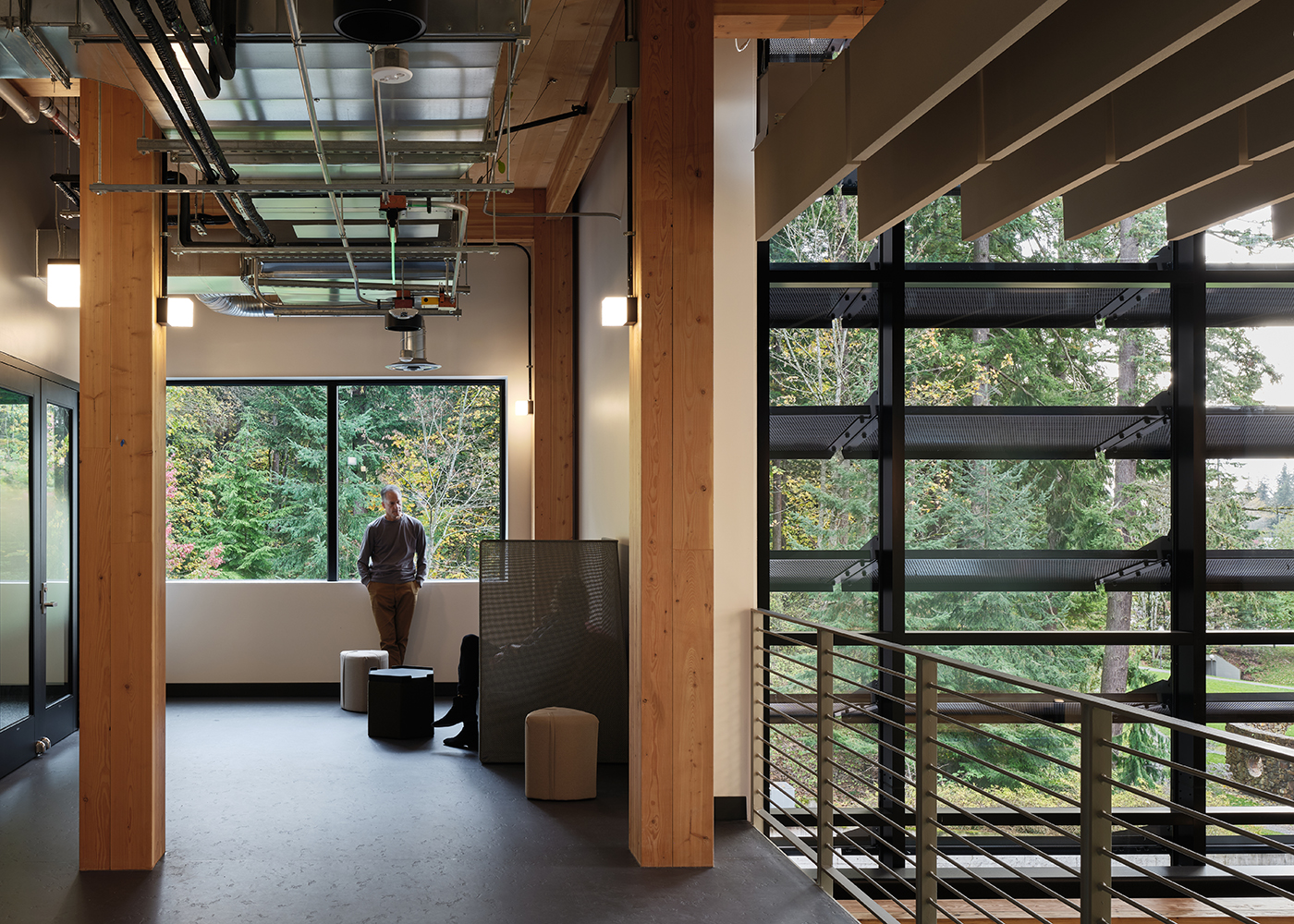
One of Kaiser Borsari Hall’s signature features is its design harmonization with the surrounding Sehome Arboretum and the many psychological and physiological health benefits offered to students and their professors. Perkins&Will leveraged mass timber to employ a concept called Forest Bathing, which can lower blood pressure and heart rate and positively affect various human immune functions.
Inspired by the arboretum, the building’s exterior wood siding was treated naturally using a “shou sugi ban” charring process. This eases the visual transition of students and teachers as they circle between the natural and built environments. The method also creates an interesting aesthetic contrast with the facility’s lighter-colored interior wood structure punctuated by exposed glulam columns, beams, and CLT ceilings.
Through these efforts, the team reduced the project’s “whole life” (operational and embodied) carbon impacts by about 90 percent compared to business-as-usual baseline lab projects, with 100 percent operational and 87 percent embodied carbon reduction.
SLASHING ENERGY CONSUMPTION
In addition to carbon reductions realized through mass timber, Mortenson and our partners disconnected the building from WWU’s Campus Steam Plant, which relies on natural gas, and converted the new facility to electric power in keeping with certification requirements. To reach this objective, our team recommended a high-performance and low-carbon HVAC system that would reduce total energy consumption by 82 percent.
The system’s rooftop solar power generation also serves as an educational display for the building’s electrical engineering and energy studies students. In addition to the energy savings, the highly sustainable HVAC system helped contribute to millions of dollars in project cost savings during the intensive preconstruction process.
The building is the product of years of careful planning and capital fundraising on behalf of Western Washington University, and part of its broad-based commitment to creating an environmentally friendly campus environment for students, professors and staff. The school adopted its Sustainability Action Plan in 2017, setting a goal of fully carbon neutrality by 2035. WWU is also a founder adopter of the Okanagan Charter, calling on higher education institutions to embed health and well-being into all aspects of their campus culture.
Paige Adkinson, project manager for Mortenson’s Seattle Office, oversaw the construction of Kaiser Borsari Hall. Jennifer Kim has spent most of her career leading Mortenson’s Seattle Office projects at higher education campuses across Washington, including as the project executive for WWU’s Kaiser Borsari Hall.
Other Stories:


