 |
Subscribe / Renew |
 |
Contact Us |
| ► Subscribe to our Free Weekly Newsletter | |

Construction Bids
| home | Welcome, sign in or click here to subscribe. | login |


 print print  email to a friend email to a friend  reprints add to mydjc reprints add to mydjc |  |
 |
May 29, 2025

Sierra
|
Hybrid teaching and learning, remote working, new technologies, and high operational and capital costs point to a new reality for educational institutions: change is the new normal. At the same time, education is contending with declining student motivation and well-being.
Gensler’s Design Forecast, published annually, identifies the top trends shaping the next generation of campus environments. Our top three trends for 2025 offer strategies in how higher education institutions can navigate pressing issues through the power of design. We will discuss how these top 3 trendscan support our institutions.
1. Reimagining underutilized campus buildings leads to financial and environmental success
In the face of limited resources, evolving space needs and aging buildings, institutions achieve their strategic goals by leaning into adaptive reuse strategies to reimagine the spaces they already have.
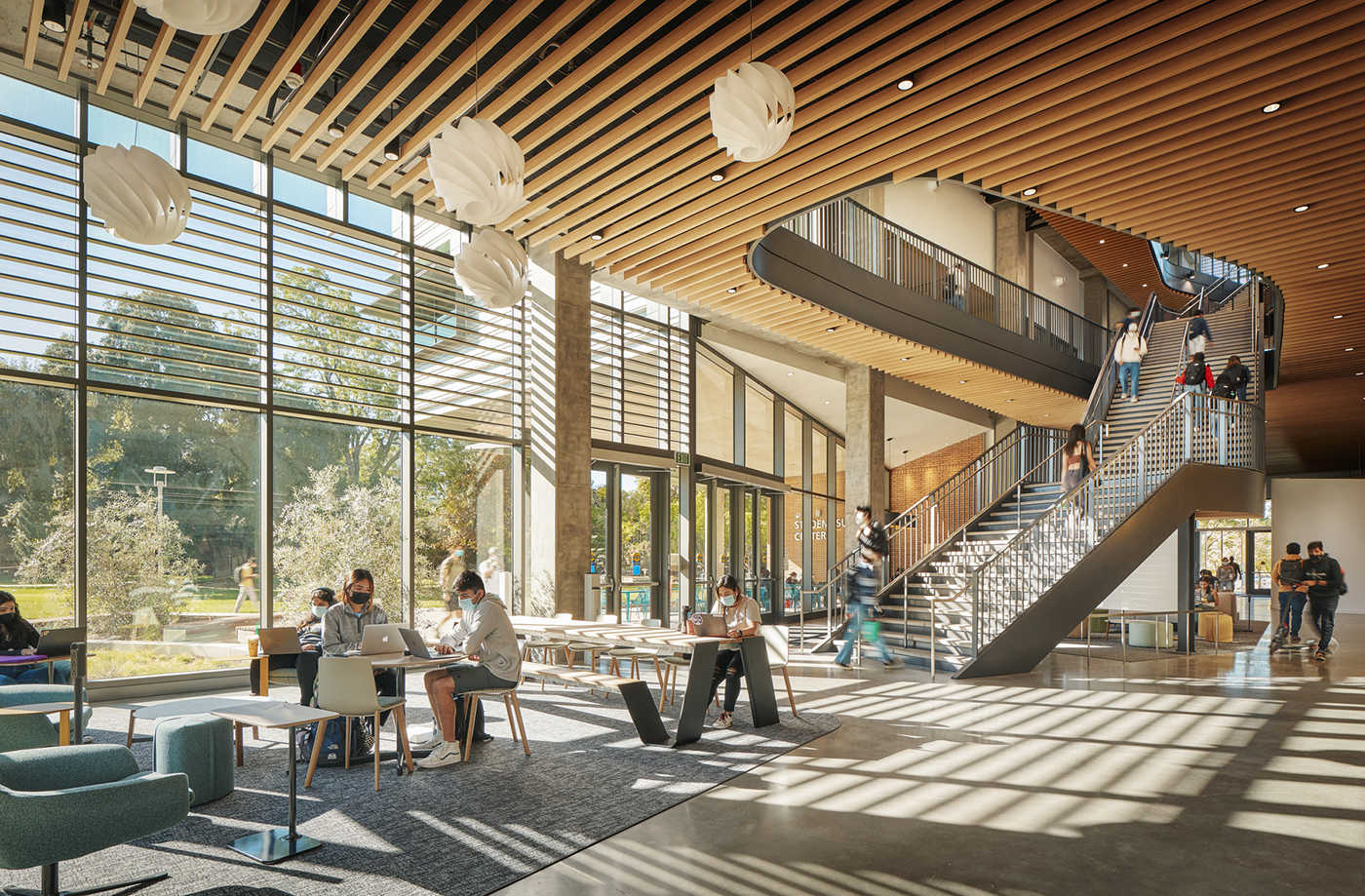
Institutions are currently grappling with potential funding cuts due to a significant state budget shortfall and rapid changes in federal funding. This financial uncertainty poses a challenge for universities striving to achieve their strategic goals with limited resources. To navigate these constraints, universities can adopt innovative approaches to maximize the useof their existing facilities.
One effective strategy is to assess how campus assets are actually being used through curriculum analysis and observational methods. This evaluation can identify underutilized buildings that may be repurposed for new uses. By repurposing these buildings, institutions can reap both financial and environmental benefits. Adaptive reuse not only reduces project costs compared to new construction, but also typically delivers results in a shorter timeframe.
Moreover, adaptive reuse maximizes the value and lifespan of existing assets by incorporating more efficient building systems, thereby reducing operational costs. This approach also significantly cuts down on embodied carbon emissions by minimizing the need for new materials, aligning with Washington State decarbonization goals and the Clean Building Act.
Additionally, rethinking the use of campus structures allows institutions to leverage real estate asset values through development partnerships, providing a potential source of funding for other initiatives. By embracing these strategies, universities can continue to advance their missions despite financial constraints.
2. Higher demand for workforce preparedness drives design for interdisciplinary spaces
More multifunctional spaces will support the type of interdisciplinary programming and preparations students need to enter the workforce. Flexible design solutions allow educators to reconfigure spaces for different needs.
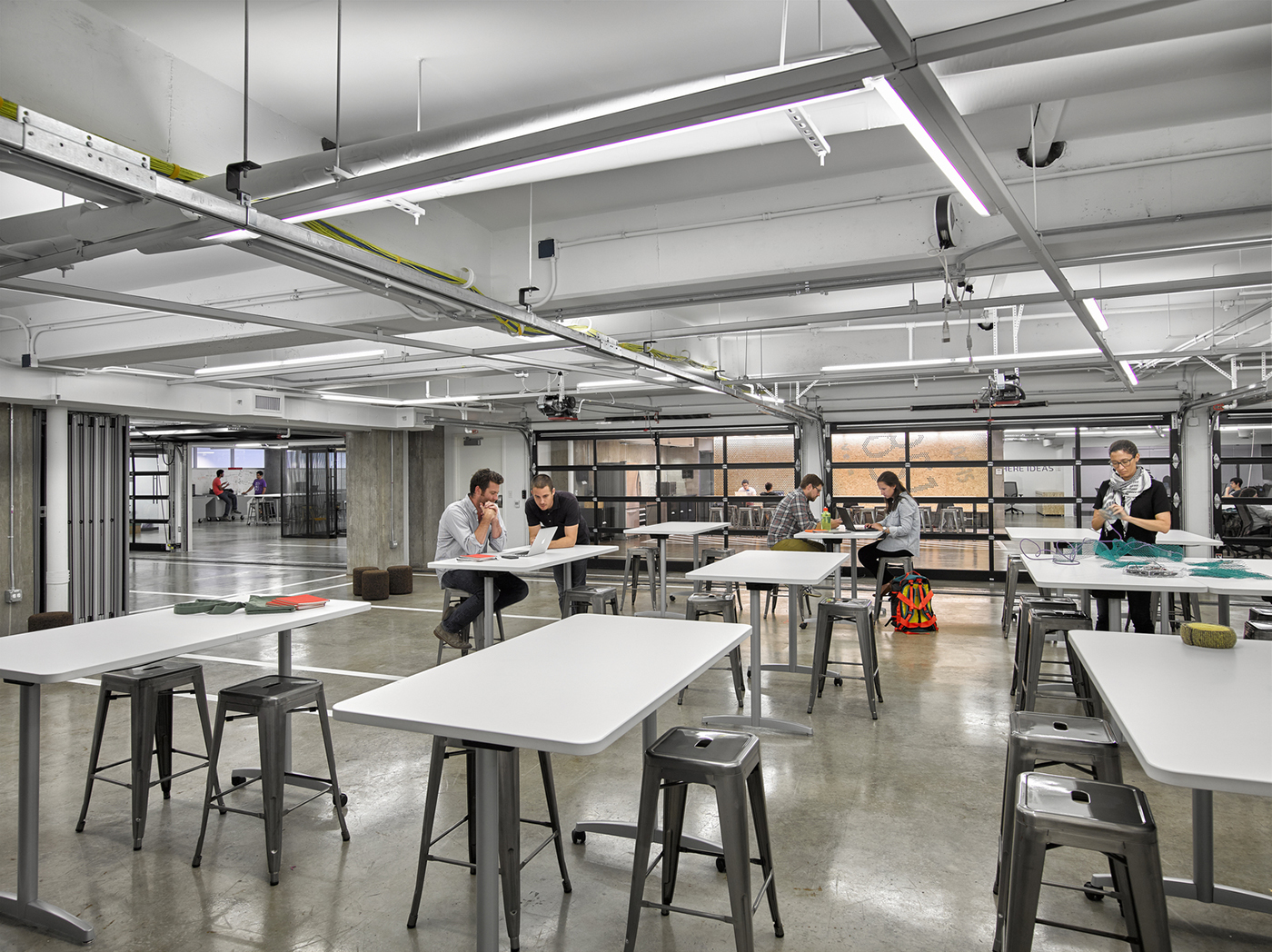
The rising demand for workforce preparedness has become a key driver in the design of interdisciplinary spaces. Local industries such as technology, healthcare and green energy require employees with diverse skill sets and collaborative problem-solving abilities. These industries demand effective team collaboration skills, the ability to adapt to changing environments and the capacity to learn new skill sets continuously.
To meet these needs, educational institutions are increasingly incorporating multifunctional space types that support interdisciplinary programming. These spaces provide students with the opportunity to develop the necessary skills to thrive in modern workplaces. This shift necessitates that educational institutions create environments where individuals from various disciplines can interact, exchange ideas and work together on real-world challenges. Institutions can facilitate these interactions through flexible classroom designs, incubator spaces, shared learning hubs and multipurpose areas that mirror contemporary work environments.
By prioritizing workforce development, institutions can position themselves for continued adaptability and success. Creating these dynamic and collaborative spaces not only prepares students for the demands of the workforce, but will foster innovation and creativity. This approach ensures that graduates are well-equipped to meet the evolving needs of local industries and contribute meaningfully to their fields.
3. Schools focus on students’ well-being and the spaces they need to succeed
Campus environments that support the whole student, including spaces that facilitate academic focus, social gathering and emotional well-being, will improve students’ sense of belonging and overall success.
A sense of belonging is what fuels communities. Research has shown that developing a sense of belonging for students is critical for their overall success and retention. National studies show reasons why first-year students don’t return is affordability and lack of meaningful connections or difficulty making friends. To address these issues, institutions can focus on creating environments that prioritize belonging, mental health and emotional support. Opportunities lie in innovations in student housing and student success centers.
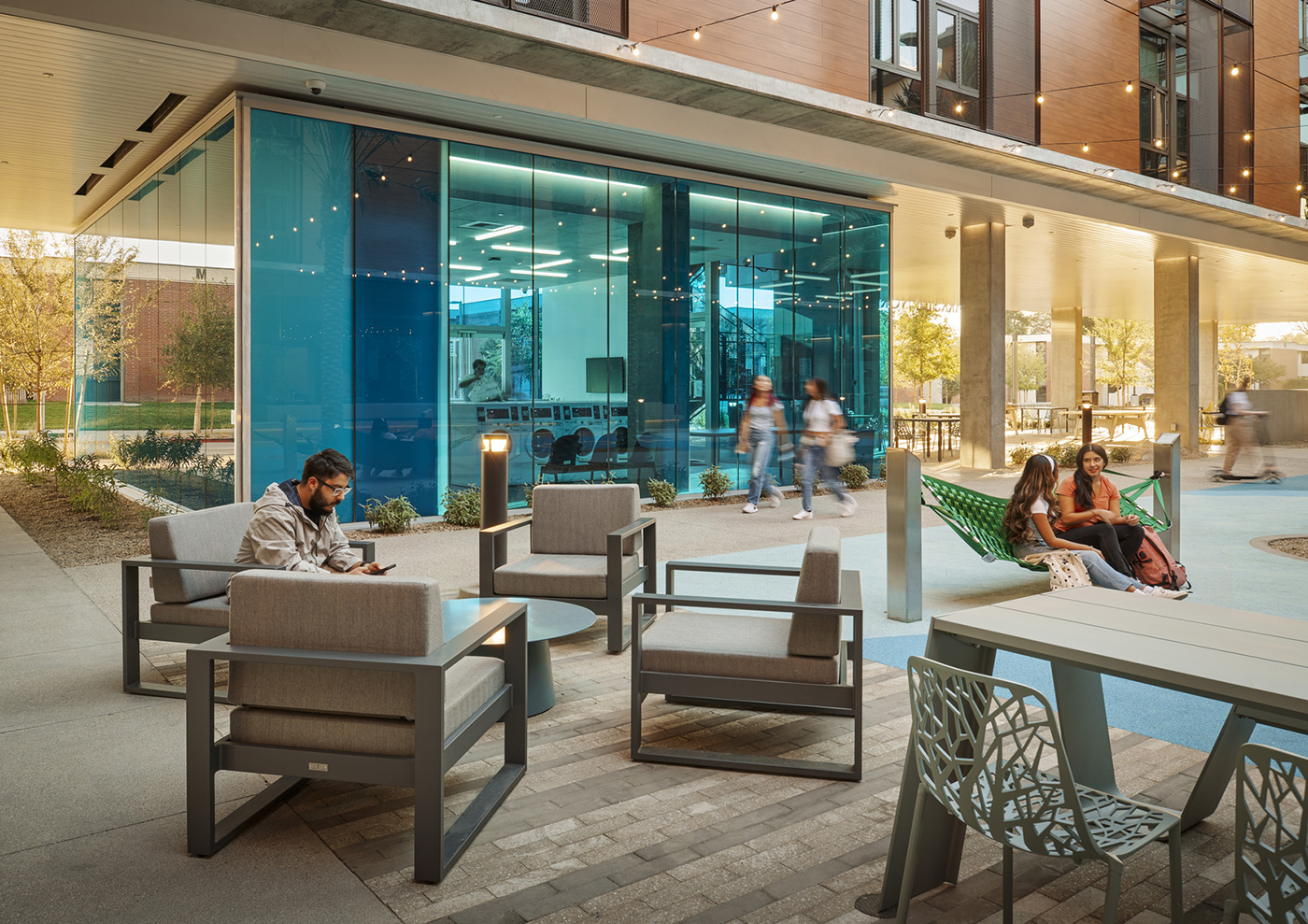
Student housing can amplify health and well-being. Student housing is a vessel for cultivating friendships and communities. Providing several types of spaces outside of sleeping rooms helps to promote engagement. Visible amenities such as shared kitchens, lounges and nooks can create social connections and strengthen a student’s sense of belonging. Other key spaces for chance encounters can also include courtyards, laundry rooms and central stairs.
Student success centers can provide students with a robust support system by integrating services in a one-stop-shop model. These facilities can deliver a comprehensive, multi-lens approach to the needs of diverse groups, including those with disabilities such as low vision, mobility, deafness trauma, and neurodiversity.
Success centers can include inclusive features such as ease of navigation for visual and spatial clarity, transitions and textural changes to support navigation for individuals with low vision, and designated areas for student ownership to reduce stigma of utilizing support services. Creating more inclusive space benefits enable all individuals to feel welcomed and connected to their institution’s community.
While higher education institutions and their leaders continue to address pressing challenges, keeping student experience at the forefront in exploring design opportunities leads to creating spatial environments that set students up for success academically and holistically as institutions compete for enrollment and retention. What’s good for student well-being can also be good for the bottom line.
Francesly Sierra is Gensler’s Seattle Education Practice Area Leader, focusing on the design and delivery of higher education facilities that build community and collaboration, and support student well-being.
Other Stories:


