 |
Subscribe / Renew |
 |
Contact Us |
| ► Subscribe to our Free Weekly Newsletter | |

Construction Bids
| home | Welcome, sign in or click here to subscribe. | login |


 print print  email to a friend email to a friend  reprints add to mydjc reprints add to mydjc |  |
 |
May 29, 2025

Beal
|
When Montana State University (MSU) awarded Cushing Terrell and CO Architects the design contract for five new nursing education facilities — in Billings, Bozeman, Great Falls, Kalispell and Missoula — it was an incredible opportunity for the two firms to merge the best of education and healthcare design while bringing MSU into the research and exploration process.
The high-level goal for the five-facility project is to help build a skilled nursing workforce in Montana — for urban and rural communities alike.
Thus, the team began by addressing a few fundamental questions: How can the prospect of becoming a nurse be more accessible? How can learning environments facilitate long-term career success and satisfaction? What are the core design elements needed for a cohesive experience, and how can the team build upon those core elements to reflect each local culture and environment?
THE RESEARCH: FIELD TRIPS, VISIONING AND FEEDBACK
On the topic of research, the team prioritized client engagement early in the design process. One of the initial steps was to take members of MSU’s nursing leadership on tours of three healthcare education projects in Kansas City, Missouri, designed by CO Architects. Located at the University of Kansas, Kansas City University, and Rockhurst University, the projects gave the client representatives a chance to see state-of-the-art programming and learning spaces, in various stages of development, showcasing the latest design trends in nursing education.
Following the field trips, the design team convened MSU leadership, staff and students for visioning sessions. The sessions included experts from both Cushing Terrell’s education and healthcare design groups, with the crossover of knowledge contributing to spaces that facilitate hands-on, practical learning and skills that translate directly into healthcare settings.
Additionally, the Cushing Terrell team utilized insights from the firm’s team members who grew up in and live in the Montana communities where the projects are located. These local connections brought a more nuanced approach to the design as it relates to placemaking.
The guiding principles for the overall program revealed themselves through this series of visioning sessions. The team spent time with MSU stakeholders on the Bozeman campus, with a full-day kickoff in one of the classrooms in Romney Hall, a historic preservation project also designed by Cushing Terrell. The design team took that information and presented it a month later to the nursing faculty and leadership for each of the new facilities, who provided additional input on their individual school culture and what they’d like their learning spaces to become.
With tools such as mind mapping to analyze feedback, the team continued to identify the overarching user needs and wants while exploring different programming relationships.
THE DESIGN: FORM AND FUNCTION
With the research and user feedback phase complete, the design team worked with MSU to develop guiding principles for the project:
• Emphasize the feeling of one college across the five locations
• Reinforce the connection to the university and its land-grant mission
• Express an inclusive, family-like culture and community
• Promote occupant health and well-being
• Craft adaptable learning spaces
• Anticipate growth, curricular evolution and technological advancements
• Commit to building performance and holistic sustainable design
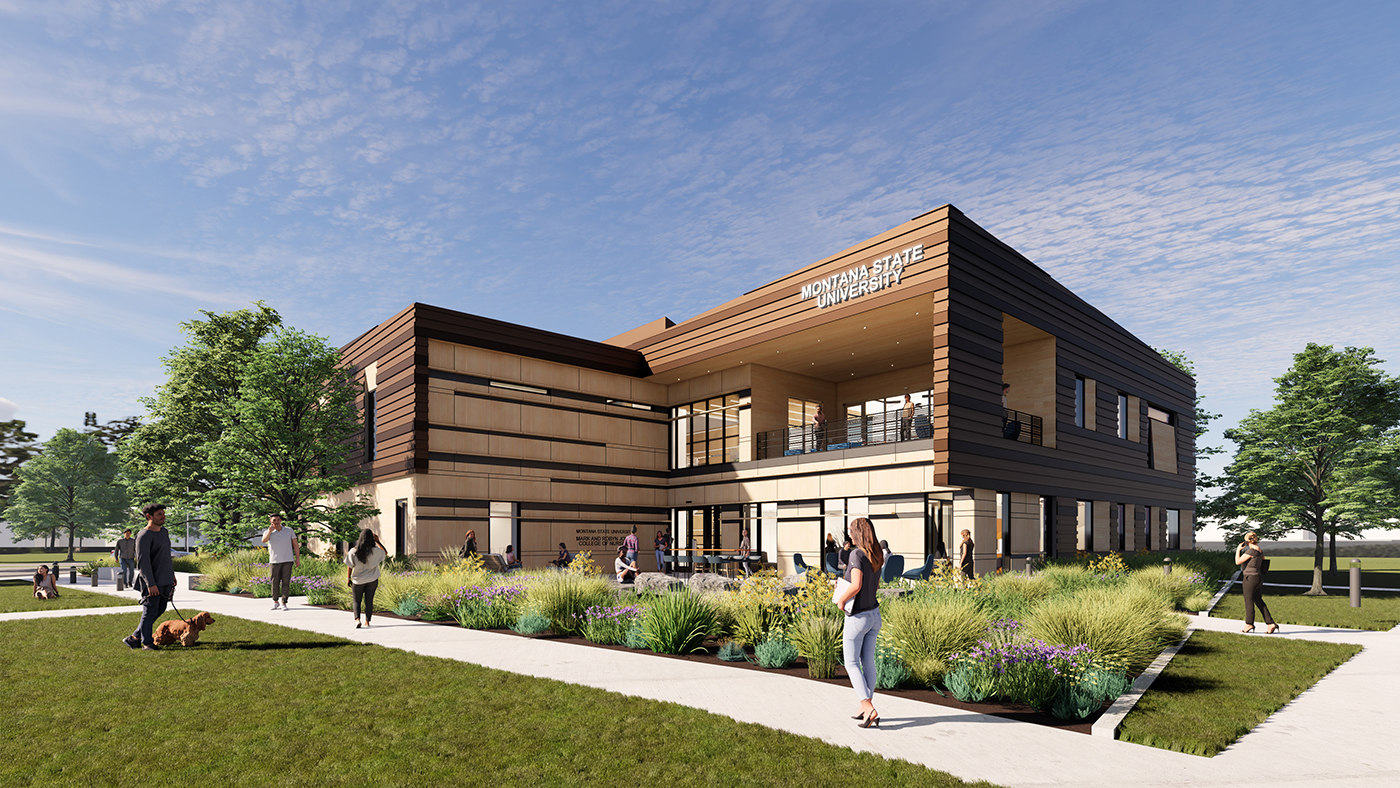
Overall built program. The overarching design concept for the MSU nursing education facilities creates a cohesive visual language that identifies each building as part of the MSU Mark and Robyn Jones College of Nursing. To emphasize a feeling of one campus across locations, much of the programming is consistent with a “kit of parts” establishing the overall built program. For example, each facility has a front porch, learning studios and a nursing gallery.
While the built program establishes consistency, variables to the design include those inspired by the different geologic landscapes, endowing each with its own regional expression in terms of form, color and façade pattern.
Land grant university goals. One of the intents of land-grant universities is to provide practical education to the local population with direct relevance to improving daily life for people in the surrounding communities. With MSU’s goal to address the nursing shortage, a learning hub was planned for each of the five communities, creating a ripple effect in the ability to reach surrounding rural communities and have a greater impact.
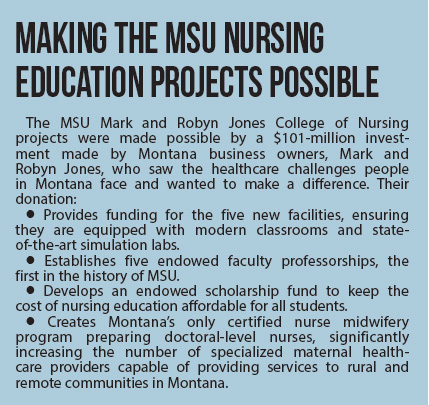
Establishing the five facilities provides local context, keeps students closer to home (and able to bring their education back to their communities), and provides more of a connection to rural areas. Additionally, MSU worked closely with local/regional medical providers to utilize land donated or purchased by these partners. MSU nursing students will have the ability to work with those providers for their clinicals and training in those healthcare systems will help prepare them even further.
Supportive community. To create community, social spaces and nursing galleries add circulation throughout the buildings as well as a variety of study locations. Nursing galleries have views into other areas of practice to support demonstration, community learning and a supportive team environment.
Communal eating areas and landscaped spaces outside the buildings provide areas to come together in informal settings. With the learning facilities designed near local medical providers (on donated land), these providers serve as partners in education, creating real-world relationships with patients and other medical professionals.
Health and well-being. To promote occupant health and well-being, the design incorporates sky lights and clerestory windows, which allow more daylighting in administration and demonstration spaces. Student nourishment areas include mini kitchens for busy students on the go.
Student study spaces offer relaxation and respite, with lounge-style furniture as well as natural materials and soft color palettes. These areas foster a calming environment with large windows and views that create a connection to nature. Landscaped areas with walking paths and green space support the ability to take breaks from the classroom and enjoy the outdoors.
Adaptability and evolution. The project principles related to adaptability and evolution are supported through the design of a variety of space types to meet differing learning/teaching styles. Learning spaces such as cohort studios and seminar labs feature multi-functional furniture, moveable partitions and advanced AV equipment.
The design includes state-of-the-art technology and simulation environments specific to nursing training where students get hands-on experience to help prepare them for just about any type of real-world situation.
Building performance and sustainability. To meet building performance and sustainability goals, the university and design team are pursuing LEED Silver for each building. All facilities are designed to be solar-ready with the ability to add on-site PV arrays. The Bozeman site will utilize the campus’ geothermal energy system while the other four sites use energy-efficient, high-performance variable-air-volume systems for heating and cooling.
Healthy materials are emphasized, with many interior products meeting certifications such as HPDs, Declare Label, or Cradle to Cradle. The interior lighting design uses high-quality LED fixtures with a color rendering index (CRI) of 90, which provides a truer color appearance, which is critical for healthcare applications.
UPCOMING MILESTONES FOR THE PROJECTS
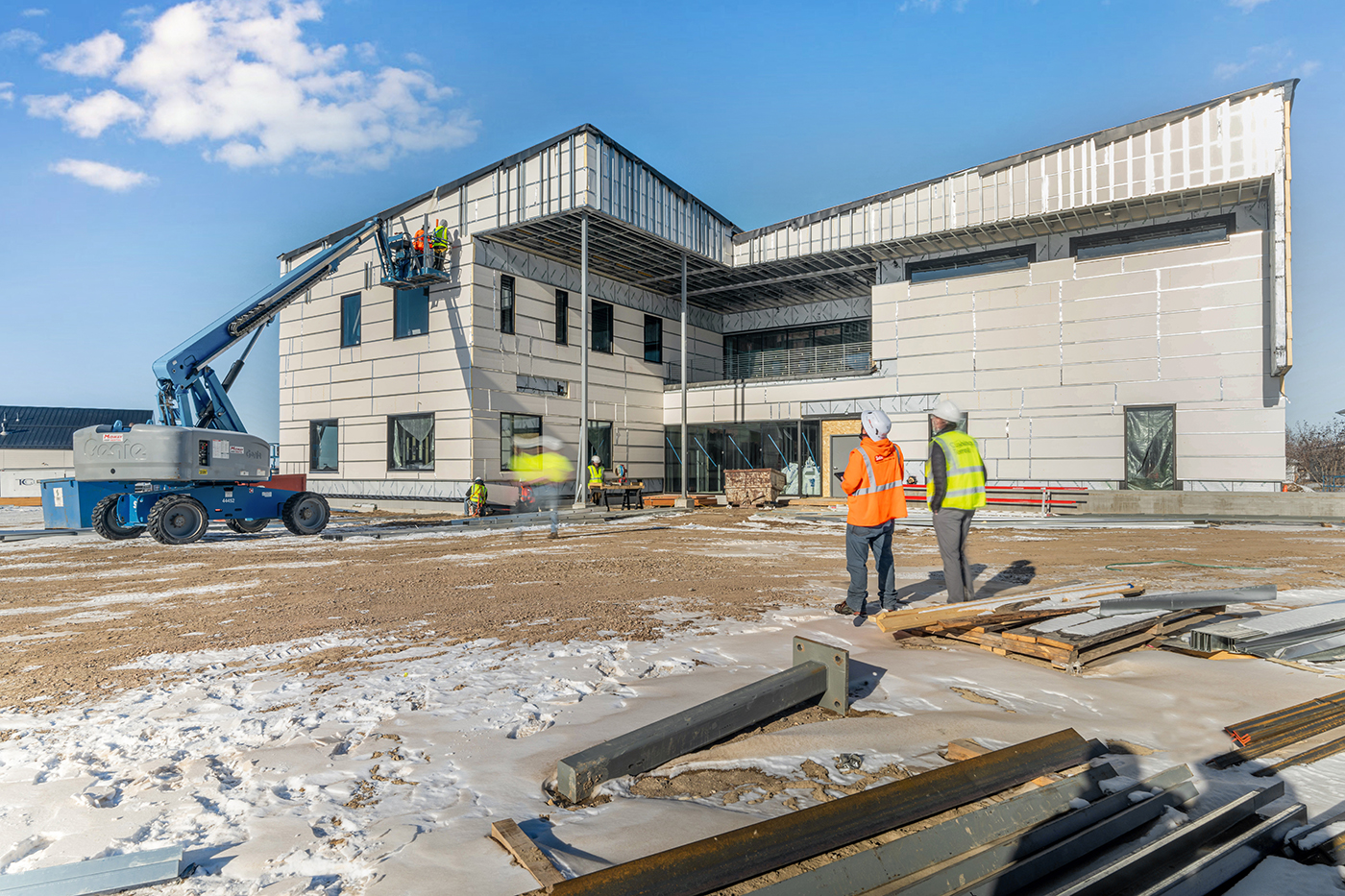
All five MSU nursing education facilities are currently under construction and planned for completion in the fall of 2026. As the projects unfold, there’s great excitement from the local Montana communities about the potential to bring skilled nurses to more rural parts of the state, help meet the demand for healthcare workers, create rewarding careers and improve healthcare in Montana.
While the design aesthetics were inspired by Montana’s landscapes, the functionality and health and wellness aspects were very much inspired by the MSU staff and students who will be moving through these facilities, creating a foundation for the future within their walls.
Jim Beal is a principal with Cushing Terrell, a leader of the firm’s Education Design team and director of the firm’s research and development initiatives.
Other Stories:


