 |
Subscribe / Renew |
 |
Contact Us |
| ► Subscribe to our Free Weekly Newsletter | |

Construction Bids
| home | Welcome, sign in or click here to subscribe. | login |


 print print  email to a friend email to a friend  reprints add to mydjc reprints add to mydjc |  |
 |
May 29, 2025

Barnhart
|

Schoen
|
Signed into law in 2019, Washington State’s Clean Building Performance Standard (CBPS) implements stringent performance standards and provides incentives for early compliance to reduce emissions and promote sustainable building practices.
As signatories to the AIA 2030 Challenge, we readily embrace these ambitious targets set for architects, engineers and construction professionals. The fact that Washington state is mandating new requirements solidifies this urgent need for action to reduce greenhouse gas emissions and energy consumption in the built environment, paving the way for a more sustainable future.
The Washington CBPS categorizes buildings into Tier 1 and Tier 2, each with specific compliance requirements. Tier 1 buildings are commercial buildings exceeding 50,000 gross square feet and require compliance with the standard from 2026 —2028. Tier 2 buildings include commercial buildings between 20,000 gross square feet and 50,000 gross square feet.
Buildings over 220,000 gross square feet must be brought into compliance by June 1, 2026, those 90,001—222,000 gross square feet by June 1, 2027, and buildings 50,000—90,000 gross square feet by June 1, 2028. The CBPS presents significant compliance challenges for most higher education campuses, requiring improvements from minor upgrades to major infrastructure overhauls — efforts that rely heavily on capital funding, whether from the state for public universities or private sources for independent colleges.
Starting from scratch to design a new building provides a blank canvas to incorporate the latest design thinking as well as sustainable strategies and systems for energy efficiency and carbon reduction.
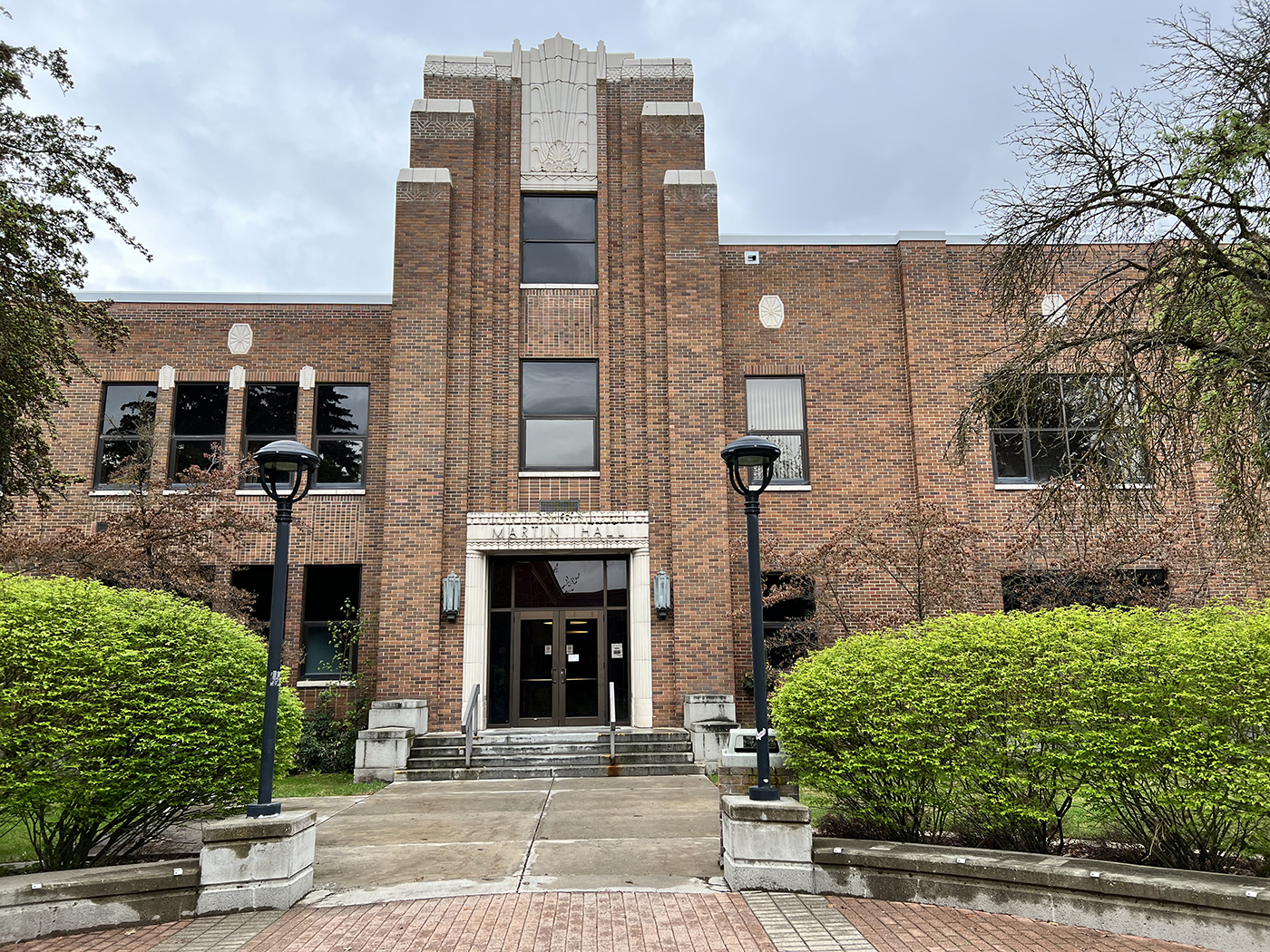
The real challenge lays in upgrading existing inventory, especially for colleges and universities with a wealth of legacy buildings. Transforming outmoded structures often requires addressing outdated and constrained spaces. It isn’t just about compliance; it’s about innovation, sustainability, and creating spaces that serve the future.
As designers of learning environments, we did this before regulatory requirements were in place, by establishing a roadmap for success using healthy materials and high-performance architecture to revitalize existing campus buildings. While it is exciting to have a state mandate, how do we bring all campuses to compliance—beyond those predisposed to this approach?
REVITALIZING CAMPUSES FOR A DECARBONIZED FUTURE
Integrus Architecture and MW Engineers are partnering with Whitman College and Eastern Washington University (EWU) to make plans for modernizing campus infrastructure and ultimately eliminating reliance on fossil fuel. Through collaborative efforts, we are enabling campuses to meet—and even exceed—state and institutional decarbonization standards.
Working on multiple campuses, we find many of the same challenges. These include funding issues and distilling cultural aspirations. Not surprisingly, defining “sustainability” conveys different meanings for different groups. For some, elevating campus buildings to current standards means a lower Energy Use Index (EUI). For others it is decarbonization, implementing recycling programs, or increasing building performance for efficiency, occupant comfort and cost-effectiveness.
Through our work we have devised best practices to guide campuses on a pathway to incremental achievements or a complete Decarbonization Plan. Lessons learned in addressing these issues can be instructive for others facing similar obstacles. They include focusing on the format and output of energy production and transitioning to options like renewable energy.
Setting up robust monitoring systems that track progress, validate projected metrics and identify areas for improvement is essential. And importantly, engaging students, administration, and the community to drive awareness and participation in sustainable practices.
The campus projects referenced here exemplify what is possible in achieving campus compliance with changing regulations and climate-responsive expectations. Note that these projects are in the planning phases, not yet built, and are awaiting funding.
EASTERN WASHINGTON UNIVERSITY — GEOTHERMAL PLANT STUDY
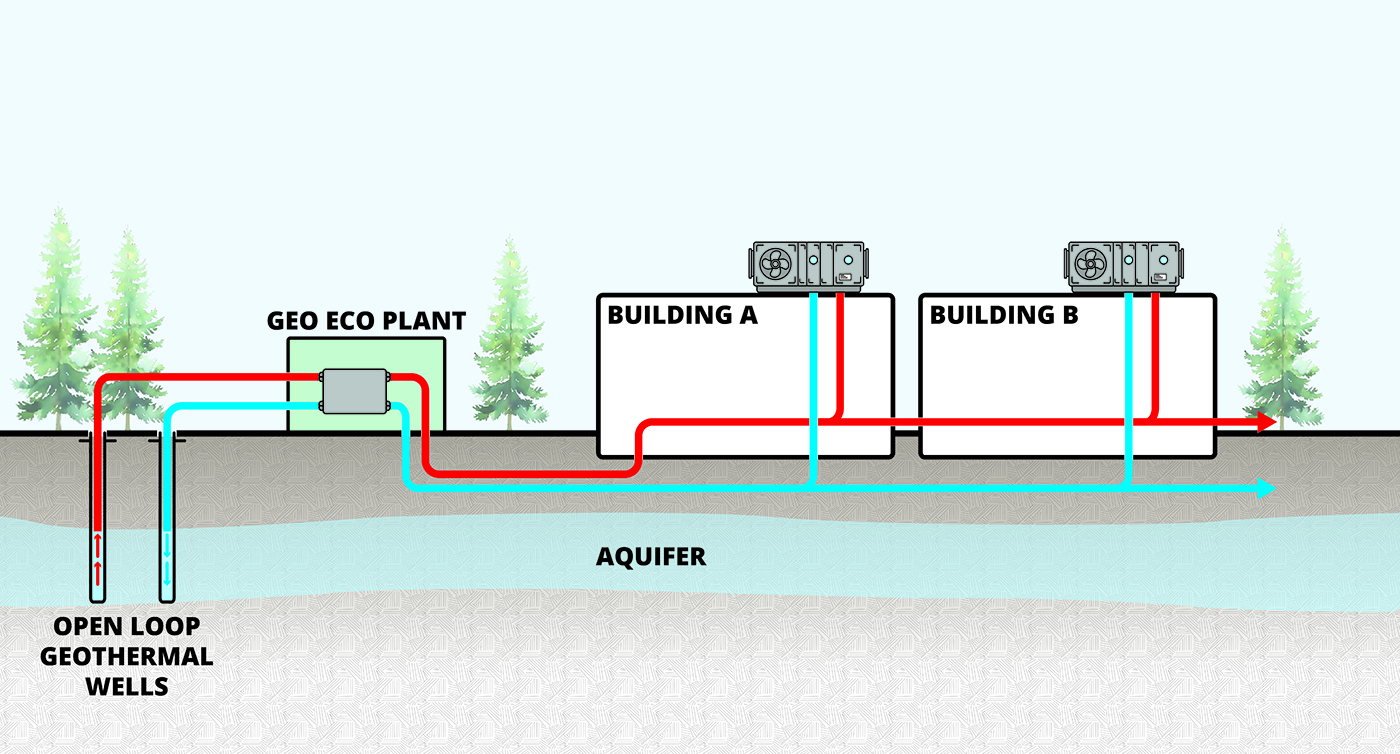
At EWU, the Integrus and MW Engineers partnership involved planning of the university’s first GeoEco Plant (GEP), a milestone commitment to eliminating fossil fuels from central campus heating operations. Our team explored transitioning from fossil-fuel generated campus steam to more sustainable energy sources, focusing on the impact, location, and potential of this transition. Plans call for a ground source heat pump utilizing the earth’s stable underground temperature — a thermal reservoir known as a heat sink — to deliver efficient, all-electric heating and cooling to campus buildings.
Highly interconnective, it will allow buildings to share thermal energy. When one building generates excess heat, that energy can be redirected where needed or stored underground for future use. This dynamic, energy-sharing network represents one of the most advanced and efficient heating and cooling systems available.
This milestone facility is also designed to serve as a community-facing educational hub — a teaching tool for campus sustainability and stewardship. The GEP site is centrally positioned relative to the eleven buildings along the campus “Sustainability Spine” it will eventually serve.
Showcasing the technology and providing clear views of the equipment and experiential graphics transforms what would traditionally be a hidden infrastructure building into a new campus landmark. EWU plans to expand this system with future GEPs to deliver campus-wide coverage.
WHITMAN COLLEGE DECARBONIZATION PLAN
Whitman College, a private institution not bound by the state’s standards, set ambitious targets: a 50% reduction in greenhouse gas emissions by 2030 and full carbon neutrality by 2040. Integrus and MW Engineers are helping lead the college’s voluntary efforts to develop an Energy Renewal and Decarbonization Plan (ERDP).
The plan evaluates carbon emission reductions and maximizes energy savings through three options: a centralized geothermal plant, a centralized ground water exchange plant, and decentralized air or ground source systems. This plan focuses on a mix of math, humanities, social science, academic buildings and residence halls, exploring options to reduce carbon emissions from existing fossil-fuel heating, trade energy between buildings, and maximize energy savings. It also communicates the values of energy savings and carbon reduction across the campus community.
Implementing campus energy metering and refining a cost model also help evaluate the impact and return on investment of various energy-saving options. The ERDP effectively charts a comprehensive roadmap to meet these goals, integrating building efficiency upgrades, electrification of heating systems, and campus-wide energy planning strategies. This proactive approach positions Whitman as a model of sustainability leadership among private colleges.
SPOKANE COLLEGES CLEAN BUILDINGS ACT COMPLIANCE
In some instances, an initial large capital investment to meet the CBPS and further advance sustainability is not necessary. The Integrus and Custom Energy Consulting team is demonstrating this in our collaboration with Spokane Colleges by focusing on the format and output of campus-wide energy production.
This team was formed to assess current energy sources and assist Spokane College’s transition to more sustainable options like renewable energy with robust monitoring systems to track progress and validate projected metrics identifying areas for improvement, which is an additional requirement of the new law.
The team updated the Energy Star Portfolio Manager, will conduct annual EUI checks, and update Operations & Maintenance (O&M) plans. The overriding goal for compliance is making informed energy-efficient design choices, reporting on benchmarking and maintaining energy management plans. This project also demonstrates the value of engaging students, administration and the community to foster a culture of sustainability through educational initiatives to drive awareness and participation in sustainable practices.
The CBPS requirements present exciting opportunities for campus and design teams to innovate in bringing new life and improved efficiency to existing buildings — both in providing inventive solutions and in growing support for campus sustainability efforts.
Regardless of the state capital planning process, these changes are necessary to keep campuses positioned with functional buildings to serve students and the educational environment long into the future. Perhaps the biggest shift required is a change in mindset, and a commitment to be part of the statewide effort to improve the efficiency and health of buildings to benefit people throughout Washington state.
Becky Barnhart is CEO at Integrus, providing vision and operational leadership that sets the tone for the firm’s work within the public realm. Anthony Schoen is a Mechanical Principal at MW Engineers, specializing in the design of higher education, laboratory and healthcare facilities.
Other Stories:


