 |
Subscribe / Renew |
 |
Contact Us |
| ► Subscribe to our Free Weekly Newsletter | |

Construction Bids
| home | Welcome, sign in or click here to subscribe. | login |


 print print  email to a friend email to a friend  reprints add to mydjc reprints add to mydjc |  |
 |
August 28, 2025

Jabs
|

Fulton
|
As Northwest cities balance explosive growth with the need for public space, a $43 million project in Idaho’s Treasure Valley stands as a case study in public space reinvestment. Rather than sell off surplus land, Ada County chose to transform an abandoned horse track into The Park at Expo Idaho — a landmark public space that integrates ecological restoration, destination recreation and resilient design.
PUBLIC LANDSCAPE RECONSIDERED
Les Bois Park, once home to Idaho’s horse racing scene, sat dormant after wagering on the sport was banned in 2015. The 88-acre site — adjacent to the Expo Idaho fairgrounds and along the Boise River — faced an uncertain future.
Local planning efforts and public engagement processes laid the groundwork for change, positioning Ada County to act when federal funding became available through the American Rescue Plan Act (ARPA) in 2021, launching an ambitious design process that prioritized public access, diverse recreational programming, ecological restoration and long-term community benefit.
The design team, led by Philadelphia-based PORT alongside a broad group of experienced national and local consultants, approached the site with care and curiosity.
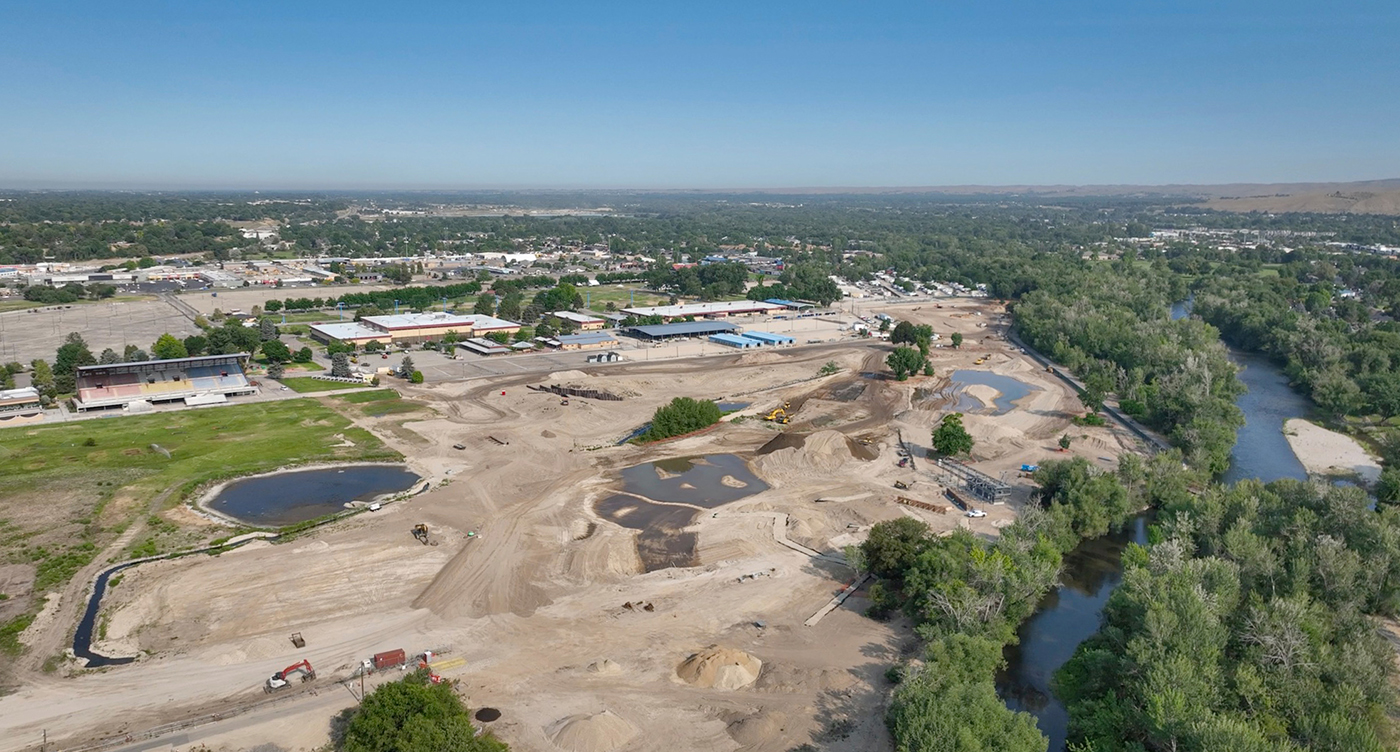
Archival photos and historic maps revealed the land had once been part of the Boise River floodplain, later filled to support racetrack infrastructure. The team proposed excavating this fill, reconnecting the site to the floodplain, and using the displaced soil to create dramatic new topography. In 18 months, they completed design and secured the necessary federal permits to meet the 2026 ARPA funding deadline.
BALANCING EXPERIENCE AND ECOLOGY
The first 50 acres balance public experience and environmental performance. Fully funded by the ARPA program, Phase 1 construction began in early 2025 and is being delivered through a traditional design-bid-build model. The new park links directly to the Boise Greenbelt and Expo Idaho, opening access to nature, culture, and recreation.
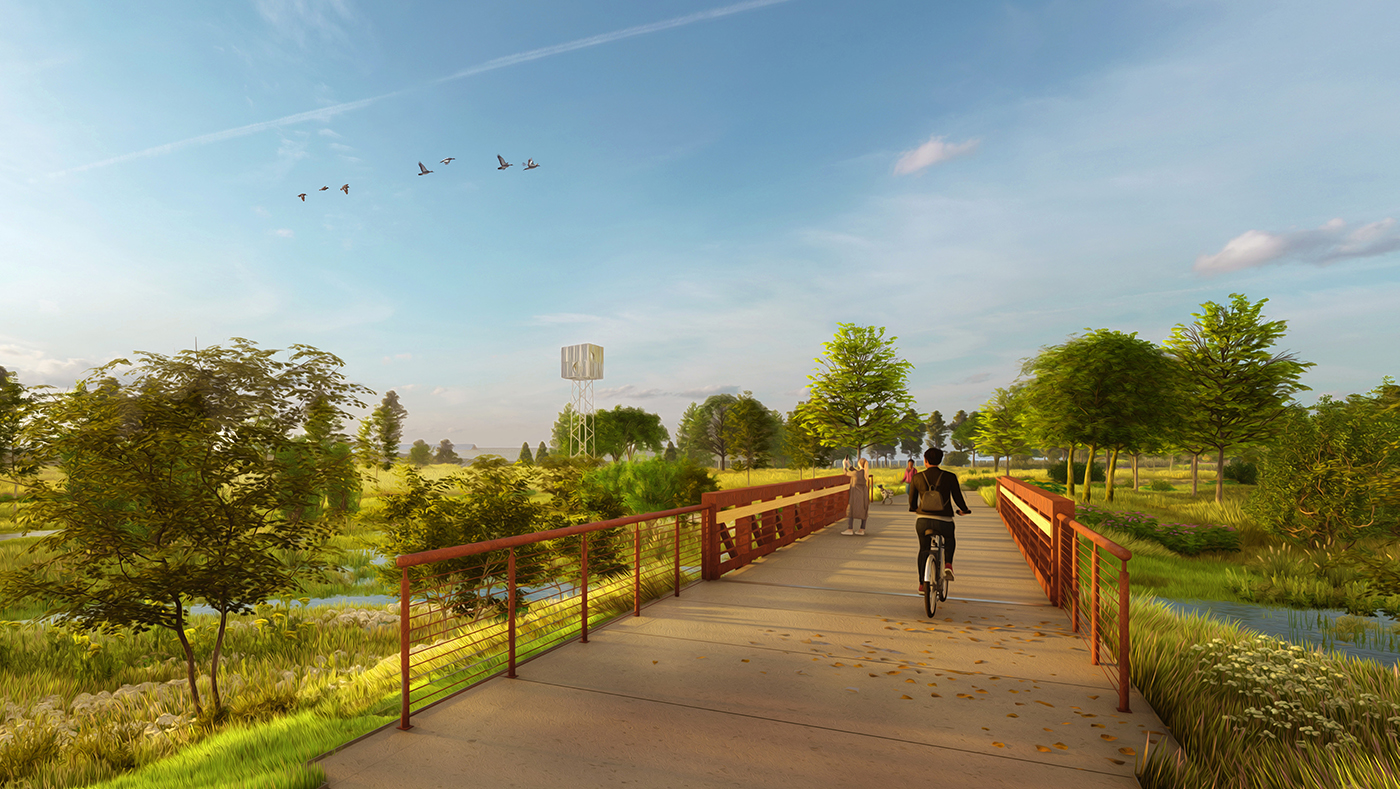
Features include a 6-acre all-wheel sports garden; two architecturally distinct pavilions designed by Marlon Blackwell Architects (MBA) and Plan North Engineers; and nature-based play areas with large-scale custom elements, including a 40-foot slide tower and one of the largest swing sets in the Mountain West.
The site also includes soft-surface trails, scenic overlooks, and over 600,000 native plants supported by integrated stormwater and irrigation systems that reduce water needs and support long-term resilience.
The Park at Expo Idaho is what the design team often refers to as an “AND” project — not an “OR” project. Rather than forcing choices between ecology and recreation, the park weaves environmental performance and active recreation into a unified public landscape.
DESIGN ROOTED IN PLACE
The Park at Expo Idaho embraces Garden City’s mid-century identity, drawing inspiration from local car culture and the visual language of the nearby Western Idaho Fairgrounds. Entry signage borrows from vintage roadside graphics, while site elements echo the bold silhouettes of fairground architecture.
Material choices — concrete, CMU, corrugated metal and weathering steel — nod to the racetrack’s historic utilitarian structures. A cantilevered swing set references the angled steel posts that once lined the track, transforming a humble relic into a striking feature of public play. The original racetrack observation tower was preserved, structurally reinforced, and repositioned within the restored floodplain as both a visual anchor and a gesture to the site’s past.
Through these layered details, the park fosters a sense of belonging and local character — honoring what was while pointing toward what’s possible.
COLLABORATION AT EVERY SCALE
The Park at Expo Idaho reflects collaboration across disciplines and geographies. PORT and MBA brought an outside perspective that helped uncover new potential in the site’s landscape and history. This vision was realized through deep partnerships with local firms like Boise-based Plan North Engineers, who helped deliver complex site features within tight funding and permitting timelines.
With more than a dozen consultants contributing across ecological, architectural, and technical disciplines—including Rio ASE, Horrocks, Ecosystem Sciences, and Studio Ludo, the team’s success relied on shared goals and an openness to navigate challenges together. The result is a park shaped not just by vision, but by committed coordination at every level.
This commitment to collaboration extended to a range of public agencies whose involvement was critical to the project’s success. Due to the site’s proximity to the Boise River and the compressed deadlines required by ARPA funding, the project presented a complex set of jurisdictional and regulatory conditions.
The team adopted an “early and often” approach from the outset—bringing together city, county, state and federal agencies. This established a shared understanding of constraints and opportunities, and fostered a spirit of cooperation that carried through permitting. Ongoing, clear communication at key milestones proved essential to aligning priorities and advancing approvals in parallel with design.
SETTING A REGIONAL PRECEDENT
The Park at Expo Idaho offers a modest but meaningful call to cities across the West: reinvest in public land, embrace ecological restoration, and design spaces that support both people and nature. As development pressure grows and public land becomes more contested, the project is a reminder that design can play a powerful role in shaping lasting civic value.
“It’s going to be the equivalent of Central Park,” said Ada County Commissioner Tom Dayley at the groundbreaking ceremony. “A transformative part of this community not only now, but for 100 years from now.”
Nicholas Jabs is a senior associate at PORT, specializing in public space design and urban planning and will teach landscape architecture at Utah State University for the upcoming academic year. David Fulton is founder and principal of Plan North Engineers, a Boise-based structural engineering firm working nationally across commercial, public and residential sectors.
Other Stories:


