 |
Subscribe / Renew |
 |
Contact Us |
| ► Subscribe to our Free Weekly Newsletter | |

Construction Bids
| home | Welcome, sign in or click here to subscribe. | login |


 print print  email to a friend email to a friend  reprints add to mydjc reprints add to mydjc |  |
 |
August 28, 2025

Olson
|
After 30 years of sharing space with Tacoma General, Mary Bridge Children’s Hospital is stepping into a new home: a purpose-built, seven-story facility that brings inpatient and outpatient care together under one roof. At 320,000 square feet, it’s the only Level II Pediatric Trauma Center in Western Washington, and it’s designed to serve not just patients, but the families and caregivers who support them.
From the beginning, the design team, including AHBL’s civil and structural engineers, planners, landscape architects and land surveyors, approached the project with a focus on how infrastructure could support healing.
“We wanted to reflect the place, the care provided and the community the hospital serves,” said Sarah Singleton Schroedel, senior landscape architect at AHBL. “We thought of it as expanding areas of care — from quiet, reflective spaces close to the hospital, to more public areas that connect to the broader community.”
DESIGNING FOR PEDIATRIC NEEDS
Unlike adult hospitals, pediatric facilities must consider not only the medical needs of children, but also their emotional and developmental experiences. At Mary Bridge, that meant designing spaces that feel safe, familiar and even playful, without compromising on function.
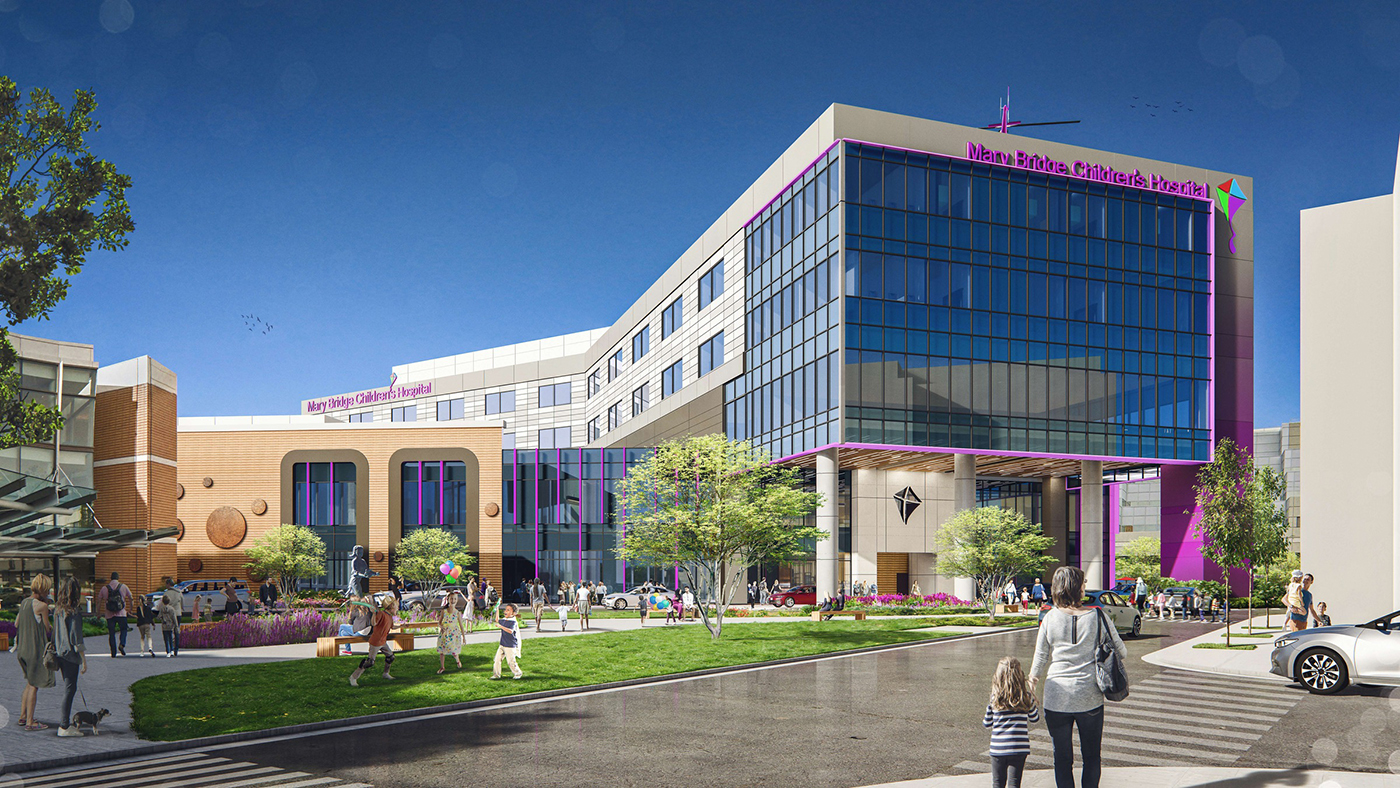
“We wanted it to feel like your backyard, but a really elevated, familiar feeling,” said Schroedel. “We used synthetic turf instead of grass for maintenance, but also to bring in that familiarity of home and comfort.”
The design also includes quiet seating areas slightly screened from view, giving caregivers and family members a moment of privacy.
“It’s not necessarily a chapel,” she said, “but just a place where someone can step outside, feel protected, and be with their experience.”
CIRCLES OF CARE
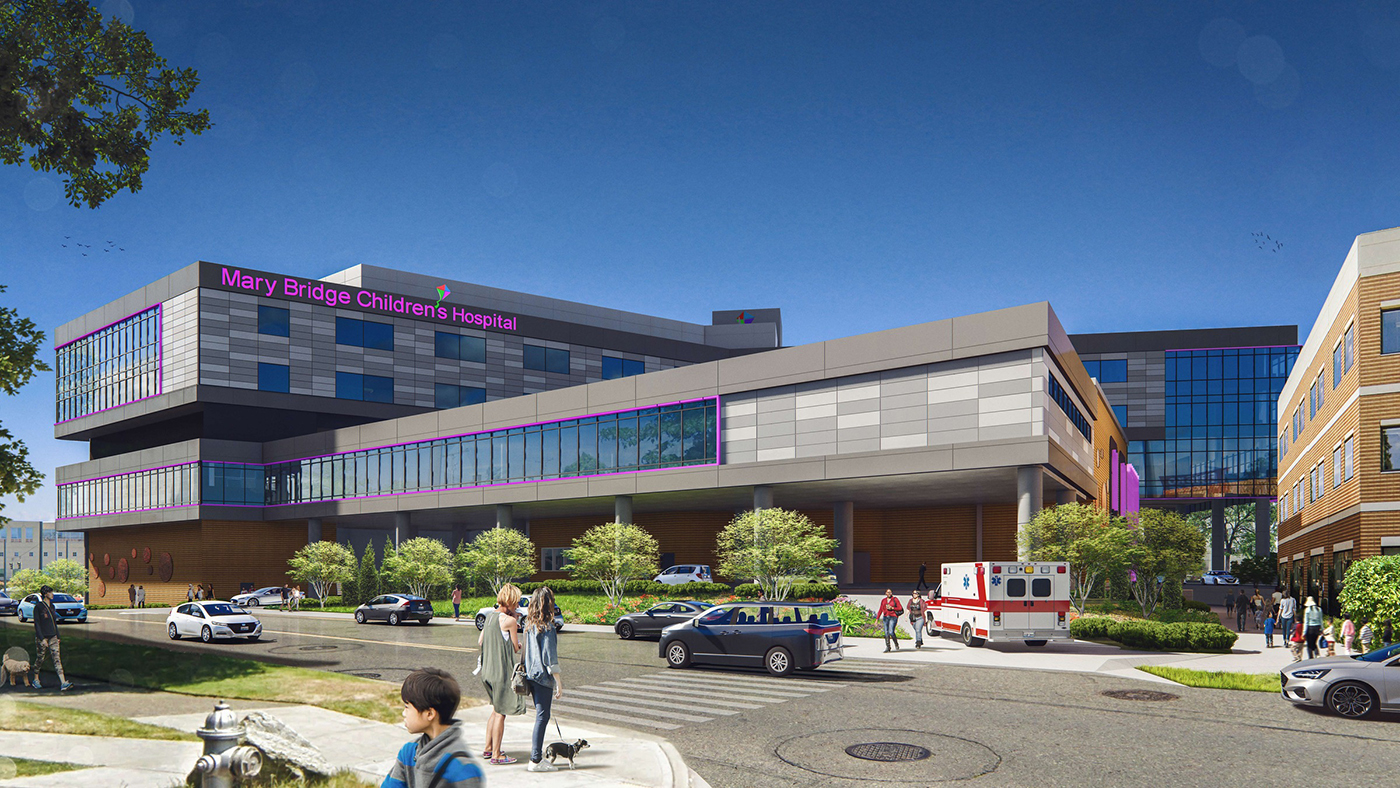
The landscape design was grounded in a concept called “Reflections of Care,” which envisioned the site in concentric rings. Closest to the hospital are peaceful, semi-private spaces like a rose garden and rooftop garden, designed to be visible from patient rooms and reduce stress.
Further out are flexible areas for families and caregivers including places to sit, reflect or let children play. And at the outer edge, the design opens to the public with plazas and pathways that invite community connection.
“We know that even a view of green space can improve overall health outcomes,” said Schroedel. “So, we were thinking of both the child, the patient and their support networks.”
CIVIL DESIGN THAT BALANCES COMPLEXITY, COMFORT
On the civil side, the challenges were significant.
“Probably the biggest complexity is that a hospital campus has a lot of existing and new utilities and infrastructure,” said David Nason, a civil principal at AHBL. “In addition to the typical utilities such as water and sewer, we also had to accommodate medical gases and emergency power lines. So, there was a lot of utility coordination required.”
Site circulation was another key focus.
“The emergency department drop-off is located off Division Street, and the main front entry is off Martin Luther King Jr. Way,” Nason explained. “We kept those two traffic streams from conflicting by separating them.”
KEEPING IT LOCAL
The project also includes two new precast concrete parking garages, a much-needed addition to a campus where parking has long been a challenge. The garages were fabricated locally at Concrete Tech in Tacoma, using precast double tees, columns, beams and non-structural wall panels. This approach was not only more cost-effective and efficient than conventional cast-in-place construction, but also supported the local economy.
“Parking over in that area is terrible,” said Drew McEachern, the structural engineer on the project. “So, adding more capacity to support the staff and visitors is the main goal.”
PERMITTING, PHASING AND PARTNERSHIP
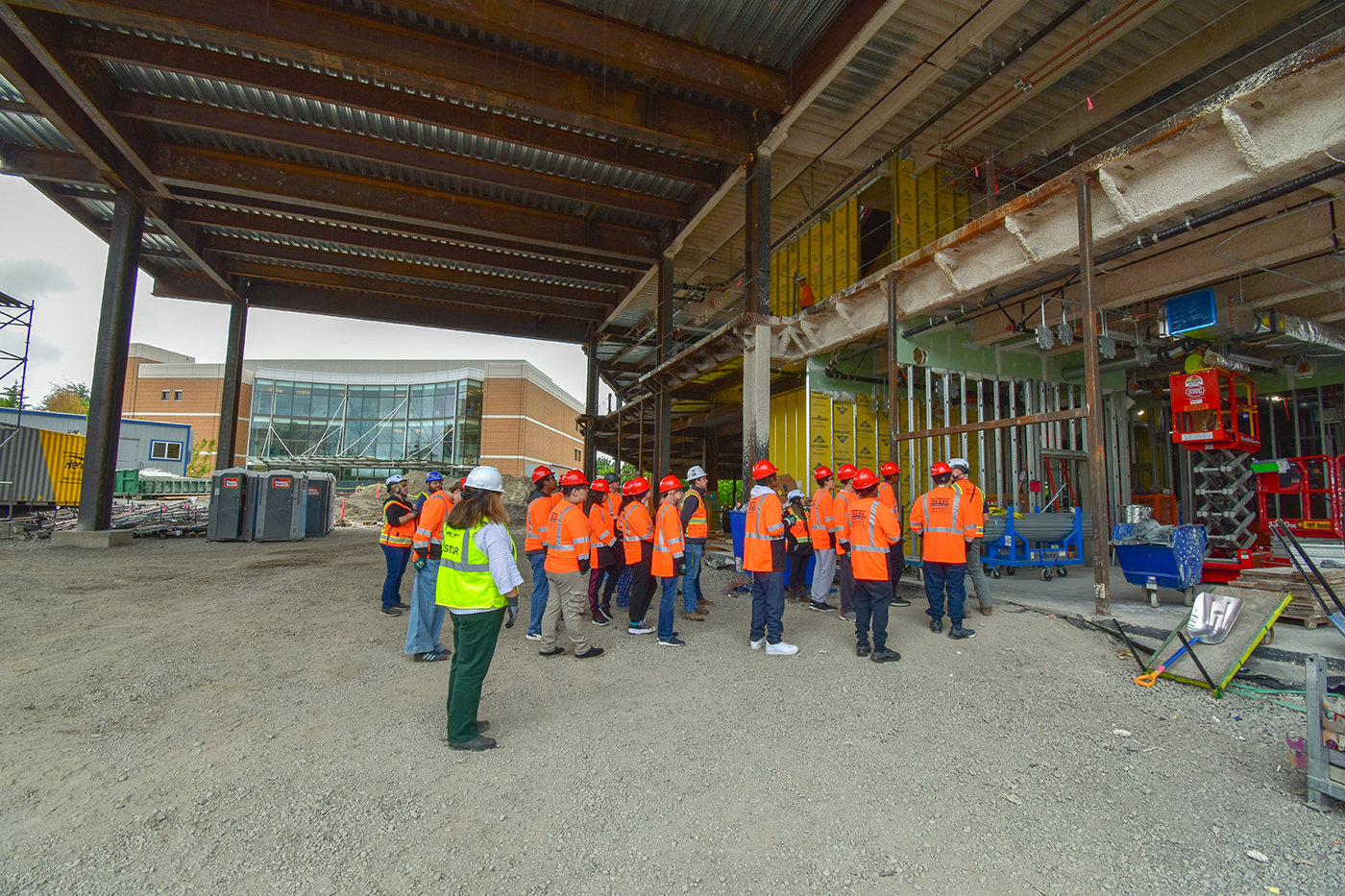
Building a new hospital in the middle of an active medical campus while keeping existing facilities operating required careful planning.
“We needed to keep Tacoma General, the existing Mary Bridge and the CHC West building active and operating,” said Nason. “That meant creating a complex phasing plan with more detail than usual.”
Permitting was another major effort.
“There was a lot of coordination with the city of Tacoma,” Nason said. “There was open conversation and discussion. The project required multiple land use, site and building permits.
A SPACE THAT FEELS LIKE HOME
For Schroedel, the most meaningful part of the project was designing spaces that feel personal.
“As a kid growing up, my brother had leukemia and we were in hospitals a lot,” she said. “I asked my mom what she would have needed, and she said, ‘A place to cry that wasn’t behind the dumpsters.’”
That memory shaped the design. From barrier-free play areas that feel like home, to quiet corners where family members can step away and breathe, the landscape is built to support the full emotional spectrum of pediatric care.
ROOTED IN TACOMA, BUILT FOR THE FUTURE
Mary Bridge’s new home is deeply connected to its city. The design team worked with the Family Advisory Committee, explored partnerships for farmers markets and therapy animal programs, and created a public-facing plaza along MLK Jr. Way that acts as a “front porch” to the hospital.
“The broader community is really deeply involved in Mary Bridge,” said Schroedel. “From the beginning, leadership shared how involved the community already was through programs, partnerships and support.”
And while the building is new, the mission is not.
“We’re just proud to be a part of the Mary Bridge Hospital project team,” said Nason. “It provides such an important service to the community. To know that’s where our friends and neighbors are taking their children when they’re very ill or hurt — it just feels amazing to be a part of the team that is providing a place for healing and treatment.”
Maddie Olson is a marketing coordinator at AHBL, where she specializes in A/E content development and proposal coordination.
Other Stories:


