 |
Subscribe / Renew |
 |
Contact Us |
| ► Subscribe to our Free Weekly Newsletter | |

Construction Bids
| home | Welcome, sign in or click here to subscribe. | login |


 print print  email to a friend email to a friend  reprints add to mydjc reprints add to mydjc |  |
 |
September 25, 2025

Boone
|
This year marks the 10-year anniversary of PUBLIC47 Architects’ design collaboration with Eastside Preparatory School (EPS), an independent college preparatory school in Kirkland serving grades 5 through 12. What began as a collection of low-rise office buildings in a 1980s office park is now a cohesive, pedestrian-friendly campus alive with the energy of the students and teachers. Over the past decades, the school and our design team have transformed nondescript, low-ceiling office suites into light-filled, interconnected spaces for learning and building community.
The project is more than a series of building upgrades. It is a case study in how comprehensive master planning can turn an unlikely site into a vibrant educational campus, one that expresses the identity of the school through spaces designed for connection, curiosity and belonging.
FROM OFFICE PARK TO OPPORTUNITY
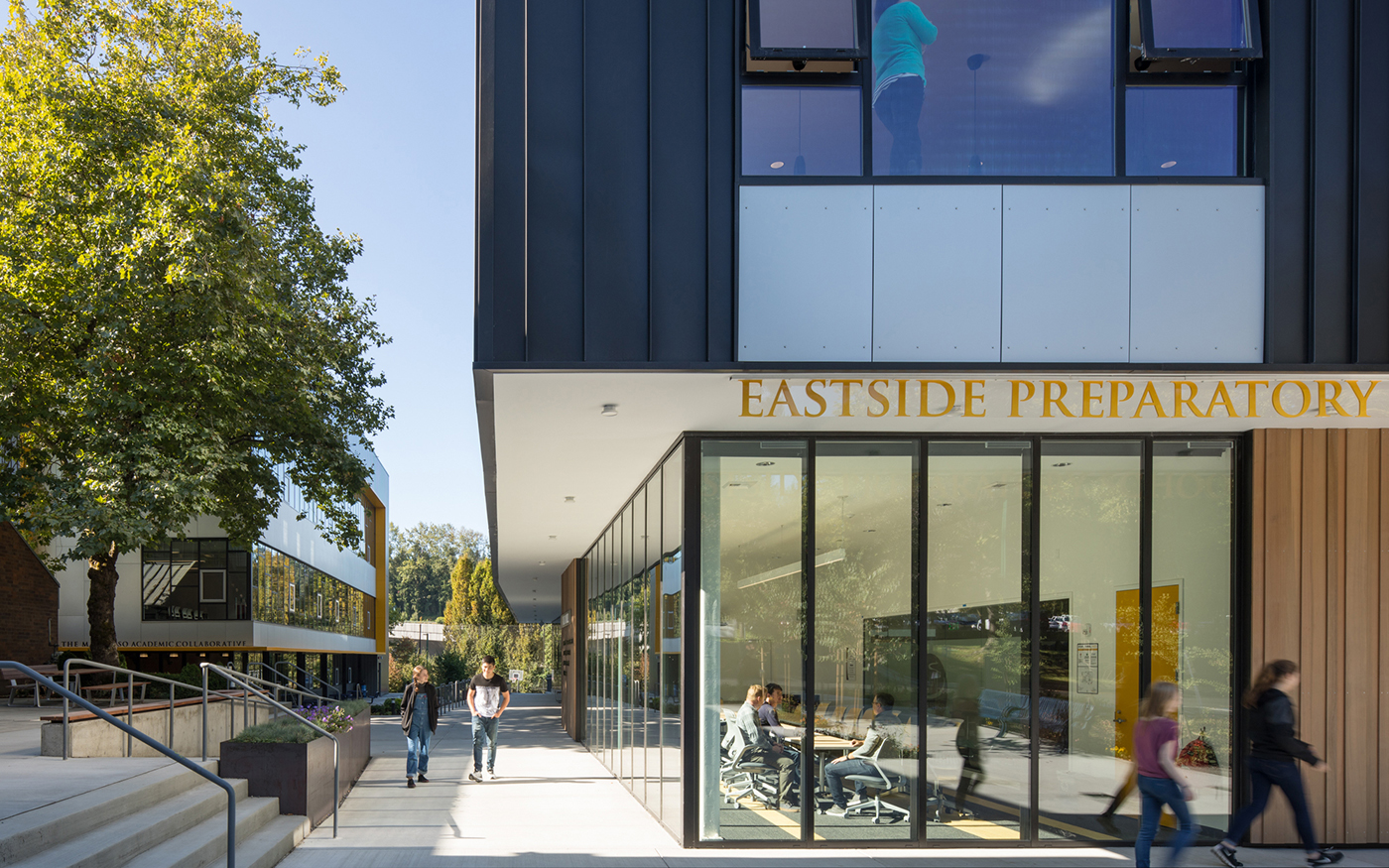
When Eastside Prep acquired its first buildings, the site hardly resembled a campus. It was a typical suburban office park: small two-story buildings filled with dentist offices and accounting firms, surrounded by parking lots with no pedestrian flow between them. Inside, the spaces were dark and generic, constrained by low ceilings and minimal natural light.
There were also regulatory challenges. The property was organized as a planned unit development, which meant that each new intervention had to work within strict building footprints. The question became: how do you transform these modest structures into a cohesive, walkable and inspiring environment for education?
DESIGNING FOR LEARNING, CONNECTION AND BELONGING
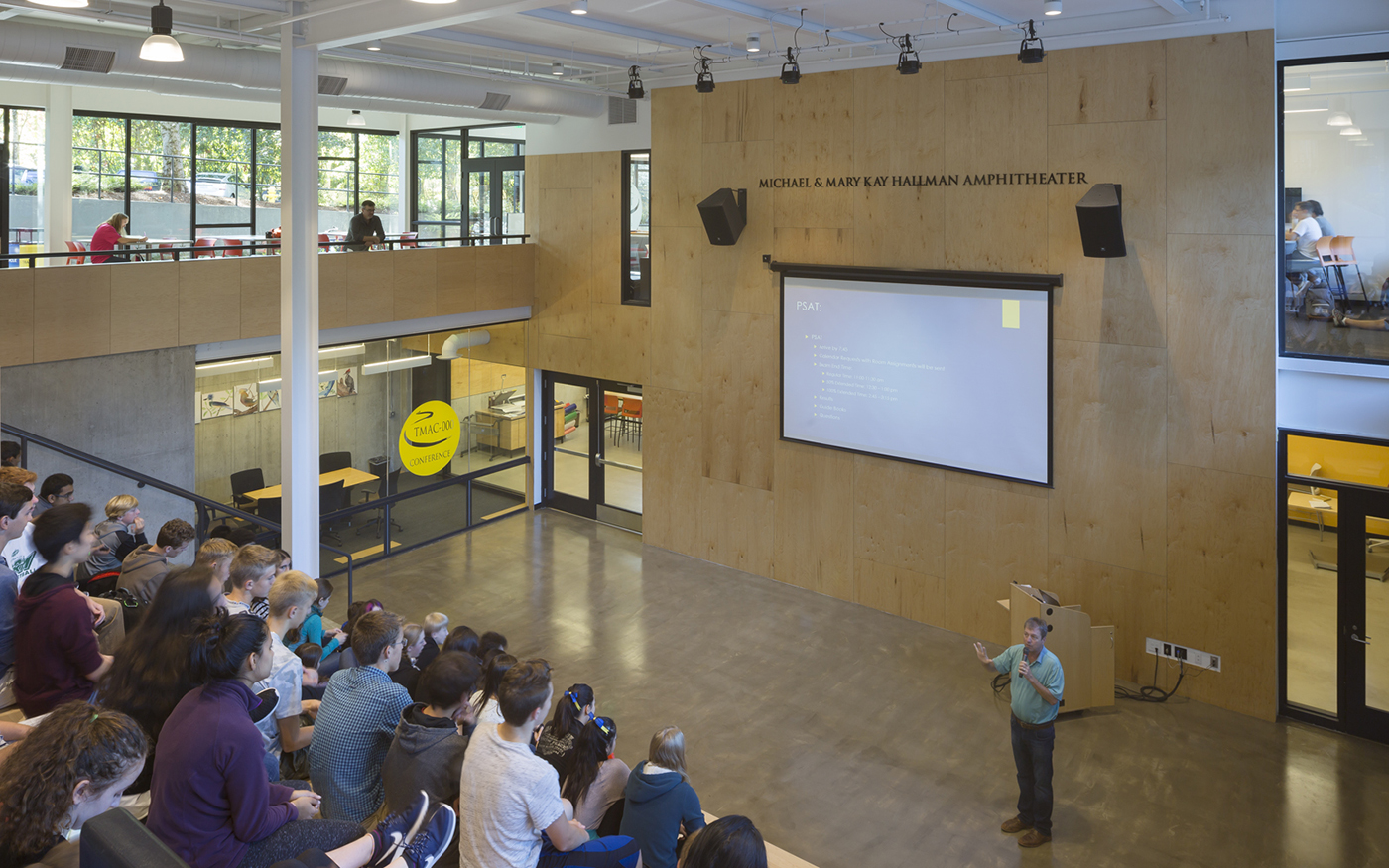
The vision took shape in 2015 with the Macaluso Academic Collaborative (TMAC). At 20,000 square feet, TMAC introduced science labs, digital fabrication spaces, classrooms, an amphitheater, and a 10,000-square-foot gym. It was the school’s first purpose-built academic building, designed to replace generic office interiors with spaces that celebrated daylight, transparency, and collaboration. TMAC established a design language for the future campus: openness, flexibility, and community at the core.
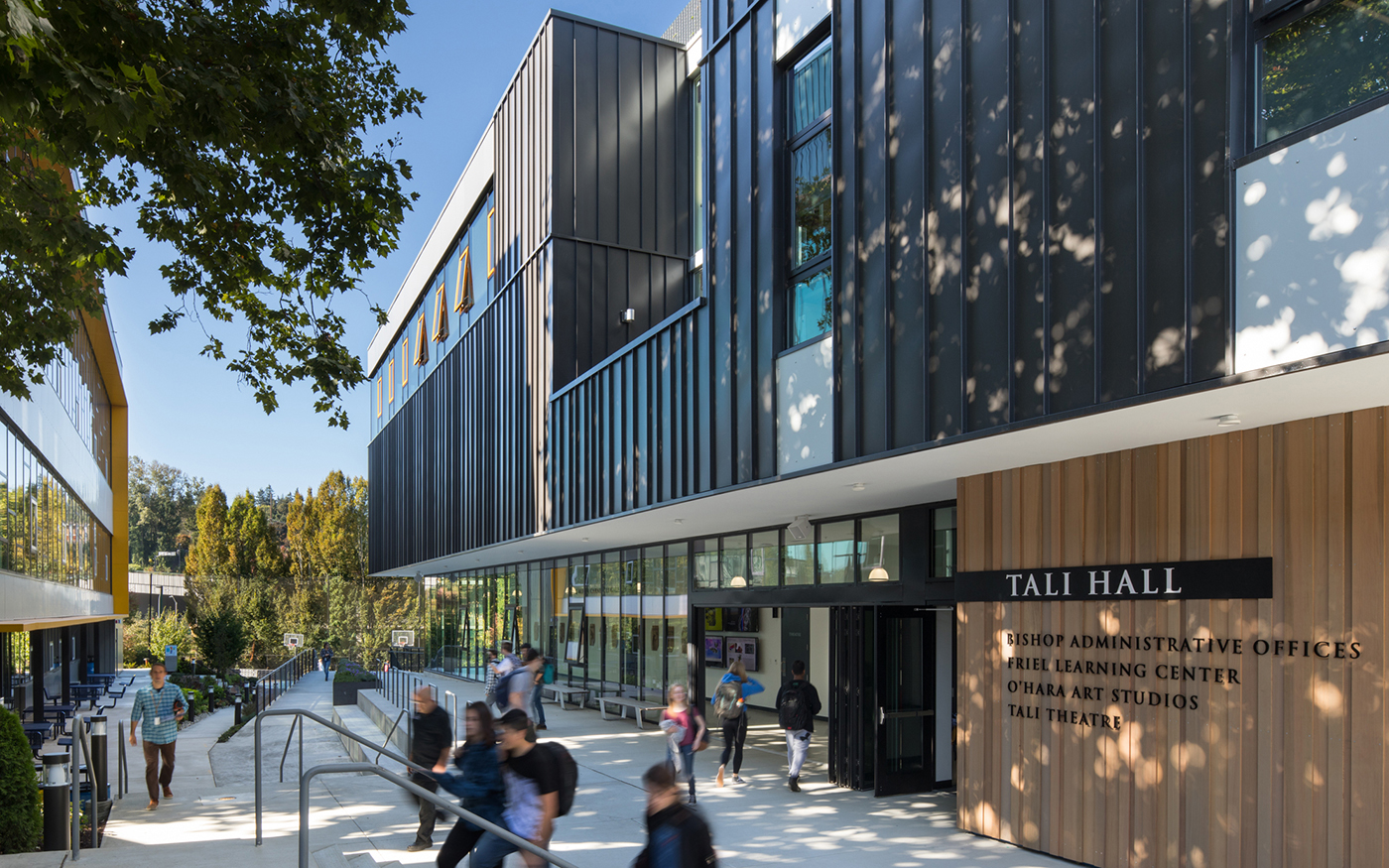
As the school grew, so did the campus. In 2018, Eastside Prep added TALI Hall, a 96,000-square-foot facility named for the school’s motto: Think, Act, Lead, Innovate. The project expanded learning and performing arts spaces, and it also added a central plaza. This area addressed a 12-foot grade change across the site, creating a pedestrian-friendly and fully accessible connection. The plaza introduced generous outdoor spaces for gathering and, during the COVID-19 pandemic, became an invaluable place for students to safely eat and socialize outside.
Inside TALI Hall, the theater became both a design challenge and a centerpiece. The school needed a fully functioning black box theater that could seat up to 600 people, a tall order on a tight urban site. Working with faculty, we developed a highly flexible performance space: retractable seating, a mezzanine that could open or close depending on the event, and acoustically sealed glass doors connecting the theater to the atrium.
With top-tier lighting and sound systems, the space supports professional-level productions while also hosting assemblies, science fairs and parent conferences. What could have been a massive, underused facility instead became a dynamic heart of the campus, equally suited to Shakespeare, dance classes, or a community banquet.
Subsequent projects continued to build on this foundation. In 2021, we completed a middle school renovation and addition with high-performance envelopes, natural ventilation, and optimized daylighting. In 2022, the Levinger-Poole Commons dining building renovations transformed an ordinary cafeteria into a vibrant hub where students and faculty gather across grade levels.
Across each project, the guiding principle has been the same: create an interlinked series of communal spaces, large and small, that encourage chance encounters and foster belonging. Whether in the dining hall, the atrium gallery, the outdoor amphitheater, or the informal seating nooks scattered throughout, the campus is designed to maximize the moments in between classes, where unplanned interactions spark community.
ARCHITECTURE REFLECTING SCHOOL VALUES
The architecture does not dictate the identity of Eastside Prep, it reflects and reinforces it. The school’s pedagogy values community, collaboration, and organic interaction between students and faculty. Our role as architects has been to create the conditions for those values to thrive.
We designed a variety of spaces for different learning styles. For students who thrive in bustling environments, there are open commons and “rail car” seating areas on the edges of activity. For those who need fewer distractions, we created enclosed guided study halls and acoustically private “phone booths.” By offering a spectrum of environments, the campus welcomes neurodiverse learners and supports accessibility in all its forms.
Ultimately, the architecture of EPS is found not only in classrooms or labs but in the spaces between them — the thresholds, the courtyards, the plazas, the galleries — where informal connections shape a student’s sense of belonging.
LOOKING AHEAD
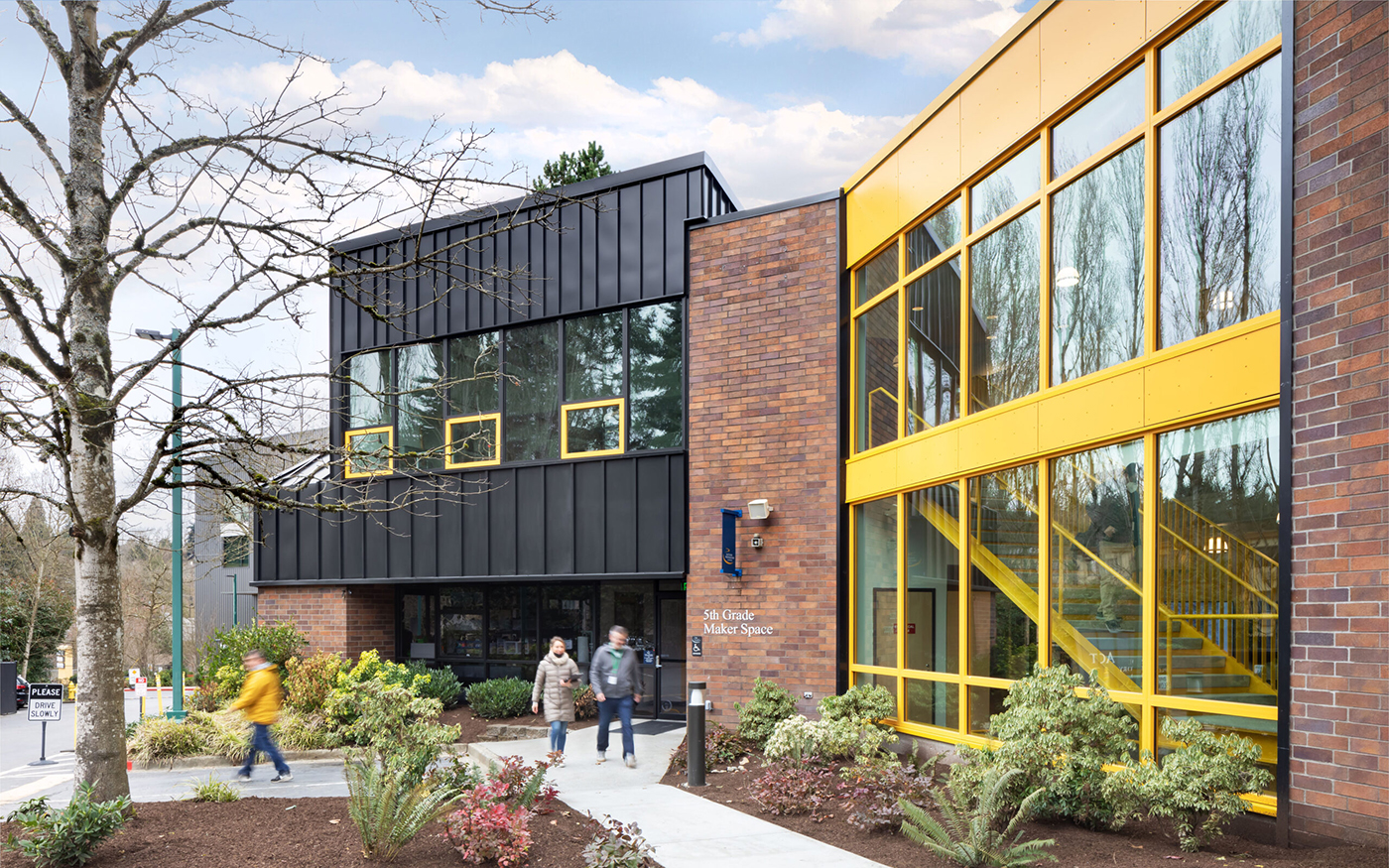
Ten years in, the Eastside Prep campus is an example of how to reclaim and reimagine suburban office parks for community use. The campus makes efficient use of limited urban land while transforming a one-car-dominated site into a pedestrian-focused environment.
Looking forward, EPS continues to acquire adjacent buildings as opportunities arise, always with an eye on how each piece fits into the whole. Growth for growth’s sake is not the goal. The goal is to sustain the school’s mission and adapt the campus to meet the evolving needs of students over the next 50 years.
What began as an unlikely site has become a thriving campus, and the collaboration between Eastside Prep and PUBLIC47 continues to show how architecture can elevate not just a place, but the values of a community.
Jeff Boone is a partner and co-founder of Seattle-based architecture firm PUBLIC47.
Other Stories:


