 |
Subscribe / Renew |
 |
Contact Us |
| ► Subscribe to our Free Weekly Newsletter | |

Construction Bids
| home | Welcome, sign in or click here to subscribe. | login |


 print print  email to a friend email to a friend  reprints add to mydjc reprints add to mydjc |  |
 |
September 25, 2025

Hampden
|
The University Cooperative School (UCoop) is a progressive learning environment serving pre-K through 5th-grade students in Seattle’s North University District. The school inhabits the historic Maxwell Auto Garage, a 100-year-old landmark that embodies the character of the surrounding neighborhood. The adaptive reuse of the building brings pride to the school in both preserving history and shaping its future.
Over the past decade, a series of carefully planned renovations was coordinated with a whole-building seismic retrofit. This allowed the school to modernize the facility, expand programs, and safeguard the building for future generations. Sensitivity to the school calendar was paramount—maintaining the school’s operations while coordinating the construction with minimal disruption to student life.
Originally built in 1925, the Maxwell Building has undergone a complete transformation from a commercial auto garage into a vibrant learning community. To honor its historic character, the design approach demonstrated sensitivity to the building’s distinctive features — celebrating its industrial character, steel sash windows, and structural framework — while upgrading it to meet current codes and the needs of 21st-century education.
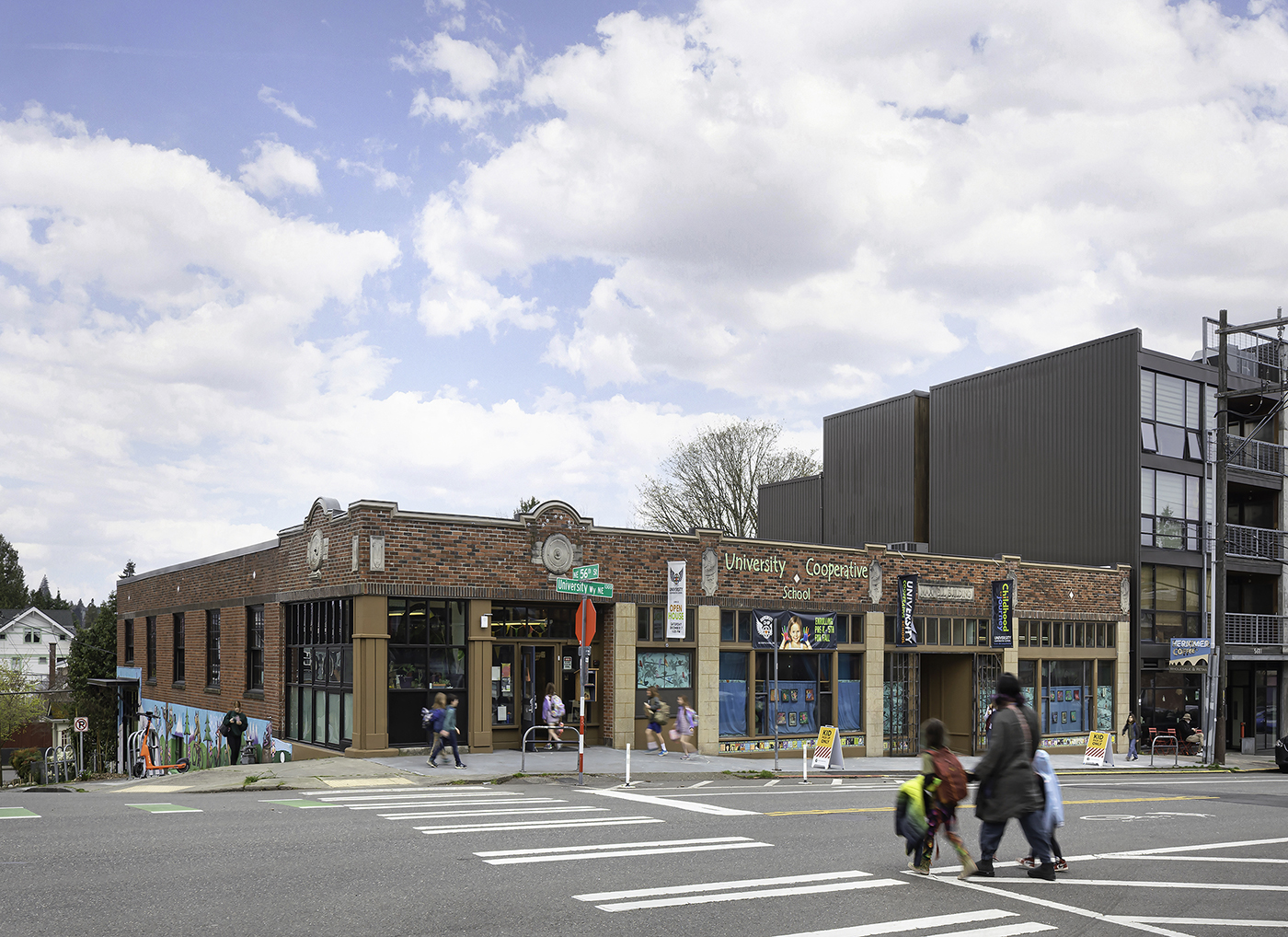
Original brick, a beloved feature, was preserved to celebrate the building’s industrial past. The layout and circulation align with the school’s progressive curriculum, creating spaces that encourage movement, collaboration and creative exploration. The newly upgraded Pre-K entrance brings an additional entry for the school’s youngest children, and the incorporation of an exterior mural brings a sense of joy and energy on arrival.
A hallmark of the school’s ongoing renovation effort is its leadership in resilience and seismic upgrades. In 2025, UCoop became the first school in Seattle to complete a full seismic retrofit and be officially removed from the city of Seattle’s Unreinforced Masonry (URM) list. Using the city’s URM ordinance as a framework, the team developed a phased plan to complete the work in tandem with the teaching calendar, budget cycles and other planned improvements.
The seismic upgrades were coordinated with each phase of the renovation, including a whole-building roof replacement, ensuring the efficient use of resources and minimal disruption to school operations. The retrofit was coordinated as a whole, but executed phase-by-phase with a corresponding renovation. This reduced redundant work and kept the team moving forward in digestible steps towards the larger goal.
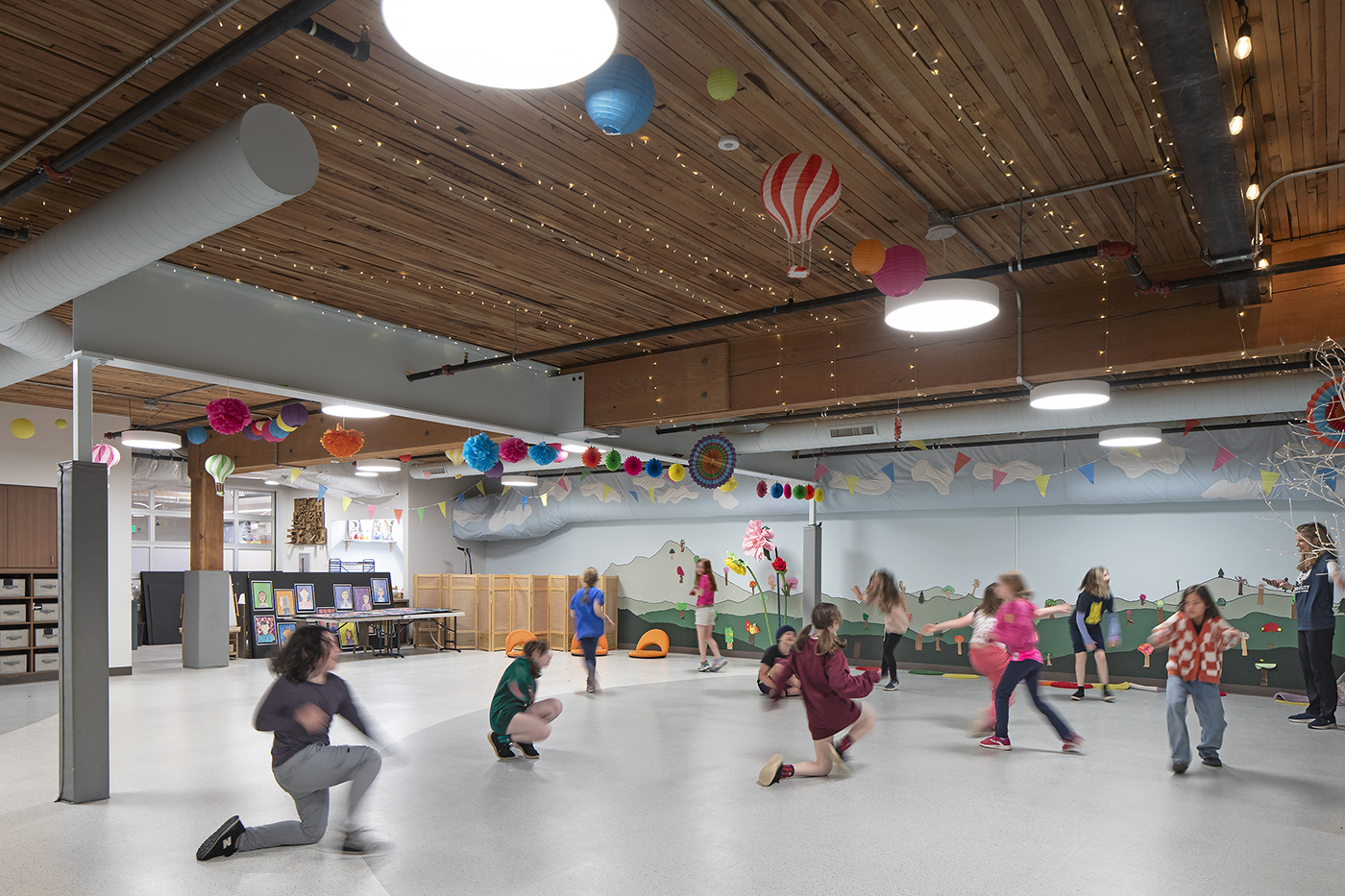
In 2013, the lower level was expanded to include a multipurpose gym, music studio and additional restrooms — spaces that are actively used for performances, community gatherings, and creative activities. The gym accommodates games, music, and larger theater productions, all reinforcing school values of creativity and skills building. An open and bright stairway connects the two levels and offers an informal gathering space on the large risers.
In a 2018 renovation, a dedicated second-grade classroom was created, the first-grade classroom was enlarged, and the commons area was renovated by reorganizing existing spaces. With the North walls of the building exposed, new shearwalls were added to reinforce the hollow clay party wall.
The most recent renovations were carried out in two phases over consecutive summers. In 2023, the art room was relocated to the lower level with reworked storage, counters, a kiln room, and workspace tailored to students and staff. The garage door of the art room opens to flex space, which, in turn, is an eddy space on the edge of the large, multipurpose commons.
The design balances creativity and community by providing flexible spaces for individual focus, small group activities, and full-school gatherings. Thoughtfully placed eddy spaces along the edges of larger areas support focused learning or collaboration while maintaining connection to the broader school environment.
The renovation of the final portion of the lower level marked the expansion of UCoop’s Early Learning Center, further extending its pre-K offerings. The phase also added a maker space, counseling offices, additional staff space, and student and adult restrooms. The robust gang-nailed floor structure, once supporting cars, was sandblasted and exposed as a striking architectural element.
The following summer of 2024, renovations of the main floor were finished, which included a new science classroom, which took over the old art room, and a renovated language arts classroom. This phase also completed the final details of the seismic work, bringing the entire building up to the city’s current structural standards.
Sustainability has been integral to the renovations and was a large part of the decision to undertake an adaptive reuse rather than new construction. The building incorporates daylighting strategies, low-VOC paints and finishes, Declare Red List-Free rubber flooring, and improved indoor air quality through energy recovery ventilators.
In response to the Covid-19 pandemic, additional environmental improvements were implemented in 2021, including window replacements with operable glazing to improve natural ventilation and complement the historic steel fenestration. Rooftop HVAC systems were upgraded with UV-filtration technology, further improving indoor air quality.
The collaborative work on UCoop’s Maxwell Building is a model of how thoughtful, phased renovation can preserve historic character while delivering safety and modern educational performance. Through adaptive reuse, seismic upgrades, and sustainable design, the school has created a durable, healthy, and inspiring environment for students and teachers alike, ensuring this neighborhood landmark continues to serve the community for decades to come.
Since co-founding CAST architecture in 1999, Stefan Hampden has led community and residential projects across the western states and is a WAsafe Building Safety Evaluator.
Other Stories:


