 |
Subscribe / Renew |
 |
Contact Us |
| ► Subscribe to our Free Weekly Newsletter | |

Construction Bids
| home | Welcome, sign in or click here to subscribe. | login |


 print  email to a friend  reprints add to mydjc |  |
 |
October 22, 2026

Martin
|
Schools are undoubtedly some of the most important buildings in any community. So, when citizens vote to invest in a new one, those of us that are entrusted with their construction have a responsibility to deliver the very best school possible.
Most school districts don’t have acres of empty land sitting around ready to be developed into a new school, which means most of the time, we’re building alongside an existing school or, in some cases, within the existing footprint.
Whatever the conditions, we have to make it work. Students and teachers need classrooms. Parents and buses need access to drop-off and pick-up. Athletic schedules, music and arts performances and after-school programs don’t stop for construction, either.
Those priorities shape how Skanska approaches K-12 construction. Before visible construction begins, we work to understand both the building and how the school functions every day. Not only does this planning help us build the best school, but it also enables maximum budget efficiency.
Here are five principles key to how we approach school construction:
1. Plan around learning
Most school districts don’t have an empty “swing school” available to temporarily house several hundred (or more) students while their existing school is remodeled or rebuilt. Renting portable classrooms adds cost and provides no lasting value once the new school opens.
Our approach is to first study whether construction can proceed around an operating campus. One way involves building the new school on an available portion of the property such as athletic fields or parking areas, and moving in over summer break.
We then remove the old building and turn that space into new parking areas and athletic fields. Tighter sites often require more complex phasing, where sections of a building are completed and turned over while students occupy other areas.
Renton High School is a good example of this, where work is underway now. Skanska has started construction of a new three-story, 350,000-square-foot high school on the 33.3-acre site occupied by the existing school.
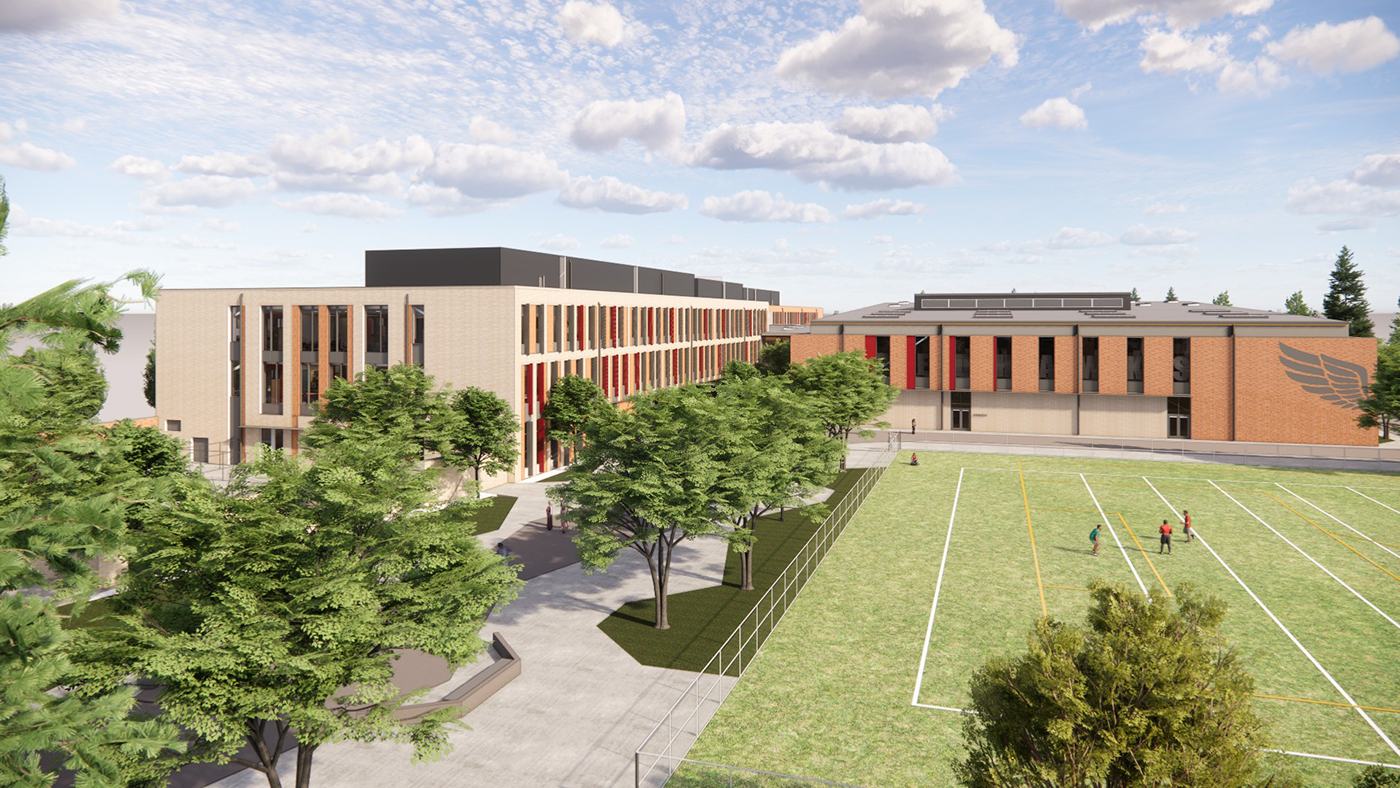
The current high school will remain occupied during construction, requiring multiple phases coordinated around school operations. Most of the existing high school will be demolished later, while the original 1930s portion and IKEA Performing Arts Center will remain.
Successful phasing starts with understanding the school and all of its operations. We are working hand-in-hand with school administrators and district leaders to understand needs and expectations, and to learn bell schedules, bus and parent access points and drop-off patterns, testing periods, athletic schedules, performances, food service delivery schedules, and anything else that may impact our ability to complete our work or hinder someone else’s ability to access the school when they need to.
The last thing we want is to schedule a construction delivery when dozens of buses and hundreds of parents are arriving for pickup, or plan an activity that causes vibrations or extra noise for Finals week. Our teams understand that preserving the learning environment is just as important as building the new school.
2. Keep students moving safely
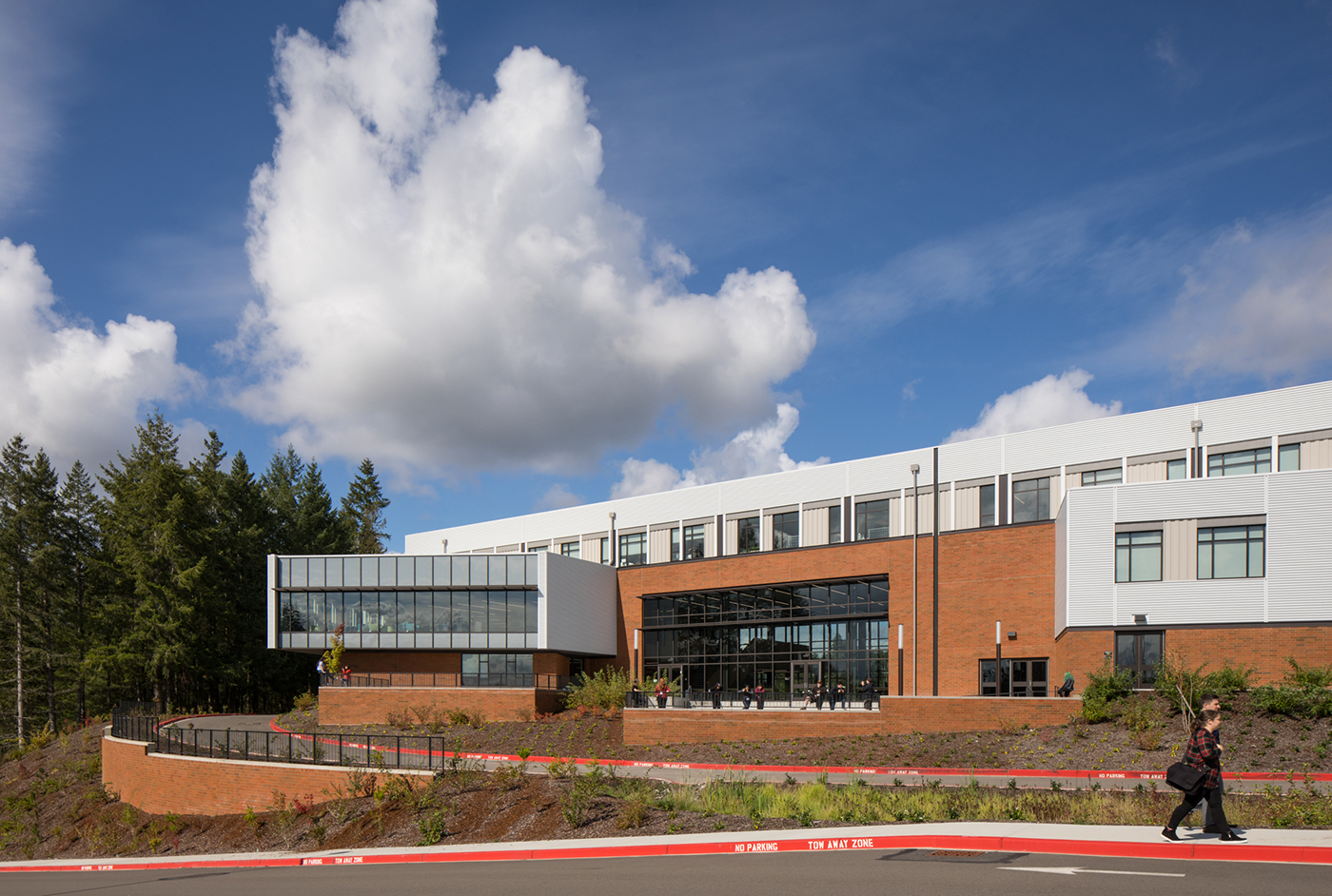
Maintaining school operations during construction sometimes requires coordination down to individual class periods. At Central Kitsap High School and Middle School, Skanska built a combined facility between the existing middle and high schools while both campuses remained active.
During one phase, construction affected the path middle school students used to get to PE class. Rather than design some complicated and costly bridge or long work-around path, the team simply stopped work on that part of the project at designated times and used supervision and spotters so students could safely pass through the controlled area, attend class and return to the main campus.
Central Kitsap’s larger phasing plan presented another challenge. We needed to complete and turn over portions of the new building for students to begin using while construction was ongoing in other parts of the same building. This required a complex level of coordination between school officials, our team and local authorities so that operation and inspection of mechanical and fire-life-safety systems supporting occupied areas could be managed while other areas of the building remained under construction.
Simply put, we can’t treat education as something happening next door to our construction projects. Instead, school operations must become part of the construction schedule.
3. Investigate early
There isn’t flexibility in the academic calendar when it comes to the start of school. The first day is the first day, and if the school isn’t ready, there’s nowhere for the kids to go, so meeting our occupancy dates is iron clad.
That also means missing a critical summer window might mean waiting months for another opportunity to perform disruptive work while students and teachers are away. Early investigation of conditions, utilities and underground infrastructure helps reduce that risk.
At Browns Point Elementary School in Tacoma, Skanska built a new school adjacent to the existing one. That allowed students to remain in place, but it also required careful planning to ensure that construction did not disrupt power, water or storm systems at the existing school while bringing those same systems to the new one.
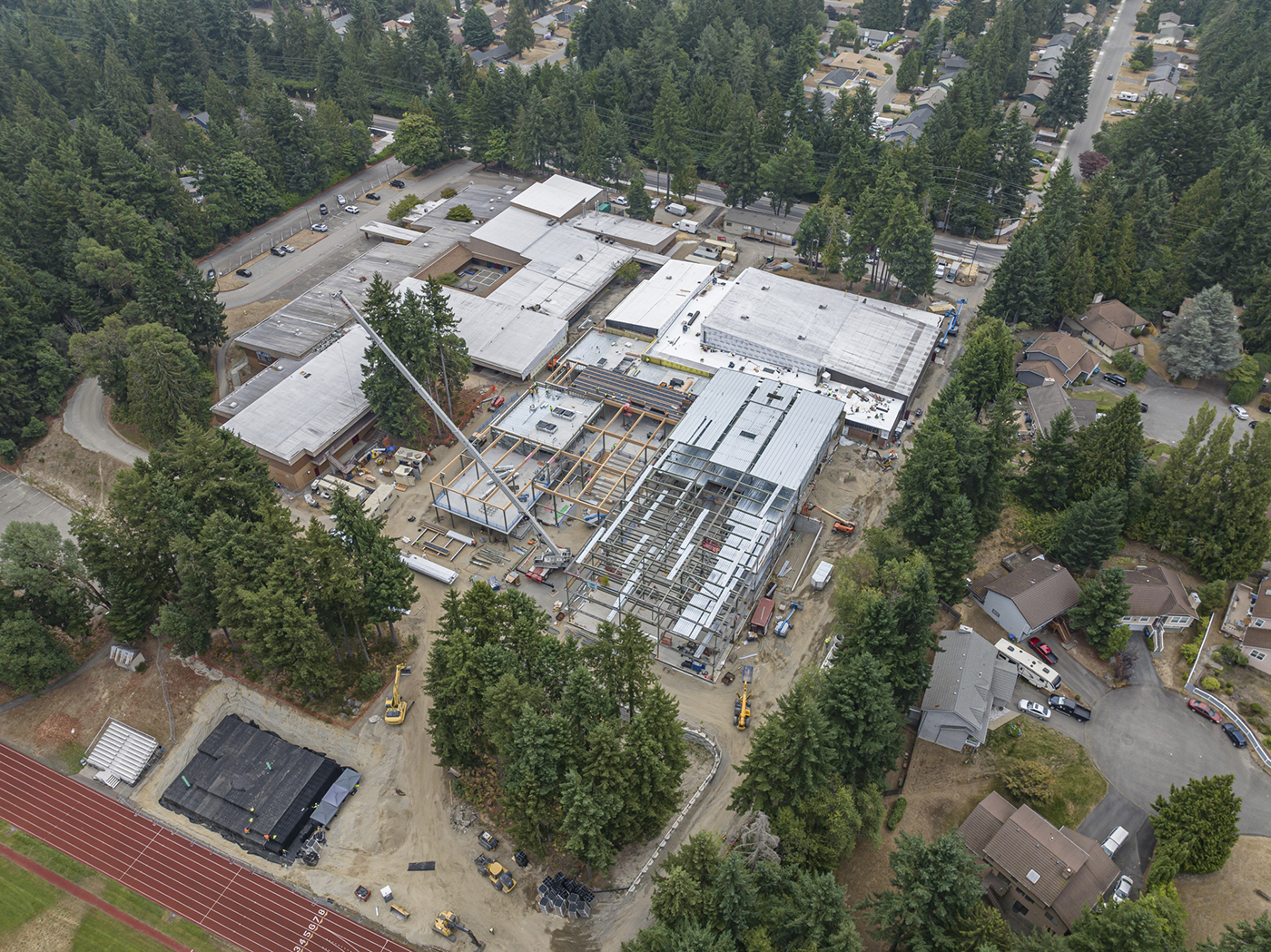
Similar challenges existed at Fairview Middle School. We needed to install an upgraded fire alarm system while keeping the existing system operational since school was in session, all while coordinating around school activities.
Our work at Sumner High School, which is just beginning, shows how phasing and proper planning supports a long-term campus transformation. Skanska recently began Phase II of the school’s multi-year, three-phase expansion.
The work includes construction of a three-story, 103,000-square-foot building directly adjacent to and connected with the existing high school. Scheduled for completion in fall 2028, Phase II will provide approximately 50 classrooms plus spaces for special education, robotics, aerospace manufacturing, CAD and digital design, culinary arts, early learning and childcare.
The sequence of how all this comes together is critical. Phase I already delivered 18 classrooms, a library, kitchen, technology upgrades and a 12,000-square-foot commons and cafeteria. Phase II adds classroom capacity needed as the broader redevelopment moves forward, and portions of the existing high school are removed and replaced.
Phase III will include a performing arts center, gym, swimming pool, music rooms and athletic fields. The overall sequence is expected to stretch across several years because students will remain on campus throughout the transformation.
4. Focus resources on permanent solutions
Beyond its impact on people and the learning environment, phasing is also a financial decision. Every dollar spent on temporary classrooms, temporary utilities, or an inefficient sequencing of construction activity is a dollar that’s unavailable for the permanent school.
To put those dollars in perspective, Renton School District voters approved a $676 million construction and improvement bond in 2022, which included funding for the new Renton High School. Sumner-Bonney Lake School District voters approved a $732 million bond measure in 2024 to fund capacity, improvement and safety projects across the district, including work at both Sumner and Bonney Lake High Schools.
Our responsibility is to direct as much of those public dollars as possible towards permanent improvements.
That makes preconstruction especially important. By working with school districts and our design partners to study site configurations and school operations schedules, we can develop thoughtful phasing plans and schedules before construction begins. Our goal is to develop an executable plan that limits temporary activity wherever practical.
5. Invest in the local community
It’s important to look for opportunities for local, small and diverse businesses in the communities where schools are being built. For GC/CM projects, one approach is to structure bid packages in smaller chunks so qualified smaller firms have a realistic opportunity to compete.
Before procurement begins, we’ve also used project-focused versions of our Construction Management Building Blocks program to help local companies understand topics like contracting, insurance, scopes of work, and public bidding requirements. For the Central Kitsap project, we held a two-week bidder-readiness workshop for local business. Every participating company submitted a bid, and two firms new to GC/CM work and to working with Skanska won contracts.
These efforts show the broader responsibility that exists with school construction. Communities invest in schools because they believe in the long-term success of their students. Our job is to help school districts translate that investment into high performing facilities while creating lasting value for the broader community.
School construction ultimately involves two commitments. We need to deliver the facilities communities voted to fund, while protecting the learning experience taking place during construction.
The new school matters. And so does every school day before the new doors open.
Albert Martin is vice president/account manager for Skanska USA Building, where he oversees Skanska’s work in the K-12 market.
Other Stories:


