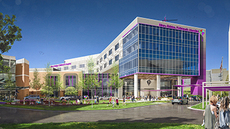
Telling a story through pattern:
West Main's approach to facade design
The use of digital printing on glass offers several advantages over traditional silkscreen methods, especially in projects where custom patterns are integral to the design narrative.
By PETER KRECH
Graphite Design Group
Designing with cultural integrity
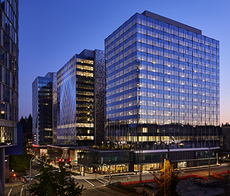
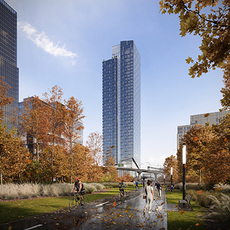
The Northern Quest River Tower team collaborated with the Kalispel Tribe to reference traditional gathering places in its design, proudly expressing a heritage of hospitality as inspiration for a contemporary place to gather and welcome visitors.
By DAN SNOOK
Integrus
The Bend: A deeply atypical development
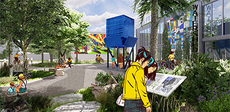
Led by artists, the nonprofit is actively seeking to work alongside those who have shaped Georgetown to recast what a development can do to positively impact a neighborhood.
By ERIC ALOZIE and LORINE MOELLENTINE
Special to the Journal
Restoring Jim Creek: A bold approach to salmonid habitat recovery and landowner collaboration
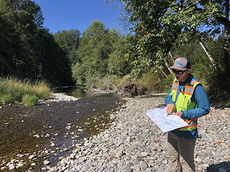
Willing landowners enabled designers to prioritize ecological science over logistical constraints in a large-scale intervention to restore hydraulic diversity and improve habitat resilience.
By MATT TIEDEMANN and LISA TARIO
Special to the Journal
Desks to dwellings:
Tackling office-to-residential conversions
Despite potential cost, design, and regulation constraints, adaptive reuse projects can pencil out when designers understand which challenges to expect.
By BRYAN ZAGERS
Coughlin Porter Lundeen
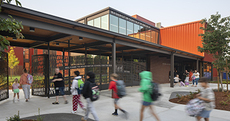
Leveraging DeafSpace principles and mass timber to advance school design
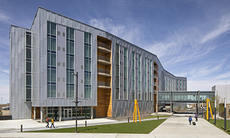
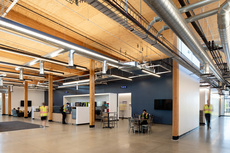
Tuned for the needs of Deaf and hard-of-hearing youth, design strategies at Washington School for the Deaf could benefit any learning environment.
By JOANN HINDMARSH WILCOX
Mithun
Transforming today's vacant office buildings into tomorrow's educational facilities
Collaborative visioning, creative thinking and available space have created new possibilities for private schools to consider sustainable alternative locations for future growth.
By ANGELA WHITE
Holmberg Mechanical
Five in 2025: Design trends transforming our cities
Design Forecast is Gensler's annual exploration of the most relevant issues facing the design and architecture industry.
By RYAN HAINES
Gensler Seattle
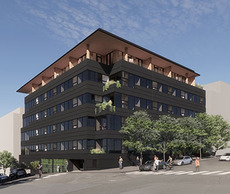
Unlocking housing in Bellevue
How architects and developers can capitalize on the new Eastside transit infrastructure, including new design opportunities brought forth by future upzoning.
By SKYE BREDBERG and JOHN STOUT
Weber Thompson
From obligation to destination:
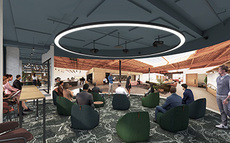
Rethinking workplace design
Mindful selection of programs and amenities creates high-value interactions and experiences for employees.
By JOSLYN BALZARINI and CHRISTA JANSEN
HKS
The timber advantage: The future is built with wood
Using mass timber streamlines project timelines, reduces soft costs for time on-site, enhances durability and aesthetics, contributes to healthier environments, supports regional economies and reduces the industry's significant carbon footprint.
By MICHAEL GREAT
Ankrom Moisan
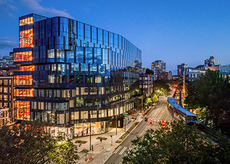
The Gateway Building: A new urban landmark
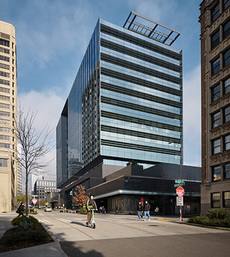
The project serves as a gateway between campus and community and exemplifies how architecture can work in harmony with major infrastructure.
By ERIK MOTT and AMRIT RANDHAWA
Perkins&Will
Engineering healing: Collaborative success at Mary Bridge Children's Hospital
Designing healthcare facilities for children requires a different approach, one that accounts for patient demographics and developmental needs, visit frequency and typical length of stay, and seeing the space through the eyes of a child.
By DOUGLAS LACY
WSP USA
2025 A&E Design Perspectives team
Section editor: Shawna Gamache
Section design: Jeffrey Miller
Web design: Lisa Lannigan
Advertising: Matt Brown
|
©2025 Seattle Daily Journal and .
Comments? Questions?
|
|