 |
Subscribe / Renew |
 |
Contact Us |
| ► Subscribe to our Free Weekly Newsletter | |

Construction Bids
| home | Welcome, sign in or click here to subscribe. | login |


 print print  email to a friend email to a friend  reprints add to mydjc reprints add to mydjc |  |
 |
March 27, 2025

Great
|
Our built environment is one of the planet’s biggest polluters, with buildings responsible for roughly 39% of global energy-related carbon emissions, 28% of which are operational and 11% from building materials and construction alone.
While this is certainly not a revelation, the window for meaningful change is closing fast. The need for architecture, design, and construction solutions that don’t just check the sustainability box, but actually move the needle — achieving sustainability goals, enhancing durability, and sustaining economic growth — has never been more pressing. The salve? Mass timber.
Now gaining momentum across the Pacific Northwest with large-scale developments like Portland International Airport’s nine-acre mass timber terminal, the region is emerging as a global leader in sustainable construction innovation. Surrounded by some of the country’s largest timber resources, the Pacific Northwest is well positioned to shift development to mass timber — unlocking a scalable, high-performance solution to not only reach sustainability goals but enhance durability and sustain regional economic growth.
THE CASE FOR MASS TIMBER
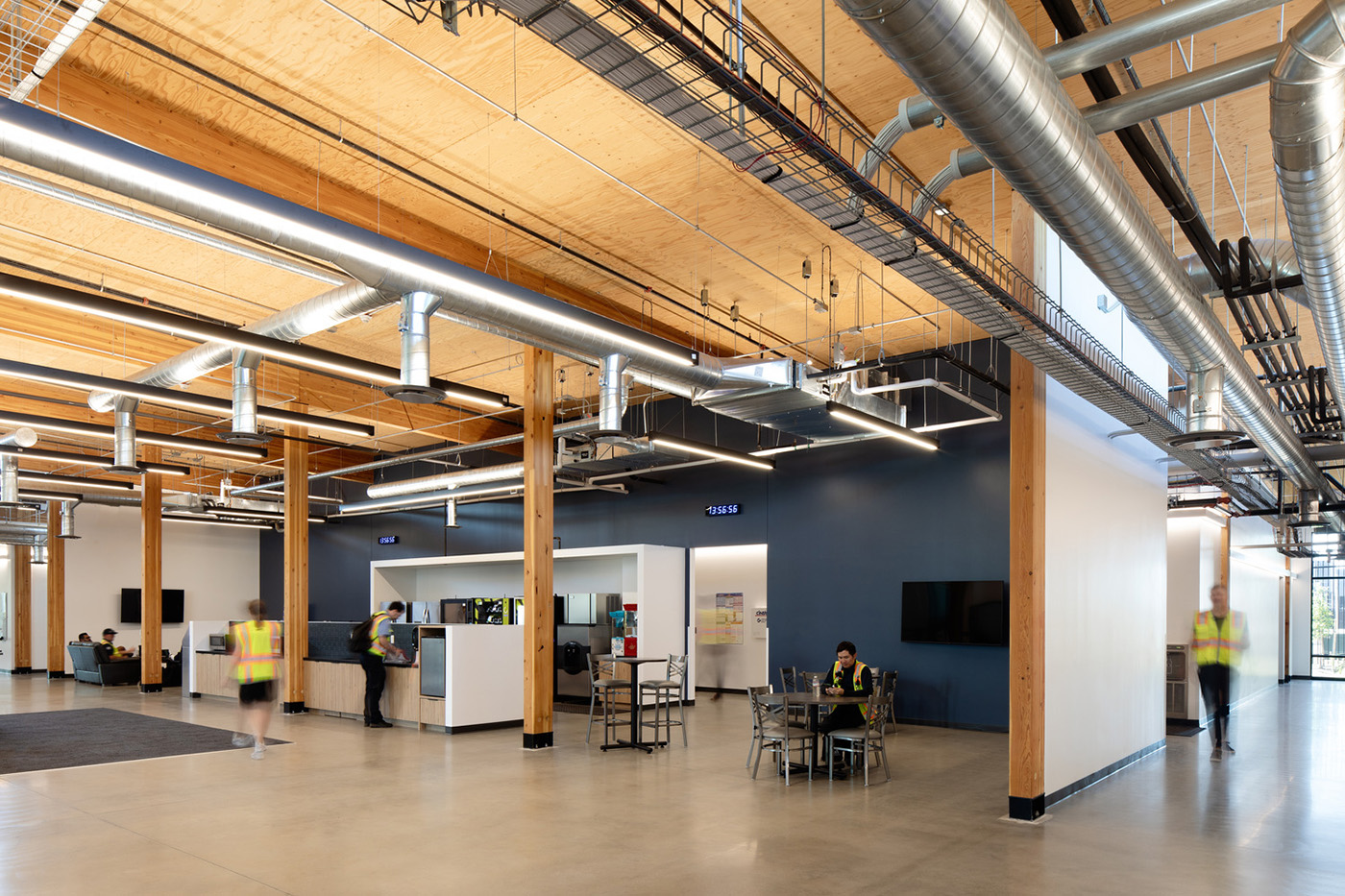
Despite its long history, mass timber — a building material made from multiple layers of wood — has yet to see widespread use due to factors like the high premium on base material costs, perception and restrictive code requirements.
Once a common construction material, mass timber was largely phased out during the 20th century in favor of concrete and steel. Concrete, for example, offers flexibility for cellular layouts; it is, however, notoriously slow to construct, cold to the touch and contributes significantly to atmospheric carbon. As the world grapples with the negative environmental impact of traditional building materials, mass timber is making a comeback, and so are the myriad benefits it possesses.
Mass timber is more than just a sustainability win — it’s an investment in both pre- and post-construction efficiency, resilience and well-being. Its ability to streamline project timelines, reduce soft costs for time on-site, enhance durability and aesthetics, contribute to healthier environments, support regional economies, and aid in reducing the industry’s significant carbon footprint makes it a powerful tool for the future of sustainable construction.
SEQUESTERING CARBON
Mass timber offers significant environmental benefits, notably in its ability to aid in reducing carbon emissions. Wood is the only scalable building material that sequesters carbon, carrying the potential to aid in reducing the building industry’s significant share of carbon emissions production by 14-31%.
Mass timber also requires less energy to produce compared to traditional building materials like steel and concrete. This reduced amount of energy demand aligns with the Living Building Challenge and LEED life cycle analysis criteria. These advantages allow the industry to substantially respond to climate change and its currently massive carbon footprint.
The material also offers an opportunity to improve forest health — it can be produced from thinning, less commercially desirable trees, creating more space for healthy, strong trees to thrive. This further enhances mass timber’s carbon sequestration efforts and supports the long-term vitality of forests.
STRENGTH, COMFORT, AND WELL-BEING
Highly durable and energy efficient, mass timber boasts impressive fire resistance and the ability to withstand extreme temperatures. Unlike traditional lumber, which has a low fire rating, mass timber’s massive panels char on the outside during a fire, forming a protective outer layer that helps retain the building’s structural integrity.
Mass timber’s multi-layered panels provide strength without added weight, allowing it to be constructed on confined sites. Furthermore, the material’s low thermal conductivity offers warmth and comfort not found in concrete or steel, making it a unique and durable choice for modern construction. Combined, these characteristics enhance safety and durability while also contributing to occupant well-being, creating spaces that feel secure, stable, and naturally comfortable.
Mass timber’s advantages go beyond performance and resilience, however. While its structural benefits are undeniable, the material also enhances the experience of a space. The natural warmth and elegance of wood evoke a sense of comfort and connection to nature, aligning with the growing demand for biophilic spaces. The material enhances the visual environment while contributing to a healthier atmosphere, improving the well-being of those who inhabit and frequent these spaces.
THE FINANCIAL UPSIDE
Although the base material cost of wood is currently high, savings from shorter project timelines, reduced onsite labor, lower import duties, and other operational efficiencies can offset the initial premium. Additionally, mass timber performs better thermally, further enhancing its long-term cost-effectiveness.
Often sourced and produced locally, the transportation and storage costs of mass timber are also minimized. The prefabricated nature of the material allows for quicker assembly, yielding less soft costs related to project management, street closures, and material storage. This streamlined construction process, in turn, allows for earlier occupancy and a quicker return on investment.
Shifting to mass timber development also carries the potential to boost rural economies by generating demand for sustainable forestry. Supporting local wood producers and creating jobs in these communities helps stimulate economic growth and balance wealth distribution between urban and rural cities and towns in timber country, encouraging a more sustainable and equitable approach to development.
This combination of cost savings, improved efficiency, and economic empowerment is an attractive incentive to developers, architects, and communities seeking to balance financial viability with sustainability goals.
Mass timber offers an impactful, multi-faceted solution to the urgent challenges of sustainable development, and a shift to mass timber can address the growing demand for more environmentally responsible building practices.
From significantly reducing the industry’s carbon emissions to promoting healthier environments and fostering economic growth within communities, it supports a more sustainable construction process and offers long-term benefits that surpass traditional building materials and approaches. It should be the baseline assumption for every new development, creating a lasting positive impact on the future of our planet, our buildings and the well-being of those who inhabit them.
Michael Great, design director of architecture at Ankrom Moisan, has over 20 years of design experience spanning housing, senior housing, office and healthcare.
Other Stories:


