|
Subscribe / Renew |
 |
Contact Us |
| ► Subscribe to our Free Weekly Newsletter | |

Construction Bids
| home | Welcome, sign in or click here to subscribe. | login |


 print print  email to a friend email to a friend  reprints add to mydjc reprints add to mydjc |  |
 |
March 27, 2025

Mott
|

Randhawa
|
Nestled above one of Seattle’s busiest light rail stations, the Gateway Building (formerly called the University District Station Building) is more than just an office tower — it is a carefully orchestrated convergence of transit, architecture and urban vitality. Rising 13 stories above Brooklyn Avenue, the 266,000-square-foot building connects with the station below, creating both a gateway to the University of Washington and a cornerstone of the district’s evolving identity.
COMPLEX COORDINATION OVER AN ACTIVE STATION
Building over an active light rail station presents a unique set of challenges. The structural design, led by Magnusson Klemencic Associates (MKA), had to account for existing underground infrastructure while ensuring the tower’s loads imposed on the existing substructure were within the parameters under which the station was designed. Perkins&Will worked closely with Sound Transit to ensure integration where the two structures connect, aligning their requirements and minimizing any impact on the station while GLY Construction, the general contractor, expertly sequenced activities to keep pedestrian access open and transit operations running smoothly.
A key innovation was the strategic placement of structural transfer beams within the tower superstructure, which minimized the impact on the station below while maximizing usable space in the tower.
Additionally, construction required precise logistics to accommodate the constraints of a dense urban site. Deliveries were carefully scheduled, and material storage was optimized to ensure minimal disruption to transit riders and nearby businesses. This level of coordination underscores the project’s technical complexity, and the collaborative effort needed to execute it successfully.
A GATEWAY TO CAMPUS AND COMMUNITY

Located along Brooklyn Avenue, the Gateway Building serves as a key entry point to the University of Washington (UW). The design embraces this role, linking with the neighborhood’s evolving greenbelt and enhancing the pedestrian experience. Thoughtful setbacks, active ground-level spaces, and a welcoming streetscape reinforce its role as a gateway, strengthening the connection between the university and the surrounding district.
Beyond its physical presence, the Gateway Building serves as a bridge between academia and industry. As part of UW’s West Campus Innovation District, the building fosters collaboration and economic growth, supporting the district’s transformation into a hub for research, entrepreneurship and urban development.
A defining architectural feature is the aperture on the west facade, a recessed opening that breaks up the building’s massing, introduces a striking visual identity, and frames views to the plaza at UW Tower to create an urban micro-campus. This design move balances aesthetic refinement with functional benefits, creating visual interest while enhancing the building’s connection to its surroundings.
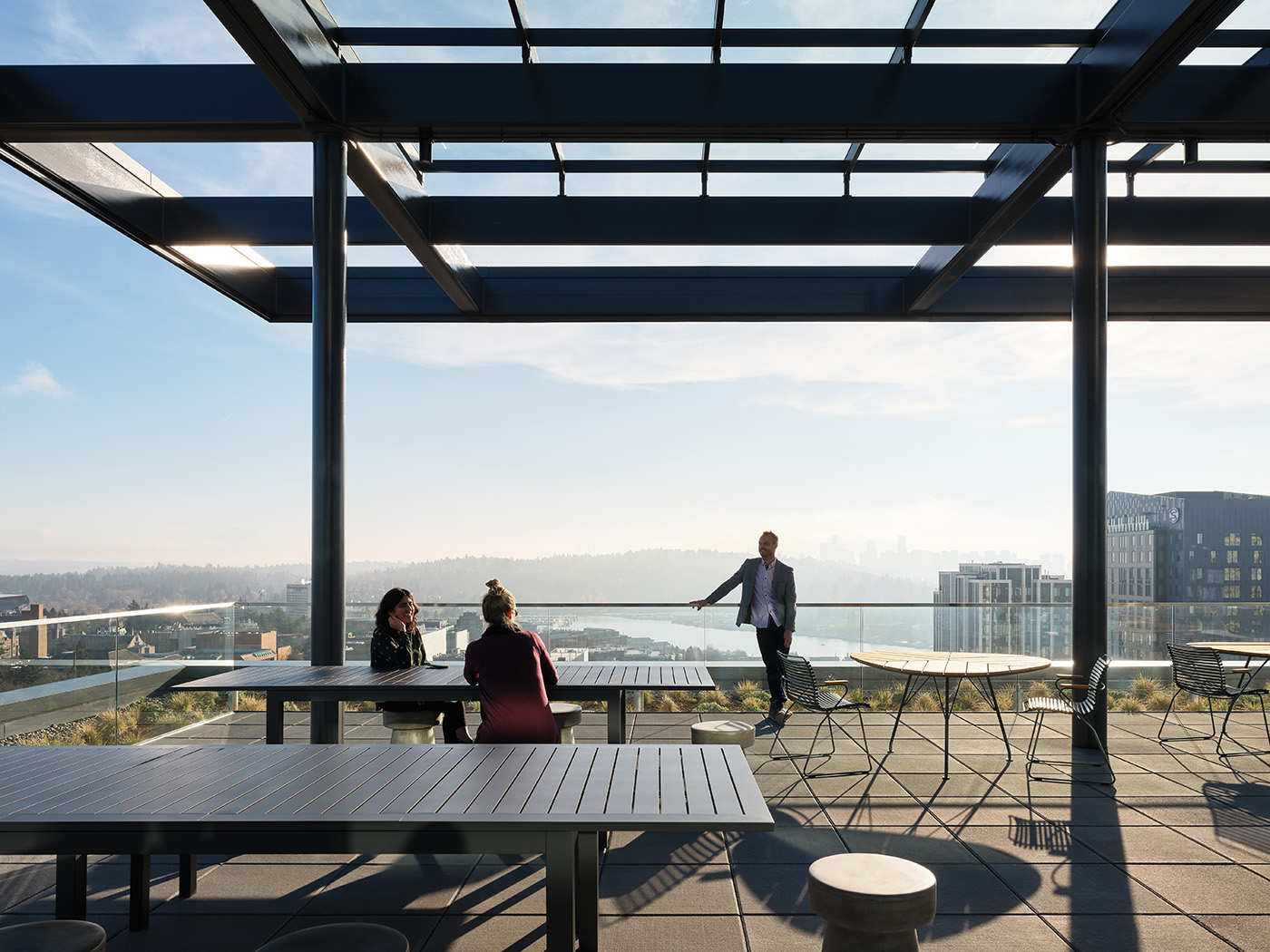
From the south facade and covered rooftop terrace, users have a direct line of vision to Mount Rainier, the North Cascades, and the Seattle skyline. The ground floor further supports the public realm with retail spaces that engage with the streetscape, fostering an active and inviting environment.
SUSTAINABILITY AND PERFORMANCE
The Gateway Building is designed with Seattle’s progressive sustainability goals in mind, incorporating numerous environmentally responsible strategies:
High-performance glazing minimizes solar heat gain while maximizing natural daylight, reducing reliance on artificial lighting thus saving energy on heating, cooling and lighting
Sunshades on the south facade and vertical fins on the west and east elevations mitigate solar exposure, optimizing energy efficiency and occupant comfort.
A green roof equipped with a 60 kW photovoltaic array generates renewable energy and mitigating the urban heat island effect
Enhanced bike storage and shower facilities encourage alternative transportation, reducing reliance on single-occupancy vehicles.
By leveraging its adjacency to a high-capacity transit hub, the building inherently reduces its carbon footprint, supporting a more sustainable urban future. Furthermore, low-impact materials were carefully selected to enhance durability while minimizing embodied carbon and toxicity improving the health and well-being of the occupants
TRANSIT-INTEGRATED URBANISM
As a model for transit-oriented development, the Gateway Building exemplifies how architecture can work in harmony with major infrastructure. With direct light rail access to downtown Seattle, the Eastside, and Sea-Tac Airport, the building enhances urban mobility. The design prioritizes pedestrian flow, with carefully coordinated entry points that align with existing pathways. Strategic design elements transition from train to workplace, contributing to a more connected and efficient urban experience.
ARCHITECTURAL DETAILING & MATERIALITY
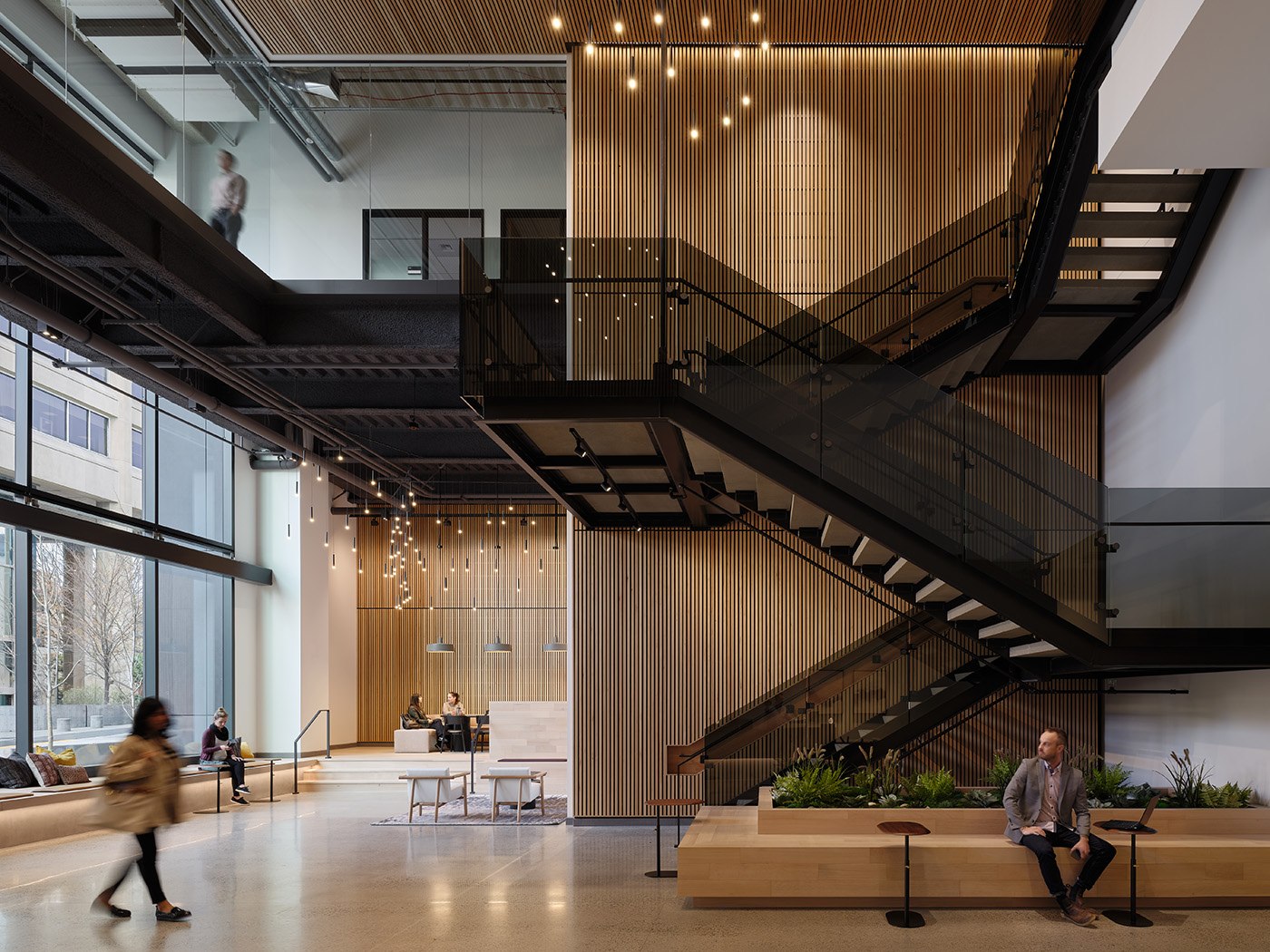
Beyond its functional role, the architecture of the Gateway Building reflects a commitment to refined detailing and high-quality materials. The facade employs a sophisticated interplay of fiber cement panels and glazing, creating a dynamic expression that shifts with the changing light. Metal accents introduce subtle variation in texture and reflectivity, adding depth to the overall composition. Inside, carefully considered material selections and precise detailing contribute to a sense of craftsmanship and refinement throughout the building. Adaptable office spaces prioritize flexibility, ensuring long-term usability for evolving workplace needs.
THE POWER OF COLLABORATION
A project this complex required extensive coordination among multiple stakeholders. Perkins&Will partnered with Lincoln Property Company to ensure the building’s design and programming contribute to the long-term vitality of the area. Sound Transit played a critical role in facilitating integration with the station, while GLY’s urban construction expertise helped navigate logistical challenges. MKAs’ structural solutions were key in making the tower possible within the constraints of an active transit hub.
The success of the Gateway Building demonstrates the power of collaboration in transit-oriented development. The integration of infrastructure, commercial space, and the pedestrian realm sets a strong precedent for future urban projects, offering valuable insights into balancing complex site constraints with ambitious design goals.
A SUSTAINABLE FUTURE
The Gateway Building is a vital piece of Seattle’s evolving transit network, a gateway to UW, and an architectural statement in its own right. Through a synthesis of design innovation, engineering ingenuity and collaborative problem- solving, the Gateway Building stands as a model for how cities can thoughtfully integrate transit, commercial development, and public space.
As urban centers continue to grow, projects like the Gateway Building demonstrate how strategic planning and design can create sustainable, transit-connected communities that enhance the urban experience.
Erik Mott is principal and design director at Perkins&Will. Amrit Randhawa is a Designer II at Perkins&Will, specializing in education, healthcare and sustainable technologies.
Other Stories: