 |
Subscribe / Renew |
 |
Contact Us |
| ► Subscribe to our Free Weekly Newsletter | |

Construction Bids
| home | Welcome, sign in or click here to subscribe. | login |


 print print  email to a friend email to a friend  reprints add to mydjc reprints add to mydjc |  |
 |
March 27, 2025

White
|
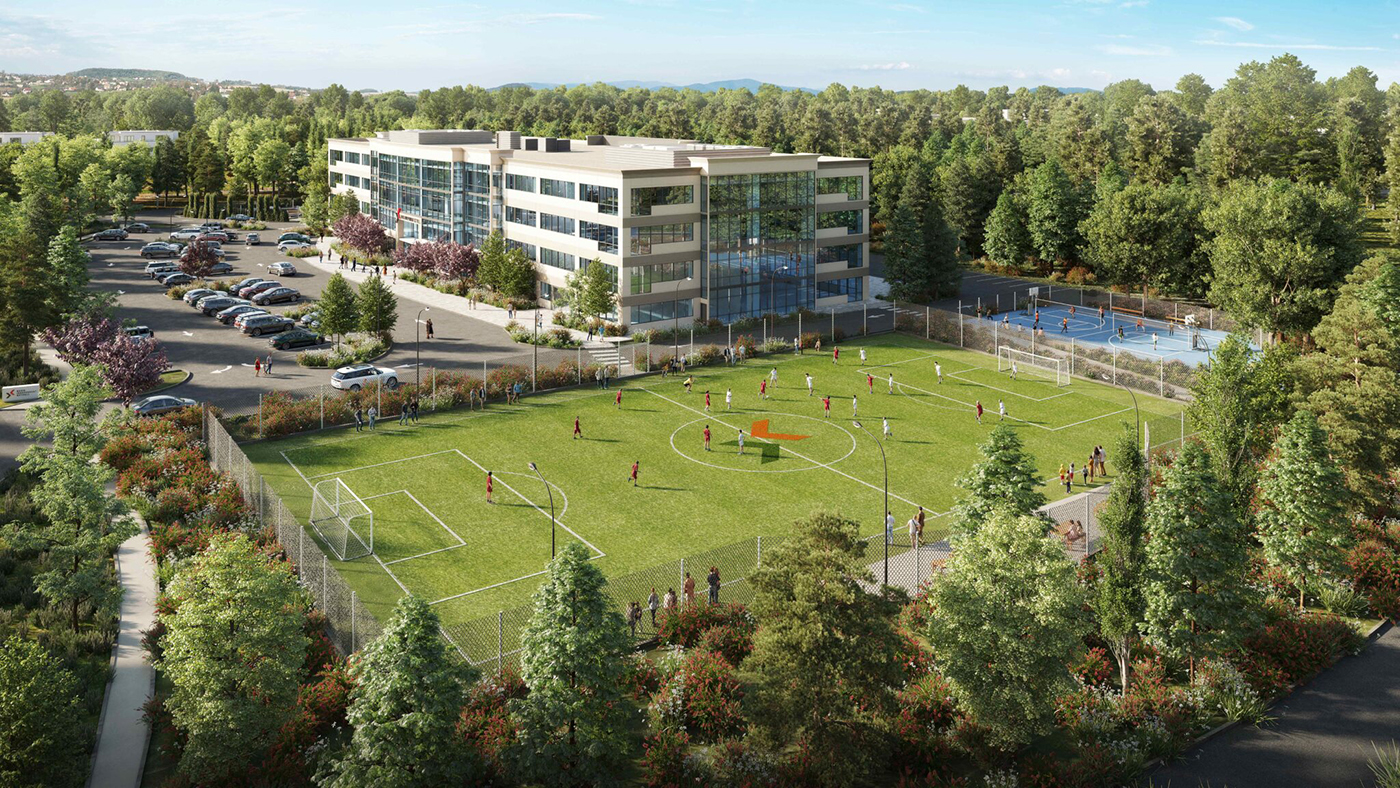
When we notice an increase of “for lease” signs in windows of empty office buildings, it does not sit well with communities, not to mention it’s aesthetically unappealing. In the construction industry, as demand for education grows and commercial office space declines in utilization, repurposing vacant office buildings into schools presents a compelling opportunity. This transformation comes with unique challenges and opportunities in engineering, mechanical, plumbing and fire protection systems.
ASSESSING EXISTING INFRASTRUCTURE
Building use conversion includes evaluating the existing mechanical infrastructure. Office buildings are typically designed for a different occupancy load and operational schedule than schools, meaning systems like mechanical and plumbing, must be adapted. Schools require better air quality, increased ventilation, and specialized zoning for classrooms, cafeterias and gymnasiums, which may necessitate upgrades to existing systems.
MECHANICAL SYSTEMS AND AIR QUALITY CONSIDERATIONS
Indoor air quality is a top priority for educational spaces. Many office buildings have mechanical systems designed for lower occupant densities, which may not provide sufficient fresh air for a school environment. Retrofitting may involve:
• Upgrading air handling units to support increased ventilation needs.
• Implementing demand-controlled ventilation to optimize energy efficiency.
• Enhancing filtration systems to meet building codes and standards for educational facilities.
PLUMBING AND RESTROOM MODIFICATIONS
Schools have significantly different plumbing requirements than office buildings. Restrooms need to accommodate higher usage, with additional fixtures installed to meet building codes for educational occupancy. Additionally, the conversion may require:
• Installing water fountains and bottle-filling stations.
• Repurposing existing space for the addition of locker rooms with showers, toilets, sinks, etc., plus laundry facilities.
• Modifying or expanding restrooms to support student capacity, and ensuring accessibility compliance with ADA standards.
• Science rooms require dedicated sinks and accommodations for acid waste; art rooms need sinks that contain clay/sediment traps; cafeterias require preparation sinks, grease traps and food service equipment.
• For a mechanical designer, these projects have special considerations such as increasing fresh air requirements and updated code compliance for fresh air due to higher density learning environments. Each project includes energy improvements which include high-efficiency equipment and building automated control systems.
• Restroom facilities also require upgrades and additions, such as locker rooms with showers that a typical office building would not need. The same is true for redesigning an existing corporate break room and reimagining it into a commercial kitchen to feed students.
BENEFITS OF OFFICE-TO-SCHOOL CONVERSION
Here’s why it can be a great idea:
Even with the betterments to the facilities, the cost-benefit analysis far exceeds that of building a ground-up new structure. Repurposing a vacant building is the best way to align with sustainable construction practices, reducing demolition debris in landfills, limiting the manufacturing of new equipment, and lowering the project’s carbon footprint.
Another benefit to this type of renovation: utilities, roads and public transportation access are already in place, making it easier for students, parents and staff to commute.
Permitting departments in certain municipalities encourage adaptive reuse and offer incentives.
Most office buildings are located in a commercial/industrial district. A school built within these areas makes it convenient for working parents who work within the area to drop off and pick up their kids. Schools that are located in commercial/industrial districts can partner with local businesses to provide students with real-world learning experiences by collaborating with nearby businesses.
Schools are enticed by the room for expansion of vacant office buildings, with many buildings having multiple floors or large open areas that can be adjusted as the school grows.
Adaptive reuse can shorten construction timelines compared to building from scratch, which means students are in classrooms more than traditional ground-up construction.
Regular activity around the building reduces crime and improves public perception of the area, increasing safety.
CHALLENGES OF OFFICE-TO PRIVATE SCHOOL CONVERSION
While repurposing a vacant office building into a school has many benefits, there are also challenges to consider:
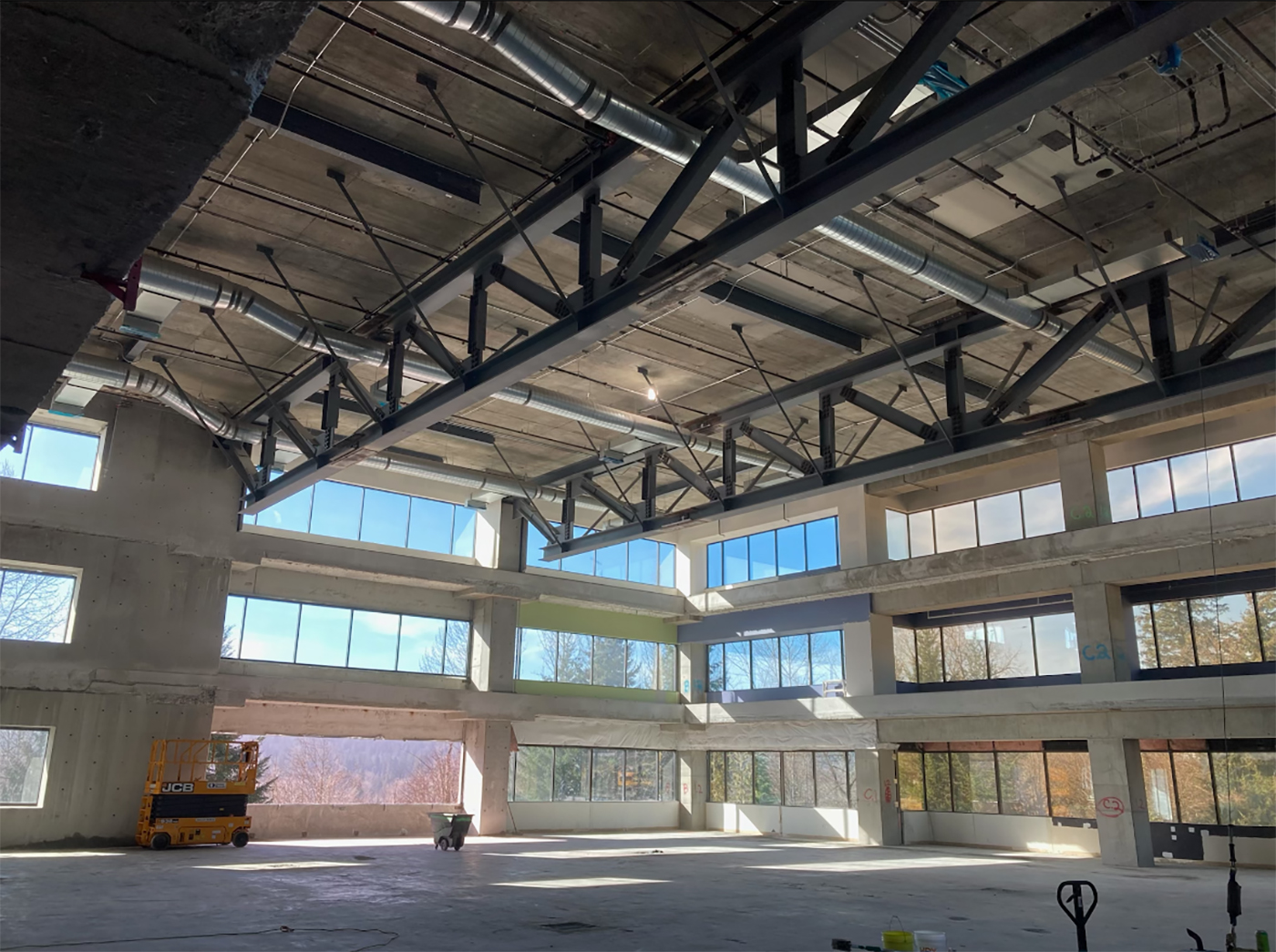
Converting office structure ceiling heights for multipurpose rooms like gymnasiums, theaters, STEM labs, open learning areas, etc. can be expensive and challenging to execute. Modifying existing window placement and accessing natural light must be considered for future students during the redesign period.
For elementary-age schools, designing and coordinating outdoor space is critical. Most office buildings typically do not have enough room for playgrounds, so creativity for adding is required.
Parking and traffic flow regulations for schools may differ from those for office buildings, requiring adjustments to accommodate student drop-offs and pickups.
Soundproofing may be needed if the building is located in a high-traffic area or if floors are stacked in a way that could cause noise disruptions
Office-to-school conversion projects may need to add fencing to deter unwanted visitors from seeing or entering the school grounds.
A REWARDING CHALLENGE
Transforming an office building into a private school is a rewarding challenge that requires careful mechanical planning. By addressing mechanical, plumbing and safety upgrades proactively, mechanical contractors play a vital role in creating a safe, efficient, and inspiring learning environment.
“The opportunity that we have witnessed in two recent projects (Summit Classical Christian Issaquah & Basis Independent Bothell) has provided an eye-opening experience for us as a mechanical contractor,” Chris Ebbert, Holmberg Mechanical’s Sheet Metal Superintendent said. “It has allowed the schools, community, and student body to repurpose existing structures into a much-needed resource and at times, a fraction of the cost.? In the mechanical sector, it also lets us engineer and repurpose an existing system that has been well maintained in its previous life. This provides the end user with a first-class structure and mechanical system.”
Angela White is Holmberg Mechanical’s Marketing/PR Manager.
Other Stories:


