 |
Subscribe / Renew |
 |
Contact Us |
| ► Subscribe to our Free Weekly Newsletter | |

Construction Bids
| home | Welcome, sign in or click here to subscribe. | login |


 print print  email to a friend email to a friend  reprints add to mydjc reprints add to mydjc |  |
 |
March 27, 2025

Balzarini
|

Jansen
|
Seattle is one step closer to achieving 2019 foot traffic levels , as employees slowly — or fairly rapidly, in some cases — filter back into the workplace. As corporate leaders continue to enforce new return-to-office mandates, many companies must now resume new build or renovation projects that were temporarily halted during a period of heightened risk and uncertainty.
While the “Great Remote Work Experiment” led many employees to replicate their ideal workstations at home, such individualized spaces, while great for heads-down work, can limit the potential of users. So, what can companies do to encourage employees to come back to the office? Culture will play a big role for many organizations looking to implement new policies.
PRIORITIZING CONNECTION
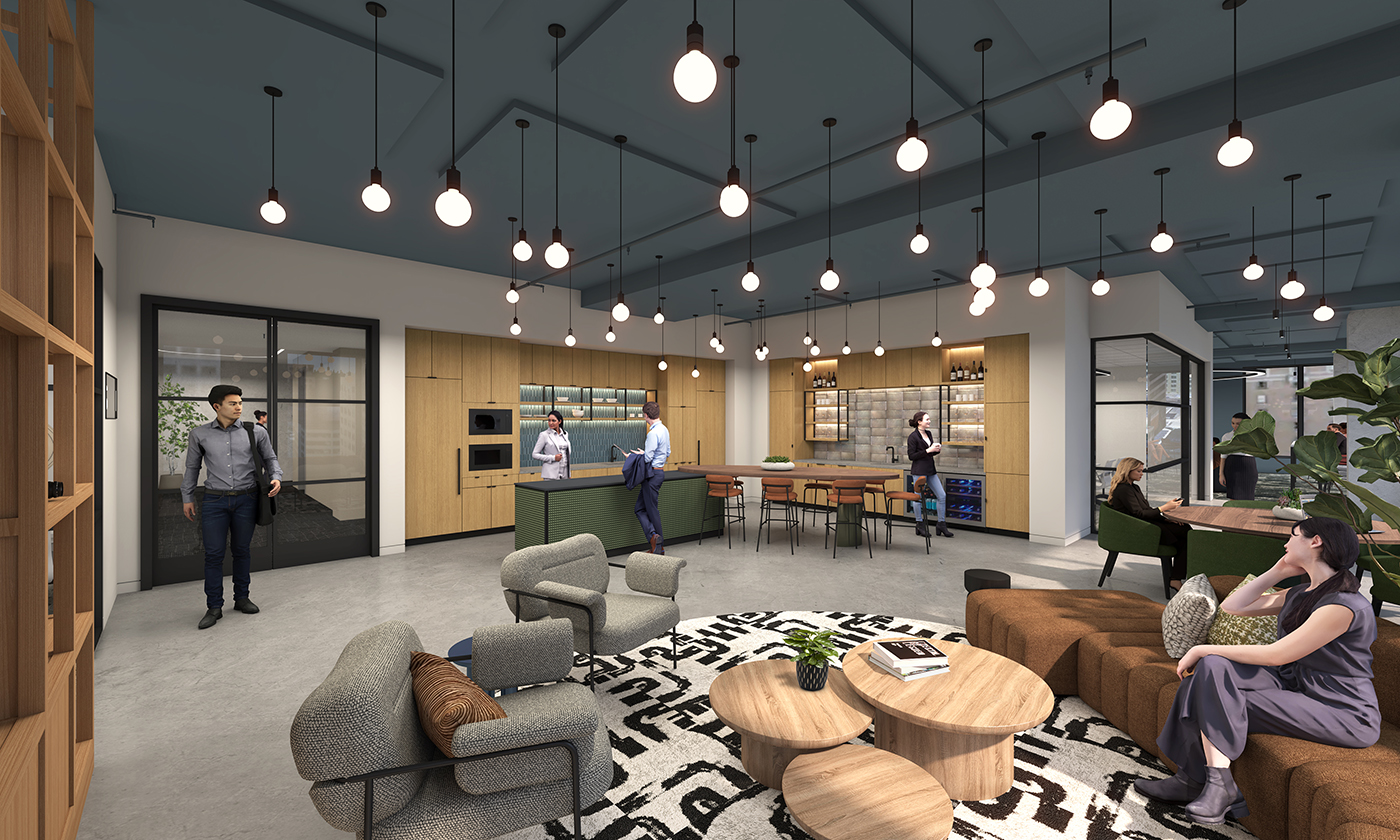
When rethinking workplace design, companies that are purposeful in the selection of programs and amenities that define their space create high-value interactions and experiences for employees in return.
While every company’s culture is different, one thing remains the same: people crave connection. After restrictions were first lifted three years ago, people flocked to restaurants and other types of shared cultural events, desperate for meaningful interactions. Drawing inspiration from the hospitality industry, design teams have since worked to erase employees’ perception of the traditional office space, bringing in different elements that have encouraged users to think of the workplace in a completely new way.
Data collected onsite further informs design decisions today. Whereas some companies track badge swipes, others are monitoring patterns in various locations within the office, finding that employees are gravitating toward communal spaces over individual workstations. With desk occupancy rates lower than 50%, companies are now downsizing assigned individual space to allow more room for team-based activities.
FINDING WHAT’S MISSING
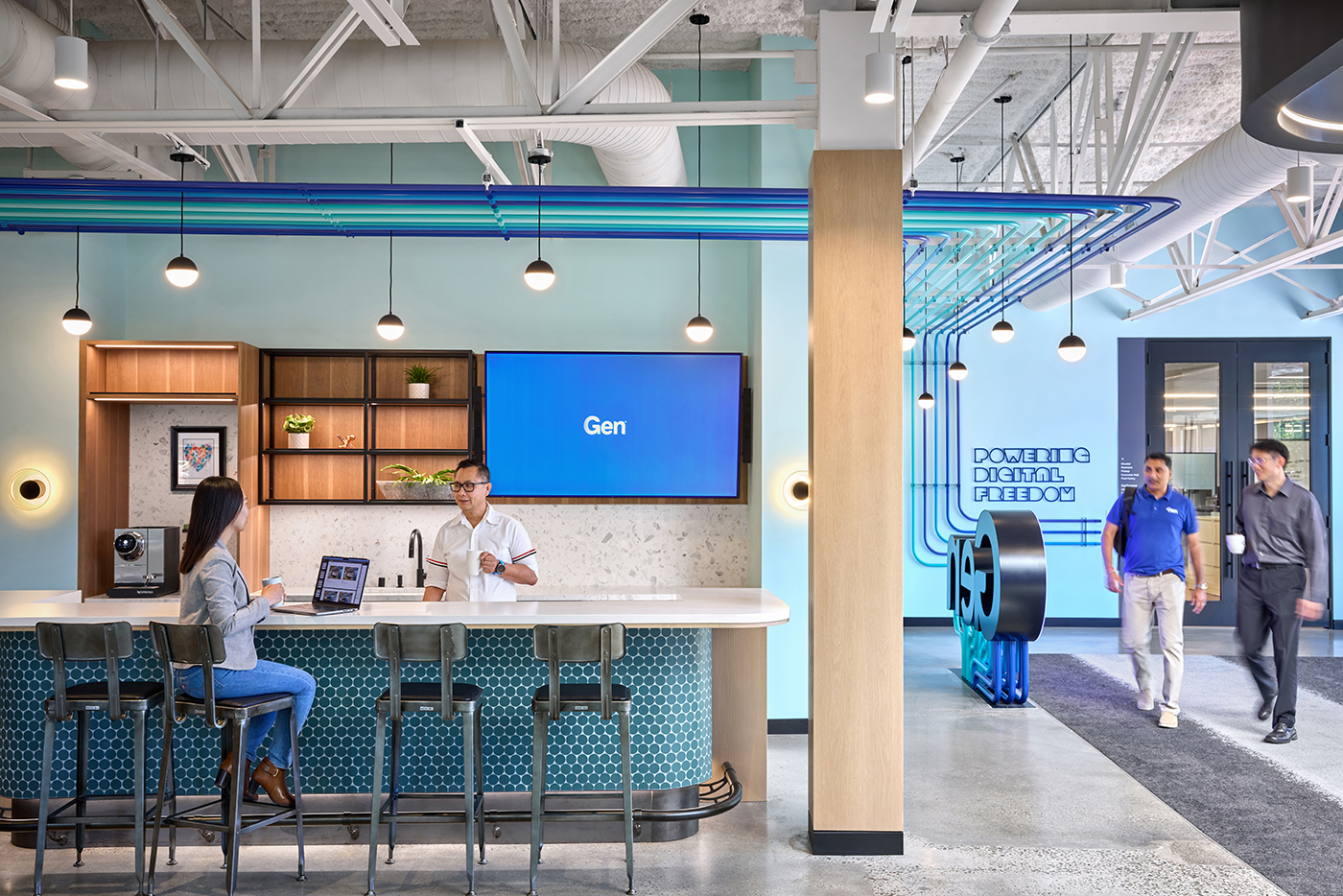
To supplement studies on the workplace, HKS conducts intensive research on each client and their location to ensure their culture and surrounding influences are represented visually, physically and emotionally in the workplace. Visioning sessions then further our understanding of a clients’ needs, serving as another essential data collection process during the onset of a project.
During these high-level exercises, designers have a rare opportunity to connect and speak with representatives from every division within an organization, guiding group members through thought-provoking activities to learn about the organization’s ethos and workplace improvements without getting too tactile. Only then do you realize what’s missing from an organization’s work environment and what design solutions will resonate and have the greatest impact on employees. ?
RETHINKING DESK AND MEETING SPACE
When HKS first entered the Puget Sound marketplace in June of 2023, we moved into several adjoining co-working spaces totaling less than 1,000 square feet. Though HKS has been delivering projects in the Pacific Northwest since 1994, this was the firm’s first physical office in the region, serving as a temporary base while leadership searched for and eventually built out a new workplace that embodies our values and equips us with new amenities to better serve our clients as well as our staff.
In mid-February of this year, we officially moved into our permanent workplace located on the sixth floor of the 400 University Building. Spanning 6,000 square feet, HKS’ new office will accommodate roughly 42 people on average per day across a diverse range of workspaces designed to elevate in-office experiences.
When first entering the space, employees and their guests are immediately ensconced in a hospitality-focused environment that allows users to flow freely from one space to another. You won’t find a reception desk here but rather an inviting and comfortable lounge area and a kitchen with a fully stocked bar and espresso machine.
Without assigned seating, employees have the autonomy to choose where to work based on their shifting needs and schedules. While less than 50% of our footprint is dedicated to traditional desking, we have enclosed quiet spaces available for employees to focus on heads-down work or engage in virtual meetings. Alternative work points are positioned throughout the office, including an active resource center, large mock-up area and various conferencing spaces all supplied with VTC capability.
Post-pandemic, these egalitarian meeting rooms have become essential workspaces for companies to find the best talent during the recruiting process. Equipped with advanced conferencing technology, employers can simulate in-person interactions with potential new employees, clients and colleagues located halfway across the world.
To accommodate strategic planning sessions, HKS also installed a dedicated design charette space, where project teams can collaborate on intensive project work, using whiteboards, pin-up space and monitors for digital content, from anywhere between one week to one month. When in need of a break, employees can rest and reflect in a designated wellness room, which doubles as a private space for new mothers. Further informed by the firm’s Insights Report on “Creating a Brain Healthy Workplace,” all workspaces were designed with social, cognitive and emotional health in mind, including the office’s most unique feature: “the Showbox.”
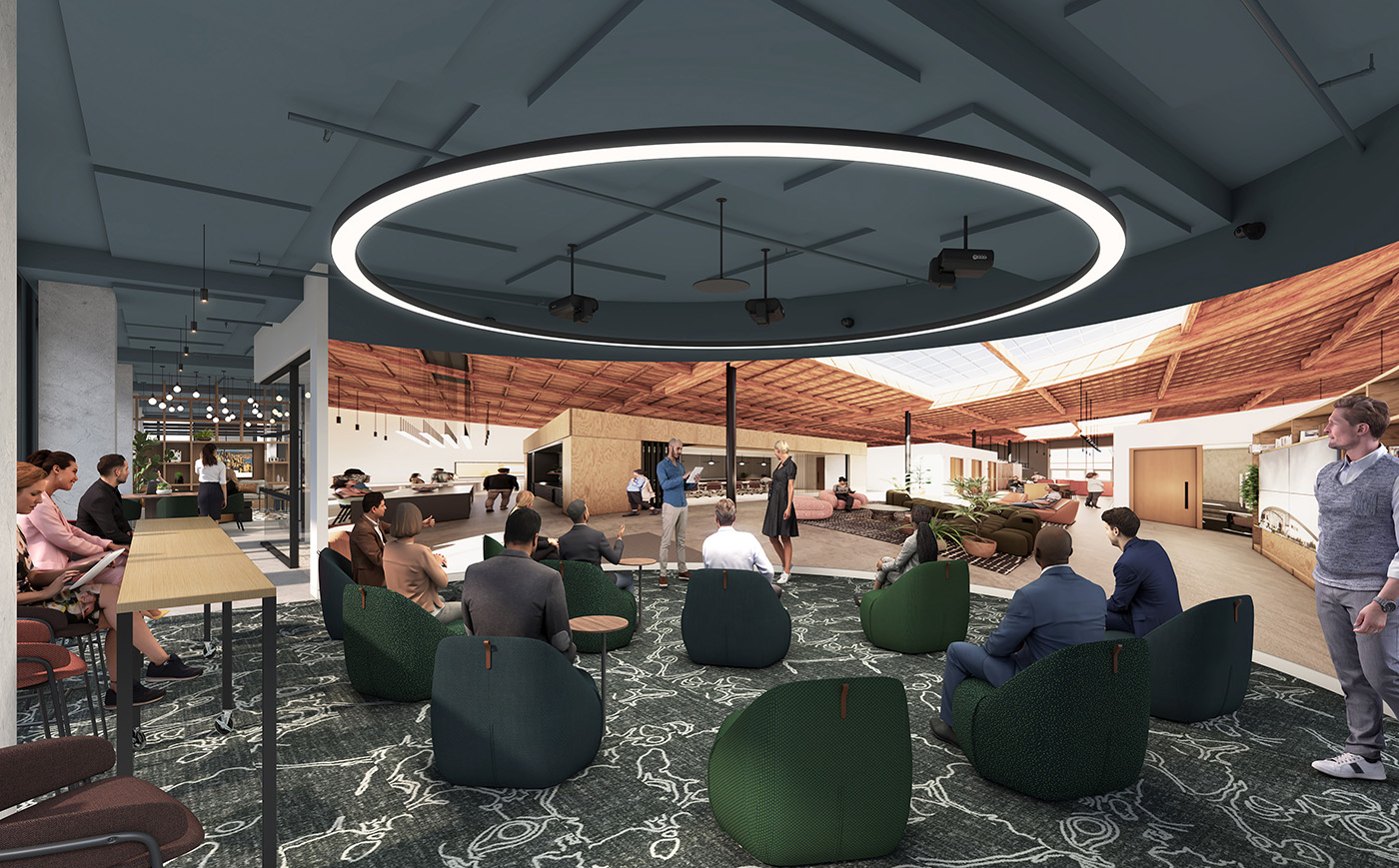
Named after Seattle’s historic music venue, the Showbox is an immersive community space with technology that projects floor to ceiling and wall to wall on a large, curved 180° vertical service, allowing users to have a unique 1:1 scale viewing experience of new and in-progress projects — either in design or being constructed in real time. One of only three design studios in the U.S. and the only firm on the West Coast with this powerful visioning technology, HKS’ expanded design capabilities reinforce its commitment to design excellence, allowing teams to analyze environmental factors and conduct virtual site walks in cities around the world. Additional uses include showcases, client presentations, firmwide conference calls and local office celebrations.?
THE EVOLUTION OF FITNESS AMENITIES
While the modern-day office has transformed to proactively support mental health and elevate in-person interactions, many employers are equally focused on supporting physical health in the workplace. To meet heightened demand for pickleball courts and other fitness amenities, many building owners across Seattle are beginning to add or update their shared spaces to become more desirable workplace destinations.?
Come Spring 2025, a new HKS-designed pickleball facility will open on the second level of Rainier Square, offering members the latest in training technology to help improve their game. Strategically positioned at the building’s tree line, the new pickleball center’s indoor courts allow for yearlong usage while also fostering connection to the outdoors. With event capabilities and access to a number of onsite restaurants, this elevated pickleball experience is at the forefront of new corporate wellness initiatives.
As Seattle employers continue to contemplate the future of their workplace, company culture will remain a driving force in bringing employees back to the office. Thoughtful design that prioritizes the shifting needs of all employees has the power to reshape the workplace from an obligation to a destination.
By creating new opportunities for meaningful interactions and unique experiences, organizations not only elevate employee morale, but also instill a sense of trust and loyalty, making them stronger than ever before.
Joslyn Balzarini is a principal and commercial interiors studio practice leader at HKS in Seattle. Christa Jansen is a principal and regional design director of interiors at HKS in Seattle.
Other Stories:


