 |
Subscribe / Renew |
 |
Contact Us |
| ► Subscribe to our Free Weekly Newsletter | |

Construction Bids
| home | Welcome, sign in or click here to subscribe. | login |


 print print  email to a friend email to a friend  reprints add to mydjc reprints add to mydjc |  |
 |
July 31, 2025

Smith
|

Ronish
|
As the demand for behavioral health services continues to rise across the country, there is a growing need to rethink how and where care is delivered. For decades, behavioral health treatment has existed outside the core of the medical system, often separated from general hospitals and disconnected from other care providers.
This is beginning to change through a new approach to facility design — one that brings treatment, housing and related support services into a single, coordinated space.
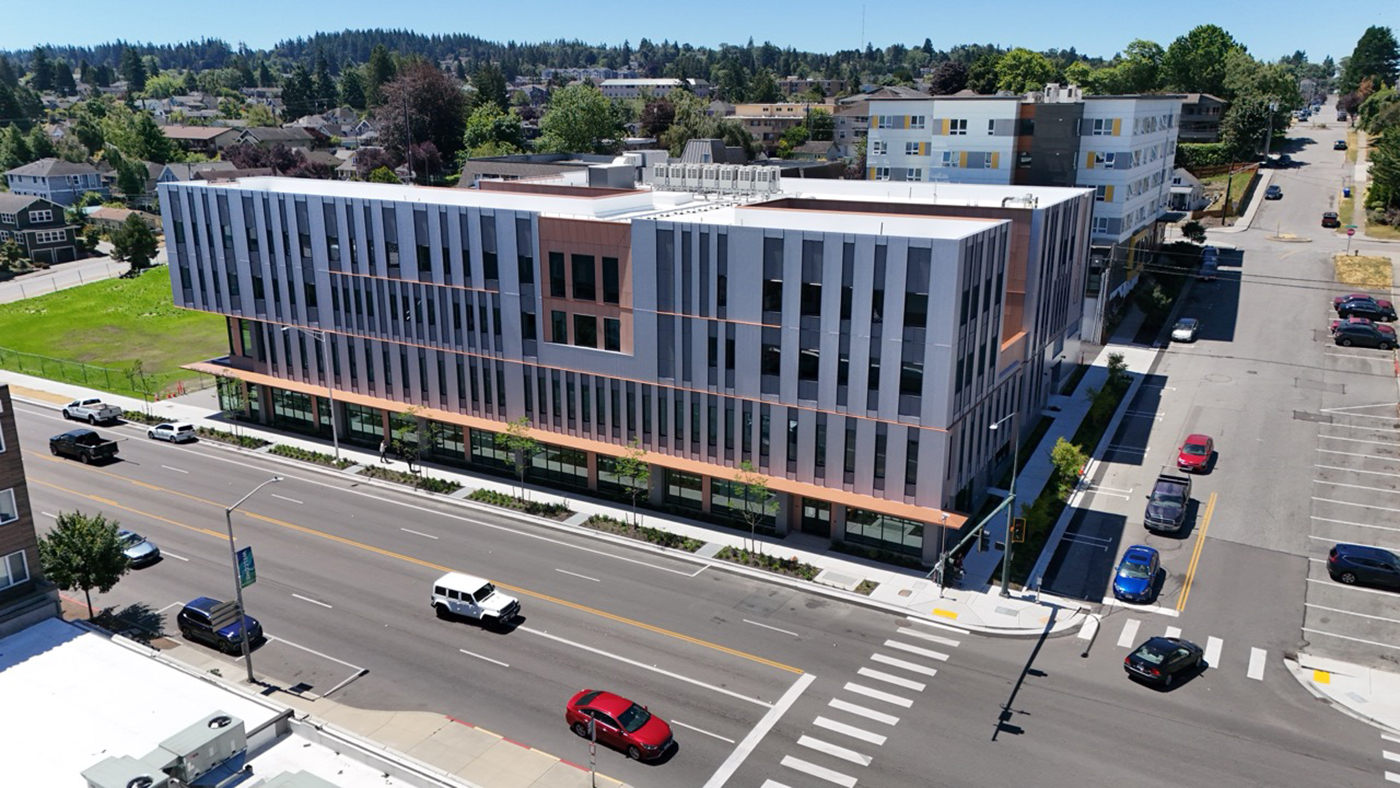
A great example of this approach is currently underway in Everett, where Compass Health is building the Marc Healing Center, a 70,000 square foot facility designed to support the full continuum of behavioral health care. While the facility is still under construction, its design reflects a broader shift in how care is being reimagined, with a greater focus on integration, access and purpose-built environments that meet client needs.
A SYSTEM UNDER STRAIN
Behavioral health crises have long placed a significant burden on emergency rooms, law enforcement and first responders. These professionals are essential to public safety and health, but they are not always trained or equipped to manage complex mental health or substance use issues. As a result, people in crisis often end up in jail cells or hospital emergency departments, where they may wait hours before seeing a behavioral health provider, if one is available at all.
This gap in appropriate care creates delays and adds strain to already overburdened systems. In contrast, specialized treatment facilities offer a more appropriate and timely response. At these centers, clients can be evaluated within minutes by trained behavioral health professionals and directed to services that meet their needs. This results in faster, more effective care, and a better experience for both clients and providers.
COMPLEX CARE, COMPLEX FUNDING
One of the major challenges in behavioral health is that services are often fragmented based on how they are funded. Programs may receive money from different sources, such as Medicaid, Medicare, private insurance, or local government grants, and those funding streams often determine who can be treated, for how long, and in what setting.
This means that a single facility may only serve adults or only serve children. It may provide inpatient care but not outpatient counseling, or it may lack services for people experiencing homelessness or in need of short-term sobering care. As a result, individuals may have to visit multiple locations to receive the care they need, adding stress and confusion to an already difficult situation.
Efforts to co-locate services are becoming more common, as facilities aim to reduce these barriers. In the case of the Marc Healing Center, for example, the facility is designed to house a spectrum of care under one roof, including outpatient and inpatient services, a pharmacy, and sobering care.
As part of Compass Health’s three-phase Broadway Campus Redevelopment, the center is located next door Phase I, Andy’s Place, which provides 82 units of permanent supportive housing to formerly homeless individuals who are living with chronic behavioral health challenges. Once complete, Phase III will further expand the continuum of care by integrating behavioral health services with a primary care clinic. Having all these services in one place makes it easier for clients to access varying levels of care, and transitions between services are smoother and more coordinated.
DESIGNING FOR A CONTINUUM OF CARE

Constructing facilities that support the entire continuum of behavioral health care presents unique design challenges. These buildings must accommodate a wide range of services and needs, while also creating a safe, dignified and therapeutic environment.
Inpatient units typically include anti-ligature features, access to daylight, and connection to outdoor areas that help with calming and recovery. These spaces are designed with durability in mind, using materials that are easy to maintain and reduce the risk of harm.
Outpatient consultation rooms are also carefully designed. While these spaces must be safe and secure, they also prioritize patient comfort and privacy. Most outpatient facilities are staffed continuously, allowing them to manage risk primarily through trained personnel rather than relying solely on architectural controls.
Additional design considerations include:
• Secure ambulance drop-off areas, which maintain patient confidentiality and reduce community visibility during the intake process.
• Community and staff spaces, such as lounges and group rooms, that support both client interaction and staff wellbeing.
• Integrated pharmacy services, which make it easier for clients to start medications quickly and maintain consistent treatment.
• Short-term sobering centers, which provide care for individuals in acute distress who do not require full inpatient admission. These centers often include reclining chairs and are designed for stays under 24 hours.
Supportive housing is another key feature in many new behavioral health projects. When clients are ready to leave treatment, a lack of stable housing can lead to a return to crisis. By having housing support close to the care facility, clients have a better chance of maintaining stability and avoiding reentry into emergency services.
LOOKING AHEAD
The future of behavioral health care will rely on better integration across services, and on facilities designed specifically to meet the needs of clients, providers, and communities. Projects like the Marc Healing Center demonstrate that it is possible to build spaces that reduce fragmentation, improve response times, and provide more compassionate and appropriate care.
While the work is ongoing, the lessons are already clear. Behavioral health treatment cannot be an afterthought in our healthcare infrastructure. It requires dedicated space, trained staff, and systems that are designed to respond quickly and holistically to people in need.
As public funding increasingly supports whole-person care, the need for thoughtfully designed, full-service behavioral health campuses will continue to grow.
Adam Smith is a Senior Project Manager at BNBuilders, with 22 years of construction experience leading teams delivering complex behavioral health, life sciences, and tech facilities. Mark Ronish is a project executive with BNBuilders, leading projects across K-12, tech, behavioral healthcare, and affordable housing, while also serving on the company’s regional leadership team.
Other Stories:


