 |
Subscribe / Renew |
 |
Contact Us |
| ► Subscribe to our Free Weekly Newsletter | |

Construction Bids
| home | Welcome, sign in or click here to subscribe. | login |


 print print  email to a friend email to a friend  reprints add to mydjc reprints add to mydjc |  |
 |
July 31, 2025

Jackson
|
Remember a time when you were anxiously waiting in a hospital emergency room to get care for a loved one, or when you yourself were the patient about to be wheeled into surgery? Most often it is not something we planned for, but we find ourselves in these facilities and we take for granted that the doors will be open and the facility operational when we need it.
Hospitals are essential facilities that operate 24/7 and can’t be shut down for a week or a month to make repairs to systems or tie in new buildings on the campus. Work on these systems has to be stitched together like a quilt, with no noticeable interruption to the patients, families, or staff in the building. It’s an intricate puzzle that takes months or years to design and plan, and a strong team to implement.
PIECES OF A PUZZLE
Most hospital campuses contain multiple buildings that have been pieced together over time — an original building from the 1970’s that has had multiple additions and hundreds of renovations over the last 50+ years. Finally, the facility can afford a new building that will house state-of-the-art patient care spaces.
It’s a dream come true for many administrators and staff, but now the design team needs to figure out how to weave this new element into the campus. There will need to be connections between old and new — for patient care, for staff workflows, and for all of the infrastructure systems that keep the hospital functional, and the doors open for patients.
PLANNING FOR THE FUTURE ON TODAY’S BUDGET
Although many see this new addition as the way to fix all the problems on campus with aging infrastructure, the design team must strike a balance between reasonably planning for the future and staying within the project budget.
This may mean that a new generator plant in the addition can back-feed the existing buildings so that the existing 50-year-old generators can be taken out of service. This would be an operational savings for the facility as the costs of maintaining/repairing the old generators are typically high. But it may be that this interconnection can’t fit within the project budget now, so we must look at making provisions for a future connection when additional funding is available. How can the team provision for this to make it as seamless as possible in the future?
BALANCING ACT
When we are designing for a future connection, there are many things we need to consider:
• Establishing a physical path from a new to existing building will be much easier and less costly in the initial construction, so that would be the first thing to try to fit into the budget. This pathway through the new building can be coordinated and straightforward, however the path through the existing building is often much more complicated. The team needs to work through what is feasible given all the other infrastructure above the ceilings that is typical in a 50+ year facility.
• Next up would be the breakers to connect new to old for the back-feed. Installing breakers in switchgear as part of the initial construction will be less costly than if they are purchased in the future. And including them in the initial construction means that the switchgear would not have to be shut down in the future for breaker installation. But these are not free — can the project afford them?
• If we want to avoid all future shutdowns of the switchgear when this tie-in is made, we need to also install the conductors that will land on those breakers. These are additional costs that must be quantified and weighed against the future costs of a shutdown.
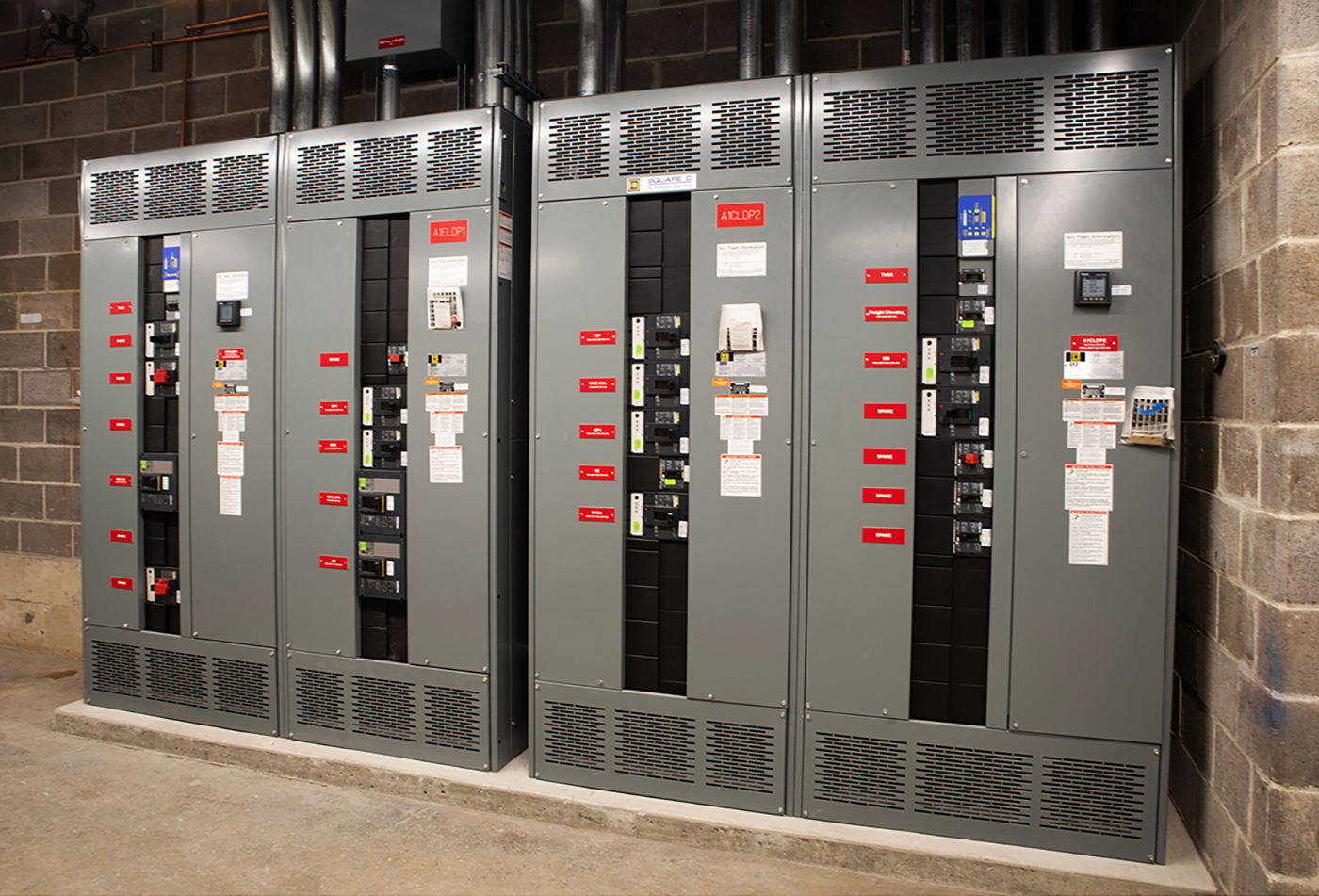
For a hospital, there is no time when it can be without power. Shutting switchgear down to make a tie-in means dollars must be spent to provide temporary power to the affected parts of the building. Every decision becomes a balancing act of first costs versus future costs.
The Swedish First Hill North Tower project currently in construction in First Hill is an example of this type of balancing act. The new North Tower building will have a new generator plant that will eventually back-feed parts of the existing campus, allowing for the elimination of aging generators. Stantec, VECA, and Swedish Facilities have worked together to find a way to make the connections in the future and strategize on the most cost-effective way to provision the facility today for that future connection.
THE DAY FINALLY COMES
While patients and staff eagerly anticipate the unveiling of a new hospital wing with its state-of-the-art care facilities, the facilities team often celebrates something less visible but just as vital—funding for infrastructure upgrades.
That’s when the real challenge begins, figuring out how to keep the hospital fully operational while replacing the electrical distribution systems that power it. Much like the buildings themselves, the new equipment must be carefully integrated—stitched into the existing system one piece at a time. Temporary power solutions are put in place to ensure that not a single patient or staff member feels the impact of the work.
At Providence Everett’s Colby Campus, a long-awaited project to replace electrical distribution equipment installed in the 1960’s gave Stantec, VECA, and the hospital an opportunity to collaborate and achieve success. The project won the 2022 ASHE Vista Award for Infrastructure as an example of teams working together to solve complex challenges in healthcare facilities. Cody Leckner, VECA’s Project Superintendent, was quoted in Healthcare Facilities Management’s April 2022 article on the award, “Communication was consistent throughout the project, which eliminated missed steps. When we ran into unforeseen issues, we stopped, communicated and adapted the plan to eliminate reactionary mistakes.”
Maureen Jackson is a principal at Stantec.
Other Stories:


