 |
Subscribe / Renew |
 |
Contact Us |
| ► Subscribe to our Free Weekly Newsletter | |

Construction Bids
| home | Welcome, sign in or click here to subscribe. | login |


 print print  email to a friend email to a friend  reprints add to mydjc reprints add to mydjc |  |
 |
July 31, 2025

Wickline
|

Thomsen
|

Schenk
|
As climate change intensifies, the need for healthcare systems to decarbonize has become increasingly urgent. According to an article in the journal, Health Affairs, the U.S. healthcare sector is responsible for approximately 8.5% of U.S. carbon emissions, with hospitals responsible for a significant share of that footprint. While much of the focus has been on reducing emissions in new construction, the most significant challenge and opportunity lies in retrofitting existing hospitals, with most — if not nearly all — built using natural gas as the primary energy source for heating, and energy efficiency not being prioritized.
Providence St. Peter Hospital, in Olympia, recently became a national case study in how health systems can tackle this problem. In collaboration with the American Society for Health Care Engineering (ASHE), a professional membership group of the American Hospital Association (AHA), Providence pursued an ambitious technical and financial feasibility study to electrify its natural gas-fueled central steam heating plant — one of the most complex and carbon-intensive elements of legacy hospital infrastructure.
This project began with a straightforward question: What would it take to decarbonize an existing hospital while delivering care for the communities it serves?
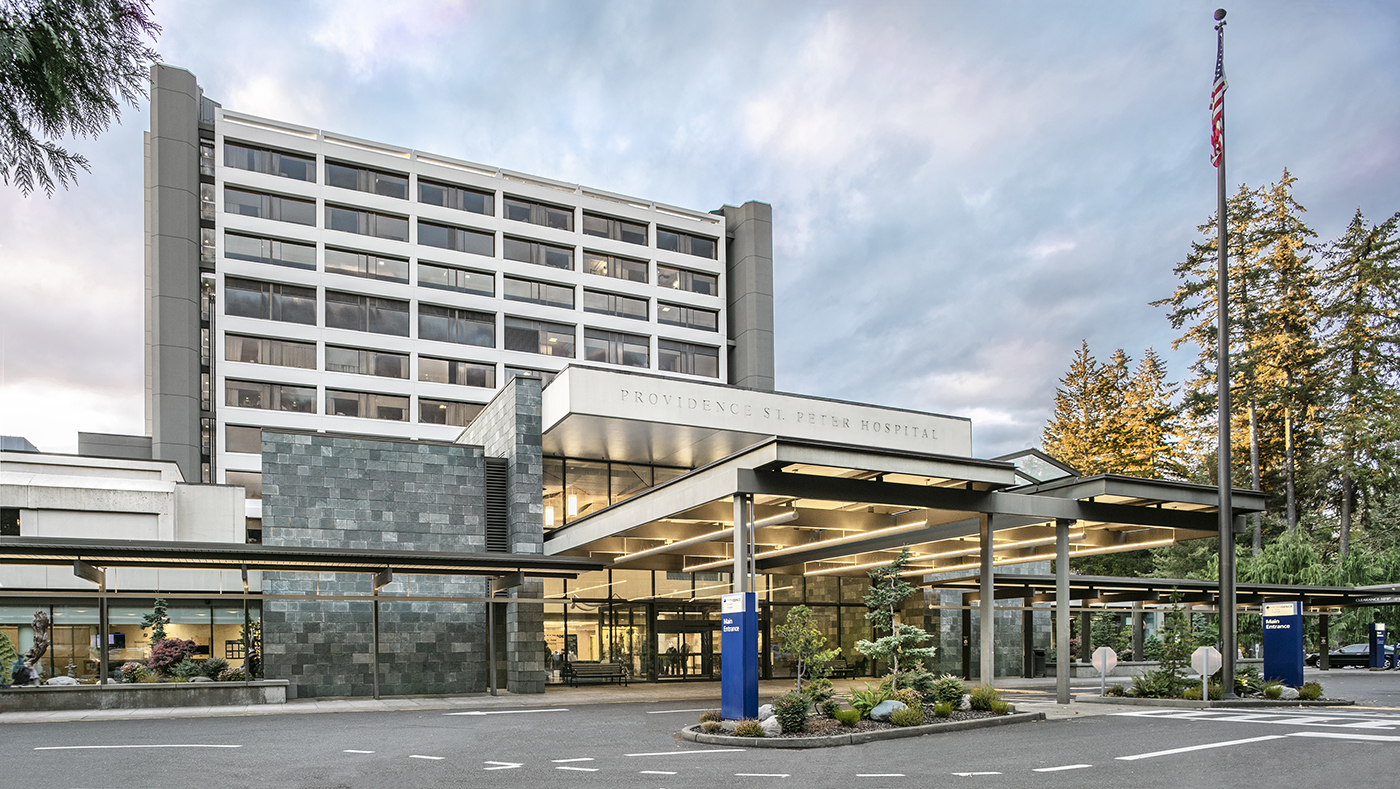
Providence St. Peter was chosen in part because it represented the typical U.S. hospital built during the Hill-Burton era, a time when natural gas-fired steam boilers powered everything from sterilization to space heating. These systems are notoriously difficult to electrify.
However, St. Peter had a few key advantages: a knowledgeable facilities team, clear internal sustainability commitments, and a long track record of monitoring and improving its energy use. The relatively mild climate in Western Washington also made it an ideal pilot location for this study.
Unlike new hospital builds, where designers can minimize or eliminate fossil fuels from the outset, retrofitting older facilities has been considered too disruptive, too costly, and too technically complex. That is largely because of how heating systems in legacy hospitals were designed. For example, most older hospitals use high-temperature, steam-based systems that require extensive infrastructure changes to work with modern low-temperature alternatives — like electric heat pumps.
Replacing these systems often means upgrading miles of piping and air-handling units, a task that has traditionally been viewed as both cost-prohibitive and operationally risky. The Providence-ASHE study aimed to test that assumption and prove feasibility of concept for others to consider.
One of the key lessons the case study found is that the electrification of an older building is feasible, but only if energy demand is drastically reduced first.
For St. Peter, this meant implementing strategies like:
• Upgrading to variable air volume systems for better airflow control
• Replacing outdated air-handling systems that used 100% outside air with more efficient systems that recirculate and recover heat
• Improving the building envelope — including windows, insulation, and air sealing
• Deploying advanced building automation to control humidity, air flow, and temperature settings — especially during nights and weekends
Reducing energy demand will help shrink the heating demand load enough to make a path to full electrification technically and financially viable. Essentially, Providence learned they would need to ‘right size’ the hospital’s heating needs before transitioning to an electrified supply.
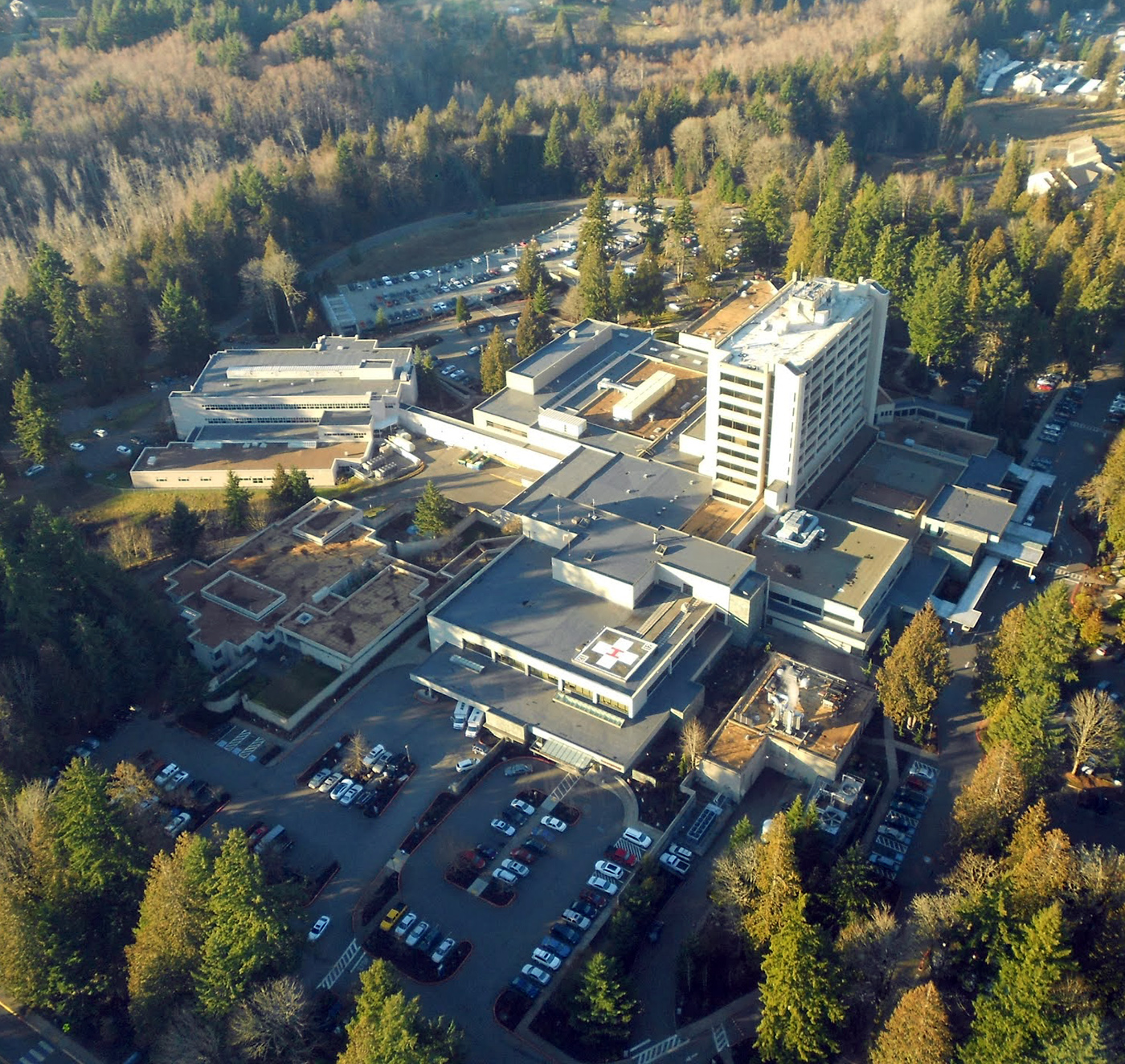
Study insights helped lay out a phased, 15-year roadmap model toward full electrification and carbon neutrality for St. Peter. This outline calls for replacing aging boilers in stages, optimizing equipment lifecycles and spreading capital costs over time.
In the meantime, Providence has already begun implementing related sustainability initiatives across the system, including:
• Transitioning its fleet to electric vehicles
• Reducing the use of high-emission anesthetic gases — like nitrous oxide — by upgrading and sealing delivery systems; and, where viable, decommissioning piped nitrous oxide systems in favor of transitioning to a cylinders-only workflow
• Digitizing building controls to improve energy efficiency in HVAC operations
• Implementing waste stream optimization and sustainable food procurement strategies
• Building envelope capital improvements
• Hydronics heat exchangers and other heat-recovery systems
• Transitioning to 100% LED lighting
• Capital investment focused on meeting Washington State Department of Commerce energy use intensity (EUI) reduction requirements
This comprehensive approach highlights that hospital decarbonization is about more than mechanical systems — it requires rethinking operations across every aspect of care delivery.
An inadvertent benefit to not lose sight of is that while pursuing decarbonization, many high-value milestones can be realized within all phases of the journey. In our experience, this has been the case, even where full electrification was not necessarily the target.
ASHE commissioned this study because they recognized a significant gap in the market: while there are toolkits for building new net-zero hospitals, there is very little guidance for existing facilities — especially on the technical and financial tradeoffs of deep retrofits.
This case study provides a much-needed starting point. In parallel, the AHA has developed a companion guide to help hospitals across the nation assess their own electrification potential and begin long-term planning.
While individual health systems like Providence are leading the way, scaling this kind of work nationally will require policy support. States like Washington with building performance standards are helping push the envelope, but most regions still lack clear mandates or funding mechanisms.
That is where the AHA and ASHE are focused next: helping members navigate emerging regulations, access technical guidance and build the internal business case for decarbonization.
Providence’s work at St. Peter, in partnership with ASHE and their state affiliate chapter — the Washington State Society for Healthcare Engineering — proves that retrofitting older hospitals for a zero-carbon future is possible, even within the constraints of 24/7 patient care.
It is not easy, and it will not be fast, but it is necessary, replicable, and ultimately aligned with the mission of every healthcare provider — to improve health outcomes.
Stephen Wickline is senior manager of facilities at Providence St. Peter Hospital. David Thomsen is director of infrastructure and environmental stewardship for Providence. Beth Schenk is chief environmental stewardship officer for Providence.
Other Stories:


