 |
Subscribe / Renew |
 |
Contact Us |
| ► Subscribe to our Free Weekly Newsletter | |

Construction Bids
| home | Welcome, sign in or click here to subscribe. | login |


 print print  email to a friend email to a friend  reprints add to mydjc reprints add to mydjc |  |
 |
July 31, 2025

Seng
|

Webber
|
American healthcare is in flux. Systems keep consolidating, costs keep rising, and research funding is shrinking. The paradox is impossible to ignore.
According to the American Medical Association, the U.S. spent $4.9 trillion on healthcare in 2023 — $14,570 per person — but life expectancy remains low at 78.4 years. In comparison, other high-income countries with similarly advanced healthcare systems average 82.5 years.
The effort to break this pattern began with exploring the connection between research and organizational outcomes. A landmark review of more than 200,000 colorectal cancer cases, published in the journal Gut in 2017, found that hospitals with sustained participation in clinical research saw significantly better outcomes. This included a 3.8% increase in five-year survival and a 1.5% drop in postoperative mortality compared to hospitals with no research activity.
Translational medicine puts that principle into practice. When laboratories and clinics share an address, discoveries reach patients sooner and clinicians can return real-time insight to scientists. Institutions from Mayo Clinic and Fred Hutchinson Cancer Center to Johns Hopkins have adopted the model, but the strongest evidence lives in the buildings that make it work.
WHERE ARCHITECTURE ACCELERATES SCIENCE
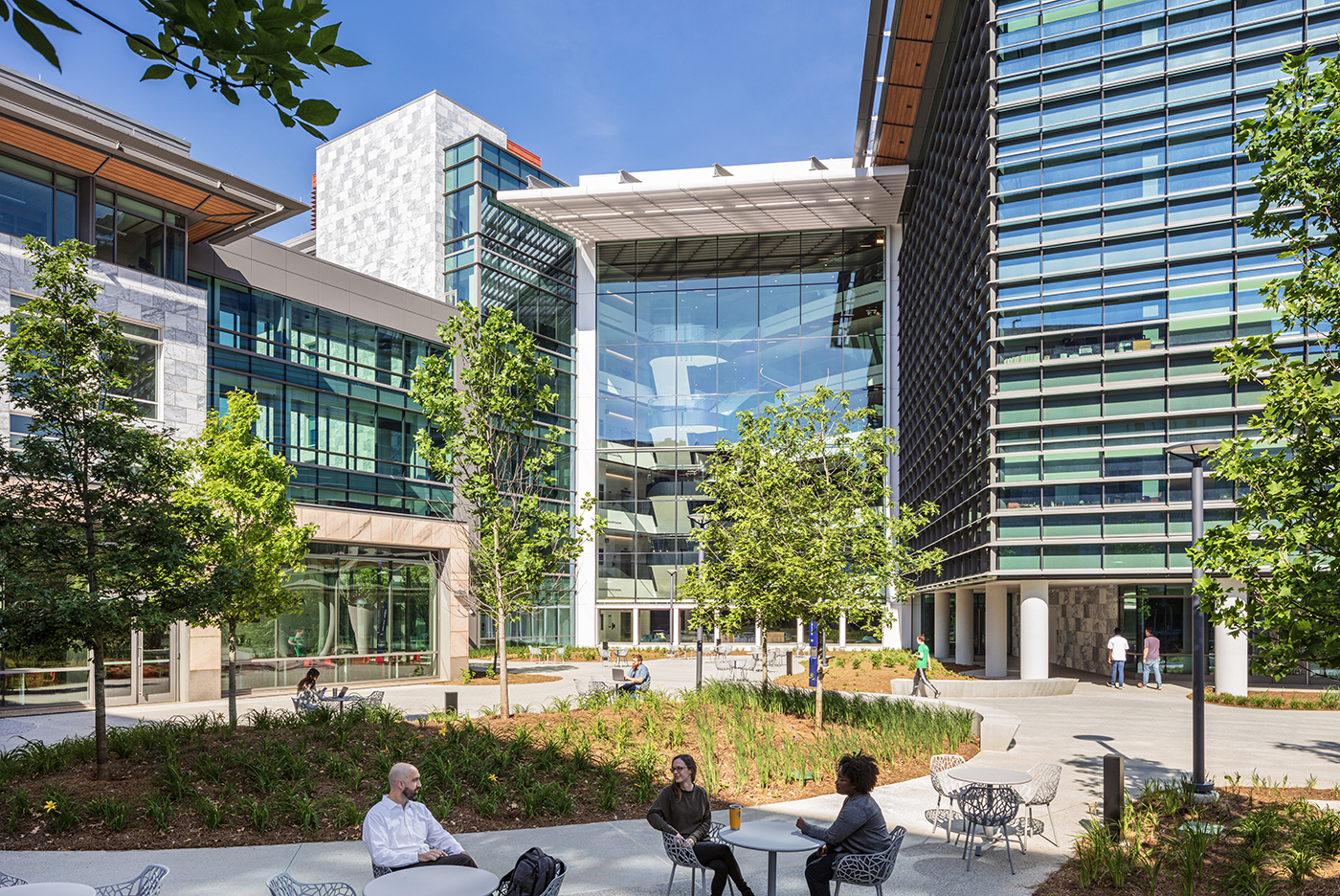
The strongest examples of translational medicine are being shaped not only by programs and people — but by buildings purpose-built to support them.
London’s Francis Crick Institute —completed in 2016 — offers a rare, decade-long case study in how building design can accelerate research. Conceived by the HOK-PLP Architecture team to break down institutional silos, the nearly 1 million-square-foot translational research center in the heart of London houses 1,500 scientists from six organizations under one roof, all connected by a daylit atrium and transparent lab neighborhoods.
Since opening, the Crick has tripled its research funding to £1.5 billion, tripled its publications, and launched more than 10 spinout companies advancing breakthroughs in cell therapy, vaccines, med tech, and small-molecule therapeutics. With 600 postdocs and 32 new group leaders recruited, it’s one of the clearest architectural examples of the benefits co-located translational research can deliver.
In Atlanta, Emory University’s Health Sciences Research Building II stitches oncology, neuroscience, and biomedical engineering teams together with flexible lab bays and shared core platforms. Combined with the new Emory Empathetic AI for Health Institute (AI Health), the building harnesses the power of machine learning and big data to transform how healthcare systems prevent, diagnose, treat, and cure diseases. Designed to catalyze bold advances in biomedical research and human health, the HRSB II supports Emory’s vision of a collaborative environment where interdisciplinary teams can take on the toughest scientific challenges. A ground floor start-up accelerator helps move discoveries to therapies.
Design also transforms the patient experience. At the Jack & Sheryl Morris Cancer Center at Rutgers Cancer Institute and RWJBarnabas Health — New Jersey’s first and only freestanding cancer hospital — research and treatment are connected.
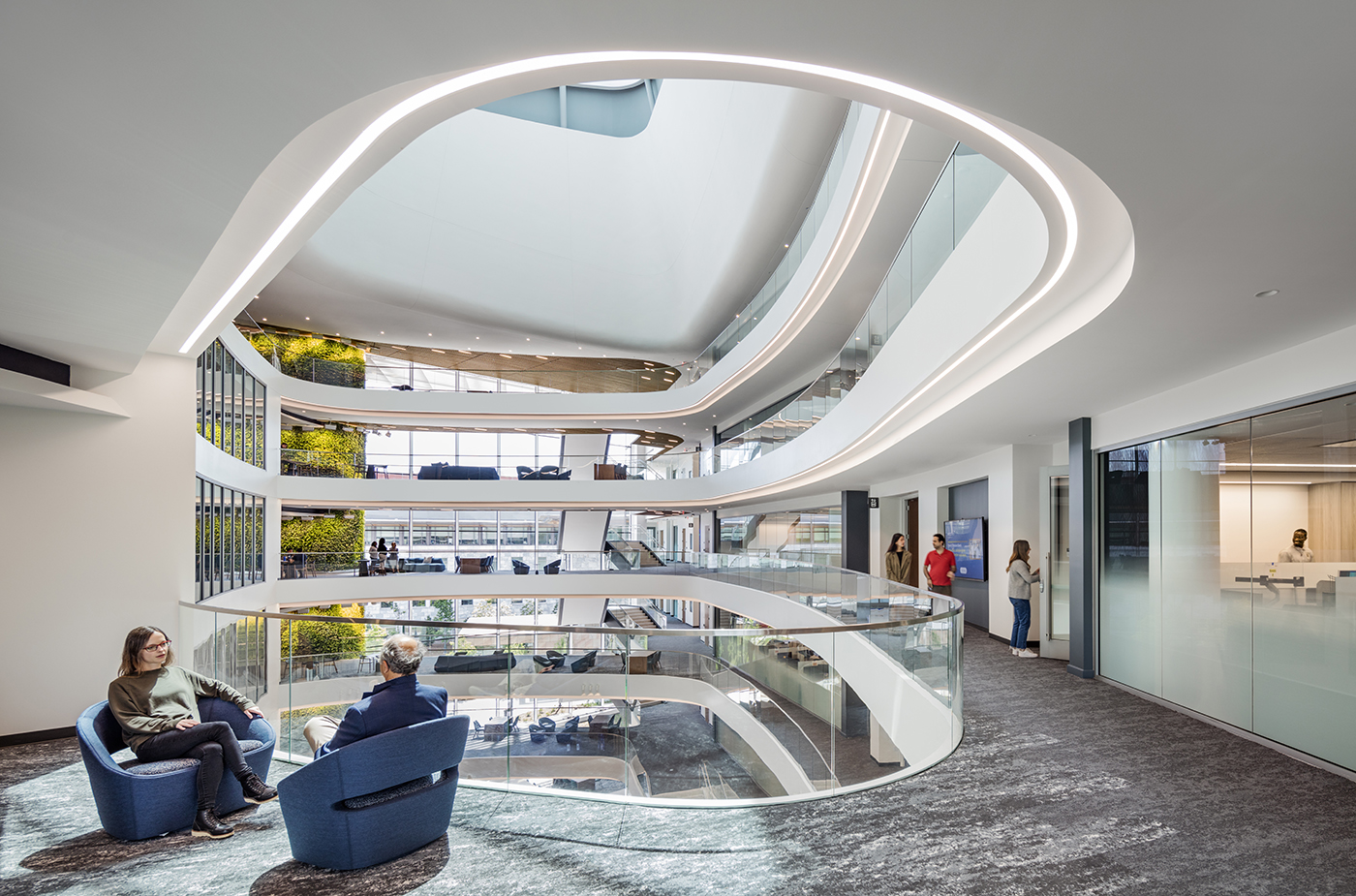
Imaging suites and infusion bays are floors away from labs studying immunotherapy, cellular therapy and other basic research. Infrastructure for clinical trial area administration and faculty offices are steps away, enabling collaboration between researchers and patients. This layout supports an improved patient experience and better access to experimental therapies informed by real-time research.
USF Health’s Morsani College of Medicine and Heart Institute in Tampa demonstrates how design can advance both education and translational research. The 13-story tower combines College of Medicine and Pharmacy teaching spaces, and four floors of flexible biomedical research space.
Since the facility was announced, medical school applications have surged 40%, making USF the most selective medical school in Florida. Located within a mile of Tampa General Hospital, the school’s main teaching partner, the building accelerates discovery and learning by encouraging daily interaction among students, researchers, and physicians.
The 200-acre Cortex Innovation Community in midtown St. Louis shows how academic health centers can partner with private industry to move research discoveries more quickly to patients.
Cortex gives founding members including Washington University in St. Louis, Saint Louis University, and BJC HealthCare access to flexible office and lab space, shared research cores, and connections to investors. At the 4340 Duncan Avenue building (below), startups, developing firms, and bioscience incubator anchor tenants share lab and office space. This mix of companies at every stage of development shortens the path from discovery to implementation.
Following the completion of two other HOK-designed translational facilities at academic medical centers, outcomes reported by each institution demonstrate how co-locating research and care can drive results. After the Ceders-Sinai Medical Center opened its Advanced Health Sciences Pavilion in 2013, research projects and publications more than doubled and NIH funding jumped from $50 million to $158 million between 2015 and 2025. The University of Wisconsin saw similar gains following the completion of the first phase of its Institutes for Medical Research in Madison. There, NIH funding doubled in 10 years, and both the number of patents and publications tripled.
DESIGNING FOR WHAT’S NEXT
Translational medicine is changing fast. It’s shifting from treating disease to predicting it, from targeting organs to reading genes. These buildings need to keep pace. The best ones adapt to make room for new ideas, unite different disciplines, adopt scientific core technologies and blend innovation into everyday activities.
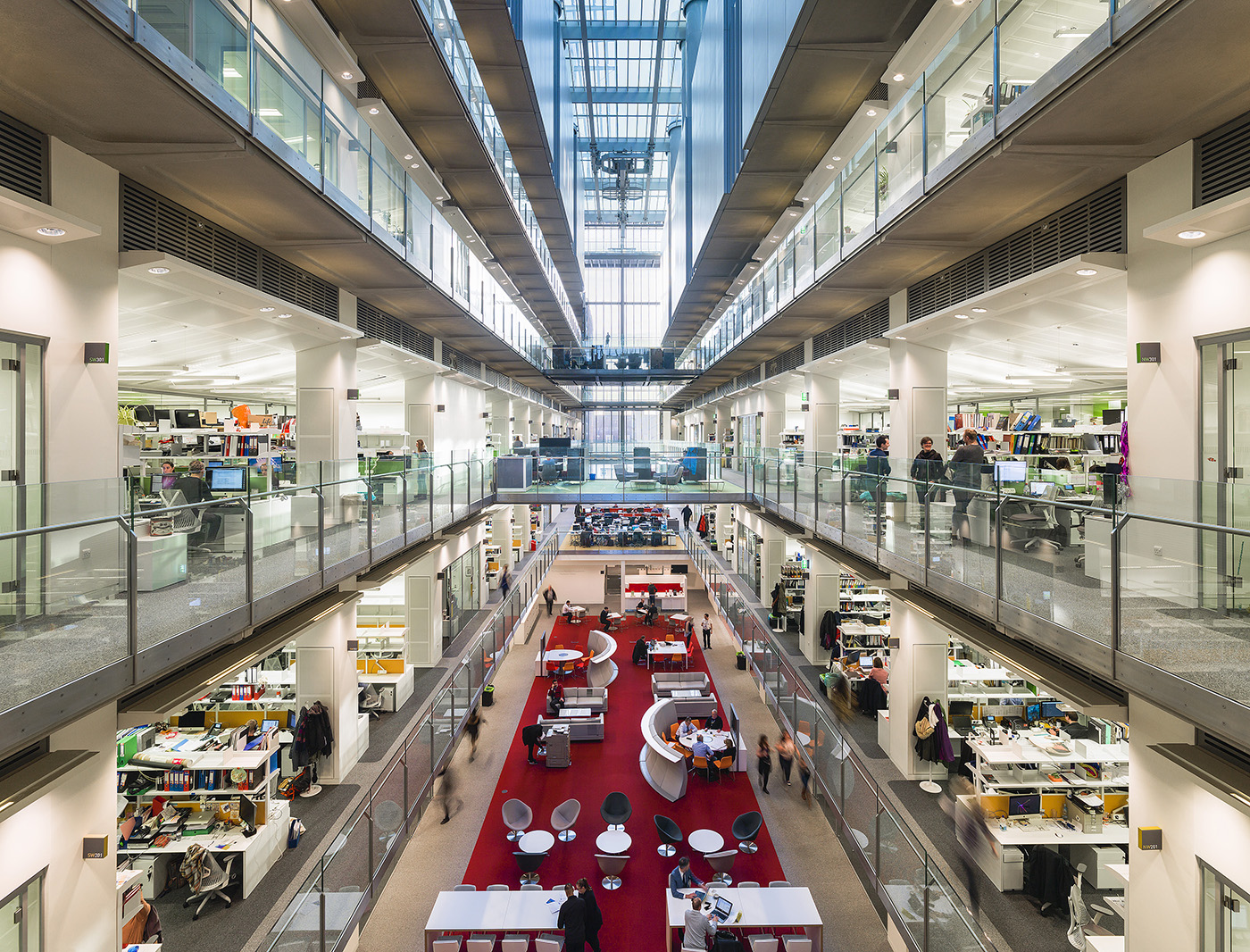
The key is to incorporate this flexibility from the start. Design teams can now model different research scenarios years ahead. Instead of forcing scientists into rigid layouts, we can create modular lab components and infrastructure systems that can be rearranged as needs change. Teams get the space they need when they need it.
HOK Director of Science + Technology Chirag Mistry has helped shape the planning approach for many of HOK’s translational research facilities. According to Mistry, “Recent advances in AI, machine learning, and big data have made it essential to integrate scientific core technologies from the outset, alongside flexible wet and dry lab spaces, for the next generation of these facilities.”
As medicine shifts toward prediction and patient involvement, architecture needs to reflect openness and compassion. Natural light, clear pathways, and spaces where education, research and care visibly connect don’t just help people find their way — they show what the building stands for.
These facilities don’t stay static after opening, either. Through post-occupancy reviews and building data, institutions can monitor how spaces perform and adapt to keep pace with advancing science.
When a translational research building’s design makes its purpose clear, breaks down obstacles, and sparks curiosity, it draws in talent and forms a test bed for ideas that shape the future.
Dan Seng is practice leader of Science + Technology, and Blake Webber is a project manager in HOK’s Seattle studio.
Other Stories:


