|
Subscribe / Renew |
 |
Contact Us |
| ► Subscribe to our Free Weekly Newsletter | |

Construction Bids
| home | Welcome, sign in or click here to subscribe. | login |


 print print  email to a friend email to a friend  reprints add to mydjc reprints add to mydjc |  |
 |
July 31, 2025

Workman
|

Rivera
|
Seattle’s life science sector stands at a pivotal crossroads as the city continues to evolve as a national hub for innovation. Rapid scientific breakthroughs, shifting funding landscapes and new modes of working are redefining what research and development environments need today and years from now.
In 2025, the market is no longer asking for static lab space; it’s demanding flexibility, adaptability, and resilience.
Designing for change is a necessity. It’s crucial to prioritize spaces that can shift with scientific needs, scale with emerging technologies, and accommodate future unknowns. Seattle’s long-term success in life science will depend on how well we future-proof our built environment today.
CollinsWoerman has completed dozens of life science projects in the Pacific Northwest over the past 37 years. In that time, we’ve seen how rapidly market needs and research priorities shift. Flexibility is a strategic imperative to build more resilient spaces.
Here are four core considerations for designing buildings that can adapt as the sector evolves:
1. Invest in infrastructure up front
Building flexibility into lab infrastructure at the outset is far more cost-effective than retrofitting later. The ability to accommodate diverse tenants and lab types without extensive modifications significantly reduces long-term operational costs and increases market competitiveness.
Buildings that offer inherent adaptability are more attractive to potential tenants due to increasing demand for lab-ready space. They also provide a buffer against market fluctuations, positioning owners and developers to weather economic shifts and evolving tenant needs.
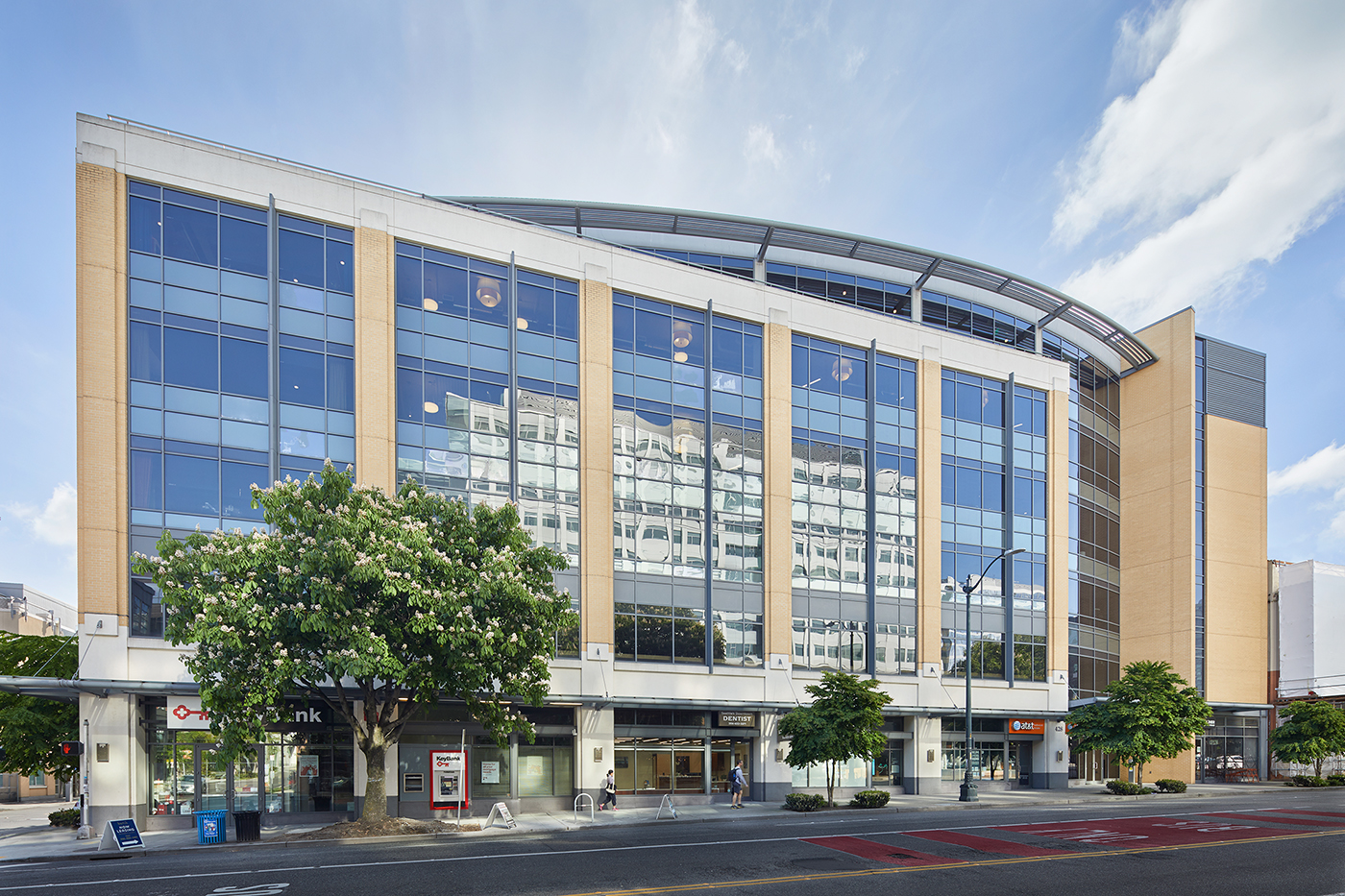
A prime example of this investment strategy is 428 Westlake in South Lake Union, a CollinsWoerman-designed project that was built during a market slump with lab use. Its lab-capable specifications included higher floor-to-floor heights, open configurations, redundant emergency power systems, floor loading and vibration control, and flexible planning zones for mechanical, electrical, and plumbing.
Tenants found it more cost-effective to lease 428 Westlake than to remodel the existing space, highlighting the competitive advantage of upfront flexibility. The building sold for a near market record a decade later, illustrating that designing infrastructure with resilience and adaptability up front supports tenants’ needs and generates long-term value for owners and investors.
2. Design with virtual lab space in mind
Traditional wet lab setups remain essential, but with emerging technology and the rise of AI means dry lab and virtual research space are equally important. Creating flexible environments that can easily accommodate higher technology capable spaces or reconfigured into wet lab bench space enables tenants to shift focus without major renovations.
This kind of modularity allows for seamless adaptation, whether it’s changing the research function of a single bench or pivoting an entire floor to meet urgent public health needs, as many companies did during the pandemic. Flexibility in lab design empowers innovation and resilience.
Building system certifications like WiredScore offer a standardized way to evaluate a building’s technology infrastructure and digital user experience. By incorporating elements of this framework like redundant electrical and data systems into the shell and core of a building, developers can ensure their spaces are adaptable to future technology demands and better equipped to support evolving virtual lab requirements.
3. Accommodate smaller tenants and incubator models
Seattle’s life science ecosystem is no longer dominated by large institutions alone; startups and smaller research groups are fueling growth. Designing buildings that can be rented out into smaller, fully equipped lab suites makes a project more viable for a wider range of tenants.
Flexible MEP systems and adaptable floorplates allow developers to meet the needs of incubator programs and growing companies, so future tenants can scale without needing to relocate.
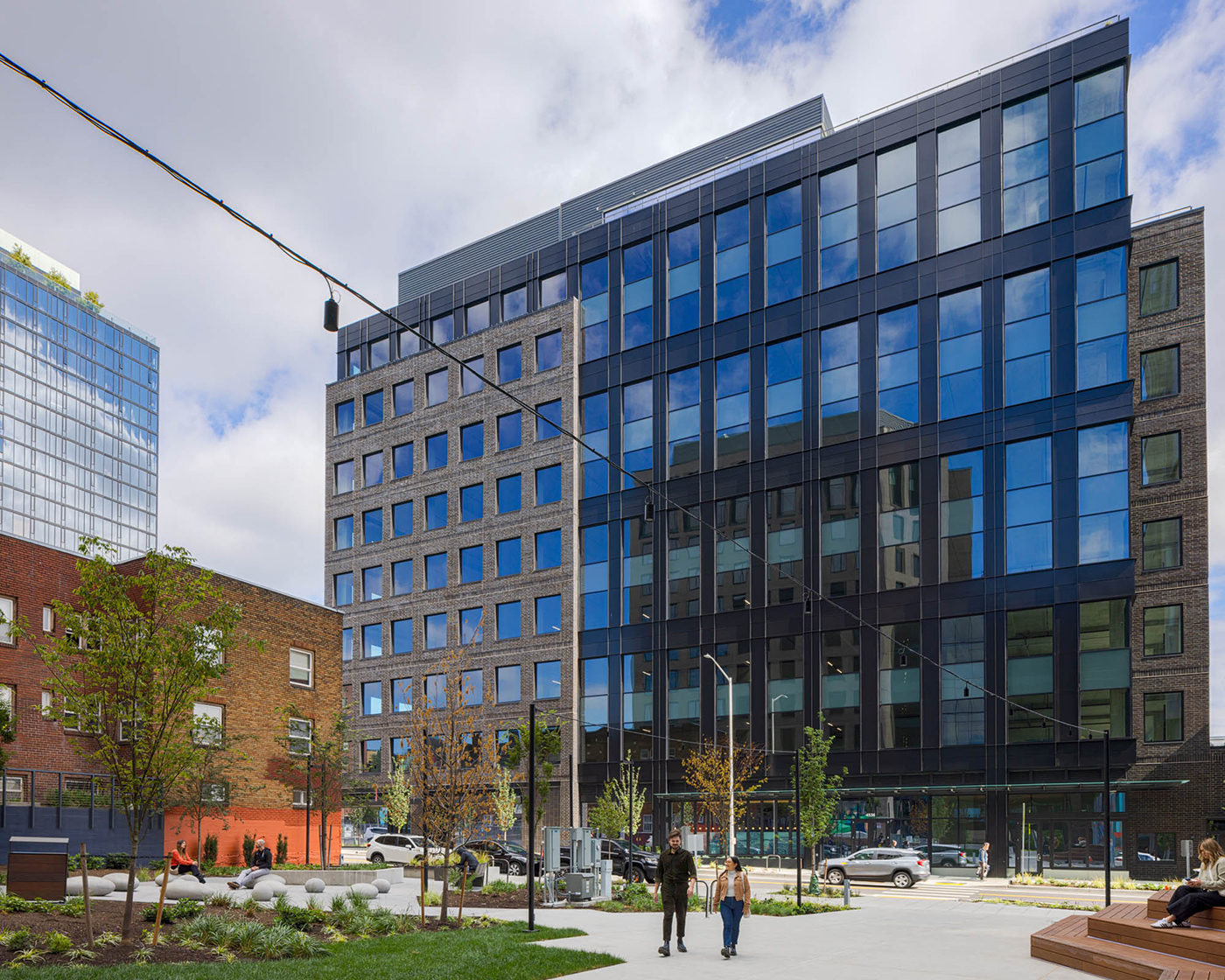
We consistently test fit buildings to accommodate the flexibility of single or multi-tenant opportunities to accommodate market demands. This flexibility was critical when CollinsWoerman designed Chapter Building II in the University District.
4. Design thoughtful amenity spaces
Seattle’s quality of life has been a big draw for life science companies. Life science professionals increasingly desire workplaces that support well-being and collaboration. Thoughtfully designed amenity spaces to promote collaboration, both interior and exterior, enhance the user experience and contribute to a building’s long-term value through attracting and keeping talented and smart people.
Amenities like indoor/outdoor areas, rooftop decks, shared lounges, fitness areas and flexible meeting spaces not only appeal to life science tenants but also keep the building versatile for a variety of future tenants beyond life science.
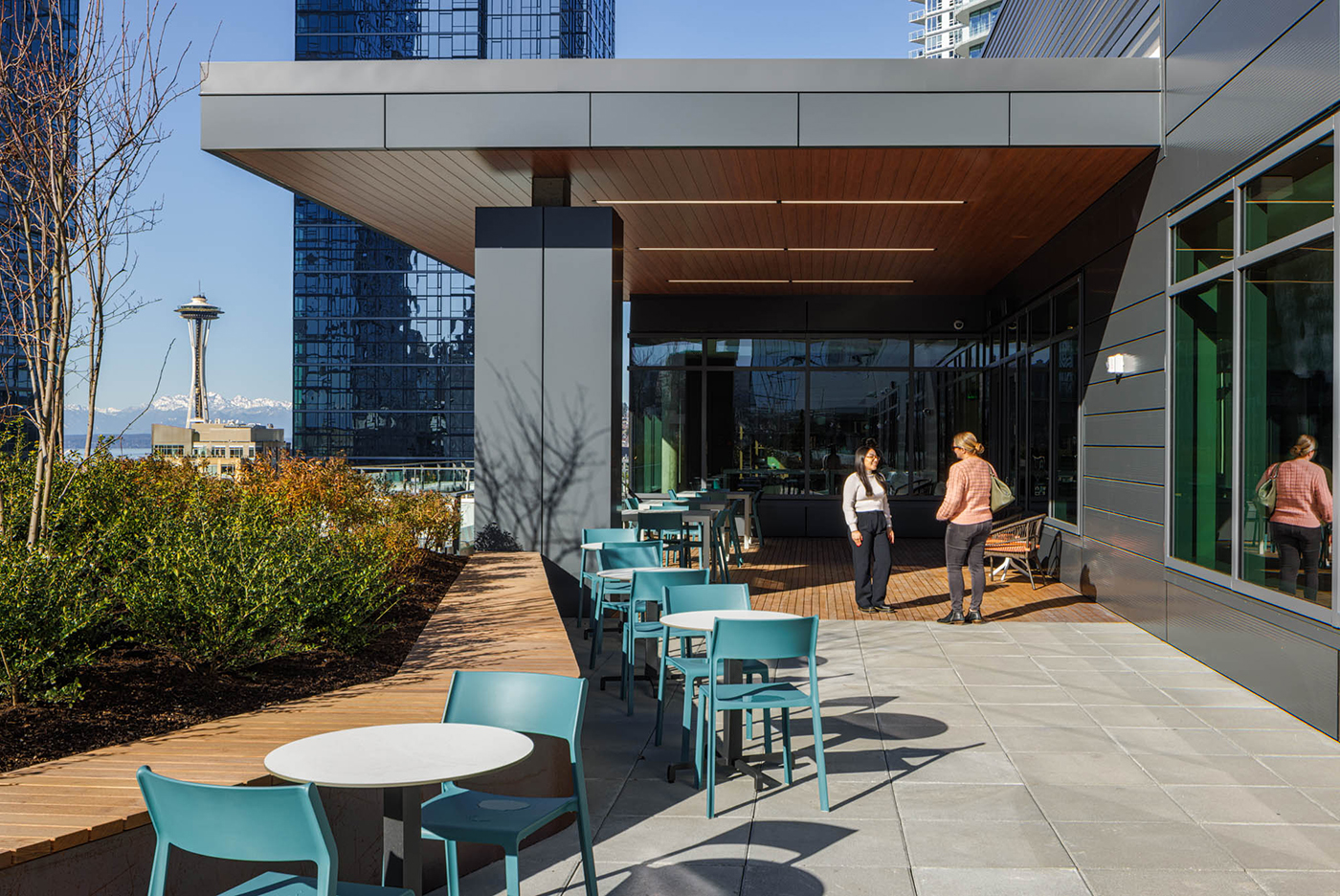
At the newly constructed 1916 Boren, CollinsWoerman prioritized wellness and connection by incorporating indoor/outdoor gathering areas on every floor. These flexible spaces support meetings, casual conversations, or provide a break from work.
The building also features large common areas, a rooftop with landscaped outdoor zones, a breakout room, a spinning facility, and an exercise room to create a holistic work environment that supports productivity and quality of life.
Amenity-rich environments like 1916 Boren appeal to a wide range of users, from life science and tech companies to hybrid workplaces. Spaces designed for comfort, collaboration, and wellness are increasingly becoming a differentiator for companies.
LOOKING TOWARD THE FUTURE
CollinsWoerman has dedicated over 30 years to supporting the growth of the life science sector in the Pacific Northwest. We’ve delivered spaces that enable research, discovery and innovation. As we look ahead, we remain committed to advancing design strategies rooted in flexibility, adaptability and long-term resilience.
Seattle’s potential as a life science powerhouse depends on how well we prepare for change. We can meet today’s demand while building capacity for the future by designing flexible, resilient, and tenant-ready buildings. The future of life science in Seattle won’t be defined by a single building or project, but by how thoughtfully and intentionally we design for what’s next.
Joe Workman is associate principal — market leader at CollinsWoerman. Kristina Rivera is the marketing coordinator at CollinsWoerman.
Other Stories: