 |
Subscribe / Renew |
 |
Contact Us |
| ► Subscribe to our Free Weekly Newsletter | |

Construction Bids
| home | Welcome, sign in or click here to subscribe. | login |


 print print  email to a friend email to a friend  reprints add to mydjc reprints add to mydjc |  |
 |
November 20, 2025

Al Aloosi
|
Conversations surrounding the embodied carbon of our structures have taken the spotlight in recent years, with additional importance placed on the need to transition from concrete and steel structures to mass timber. And rightfully so — steel and concrete alone are estimated to be responsible for around 16% of carbon emissions globally ( Energy Policy, 2023).
Many designers and organizations like SE 2050, a collective of structural engineers committed to designing zero carbon buildings by 2050, see mass timber as a key solution to the climate crisis. But for those projects that can’t do mass timber, what are the opportunities to source responsible, and even climate positive, wood?
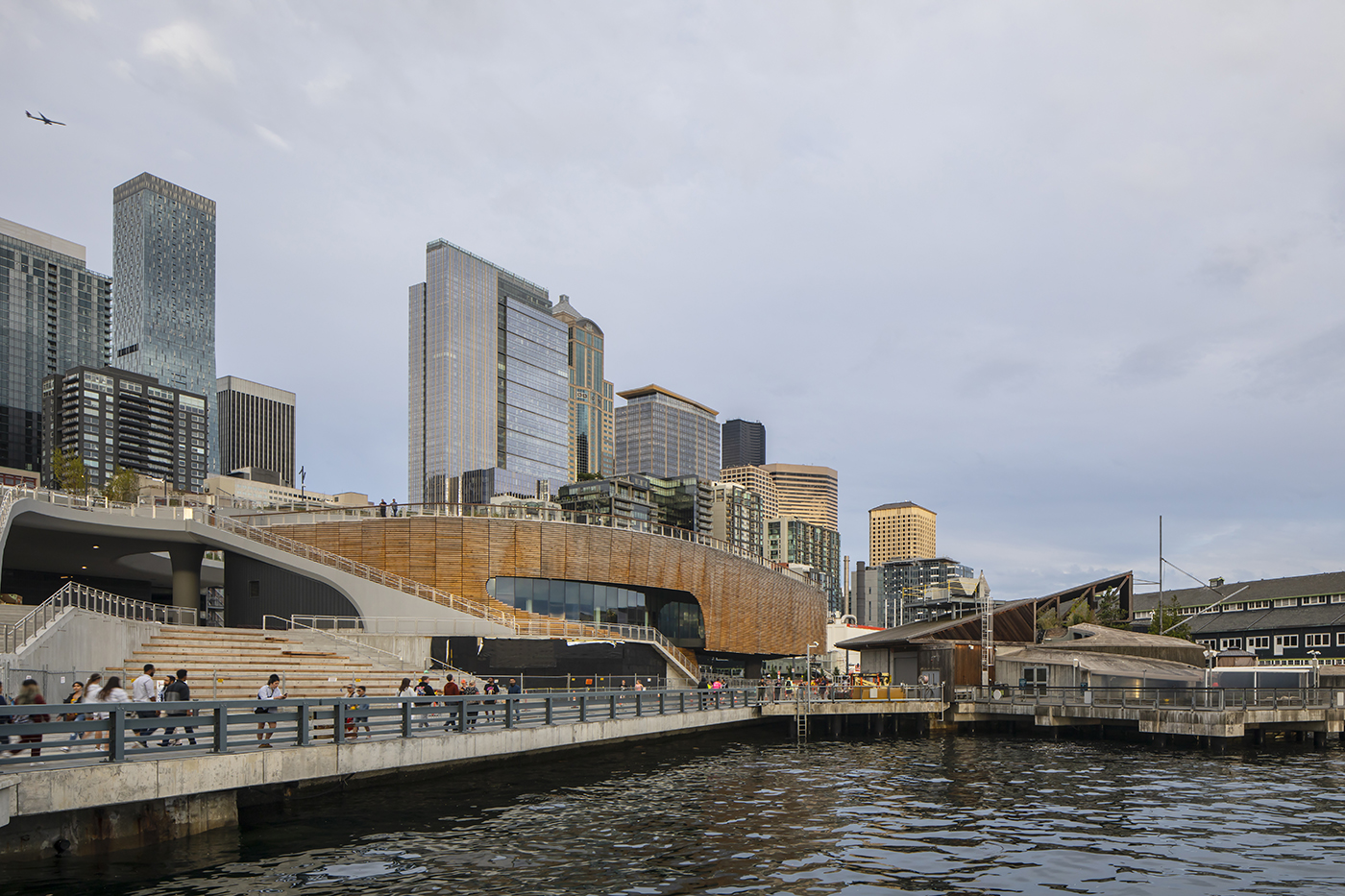
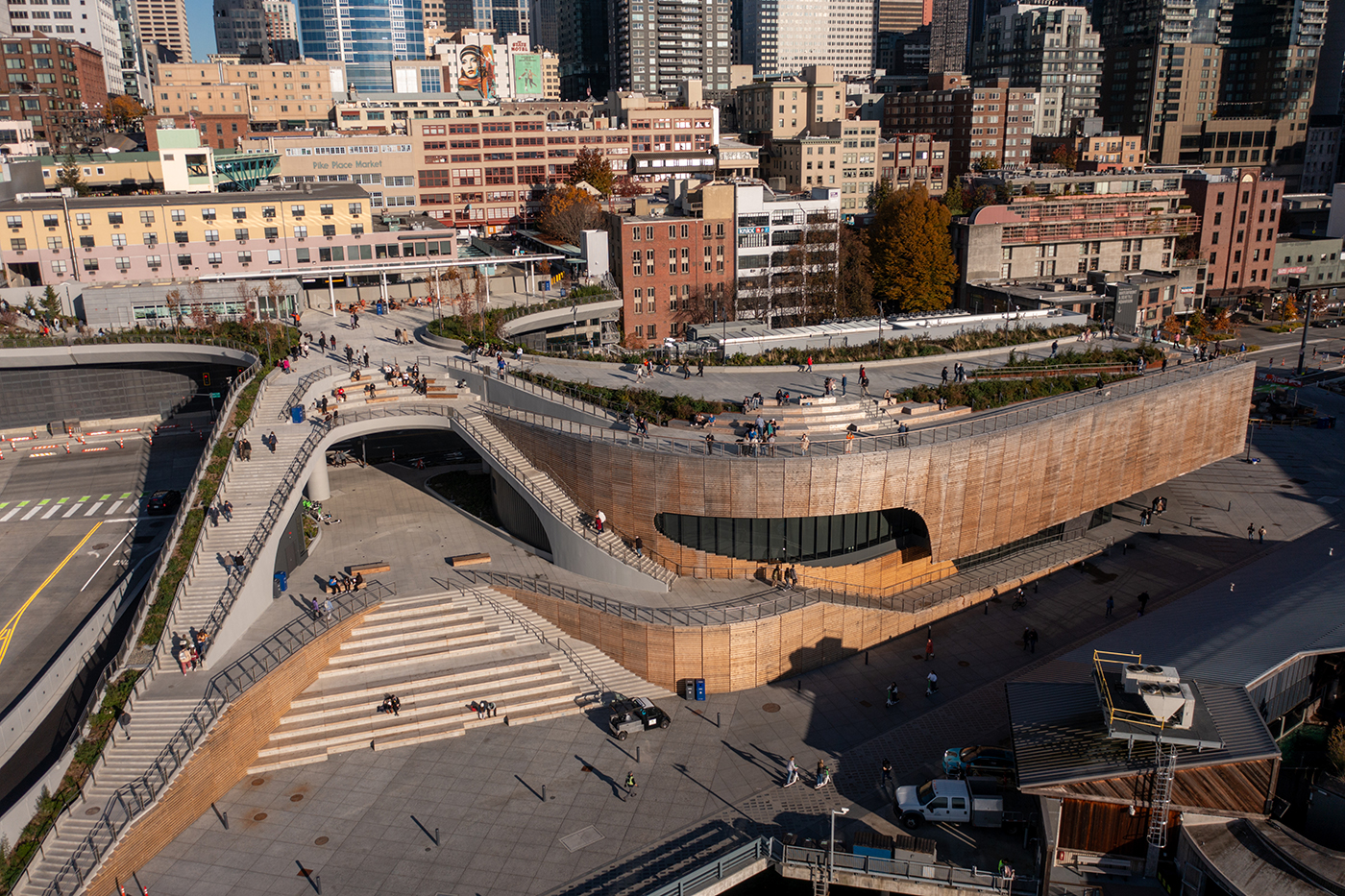
This was a question that the Seattle Aquarium team asked back in 2019, when the owner set the stage for the new Ocean Pavilion project by requiring both FSC and tribally sourced wood at the feature exterior rain screen, which encompasses the entire seaward west façade. The Seattle Aquarium champions local community stewardship, ecological conservation, and waterfront revitalization, and it wanted its new addition to embody these values.
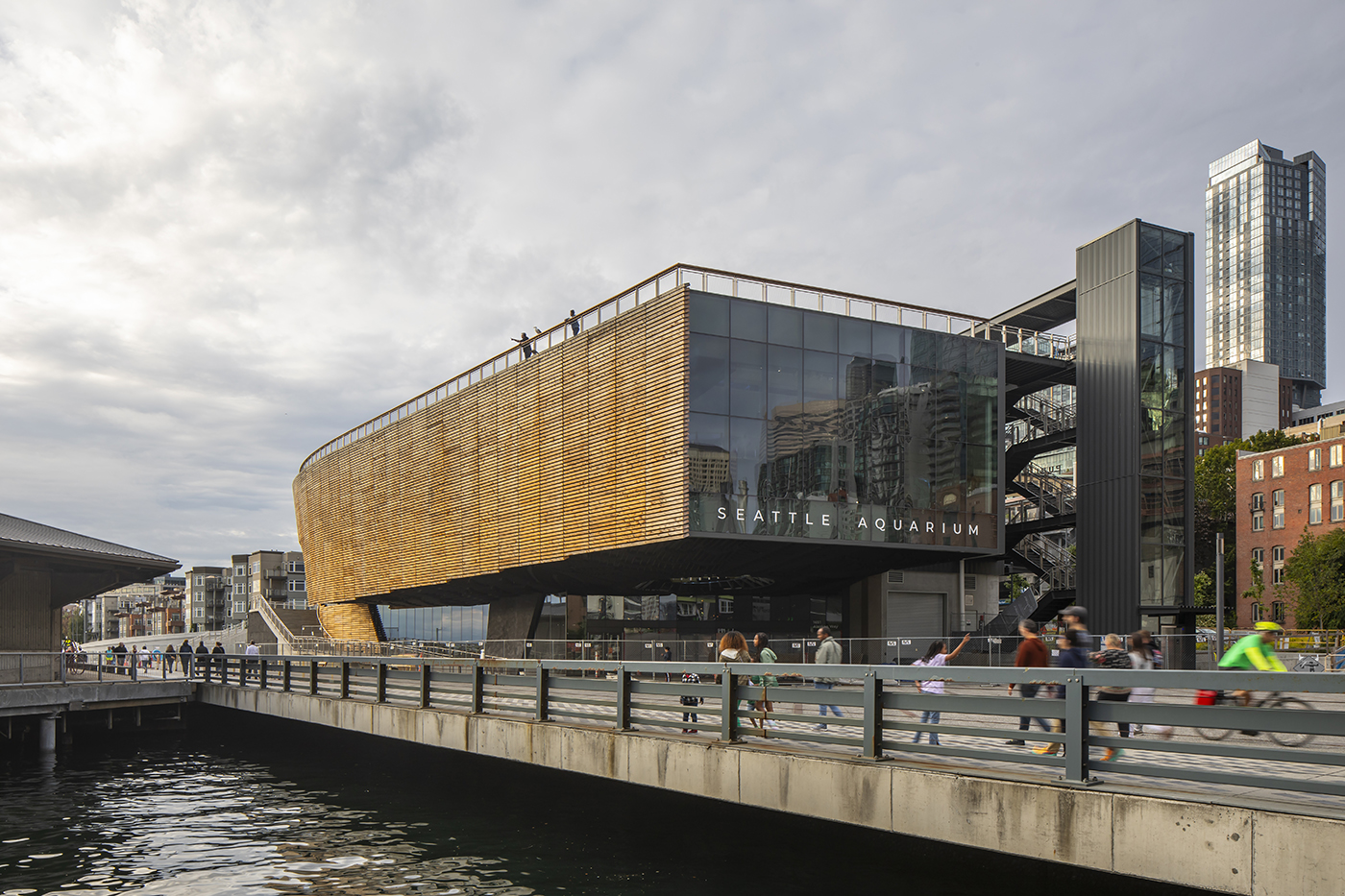
Given the screen’s exposure to the elements, LMN Architects specified the use of Alaskan Yellow Cedar, which is known for its natural rot resistance, longevity, and UV resilience. After a great effort to find a forestry tribal partner that cultivated FSC-Certified Alaskan Yellow Cedar, Turner’s Self-Perform Operations team connected with Taan Forestry located just across the border in Vancouver, BC.
The connection between Turner Construction and Taan Forestry proved to be a natural fit, as both organizations were in lockstep alignment in terms of sustainable stewardship and cultural values.
“Initially, finding suppliers that met both FSC and Tribal Wood criteria was challenging,” explained Vandad Mazarei, SPO Project Manager. “Tribal communities exemplify the ideal approach to sustainable forest management, guided by centuries of land stewardship. As a result, many tribes view certification as an added bonus rather than a necessity. Nonetheless, FSC certification is widely recognized by the public, and sharing that narrative and supporting the brand is crucial. Connecting with Taan Forestry was a fantastic achievement and made the procurement process incredibly rewarding.”
Mazarei continued: “This collaboration not only highlights the importance of sustainable practices but also bridges the gap between traditional knowledge and modern certification standards. By working with Taan Forestry, we were able to showcase the exceptional management practices of tribal communities while also adhering to globally recognized standards. This dual approach ensures that we maintain the integrity of our forest lands and promote sustainable practices on a larger scale.”
The project’s commitment to sustainability and responsible material sourcing was recognized with the FSC Leadership Award in 2025.
The Seattle Aquarium sits proudly aside the Salish Sea; the naturally durable rain screen of the Ocean Pavilion is starting to develop a beautiful patina as the summer sun and seawater sprays begin to change the façade into a more permanent Pacific Northwest expression.
The Seattle project is not the only project to proudly tout its environmentally friendly architectural wood features at Turner. In Sacramento, another public-facing project is telling a story with its wood finishes. The New Natural Resources Headquarters building, home to the Natural Resources Agency, features a stunning 30-foot wood wall upon entry into its cavernous lobby. The 7,000-square-foot curved wall is made from two species: California Walnut sourced from retired Californian orchards, and Cedar salvaged from the devastating 2018 Paradise wildfires.
Restoration wood, as this genre of salvaged or preventatively harvested wood is referred to, helps prevent the spread of wildfire, pests, and disease (such as the pine beetle), and provides an alternative end-of-life solution for trees that are most frequently chipped and burned. The wood wall, which was sourced, milled, and finished by Tule Peak Lumber in California, was also installed by Turner Self-Perform Operations.
Looking forward, Turner is looking for ways for projects to express actively ‘good’ wood features even when they aren’t wood structures.
“Tropical hardwoods are a major point of concern in our industry,” says Emi LaFountain, sustainability strategy manager for the West Coast. “Many teams don’t realize that commonly used tropical hardwoods like Ipe and Teak come from high-risk rainforests where sustainability standards are weak. Without FSC certification, use of these woods is highly likely to result in illegal and unsustainable deforestation.”
Because of this, Turner Construction is collaborating with organizations such as the Rainforest Alliance, the Climate Smart Wood Group, and other design firms to develop a strategy to eliminate the use of non-certified tropical hardwoods and promote alternative exterior material solutions, like those used at the Seattle Aquarium.
“We really don’t need to be turning to tropical hardwoods to meet our exterior wood needs,” explains LaFountain, who has been working on a guidance document with ZGF, SERA Architects, and Sasaki to outline the alternatives to woods like Teak and Ipe. “We have solutions like polymerized wood, charred shou-sugi-ban, acetylated wood, and just naturally rot-resistant North American species like Yellow Cedar, which can not only prevent deforestation in the tropics but also support local communities. FSC certification is great when it must be used, but I think it’s important that we look to what we have locally first.”
Ali Al Aloosi is a project engineer with Turner Construction in Seattle, bringing over 20 years of experience across construction, structural engineering, and academia.
Other Stories:


