 |
Subscribe / Renew |
 |
Contact Us |
| ► Subscribe to our Free Weekly Newsletter | |

Construction Bids
| home | Welcome, sign in or click here to subscribe. | login |


 print print  email to a friend email to a friend  reprints add to mydjc reprints add to mydjc |  |
 |
November 20, 2025

Clinton
|
When Overlake Medical Center began planning energy upgrades across its Bellevue campus, the goal wasn’t modest: achieve Clean Buildings Performance Standard compliance, improve energy and water performance, and do it all without disrupting the ongoing operations of the hospital and medical centers.
For many critical environment facilities, that kind of improvement starts and ends with HVAC or lighting controls. At Overlake, the strategy went deeper — into the walls, beneath the floors, and beyond the pipes. The project team, which included UMC, Overlake’s Facilities team, Puget Sound Energy, the Washington State Department of Commerce, and others, took a carefully considered mechanical approach that accounted for multiple benefits, including piping modifications, energy management strategies, and controls optimization. By prioritizing high-impact, low-risk measures such as lighting upgrades and equipment replacements, the team helped raise the site’s EnergyStar® percentile from the 24th to 61st, demonstrating meaningful progress for the healthcare market.
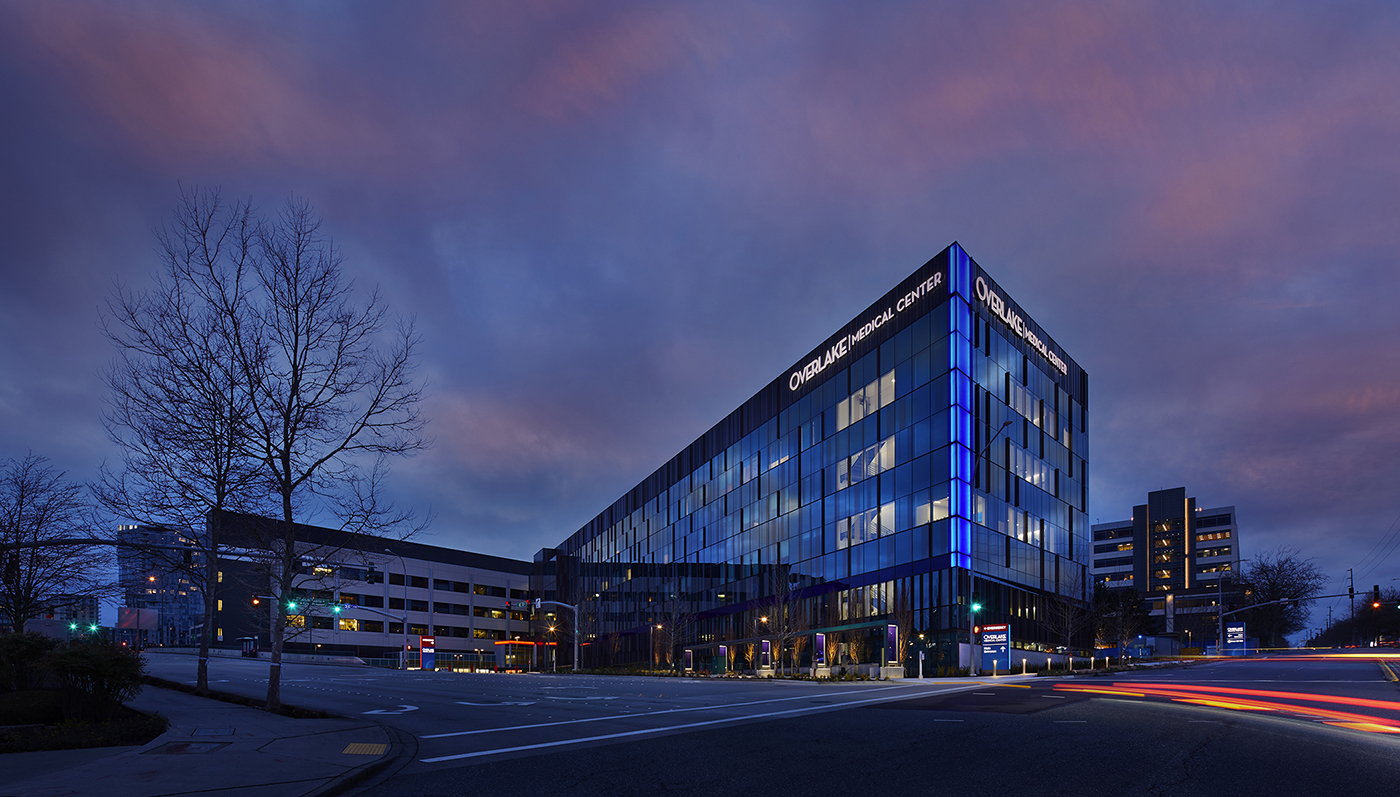
It’s a notable milestone in the healthcare sector, where 24/7 operations, infection prevention strategies, and occupancy constraints often make deep retrofits challenging. Overlake’s success underscores a key lesson: performance gains require strategic project selection and a willingness to treat plumbing and mechanical systems as central to energy strategy.
CONTROLS DRIVING CLEAN-BUILDINGS BREAKTHROUGH
At Overlake, energy transformation went beyond compliance: it was smart, data-driven decisions. As part of the hospital’s push to meet Washington’s Clean Buildings Performance Standard (CBS), the facilities team, in partnership with UMC, optimized energy usage across plumbing, HVAC and water systems.
The process began with a detailed energy modeling audit. UMC identified over 40 energy efficiency measures (EEMs) and carefully evaluated payback, risk and operational impact for each. Early EEMs focused on eliminating waste and conserving energy with high-return, low-cost solutions. These were prioritized ahead of larger capital improvements, ensuring that each project delivered meaningful results with minimal operational disruptions.
“Project selection [was] critical,” said Jim Dobbs, director of facilities at Overlake Medical Center. “We focused on measures that provide multiple benefits including energy savings, operational improvement, and long-term value instead of just chasing the biggest capital project. That strategy has paid off.”
PROVEN RESULTS, PROVEN MODEL

UMC’s approach was deliberate: energy efficiency measures were carefully selected and sequenced, starting with waste elimination and conservation strategies that often deliver returns exceeding 100%, followed by more complex equipment upgrades with lower ROI. Each project was evaluated for payback, operational impact, and long-term value, ensuring that investments contribute meaningfully to both energy performance and financial outcomes.
Subsequent initiatives were chosen strategically, considering life-cycle costs, expected equipment longevity, and broader sustainability goals, including electrification where appropriate. Demand-side management initiatives typically achieve ROI over 50%, while equipment replacements are closer to 20%, reinforcing a consistent focus on high-impact, low-risk measures that maximize both efficiency and value.
PHASED EXECUTION, MEASURABLE IMPACT
The hospital remained fully operational while the UMC-led project team completed the upgrades, requiring meticulous planning, carefully scheduled shutdowns, and strict compliance with healthcare codes and safety standards. Early coordination with trade partners allowed the phasing plans to align with clinical operations, reducing risk, and increasing efficiency.
“The collaboration and planning behind our surgical suite VAV and terminal unit upgrades were exceptional,” Dobbs said. “We managed a phased shutdown of nine surgical suites over six weeks and not only avoided anticipated disruptions but also achieved record surgical volumes. That was a huge win for the team.”
The team also identified opportunities to consolidate and optimize equipment replacements, scheduling tie-ins after hours, and during low-demand periods to avoid operational impacts. This collaborative approach minimized disruptions and delivered meaningful results, both in energy performance and financial returns.
A MODEL FOR THE INDUSTRY
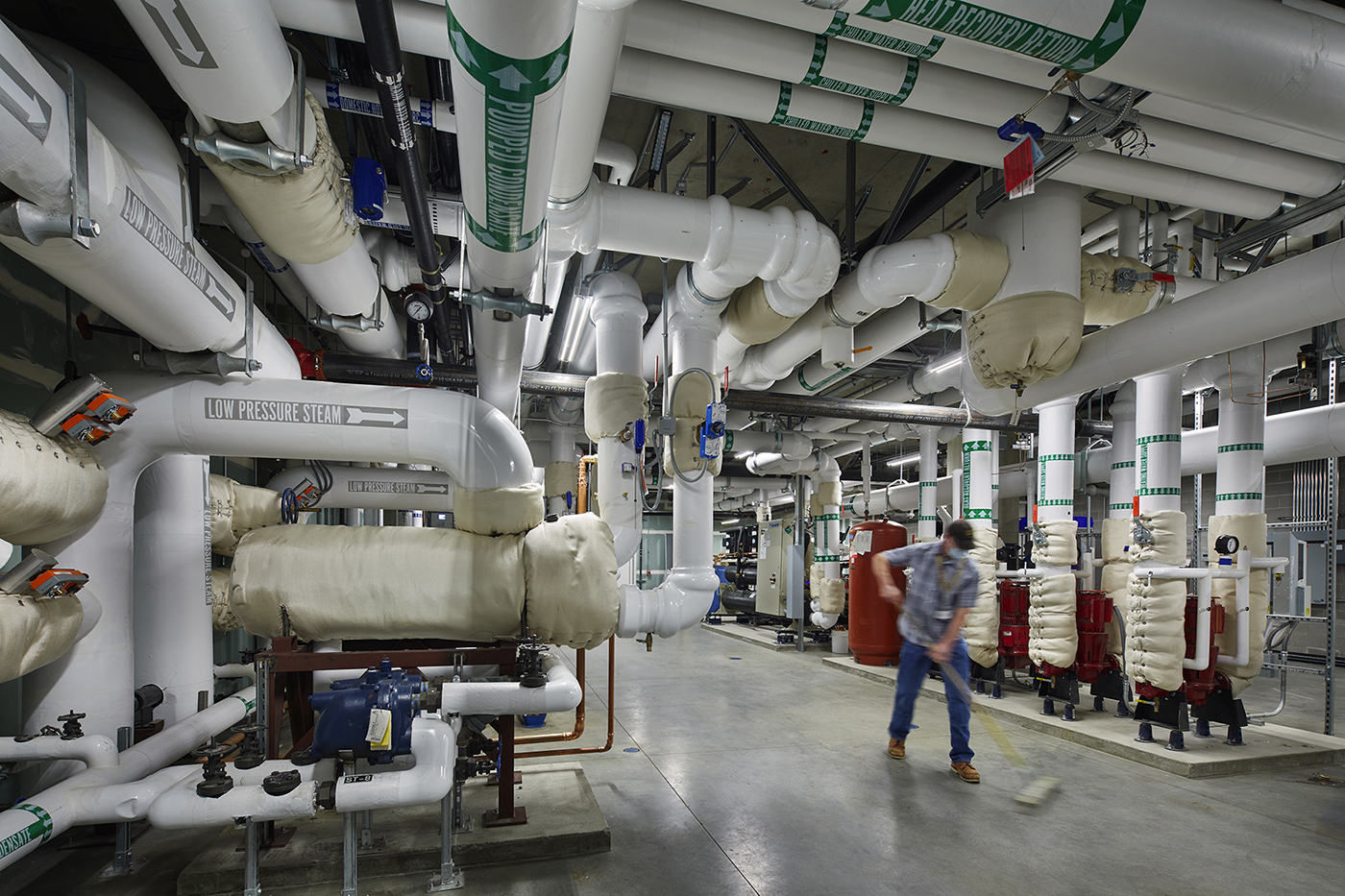
Overlake achieved measurable energy savings, including 4,610,045 kilowatt hours (a 16% reduction from baseline year ending July 2025, per PSE) and 162,881 therms saved from the Commerce baseline. These savings translated into substantial incentives, with the Washington State Department of Commerce offering $2.2 million in funding and PSE projecting approximately $2.3 million in savings, plus additional payments if sustained over four years.
This project demonstrates that building systems cannot be treated in isolation. Careful project selection, balancing energy savings, cost, risk, and long-term impacts, are as important as the measures themselves.
Early collaboration among owners, engineers, contractors, and facility staff lays out the foundation for smarter sequencing, better operational alignment, and effective use of incentives. When projects are chosen strategically, executed thoughtfully, and sequenced carefully, they deliver results that extend beyond compliance to lasting operational and financial value.
Martin Clinton is UMC’s building performance services manager.
Other Stories:


