|
Subscribe / Renew |
 |
Contact Us |
| ► Subscribe to our Free Weekly Newsletter | |

Construction Bids
| home | Welcome, sign in or click here to subscribe. | login |


 print print  email to a friend email to a friend  reprints add to mydjc reprints add to mydjc |  |
 |
October 31, 2024
Seattle now ranks with the many cities across the country that have made major efforts to revitalize their downtown waterfronts. The striking new Overlook Walk and the Seattle Aquarium’s Ocean Pavilion are part of an $806 million investment in new public spaces and cultural facilities along Seattle’s central waterfront.
With the anticipation of millions of new visitors, this decades-long project has the potential to be truly transformational at a time when downtown Seattle really needs it. However, in spite of tremendous economic potential, restrictive zoning is still in place that prioritizes traditional industrial uses and prohibits residential, which could leave some areas around downtown blighted and underutilized for years to come.

If city leaders want to leverage the new Waterfront Park as a catalyst to help revitalize downtown, it needs to consider adopting more inclusionary zoning that promotes new jobs as well as providing more housing options and new spaces for entertainment-oriented retail, arts and cultural facilities.
TACOMA: LEADING THE URBAN WATERFRONT TRANSFORMATION
In the last 20 years, cities throughout the Pacific Northwest have made great strides in redeveloping their central waterfronts. Cities such as Tacoma, Bremerton, Bellingham, Vancouver and Everett have invested hundreds of millions of dollars on the cleanup, master-planning and ultimately the transformation of formerly blighted, contaminated and underutilized industrial lands into vibrant new neighborhoods.
In most cases, water and rail-dependent industrial uses have been both preserved and prioritized. But in addition, a wider and more inclusive mix of uses has been introduced to provide better public access, increased economic development, more housing options and new jobs that also foster tourism.
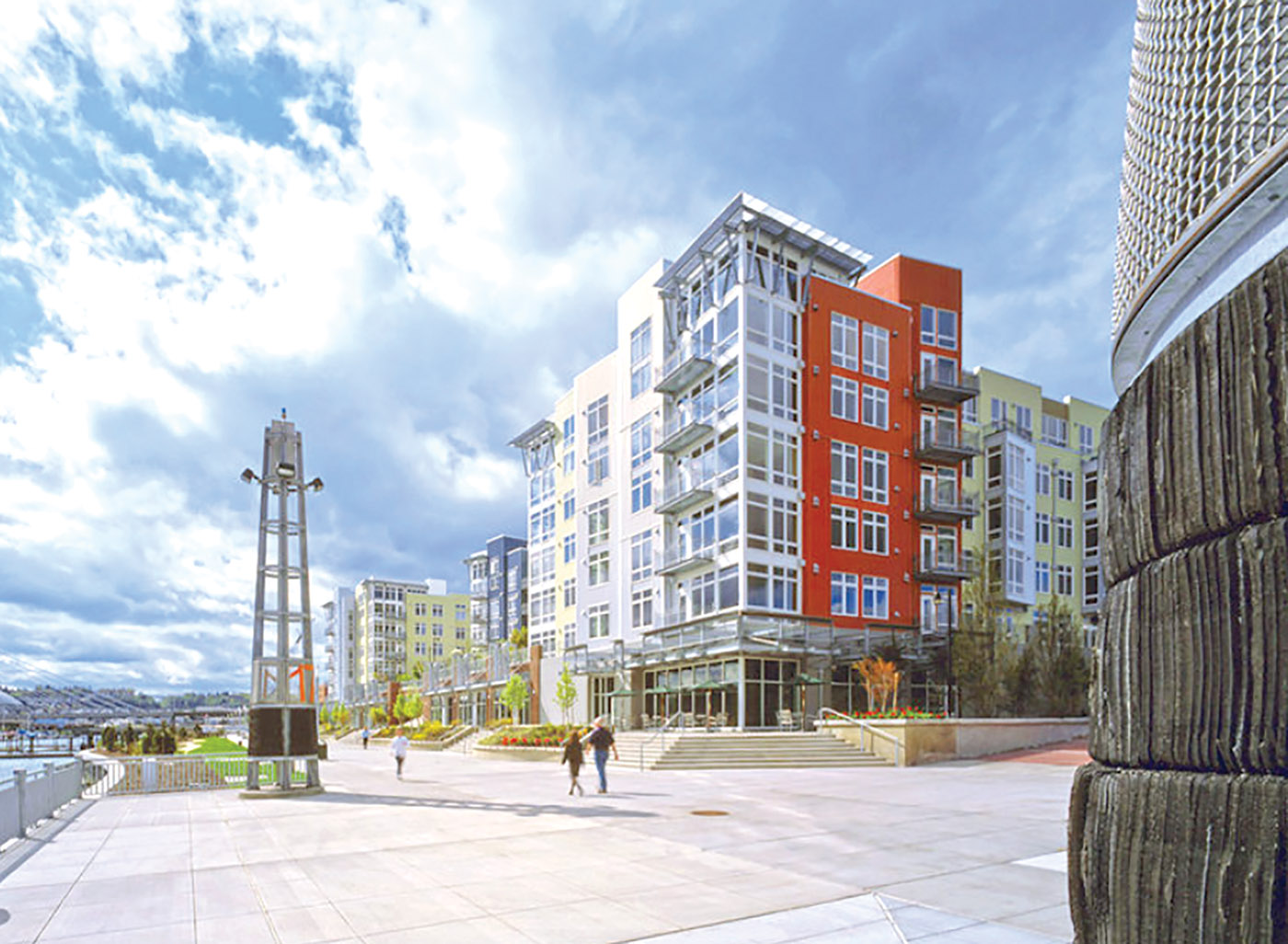
The most impressive and complete example is Tacoma’s Foss Waterway. The city of Tacoma partnered with the Port of Tacoma to transform underutilized surplus railyards into a thriving new neighborhood that puts public access, culture and recreation at the forefront. The Museum of Glass provides the cultural anchor, connecting to the UW Tacoma campus and the museum district that also includes the Washington State History Museum and Tacoma Art Museum.
In addition, hundreds of new housing units have opened, as well as new businesses and business incubators. During the 20-year transformation of this once blighted area, the Port of Tacoma has also maintained and increased its investment and commitment to Tacoma’s maritime industries. The once highly-contaminated Foss Waterway has now become a national model for environmental stewardship and sustainability, and the strong partnership between the city and the port has helped foster a collaborative success and provided a new front door to the city.
SODO AND THE STADIUM DISTRICT
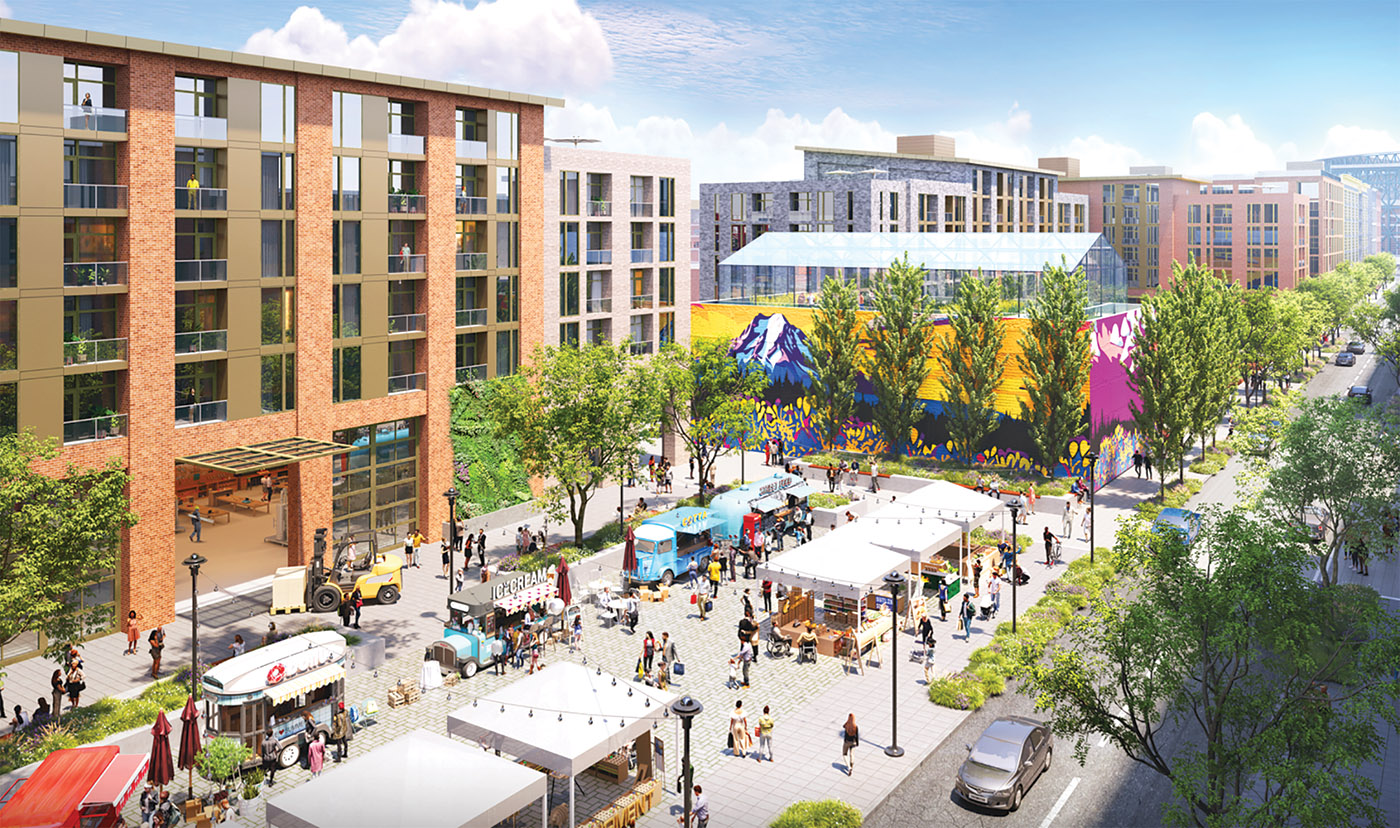
Ironically, back in Seattle, the downtown neighborhood that would likely benefit the most from our new waterfront is also the one that currently has some of the most restrictive zoning. The area near the stadiums, just south of Pioneer Square on the north edge of SoDo, is a kind of a no-man’s land when it’s not Game Day. In spite of $1 billion worth of stadium investment (T-Mobile Park and Lumen Field), Seattle’s so-called Stadium District has languished for decades. New development has been anemic, with the exception of the Silver Cloud Hotel and two mid-rise office buildings. And yet, while Seattle’s Stadium District sits relatively quiet and undeveloped, most other U.S. Cities capitalized on the tremendous economic impact of new stadiums by developing new mixed-use neighborhoods, capitalizing on sports and entertainment retail.
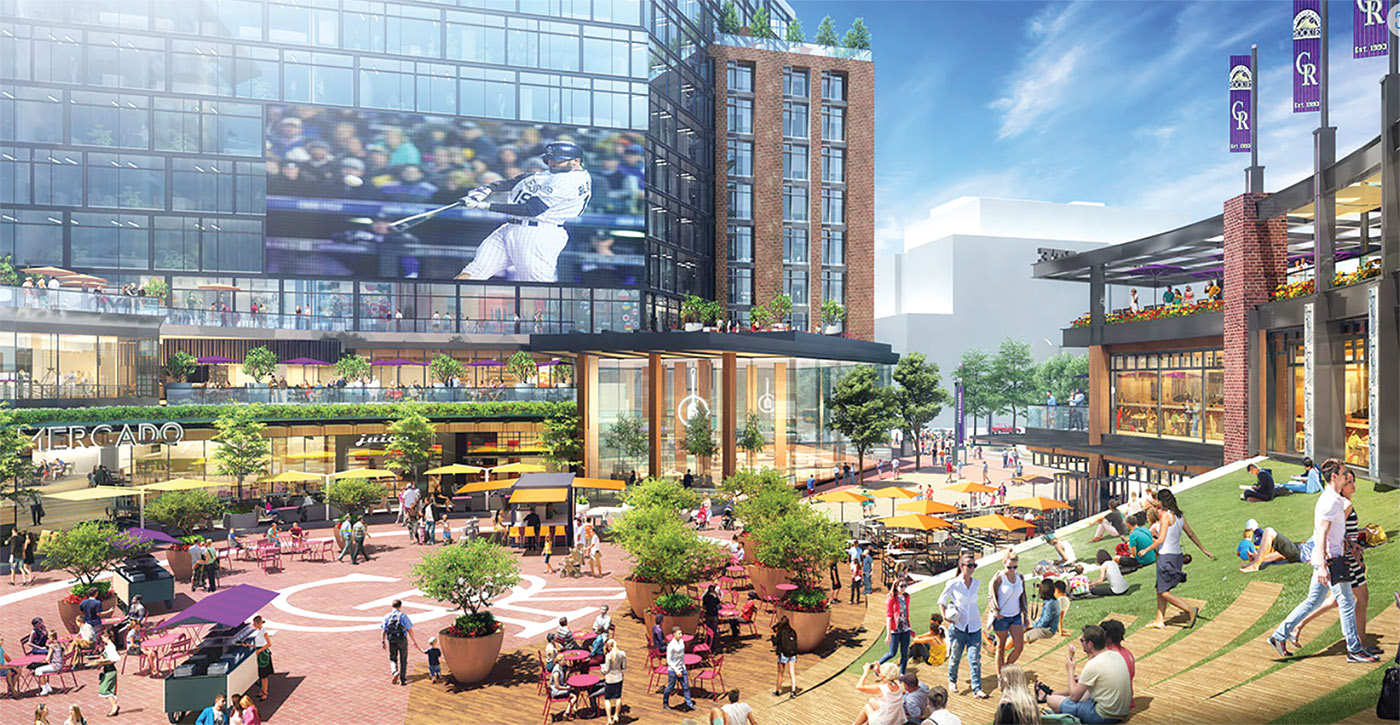
Lively and welcoming, these new Stadium Districts are showcasing how fun downtowns can be, with entertainment venues, small businesses, restaurants, hotels and yes, multiple housing options. Cities such as Oakland, Denver, Milwaukie, San Diego, Anaheim, Tampa, Jacksonville and Kansas City have all experienced major transformations within their stadium districts.
“With the completion of the new waterfront, I believe that there is a tremendous opportunity to further revitalize downtown Seattle with a vibrant new stadium district,” says economist Matthew Gardner. “However, be assured that, without a unifying vision or leadership, current zoning will offer extremely limited opportunities and will likely result in minimal economic development.”
AN EXTRAORDINARY OPPORTUNITY FOR SEATTLE
To any urban economist, planner or enthusiast, the neighborhood near Seattle’s stadiums provides an extraordinary opportunity for economic growth, new jobs and downtown revitalization. The stadiums themselves bring millions of visitors each year, generating substantial pedestrian traffic. And with the new pedestrian-oriented Railroad Way serving as the south terminus of Waterfront Park, the area is easily accessible to the Seattle Ferry Terminal, LINK light rail and multiple bus routes.
In spite of this tremendous potential, the city has maintained “Urban Industrial” zoning that prohibits any type of housing, instead encouraging industrial and office, retail and hotel uses. Residential was proposed and supported by most of the area property owners but was ultimately excluded by the City Council two years ago.
Since then, no new projects have been proposed in this neighborhood. Instead, property owners are planning for mixed-use projects that do include residential, which they believe will help transform this underutilized area into a more complete, safe and vibrant neighborhood.
“We believe a reimagined Stadium District that includes a modest amount of mixed housing and spaces for light industrial businesses would complement and help to buoy the development of commercial and hotel spaces near the two stadia and improve the area’s public safety,” says Joshua Curtis, Executive Director for the Washington State Ballpark Public Facilities District. “The addition of residents and workers to this area would boost the economic activity of struggling businesses in the Chinatown International District and Pioneer Square.”
In addition to thousands of square feet of new light-industrial “maker spaces,” entertainment-oriented retail and hotels, property owners near the stadiums have proposed more than 900 units of workforce and market-rate housing. All of this planning indicates that tremendous momentum is building, however there’s still one major catch: no housing is currently allowed.
Considering that almost every other stadium district in the country is thriving with all of the above uses, considering that downtown Seattle is in trouble, and considering that we are experiencing a major housing shortage, shouldn’t the city consider a compromise that allows a more inclusive mix of uses?
Driven by Mayor Harrell’s Downtown Activation Plan, city leaders and planners are starting to think outside the box in efforts to revitalize our downtown. One sign of progress is the WOSCA site, a 5-acre parcel just west of Lumen Field that is going through a city-sponsored RFP process. The development of this site could serve as a catalyst that incorporates Seattle’s maritime industrial heritage while also including a more appropriate mix of uses that reflects the site’s proximity to the stadiums.
To its credit, the city of Seattle has done more to preserve its maritime industries than most cities. While there’s no doubt that water-dependent uses must be close to the shoreline, other industrial uses such as warehouse storage and fulfillment centers do not need prime locations near the heart of downtown.
Cities are organic in nature, and change is inevitable. The fact that in the last 20 years the Kent Valley and other more affordable suburban industrial areas have thrived, while Seattle’s Stadium District has languished, is a call to pause and consider what’s the best way to promote a healthy and vibrant downtown.
With the upcoming completion of the new Waterfront Park, a mixed-use Stadium District that includes housing offers a unique opportunity to integrate Seattle’s thriving maritime industries with the rest of its downtown.
A new neighborhood that preserves Seattle’s industrial heritage while celebrating sports and entertainment could result in a safe, thriving destination, creating hundreds of new jobs, multiple opportunities for small businesses and much-needed housing for all income levels. This could be a win-win situation for Downtown Seattle, and our underdeveloped Stadium District would finally be allowed to flourish.
Scott Surdyke is a development manager and land use consultant specializing in transit-oriented and mixed-use development.
Other Stories: