 |
Subscribe / Renew |
 |
Contact Us |
| ► Subscribe to our Free Weekly Newsletter | |

Construction Bids
| home | Welcome, sign in or click here to subscribe. | login |


 print print  email to a friend email to a friend  reprints add to mydjc reprints add to mydjc |  |
 |
October 31, 2024

Hook Spooner
|
A stop along Tacoma’s revitalized Ruston Way, the expansion of Dickman Mill Park serves as a testament to how waterfront development can balance history, environmental resilience and community engagement. Once home to the longest-operating sawmill on Tacoma’s waterfront, the park now features restored artifacts, enhanced ecological habitats and design strategies that counter the pressing challenges of sea level rise. As waterfront redevelopment continues to shape the Pacific Northwest, Dickman Mill Park offers a compelling case study in how cities can blend industrial heritage with modern environmental goals.
A GLIMPSE INTO TACOMA’S INDUSTRIAL PAST
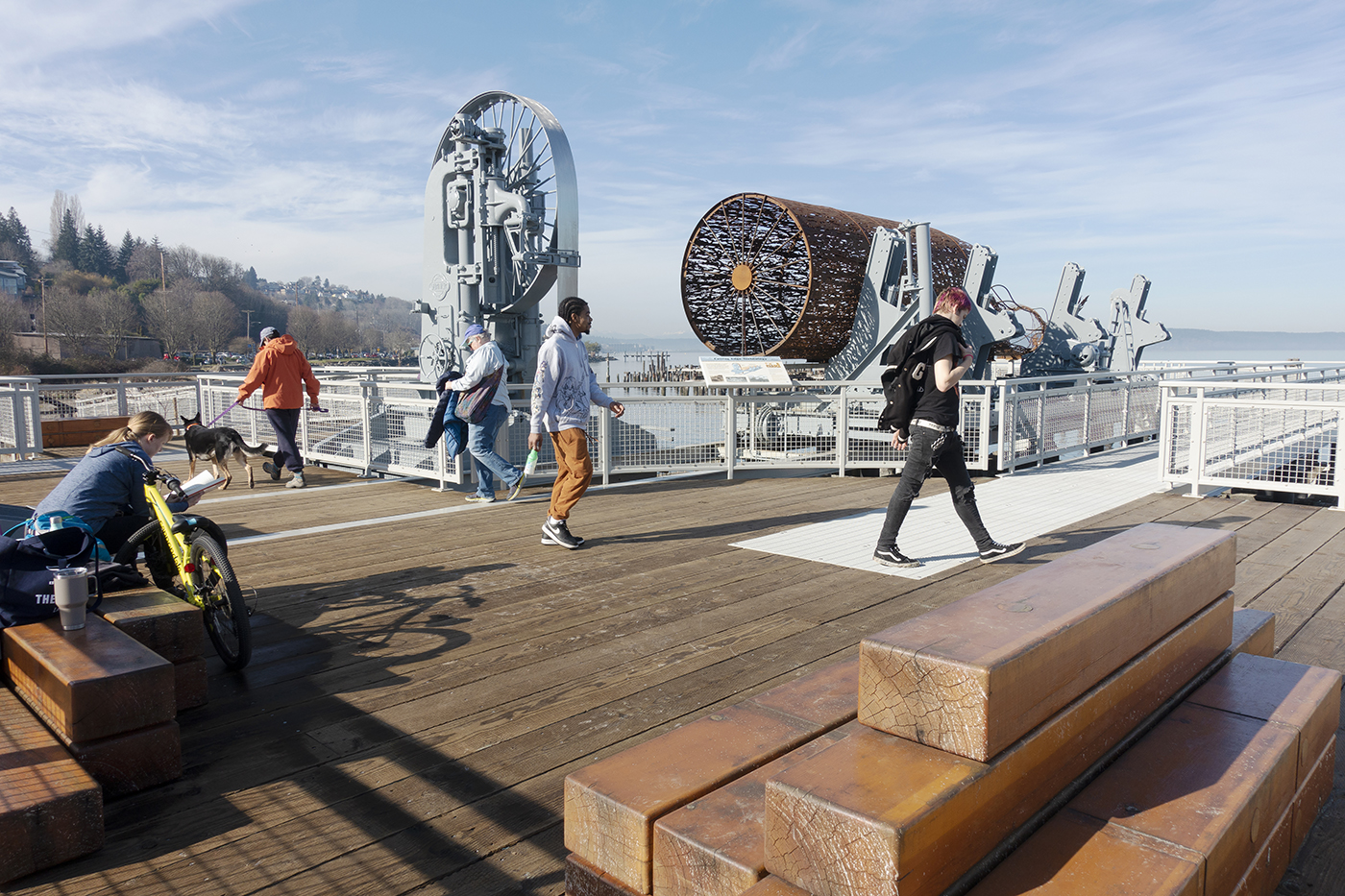
The Dickman Mill site, established as a lumber mill in 1889 and operational until 1977, hosted one of the most significant players in Tacoma’s thriving timber industry. Situated along Commencement Bay, the mill was part of a bustling waterfront filled with sawmills and other industrial enterprises. Today, while the hum of machinery has long faded, the restored head saw— a 15-ton mechanical marvel —stands as a centerpiece of the park, offering visitors a tangible link to the city’s past.
However, this restoration isn’t merely about preserving history; it also serves as a critical environmental and educational project. The Dickman Mill Park expansion, completed in 2021, was driven by the vision of Metro Parks Tacoma and a multidisciplinary team led by landscape architects. The goal: to create a public space that honors Tacoma’s industrial roots while advancing efforts to restore and promote the ecological health and recreational benefits of its shoreline.
ENVIRONMENTAL RESILIENCE AND RESTORATION
The design team prime consultant was Anchor QEA, whose services included landscape architecture, geotechnical and civil engineering, environmental permitting and mitigation, natural resources and investigation, public outreach and construction management. The team also included architect and historic preservation specialist Ron Wright Architects/Associates, structural engineering subconsultant WSP, electrical engineering subconsultant Cross Engineers and contractor Redside Construction.
The site’s waterfront location is environmentally sensitive, and its history of industrial uses created the need to address environmental concerns. From nearshore debris removal to habitat restoration, the team designed each step in the process to mitigate human impact on the surrounding environment, building off previous shoreline cleanup efforts.
The design focused on restoring nearshore, beach backshore, and riparian habitats, which are crucial for supporting local wildlife, including salmon populations. Crews removed old industrial debris, such as bricks and concrete, and introduced native plants like dune grass and gumweed to enhance the coastal marsh. Some of the bricks recovered from the shoreline had historical significance and markings, so the team used them in the head saw’s foundation. DNR is removing hundreds of creosote piles just offshore of the project site — another plus for ecological restoration.
By removing sections of vertical walls in the nearshore area to improve tidal exchange and ensuring overwater decking was grated to allow light penetration, the design helped restore critical nearshore habitat that supports juvenile salmon.
RESILIENCE IN THE FACE OF SEA LEVEL RISE
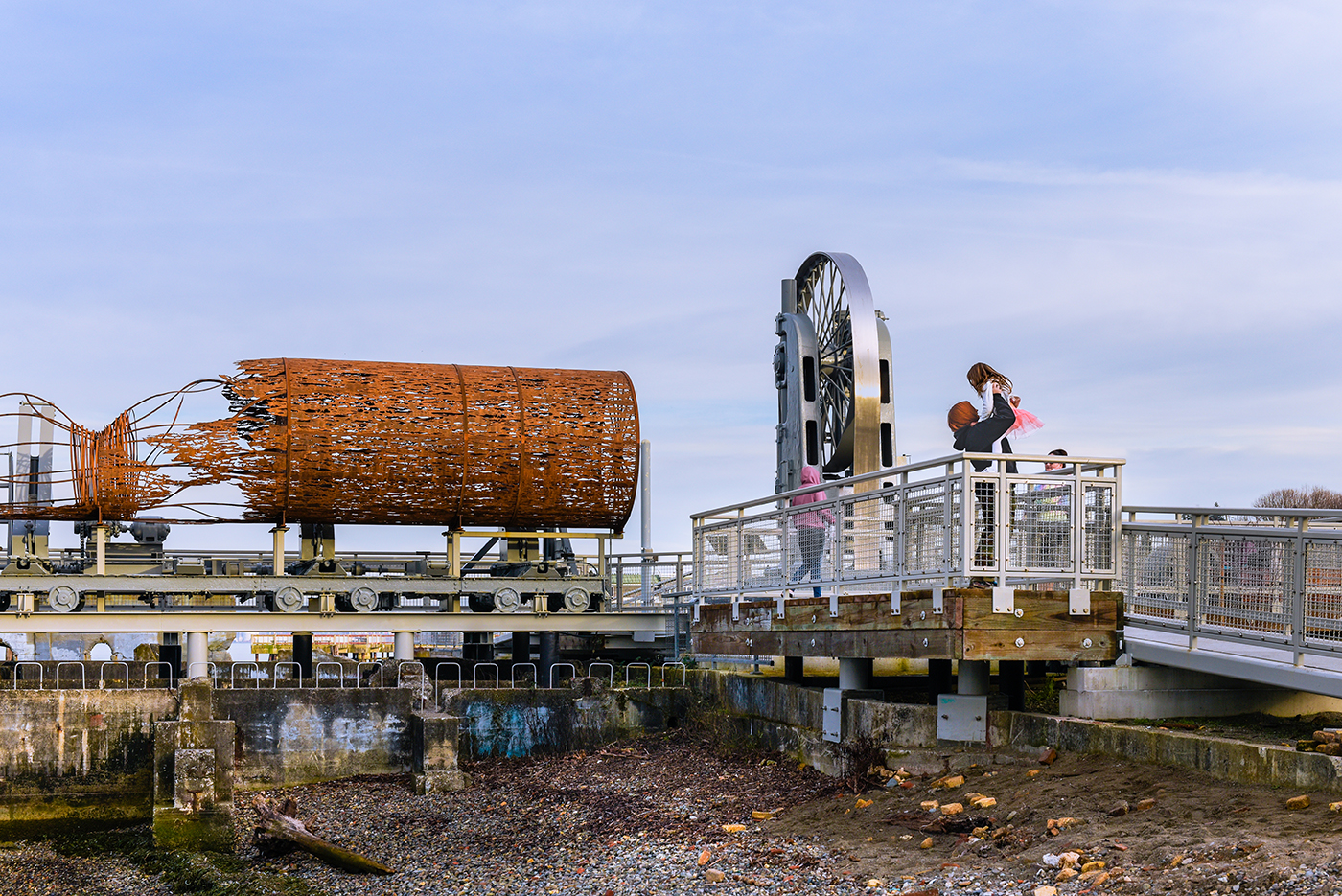
One of the key resilience strategies was elevating the park’s decking and plaza areas. Informed by coastal engineering evaluations, construction crews raised the head saw plaza three feet above the surrounding ground level to account for projected rising waters. This elevation not only protects the park’s current infrastructure, it also ensures that public access to the waterfront will continue in the future. Gradually sloped ramps connect the elevated deck to the surrounding beach and park.
The choice of materials was another important consideration. Steel used in construction was either stainless or marine-coated to avoid using galvanized steel, which contains zinc — a substance harmful to salmon and other aquatic species. By carefully selecting materials that can withstand the harsh marine environment without causing ecological harm, the project illustrates how waterfront development can co-exist with environmental sustainability.
ENHANCING PUBLIC ACCESS AND INTERPRETATION
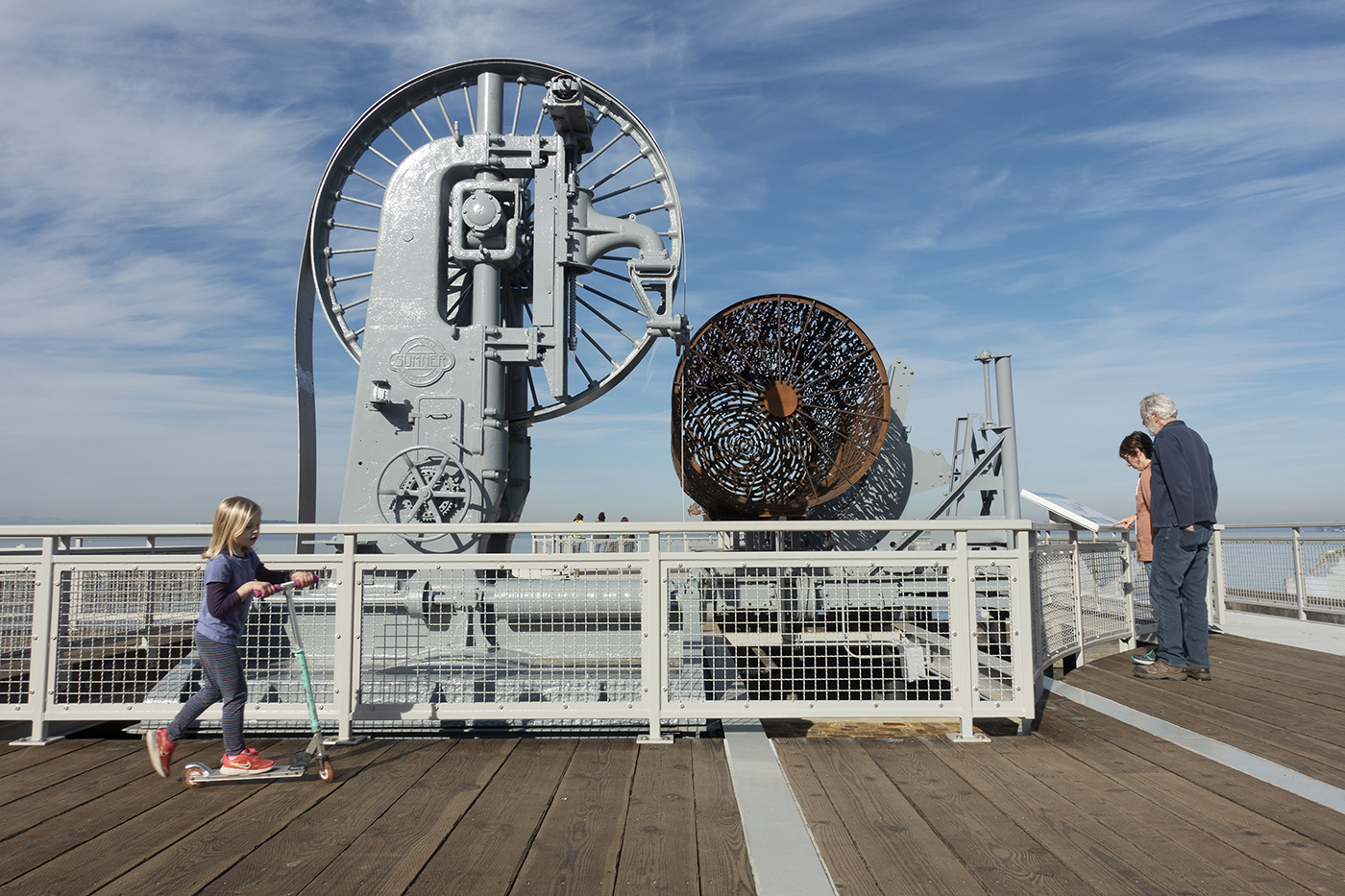
Beyond its environmental and historical significance, Dickman Mill Park offers an inviting and educational space for the public. The park’s layout and interpretive elements allow visitors to explore the natural beauty of Commencement Bay while learning about the long history of the Coastal Salish people — specifically the local Puyallup Tribe — and learning about the site’s industrial history. The restored head saw, for example, is positioned in its original location, offering a direct link to the past. Visitors can stroll along an elevated catwalk that runs parallel to the historic log carriage, providing a close-up view of the industrial process that once defined the site.
One of the park’s most striking features is the Ghost Log, a weathering steel sculpture that pays homage to the old-growth timber processed at the mill. Created by artist Mary Coss, the sculpture represents an old growth cedar log that unravels into cedar boughs, a sacred symbol of the Puyallup Tribe’s cultural connection to the land. Metal strands bend to form words for cedar tree, bark, branch and basket in English and Twulshootseed, the Puyallup tribal language. This blending of industrial and cultural history creates a unique experience for visitors, who can scan nearby QR codes to hear stories from Puyallup tribal members and former mill workers.
The expansion also emphasizes accessibility. ADA-compliant ramps and surfacing ensure that visitors of all ages and abilities can explore the full extent of the park’s offerings. Interpretive signage, designed by Dahn Design and strategically placed along the viewing areas, provides additional context for those interested in learning more about the site’s historical and environmental significance.
A MODEL FOR FUTURE WATERFRONT DEVELOPMENT
The revival of Dickman Mill Park represents more than just a nod to Tacoma’s past and another destination along Ruston Way’s chain of waterfront parks. It’s a forward-thinking project that addresses some of the most pressing challenges facing waterfront developments today: environmental degradation, climate resilience, and public access. By integrating historical preservation with modern environmental techniques, the park offers a blueprint for how coastal cities like Tacoma can continue to revitalize their waterfronts while respecting their industrial and cultural heritage, as well as their ecological future.
Anna Hook Spooner is principal landscape architect with Anchor QEA, an environmental science and engineering consulting firm specializing in aquatic, shoreline, and water resource projects for public agencies and private industry.
Other Stories:


