 |
Subscribe / Renew |
 |
Contact Us |
| ► Subscribe to our Free Weekly Newsletter | |

Construction Bids
| home | Welcome, sign in or click here to subscribe. | login |


 print print  email to a friend email to a friend  reprints add to mydjc reprints add to mydjc |  |
 |
October 31, 2024
Maharry
|
Development along the shorelines of Washington state often requires restoration of habitat to offset the impacts associated with the development. The requirements for this restoration are meant to protect and preserve the habitat essential for wildlife that live in the aquatic environment, such as salmon, Orca, crabs and other species. An often overlooked aspect to this shoreline restoration, particularly in the urban environment, is public education.
Public education as a component of shoreline development is particularly important with respect to the development or redevelopment of public parks. Park designs often include signage and other educational opportunities to educate users on the importance of the habitat on and near the park. Educating the public about the importance of shoreline habitat restoration is a critical aspect of public engagement to build support for future habitat restoration initiatives.
Farallon Consulting has been involved in numerous park development projects where public education has been a focal point of design.
FRITZ HEDGES WATERWAY PARK
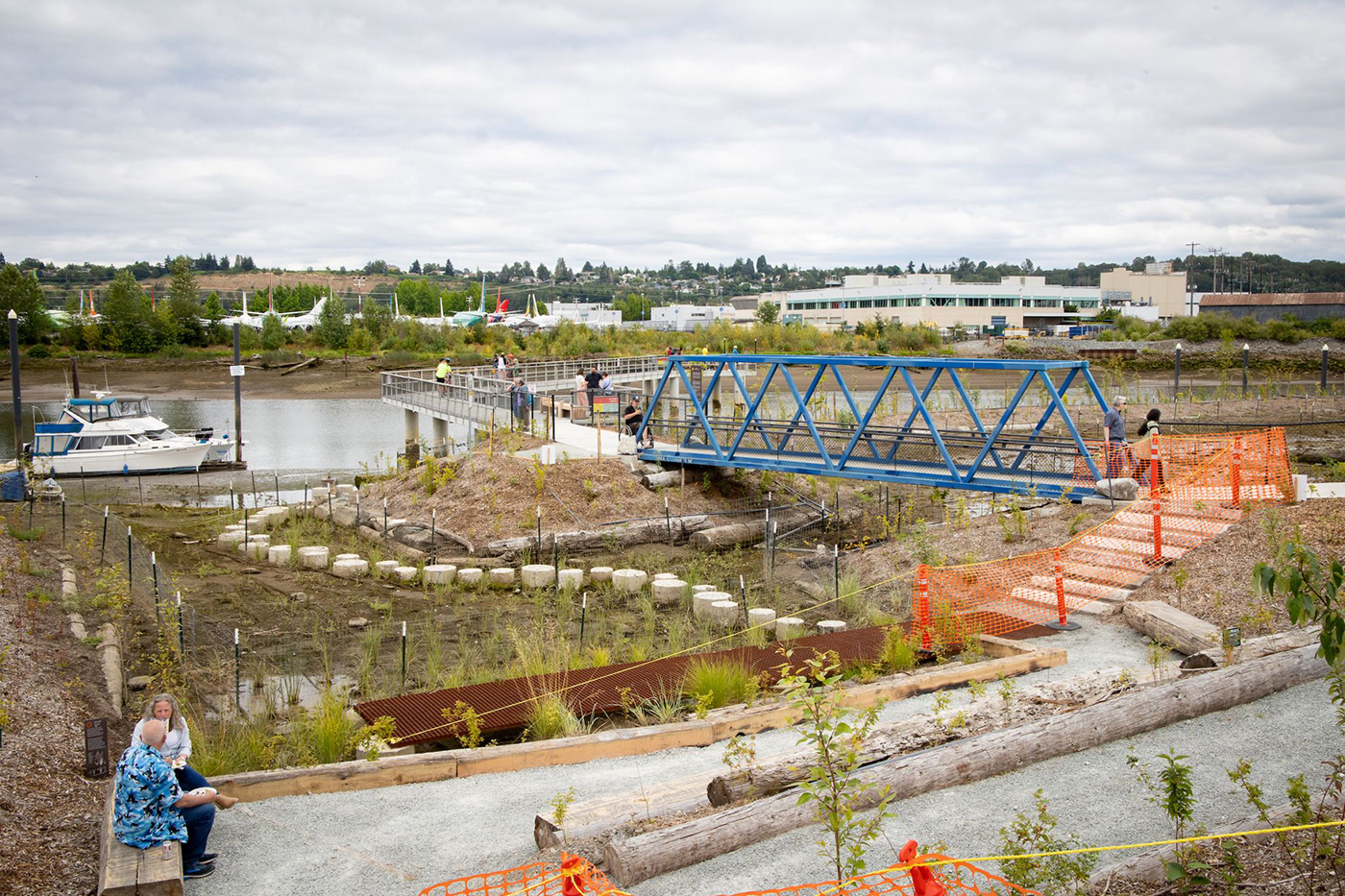
This entire site at the north side of Portage Bay just south of the Waterfront was redeveloped from 2018 to 2020 from a warehouse and parking lot to a public park that provides fish habitat, interpretive trails, and public access with piers and beachfront area. This project for Seattle Parks and Recreation combines restorative elements including habitat and contamination cleanup and increased public access.
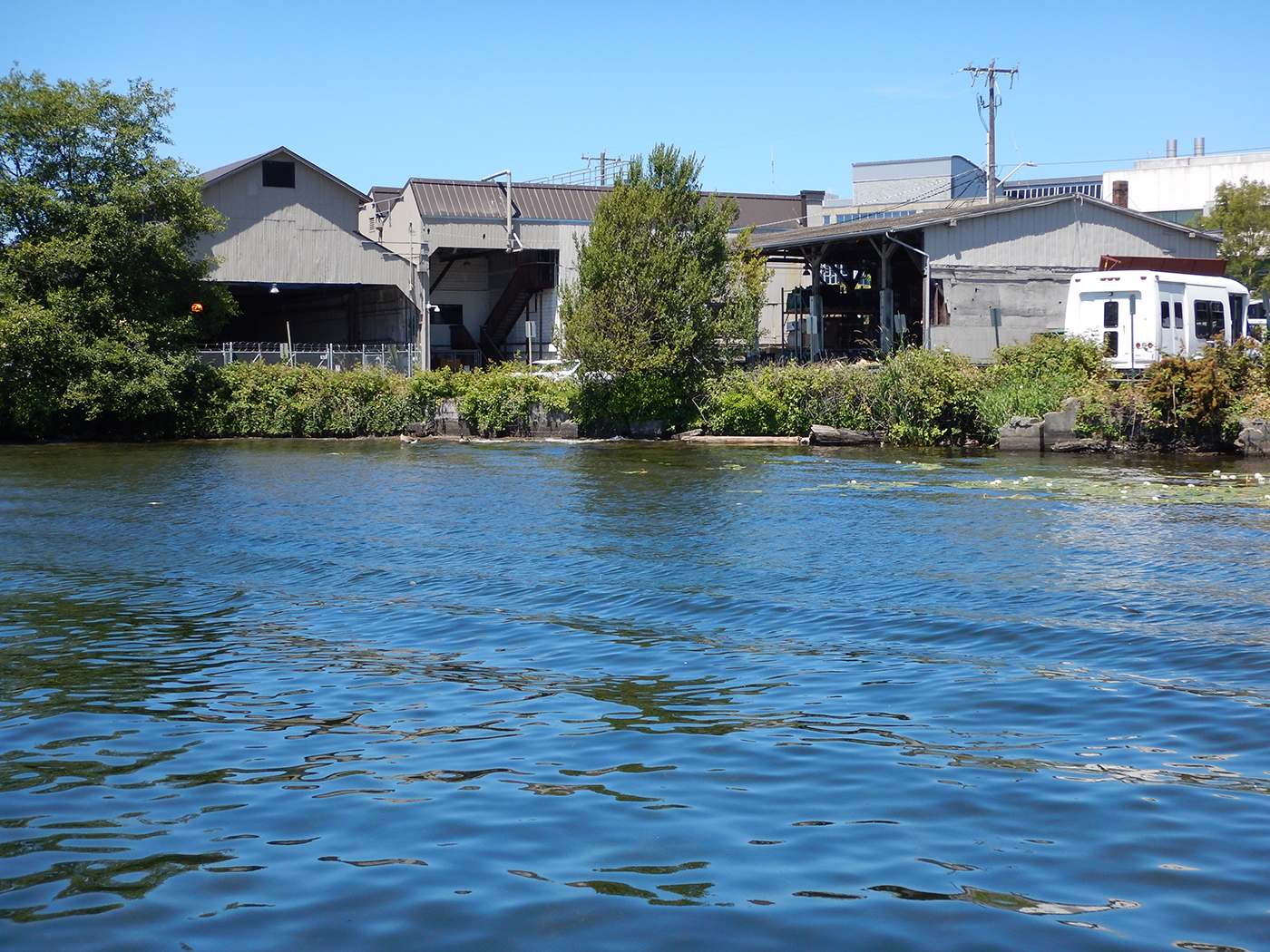
Historically, the site contained a large warehouse building and associated private marina, along with upland storage and parking and a dilapidated pier. The warehouse, known as the Bryant Building, was an historic building that required coordination with other agencies to remove. In addition, permits and approvals from local, state, and federal agencies were necessary to conduct the shoreline and in-water portions of the project.
Work on the project included:
• Shoreline surveys assessing riparian and aquatic vegetation, habitat function, and wetland delineation
• Preparing permit application documents for local, state, and federal permits
• Capping contaminated sediment with beach fill that functioned as a physical barrier to the contaminated sediment and also provided habitat function
• Creating a naturally-sloped beach with water access
• Shoreline plantings and restoration
• Installing large woody debris and riparian plantings to provide increased habitat function
• Installing grated decking on a pier to allow sunlight to penetrate to the beach
• Preserving wetland area with aquatic vegetation along the shoreline
• Creating a mitigation plan to offset impacts from the project, including removal of bulkheads and invasive shoreline vegetation
The plan documented the corresponding removal of prior overwater coverage and the installation of native shoreline vegetation, large woody debris, and habitat fill as compensation.
This park was designed so the habitat restoration elements of the park are front and center to the user, providing the public with unobstructed views of the large woody debris and native vegetation installed along the shoreline. Interpretive elements in the park’s design educate visitors on the importance of these restored habitats.
POINT NO POINT
A king tide event coinciding with a storm in 2021 resulted in major flooding that severely damaged this park. Kitsap County Parks and Recreation began emergency repairs on the park to stabilize the land before the next winter. The nearby houses were flooded, and the storm created a big channel through the park.
Under Phase 1 of this project, the county brought in sand to fill the scoured portions of the park and restored the access road and parking lot.
Our work is still ongoing. Phase 2 of the project will include construction of a shoreline berm to protect the park against future King Tides and sea level rise. Native shoreline and beach vegetation will also be installed to further protect the backshore from tidal erosion.
The project will result in improvements to habitat with public access so that the public can continue to use the park and enjoy the beach, and also learn a little bit about the environment and shoreline ecology.
The project will also protect the park, the estuarine wetlands, and the nearby residential structures from future impacts of sea level rise and storm events. Phase 2 of the project will also include enhancement of a revetment protecting an historic lighthouse, and other improvements to the beach to protect against sea level rise, such as rebuilding the berm for king tide resiliency while also incorporating habitat benefits.
Work on the project included and will include:
• Permitting and design assistance for Phase I
• Emergency sand placement to fill eroded areas of the park and protect nearby residences
• Restoration of the access road and parking lot
• Phase II restoration (in process now)
• Berm installation for king tide resiliency and habitat benefits
• Planting and habitat restoration (installing native plants, beach substrates and large wood)
• Infrastructure to protect the historic lighthouse
• Project design resulting in preservation and enhancement of habitat and ecological functions
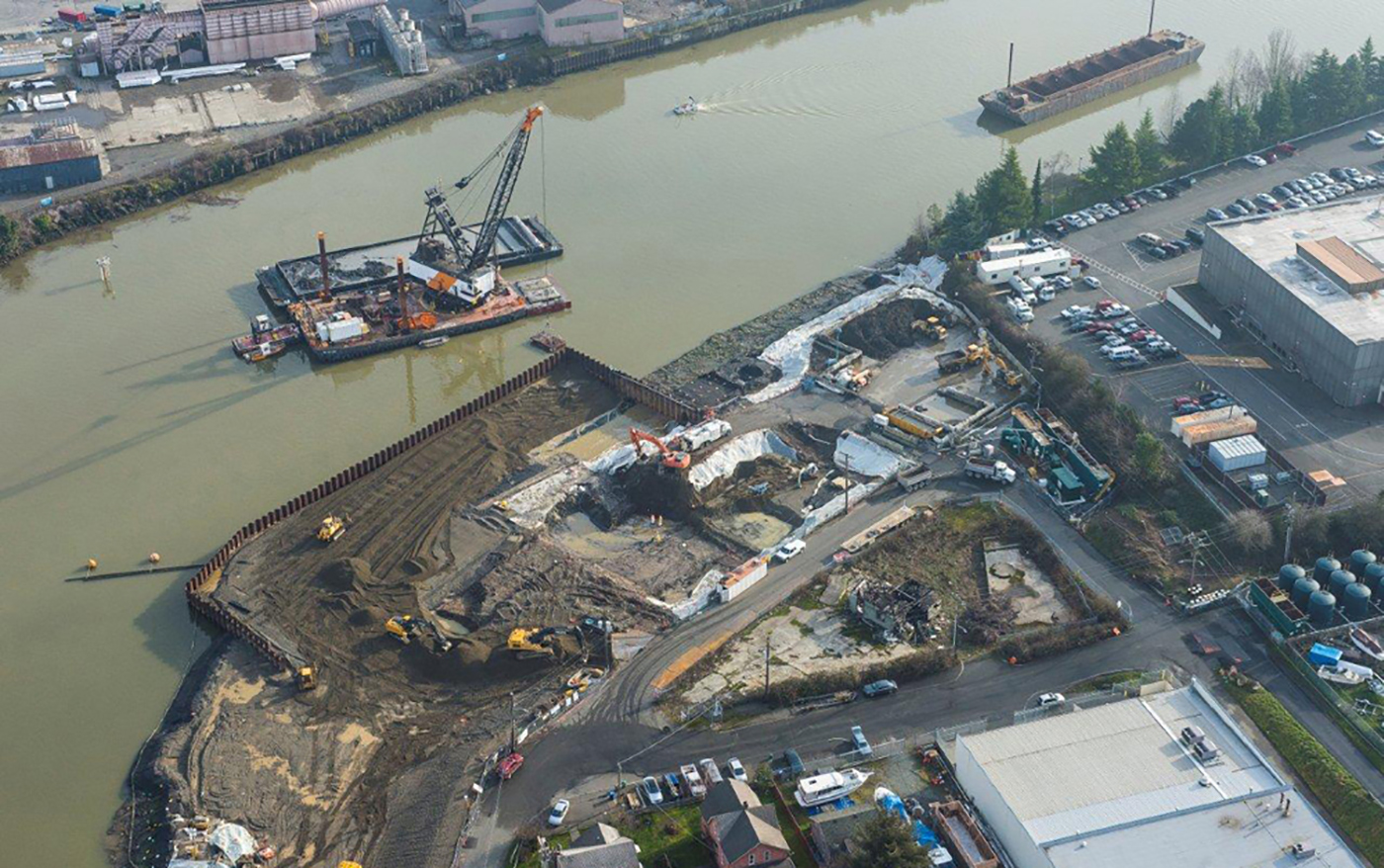
DUWAMISH RIVER — PEOPLE’S PARK
The site along the lower Duwamish Waterway, formerly called Terminal 117, was a long-time asphalt plant and was designated as an Early Action Area within the EPA’s Lower Duwamish Waterway Superfund Site. Cleanup of the site involved extensive coordination with the permitting agencies to protect the riverine ecosystem.
An involved local community, South Park, was engaged from the early stages of the cleanup design. Frequent community planning and engagement sessions along with project website updates kept the community up to date on project progress.
Once cleanup was complete, a public park was constructed at the site, including a public viewing platform, a public pier, and a kayak launch along with extensive intertidal marsh and native vegetation installation. Coupled with the habitat restoration elements are a public art installation and interpretive signage, educating park users on the habitat restoration and the history of the site.
Work on the project included:
• Permitting the cleanup of the site along with construction of an overlook pier
• Permitting and installing a giant sheet pile wall because the site was so dirty the Port of Seattle and the resource agencies didn’t want to expose the contaminated soil to the Duwamish River. This involved in-water construction activity outside of the allowable work window, resulting in extensive consultation with multiple federal agencies under the Endangered Species Act.
• Monitoring underwater noise levels during installation of the steel piling for the overlook pier and debris deflector to ensure noise levels were not injurious to fish and marine mammals.
Extensive public outreach and collaboration occurred during the initial design and cleanup of the site. Once cleanup was complete, the port constructed the park amenities, including the viewing platform and public pier, hand-carry boat launch, and habitat restoration elements.
Acknowledging the importance of the site to the South Park community, interpretive signage and a public art display were installed to further educate the public on the importance of the habitat restoration along this industrialized shoreline of the Duwamish River.
Scott Maharry is a principal scientist with Grette Associates, a division of Farallon Consulting, with extensive expertise in shoreline ecology, wetland and riparian systems, and fisheries and wildlife ecology and he manages large, complex projects in both marine and freshwater environments.
Other Stories:


