 |
Subscribe / Renew |
 |
Contact Us |
| ► Subscribe to our Free Weekly Newsletter | |

Construction Bids
| home | Welcome, sign in or click here to subscribe. | login |


 print print  email to a friend email to a friend  reprints add to mydjc reprints add to mydjc |  |
 |
October 31, 2024

Patano
|
The movement by Puget Sound communities to reclaim their waterfronts is gaining momentum. From the mega-project on the Seattle waterfront to communities around the Sound with long, historic connections to the water, bold visions are emerging to reconnect with the iconic shorelines of the Pacific Northwest.
At EHDD, we have been designing waterfront projects up and down the West Coast for the past 50 years. In the Puget Sound region, three key factors are driving community investment in, and commitment to, reimagining our waterfronts.
As our economy continues to grow and diversify, the maritime industry remains a vital backbone, providing jobs and training. Second, as our population expands, communities are increasingly seeking recreational opportunities close to home. Investing in cultural and recreational spaces enhances our communities and provides everyday opportunities to connect with the natural environment. Finally, as we’ve seen in recent years, climate change-induced challenges such as extreme weather and rising sea levels are realities we must confront; Our shorelines and waterfronts are at the front lines of resilience.
TRADE & JOBS: A MARITIME BACKBONE
The maritime industry is a robust, diverse sector that includes fishing, boat and shipbuilding, component fabrication, logistics, and the emerging sectors of energy and offshore wind component fabrication. Our local ports play an essential role in supporting maritime trade, developing the skilled workforce needed to maintain one of the world’s largest trading and shipping networks. Local ports and waterfront communities have identified underutilized waterfront properties with potential for development in industries like boat and shipbuilding.
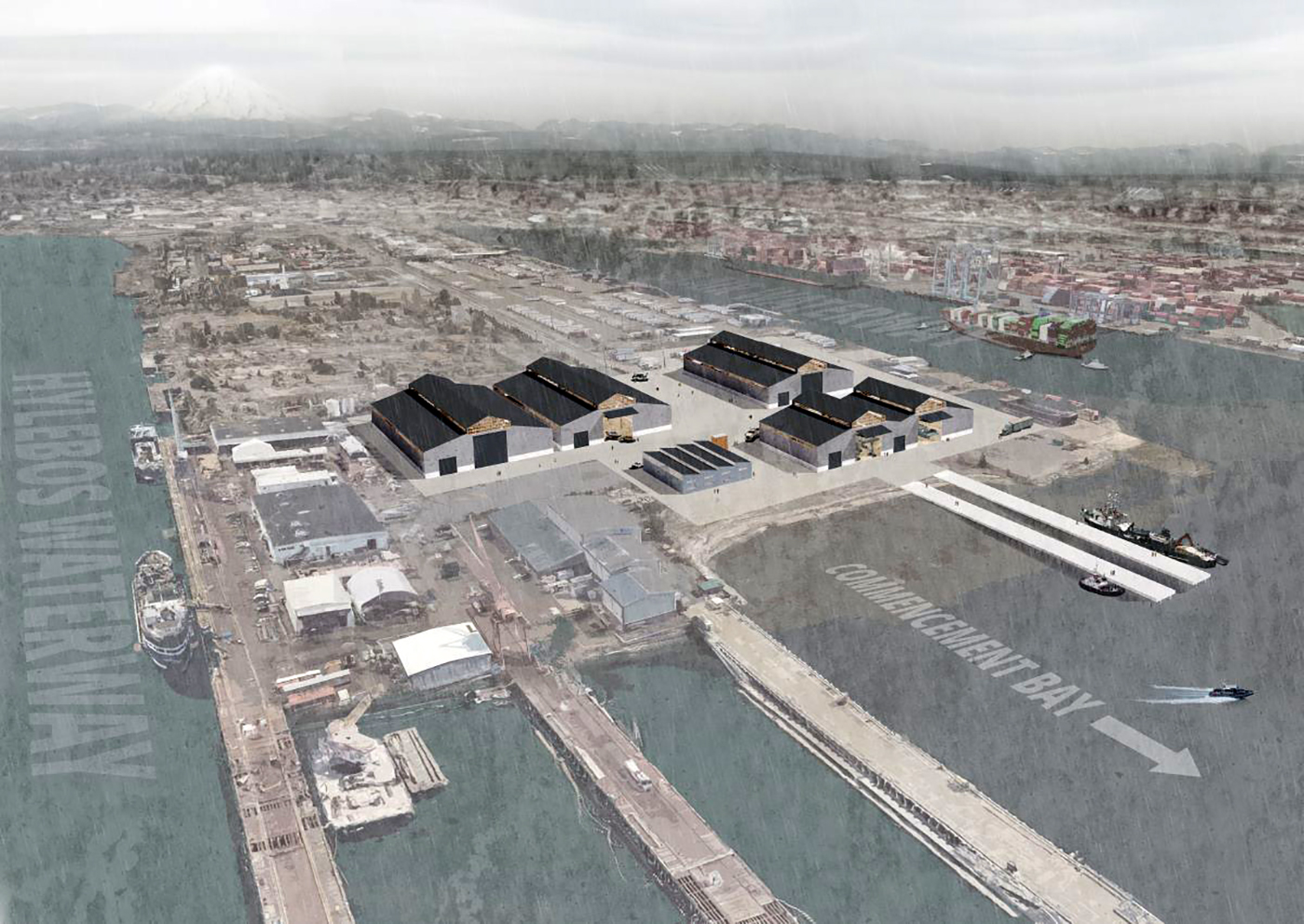
EHDD is currently collaborating with the Port of Tacoma to reimagine the Earley Business Center site on the Hylebos Peninsula. Originally a vital shipbuilding hub during WWII, the site now hosts remnants of those facilities, which are used by small boat-building companies, the Army Corps of Engineers, seafood and fishing operations, as well as shipping companies.
EHDD and the Port of Tacoma have developed a preferred scenario that brings boat and shipbuilding back to the site, laying the groundwork for long-term investment in this water-dependent industry. This approach makes the highest and best use of our limited shoreline resources, ensuring the creation and sustainability of the next generation of maritime jobs.
RECREATION: CONNECTING COMMUNITIES TO THE WATER
The Pacific Northwest’s natural landscape amplifies our communities’ love of nature and draws us toward our lakes and waterways. Cities and ports are increasingly identifying underutilized and transitional sites as opportunities to rehabilitate outdated parks and build new, vibrant connections to our waterfronts.
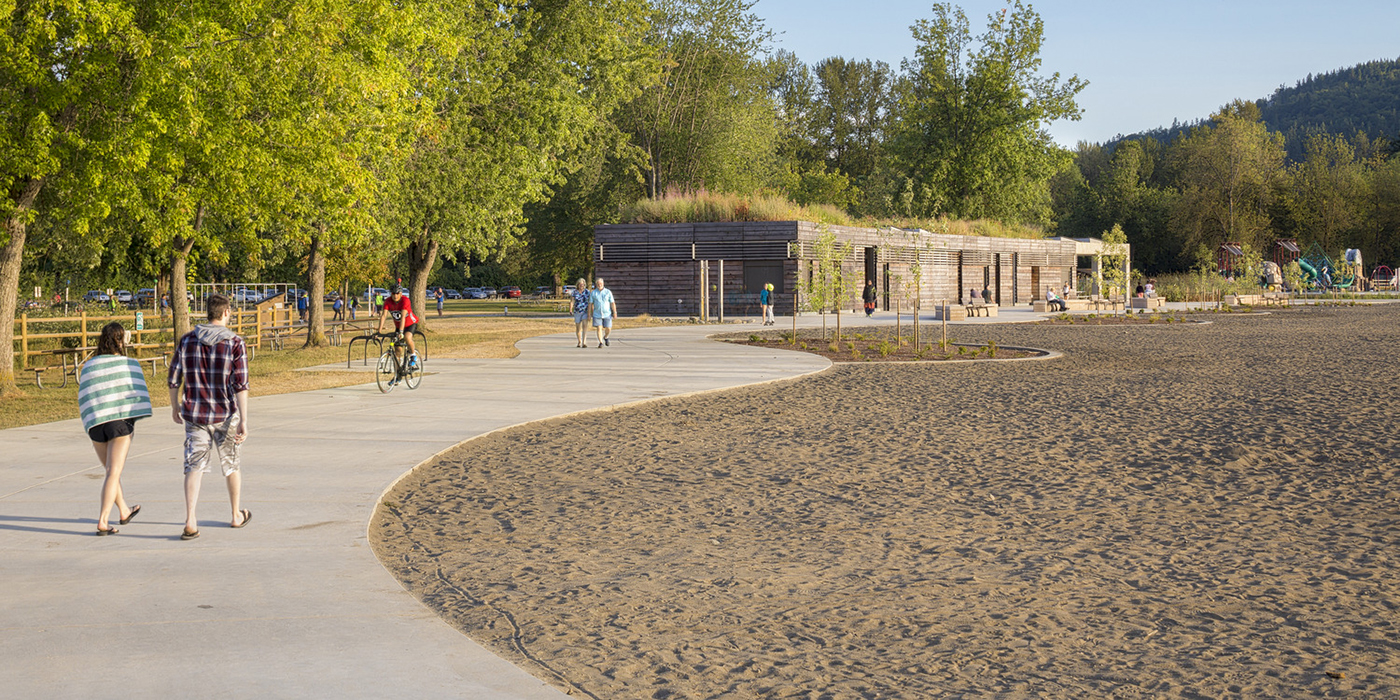
EHDD recently completed new mass timber picnic shelters at Sunset Beach, marking the latest phase of our 20+ year effort to transform Lake Sammamish State Park in Issaquah in collaboration with Washington State Parks. When we first began work in 2001, Lake Sammamish State Park was underutilized, with an overgrown shoreline, outdated facilities and little activity. Working closely with Washington State Parks, EHDD developed a master plan and began the phased implementation of key improvements.
A new bathhouse was built using reclaimed wood siding and photovoltaic panels, with an intensive green roof that mitigates stormwater. This bathhouse serves as an educational example of sustainability and energy self-sufficiency. At the same time, the beach was restored, and a new promenade was constructed. Over the following years, we added a boardwalk, a new playground, and, in August 2024, five new picnic shelters, along with new pathways, plantings and stormwater management infrastructure.
The revitalized park has been a hub of activity for the past decade. As the connection to the community continues to strengthen, you’ll find morning cycling clubs, runners, bird watchers, windsurfers, and families gathering to enjoy the lake and beach. Special events, such as the Pro Volleyball Tour, fill the calendar and bring new visitors year-round.
RESILIENCE: ADAPTING TO A CHANGING ENVIRONMENT
Building along the water’s edge and rehabilitating existing facilities presents unique challenges, which are further intensified by rising sea levels, more intense storms, and increased seismic risks. New shoreline projects are not for the faint of heart — designing and planning these projects requires a specialized team with unique expertise.
The soils along the edges of Puget Sound likely consist of materials from Mt. Rainier’s last eruption. Earthquakes can turn these materials into liquid. Tsunami risks in the Salish Sea are becoming better understood, and planning for areas of refuge from surging waters is critical. Rising sea levels demand careful planning, from reinforcing existing shorelines to determining the elevation of new structures so that these investments remain functional well into the future.
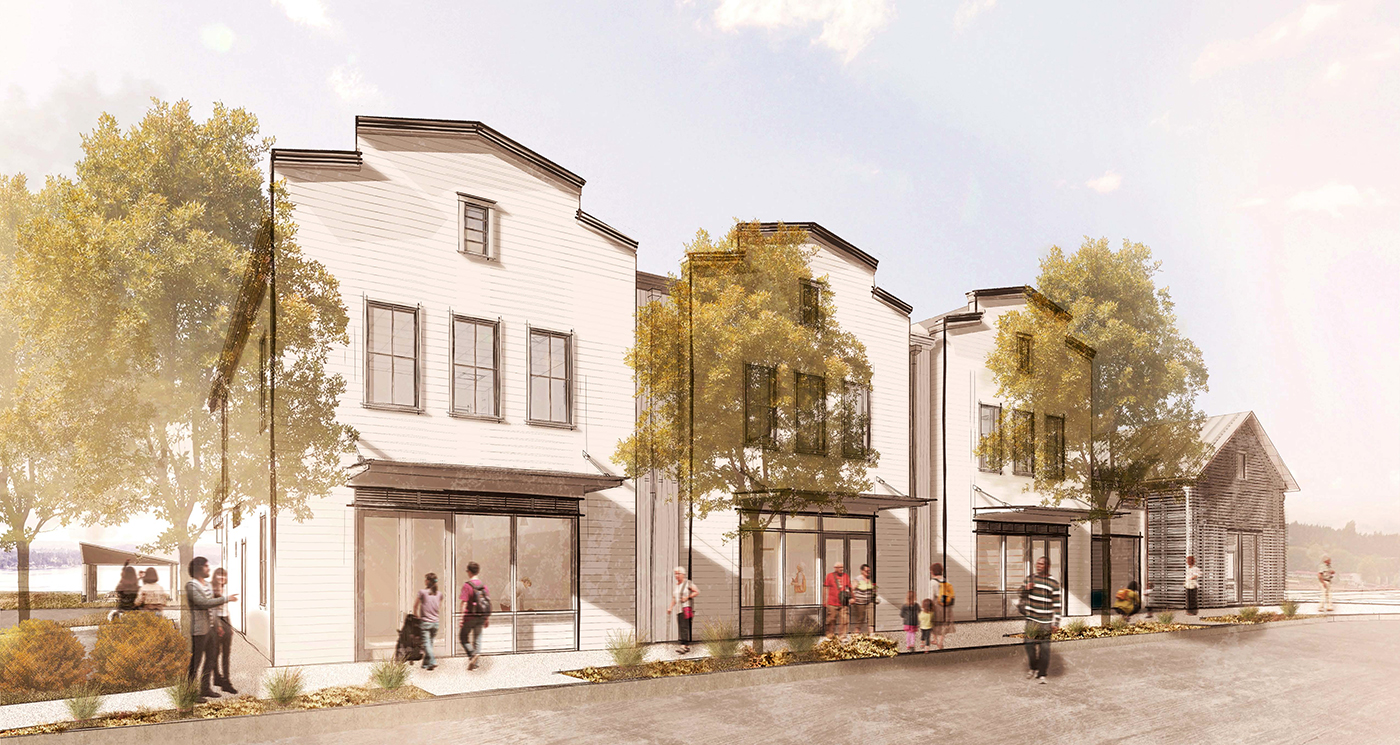
EHDD is currently working with the Port of Silverdale to design a new Waterfront Center for the community. This 13,000-square-foot facility will include retail space along historic Silverdale’s main street, offices for the port, a community shed for events such as a farmers’ market, and an assembly space for crew shells and sailboats.
The upper level will feature a community room with a large terrace overlooking the waterfront. The project is intertwined with shoreline restoration, the rehabilitation of an existing waterfront park, and an extension of a regional trail system in collaboration with Kitsap County. This type of complexity is not uncommon in waterfront projects and requires a great deal of coordination and long-term thinking.
These challenges also present opportunities for communities to fortify their shorelines while enhancing public access to recreation. By rehabilitating polluted, disused tracts of land, we can support the emerging industries that will power the next generation of maritime jobs.
As Puget Sound communities reimagine their waterfronts, they’re embracing opportunities for growth, recreation and resilience. By investing in sustainable infrastructure and revitalizing historic maritime hubs, we can strengthen local economies, foster deeper connections to nature, and prepare for the challenges ahead — ensuring vibrant, resilient waterfronts for future generations.
Christopher Patano leads EHDD’s Pacific Northwest practice in Seattle, focusing on waterfront redevelopment, parks and interpretive centers.
Other Stories:


