 |
Subscribe / Renew |
 |
Contact Us |
| ► Subscribe to our Free Weekly Newsletter | |

Construction Bids
| home | Welcome, sign in or click here to subscribe. | login |


 print print  email to a friend email to a friend  reprints add to mydjc reprints add to mydjc |  |
 |
October 31, 2024

Tang
|
More than 20 years of work to clean up Bellingham Bay is paying off, with the opening of new affordable housing, parks and other redevelopment on land previously contaminated by heavy industry.
The Washington Department of Ecology, the Port of Bellingham, the city of Bellingham, local tribes, and other government agencies began a partnership to clean up several industrial sites along Bellingham’s waterfront, signing on to a comprehensive strategy in 2000. The collection of properties had seen a variety of land uses and industries for more than a century, before modern environmental laws were in place. As a result, the related contamination also had a range of types, locations and risks to human health and the environment.
TWELVE CLEANUP SITES UNDER ONE UMBRELLA
Cleaning up contamination in Bellingham Bay and along the waterfront has been a long-term, complex puzzle. The area has 12 different priority sites on the state cleanup list, each with unique histories, contaminants and cleanup needs. The typical approach is to focus on one individual cleanup at a time.
However, the Bellingham Bay partner agencies, now known as the Bellingham Bay Action Team, brought the cleanup of all the sites under one umbrella. The big-picture approach allowed the partners to prioritize the cleanup work and find efficiencies, as well as address overarching goals of habitat restoration, controlling pollution sources, and aquatic land use, said Kim Wooten, regional section manager of Ecology’s Toxics Cleanup Program, which oversees the cleanup of contaminated sites.
“When this effort started, there were a lot of different factors that we needed to take into account,” Wooten said. “In addition to the cleanup work itself, we also had partners managing navigation, treaty rights, stormwater, fish and wildlife habitat, and so on. For example, deciding where to dredge or contain contaminated sediments might have an impact on navigation channels and aquatic habitat. Having all the parties at the table has been crucial to integrating all these different issues, prioritizing the sites, and ensuring the cleanup will be protective of the environment in the long run.”
MAKING HEADWAY ON CLEANUP
Since 2000, Bellingham Bay cleanup has progressed steadily. Depending on the specifics of an individual site, cleanup work can involve dredging in-water sediments, excavating on land, treating contamination on-site, capping with clean material and/or restricting types of future land use.
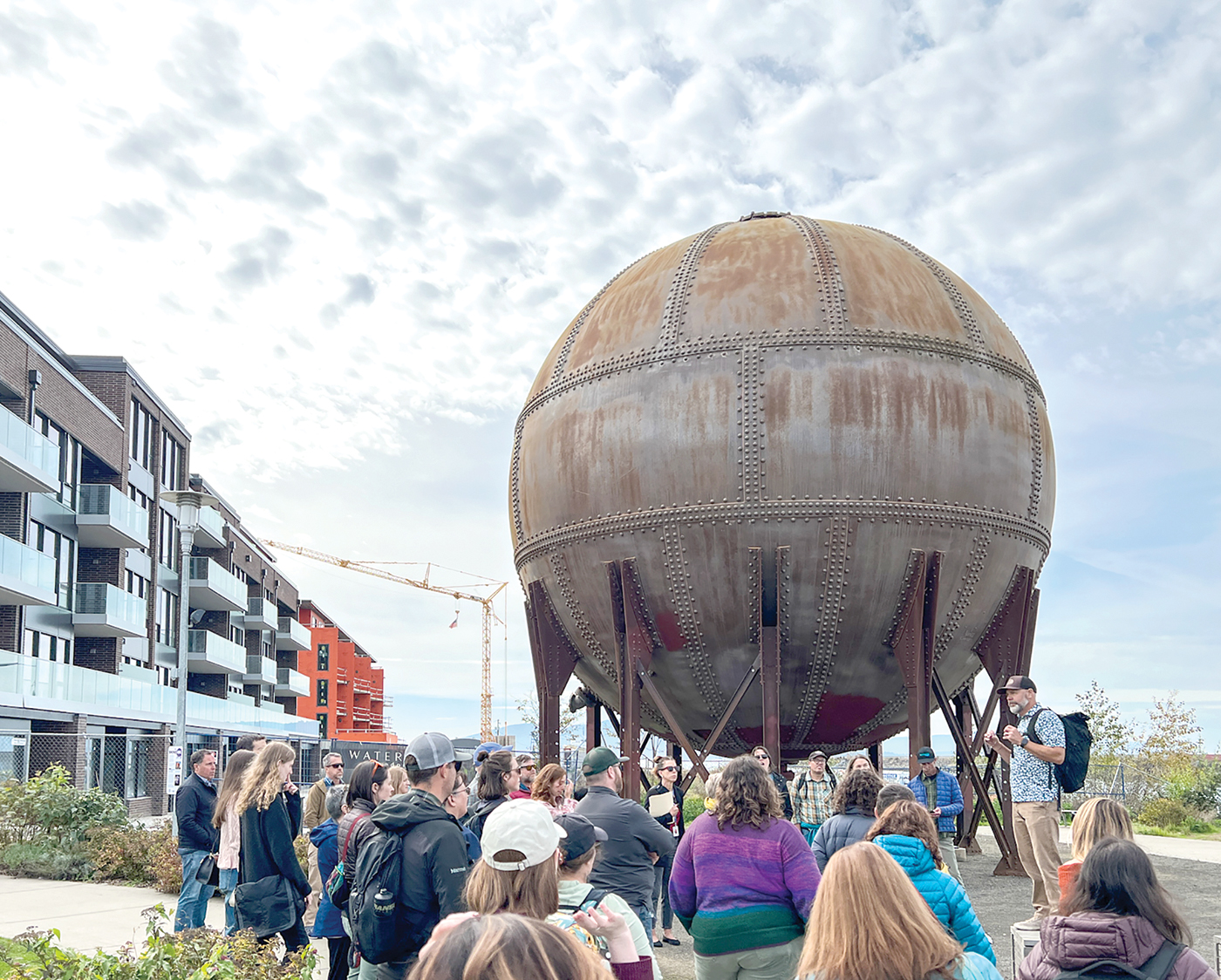
A number of areas have been cleaned up and converted into parks and open space, quickly becoming favorite amenities for the community. The Taylor Avenue boardwalk, the first phase of Waypoint Park, the Portal container village, a pump track and a portion of Little Squalicum Park are all located on former cleanup sites.
Several in-water areas have been cleaned up and restored as fish and wildlife habitat. For example, at one location, creosote pilings and contaminated sediment were removed, allowing for the creation of two acres of intertidal habitat.
AN UNEXPECTED SUCCESS: AFFORDABLE HOUSING
The Bellingham Bay cleanup’s framework has allowed for greater flexibility in how cleanups are conducted when unexpected opportunities emerge. The partners were able to take advantage of a new initiative to transform cleanup sites into affordable housing, Ecology’s Affordable Housing Cleanup Grant Program.
Kim Wooten from Ecology explained that the high cost of contamination cleanup means developers often end up building market-rate housing on brownfields, which prices out existing residents and contributes to gentrification.
Ecology’s new grant program pays for housing developers to plan and implement cleanups of contaminated sites. In return, the developers make at least 20% of their units affordable for a minimum of 30 years.
“Contaminated properties are often in neighborhoods that have a disproportionate share of environmental problems,” Wooten said. “And then when the contamination does get cleaned up, the neighbors can’t afford to live there anymore. The goal of our grant program is to relieve that environmental burden while making it possible for people to stay and enjoy the benefits of a cleaner and revitalized neighborhood.”
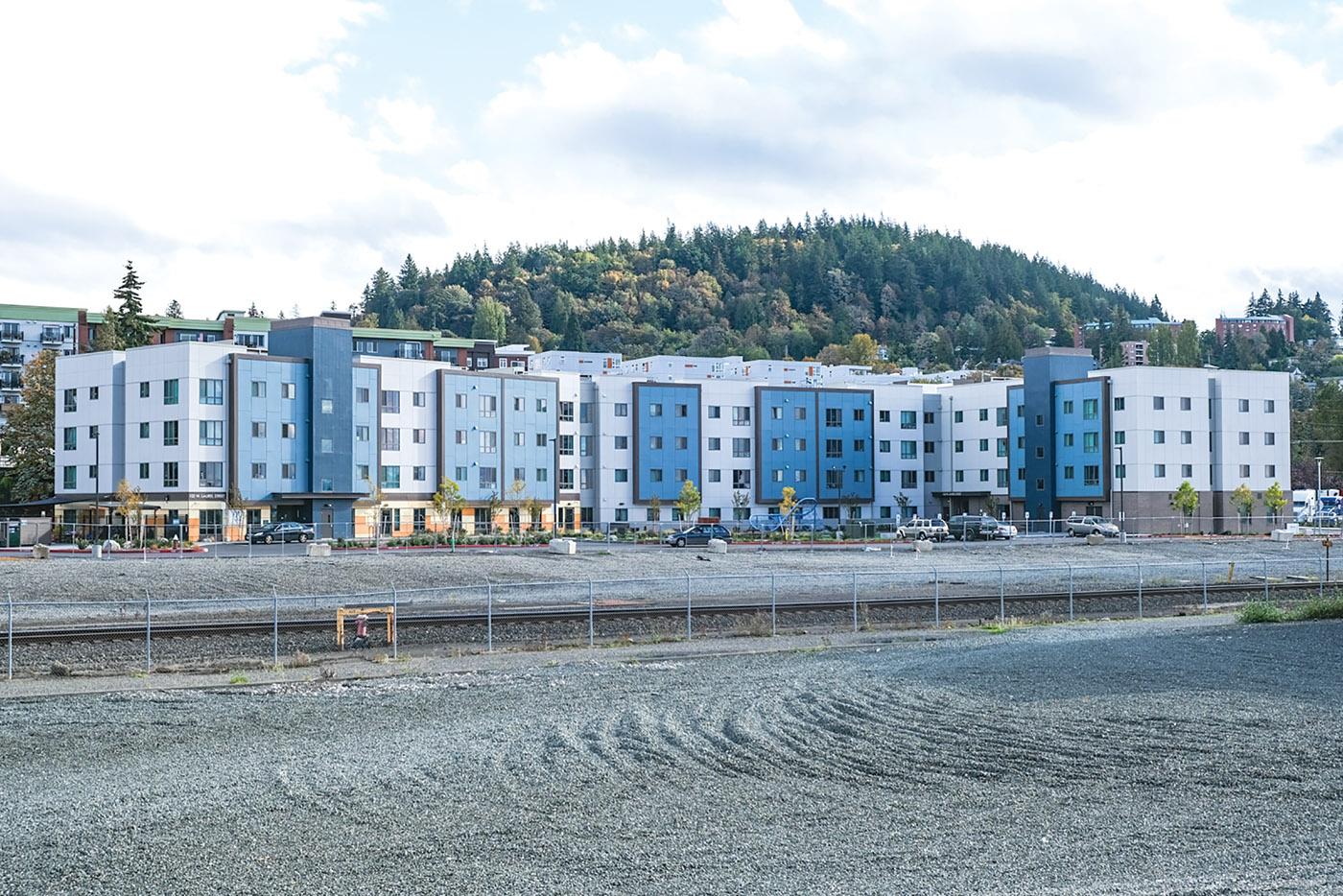
One of the first projects to receive funding from the grant program is Millworks, built on the former Georgia-Pacific pulp mill site on Bellingham Bay. Owned by Mercy Housing Northwest, Millworks has 83 units of permanently affordable housing as well as an early childhood education center that can care for about 100 children.
A future phase of the project plans to include a food campus that will support local farmers, food businesses and meal programs such as Meals on Wheels.
Ecology provided a $200,000 grant in 2019 to the Port of Bellingham to explore the feasibility of redeveloping the property into affordable housing, as well as a $2.8 million grant in 2021 for design and cleanup. After the cleanup, Mercy Housing Northwest purchased the property from the port and constructed the project.
Millworks welcomed its first residents this spring. It joins the Maddux in south Seattle as the first two projects funded by Ecology affordable housing cleanup grants to open their doors.
Affordable housing cleanup grants are awarded every two years, and applications for the next round of funding will open in 2026. For more information, visit http://ecology.wa.gov/grants-AHCG.
For more information on the Bellingham Bay cleanup, visit http://ecology.wa.gov/BellinghamBay
Scarlet Tang is the communications manager for the Washington Department of Ecology’s Northwest Region.
Other Stories:


