 |
Subscribe / Renew |
 |
Contact Us |
| ► Subscribe to our Free Weekly Newsletter | |

Construction Bids
| home | Welcome, sign in or click here to subscribe. | login |


 print print  email to a friend email to a friend  reprints add to mydjc reprints add to mydjc |  |
 |
June 25, 2026

Moggio
|
Health sciences programs across the region are under pressure to graduate more students, faster, and better prepared for the realities of clinical practice.
Washington state alone faces an immediate need for 6,000 new nurses, driven by an aging workforce and growing demands from baby boomers. The 65+ population is expected to double over the next two decades, with a majority likely to need long-term care. Nursing homes and skilled facilities are already seeing 30—60% vacancy rates, competing directly with hospitals for qualified staff.
The connection between physical capacity and workforce supply is direct. Before nursing students can access clinical placements, they need foundational skills and simulation training in patient assessment, medication administration, and emergency response. Without adequate space for that training, programs can’t admit more students, regardless of demand or funding.
Institutions are responding with significant capital investment. Ground-up projects like the University of Washington’s Health Sciences Education Building have set a new standard for what health sciences learning environments can be: purpose-built, daylit, and pedagogically aligned from the start. Facilities like this represent what’s possible when a campus can build from the ground up.
But most campuses aren’t in that position. They’re looking at buildings constructed decades ago and asking a more immediate question: what do we do with what we already have?
THE CASE FOR RENOVATION
Renovation is inherently sustainable. Saving and repurposing a structure reduces demolition waste and preserves embodied carbon. Finding ways to evolve within a building with “good bones” and operational systems helps direct limited funding towards the scopes that directly improve student learning.
The common concern is that existing buildings can’t support the technical demands of modern health sciences education. In our experience, buildings paired with teams open to a creative approach to existing conditions can accommodate far more than many institutions initially assume. With a clear understanding of desired outcomes, a reasonable amount of space, and a willingness to problem-solve, there is often a path to a transformative renovation capable of delivering the same outcomes as new buildings, regularly faster and more cost-effectively.
T-WING AT MAGNUSON
The University of Washington’s Magnuson Health Sciences Center T-Wing renovation exemplifies this approach: a comprehensive modernization of a 1970s building that transformed approximately 60,000 square feet of classrooms, laboratories, offices and student spaces across seven floors.
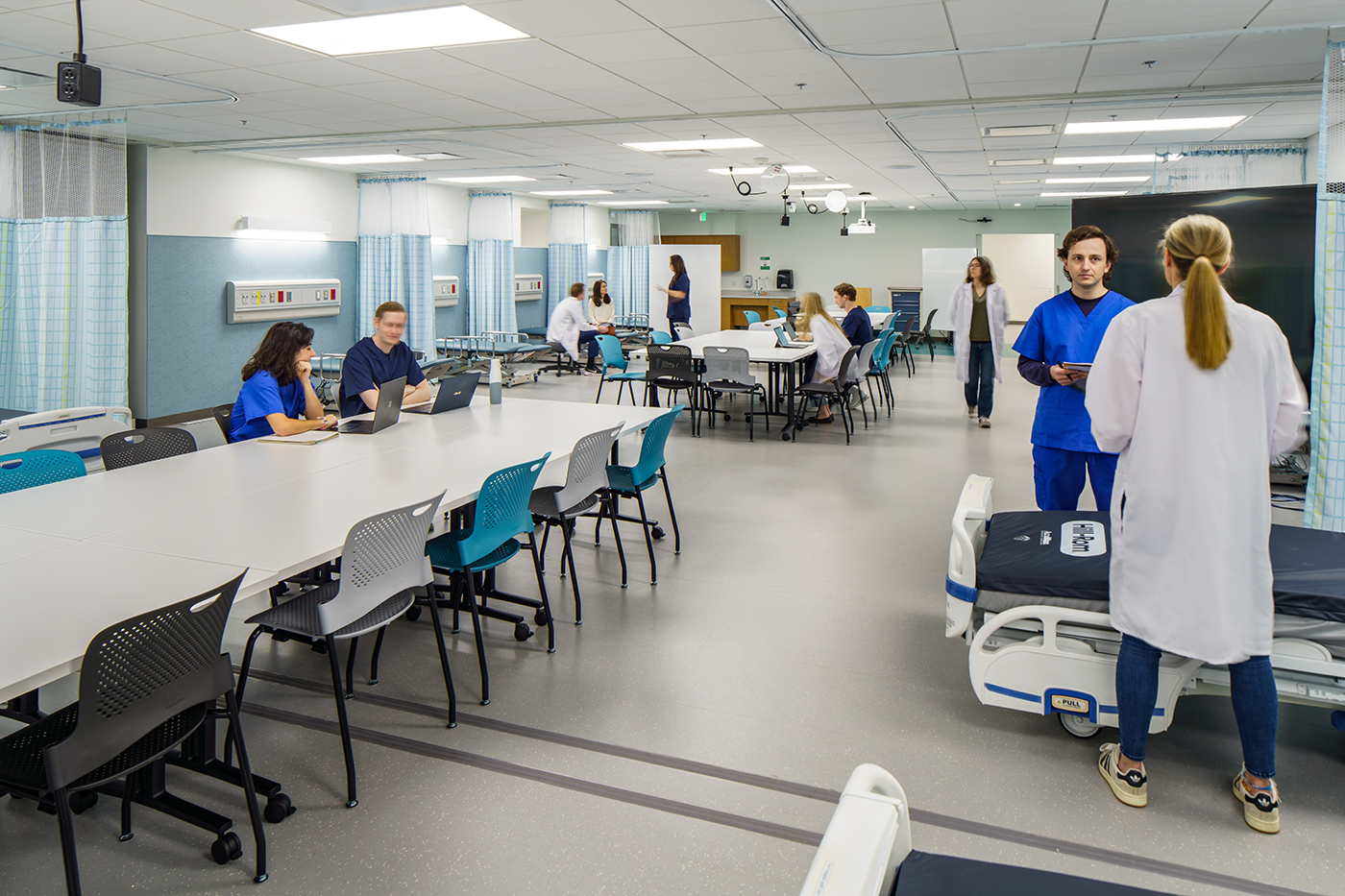
The center of the renovation is the new Health Sciences Simulation Suite on the sixth floor, featuring two interconnected flexible skills labs, 14 simulation rooms with full recording capability, debrief rooms for post-simulation review, supporting spaces for student preparation, and storage. The shared facility will support all six Health Sciences Schools, serving 288 undergraduate nursing students annually, each requiring a minimum of 110 hours of high-fidelity simulation.
All simulation rooms can connect remotely to campuses across the Washington, Wyoming, Alaska, Montana, and Idaho (WWAMI) region, extending the investment beyond Seattle to students and faculty across five states served by the School of Medicine. This connectivity supports students who may go on to become one of the only healthcare providers in their rural communities, while demonstrating how expanded health education capacity at a single university can strengthen healthcare access across an entire region.
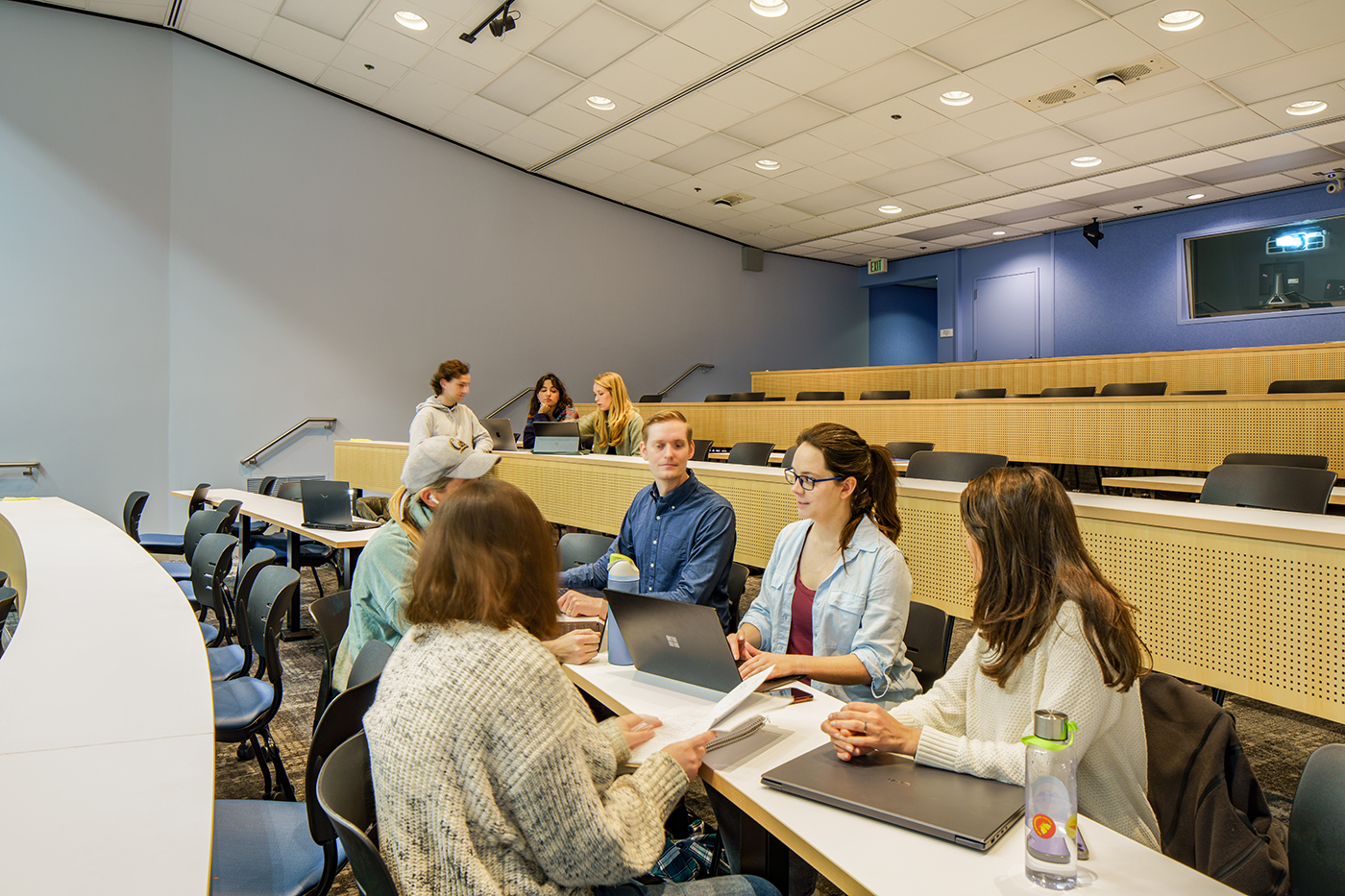
Originally a workhorse research and teaching building, it carried significant limitations embedded in the existing design: corridors wrapped the outside of the building, leaving instructional spaces dark and disconnected from daylight; steep concrete lecture halls with fixed seating couldn’t flex between lecture format and small group discussion; and a rigid structural grid and complex system routing meant even minor adjustments required careful coordination across multiple stakeholders.
As is common with renovations of older facilities, the project required navigating conditions that weren’t fully visible at the outset. Hazardous materials above the ceiling and in distribution shafts complicated nearly every scope involving overhead work.
We ultimately routed much of the technology infrastructure without disturbing ceiling planes, surface mounting systems where necessary, and provided intensive training for trade partners working in hazardous areas. Mechanical and electrical systems were updated surgically, tapping into recently installed components from prior small renovations rather than triggering full-system replacements.
Collaborating with Skanska on a progressive design-build delivery was essential to managing this complexity. Detailed site walks and embedding the team in the building surfaced conditions before they became a crisis in the field. Scope was carefully sorted into base requirements and nice-to-haves, allowing the team to stay flexible when unexpected conditions emerged. A project charter established shared behaviors and communication protocols from the start, so the team was structured to have hard conversations about cost and tradeoffs productively.
DESIGNING FOR ADAPTABILITY
Enrollment, curriculum, pedagogy and technology evolve over time—and must in order to remain relevant to students and industry. Evolutionary changes like the inclusion of AR/VR platforms now in use at a growing number of institutions’ simulation environments continue to open new possibilities for how skills training is delivered.
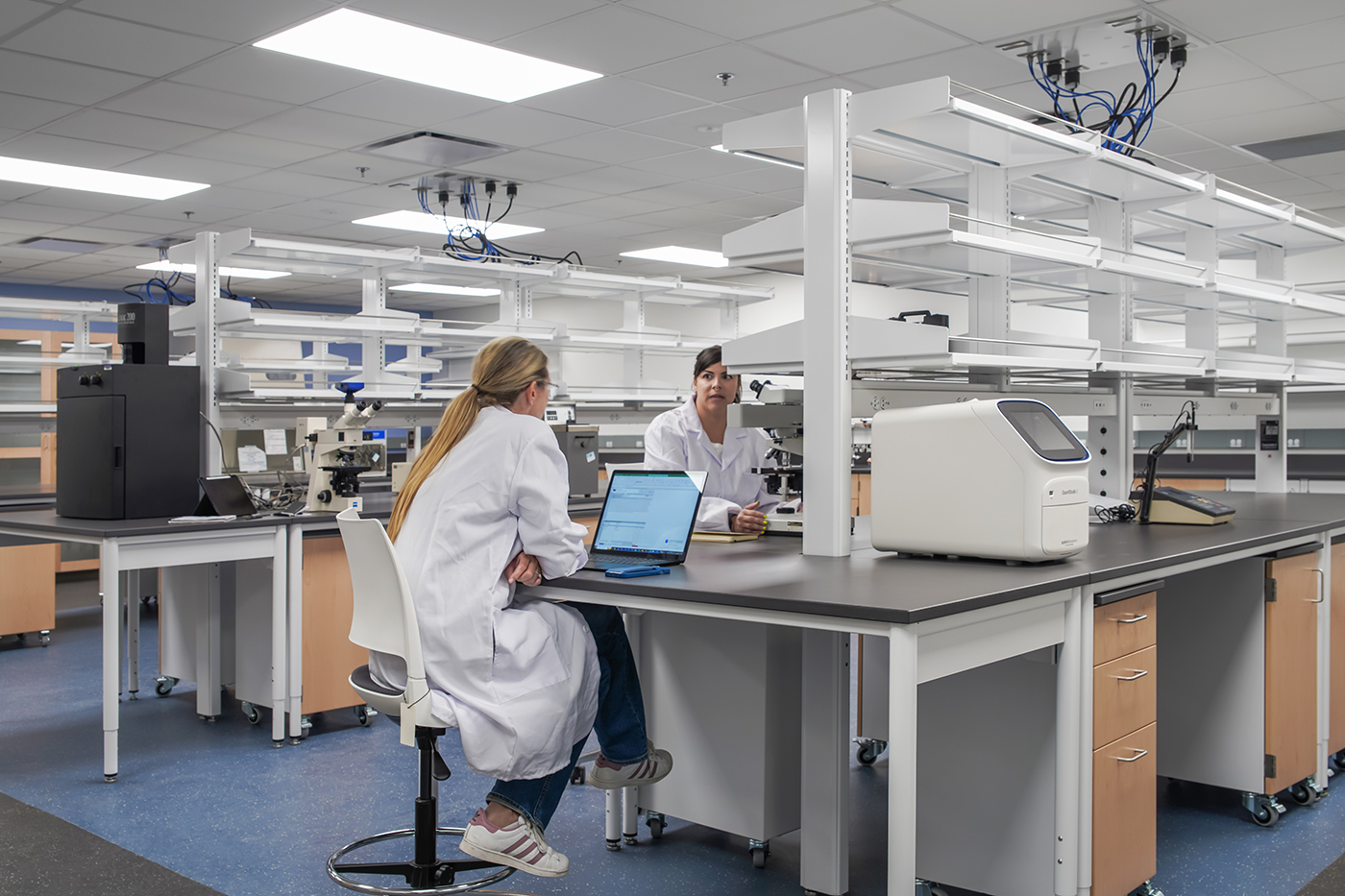
At T-Wing, we designed the simulation suite with future adaptation as a core requirement. Early workshops with faculty, students, standardized patient staff, and Health Sciences Administration identified the critical skills that had to be developed across all six health sciences schools. Spaces were configured to support those needs while remaining reconfigurable as those needs shift. The result is an infrastructure that can accommodate task trainers, recording systems and changing clinical configurations over time.
WHAT THIS MEANS FOR OTHER CAMPUSES
Interior renovation projects present challenges in the best of circumstances. When unexpected conditions arise — and in buildings of this age, they will — success depends on the team’s ability to evaluate risk early, build in flexibility, and collaborate across owner facilities experts, design partners, and trade contractors to find solutions that weren’t obvious at project kickoff.
Lessons from T-Wing aren’t specific to health sciences or to the University of Washington. Any campus facing aging facilities and growing program demands can apply the same framework: assess conditions honestly, define must-haves versus nice-to-haves, build a team with shared accountability, and stay flexible when the building surprises you.
Elizabeth Moggio is a principal at The Miller Hull Partnership.
Other Stories:


