|
Subscribe / Renew |
 |
Contact Us |
| ► Subscribe to our Free Weekly Newsletter | |

Construction Bids
| home | Welcome, sign in or click here to subscribe. | login |


 print print  email to a friend email to a friend  reprints add to mydjc reprints add to mydjc |  |
 |
June 25, 2026

Campanella
|

Hakala
|
In today’s higher education landscape, institutions, more than ever, must compete for students, funding, and long-term relevance. Success is measured by how well universities differentiate themselves through innovation, regional partnerships, and their ability to prepare students for rapidly evolving careers. As a result, higher education laboratories have become a more critical part of the overall marketing and branding equation, serving as strategic assets that include amenities as well as reflect institutional priorities and future direction.
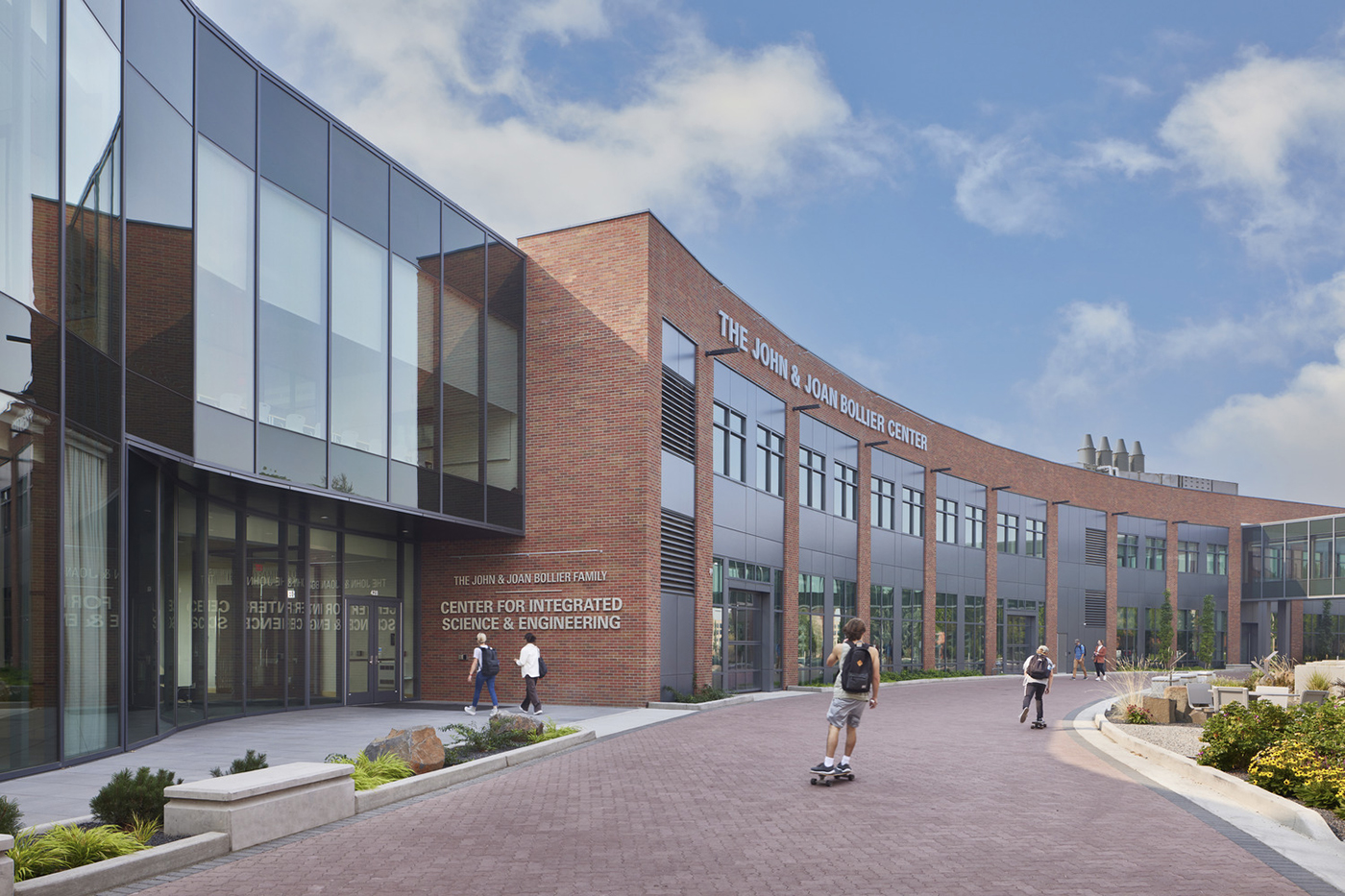
At Gonzaga University’s Bollier Center for Integrated Science and Engineering, a series of recently completed laboratories designed by Integrus Architecture reflect this shift. Among them, a Materials Science Laboratory, named the Patrick D. Ferro Center for Materials Research (FCMR) stands out as a compelling example of how intentional design can shape program growth, strengthen industry connections, impact academic success, and influence student outcomes.
Named in honor of longtime Gonzaga mechanical engineering professor Pat Ferro, the center reflects a legacy of applied research, mentorship, and a commitment to connecting academic inquiry with real-world challenges.
What has emerged is more than a laboratory. It is a model for how universities can strengthen their competitive position, deepen ties to regional industry, and prepare students to step directly into the workforce after graduation.
SPACES DESIGNED WITH PURPOSE AND POSSIBILITY
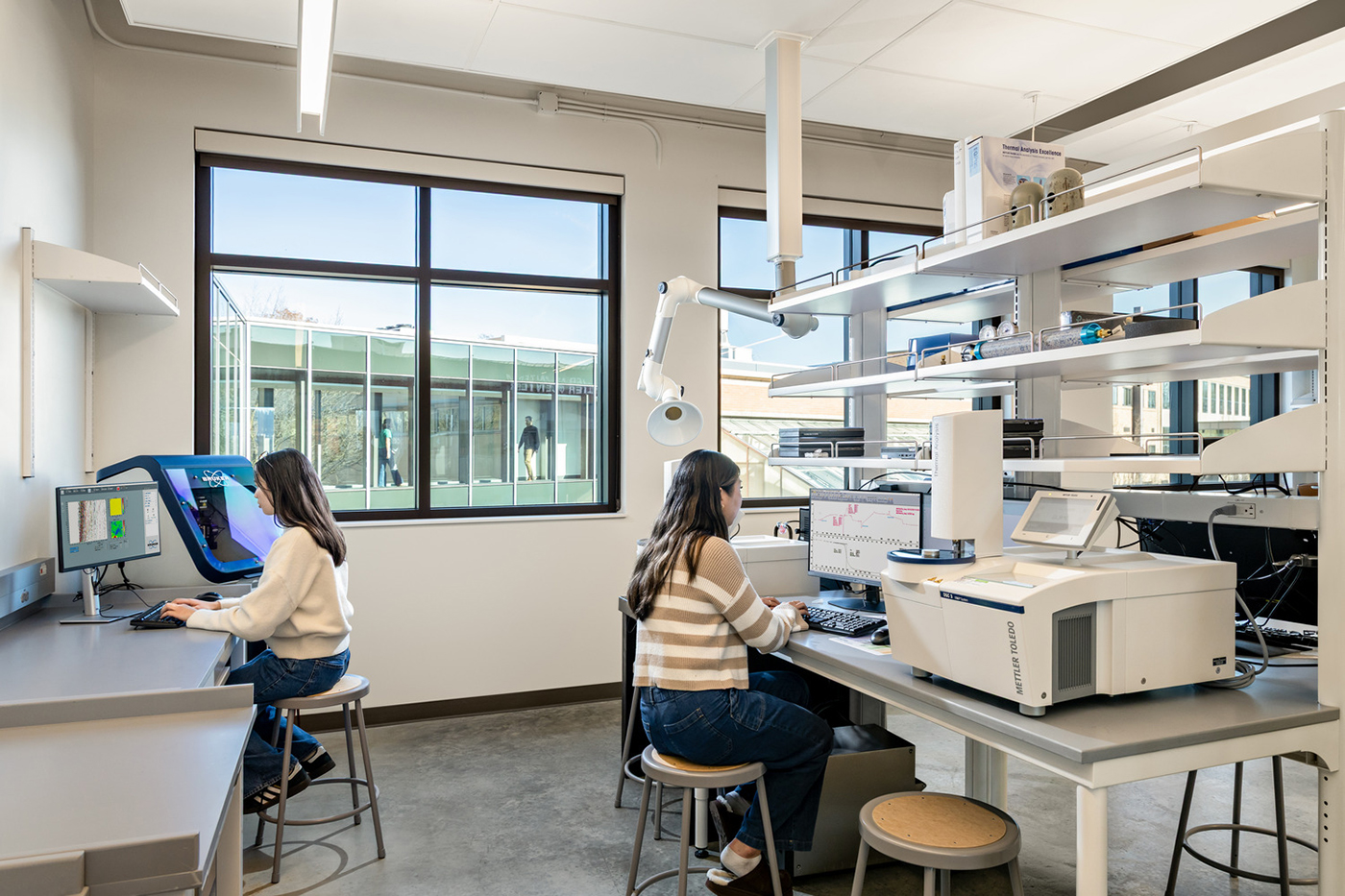
Gonzaga’s newest lab spaces were never intended to be traditional academic environments. From the outset, they were designed to function as working, visible, and flexible platforms for research and applied learning. Specifically, the FCMR brings advanced instrumentation, teaching space, and collaboration zones together in an accessible, shared environment where research is on display.
Transparent views into the FCMR are a defining feature. Students, faculty, and visitors can see work in progress and make immediate connections between academic inquiry and real-world application. This lab extends the interior environment of the Bollier Center including views into the hallway and adjacent student study areas, abundant daylight, and flexible laboratory workstations that support both visibility and adaptability.
Flexibility is equally critical. The infrastructure is designed to support evolving research, new technologies, and funding opportunities. The lab will easily expand alongside the programs they support.
DESIGN DRIVES PROGRAM MOMENTUM
The impact of these spaces is evident in the rapid growth of Gonzaga’s Materials Science program. This centralized, instrument-rich environment has expanded what’s possible for teaching and research. Users now have access to advanced tools for imaging, spectroscopy, and materials testing within a single integrated lab.
This access is changing behavior. Research is becoming more ambitious. Collaboration is becoming more natural. The program is gaining momentum.
Faculty are building on that momentum. Harman Khare, recently awarded a National Science Foundation CAREER grant, is advancing Materials Research while leading outreach that introduces students to the field earlier and expanding pathways into science and engineering. His upcoming role as Faculty Director of the Ferro Center further aligns leadership with program growth.
Research also reflects the expanding reach of Materials Science. Dr. Shannen Cravens is exploring how everyday substances affect dental enamel at the microscopic level, using advanced analytical techniques to better understand material behavior and its impact on health.
This breadth strengthens the program. It signals that materials science at Gonzaga is intentionally broad and positioned to support industries such as aerospace, manufacturing, healthcare and emerging technologies. That is attracting industry partners.
INDUSTRY BECOMES PART OF THE LEARNING ENVIRONMENT
A clear indicator of FCMR’s success is how quickly outside industry has engaged.
Partners such as Altek, a regional aerospace manufacturer, are already working with Gonzaga, connecting the university’s research capabilities directly to supply chain and production needs.
Boeing has also begun exploring opportunities for engagement, including internships, senior design projects and long-term collaboration. These are partnerships that:
• bring real-world testing needs into the lab
• create pathways for internships and applied learning
• address current performance and production challenges
• expose students to professional expectations early
This is not industry at arm’s length. It is industry in the room.
The connection to aerospace is significant. Materials must meet strict federal requirements for performance, durability and reliability. The ability to study and test those materials in an academic setting creates a direct link between Gonzaga and the region’s aerospace ecosystem.
At the same time, the lab supports collaboration across other sectors, including biomaterials and advanced manufacturing. This expands Gonzaga’s relevance and strengthens its network of partnerships.
FROM EXPERIENCE TO READINESS
The most meaningful outcome of industry alignment is reflected in the student experience.
Learning in the FCMR is hands-on, applied, and connected to real outcomes. Students work with industry-standard equipment, participate in research that mirrors professional environments, and engage directly with potential employers.
Through these experiences, students gain:
• confidence working with advanced tools and systems
• understanding of how materials perform in real-world conditions
• exposure to industry workflows and expectations
• a clear sight line from education to career
This is where design, program and partnership come together most powerfully, creating more than a place to learn. It becomes a place to prepare.
POSITIONED FOR WHAT’S NEXT
As Gonzaga continues to grow its Materials Science program, the connection between space, research, and industry is positioning the university for continued investment.
Funding agencies and industry partners seek institutions that can demonstrate measurable impact.
They prioritize programs that support applied research, develop workforce-ready graduates, and contribute to regional economic growth. The FCMR delivers on these fronts.
This demonstrates what’s possible when facilities are designed to advance programs, invite industry participation, and provide students with early exposure to real-world challenges.
A MODEL IN MOTION
What is happening at Gonzaga is still unfolding, but the direction is clear. Purpose-driven design has accelerated a growing program. That growth is attracting industry partners.
Those partnerships are shaping the student experience. And those experiences are preparing graduates to contribute immediately to fields that demand precision and adaptability.
This represents a powerful alignment between education and industry, research and application, as well as students and opportunity.
It also reflects something larger. A region building the infrastructure, talent and partnerships needed to compete in the future of aerospace, advanced manufacturing and materials innovation.
Tina Campanella is director of business development and marketing, and Brad Hakala is associate principal at Integrus Architecture.
Other Stories: