 |
Subscribe / Renew |
 |
Contact Us |
| ► Subscribe to our Free Weekly Newsletter | |

Construction Bids
| home | Welcome, sign in or click here to subscribe. | login |


 print print  email to a friend email to a friend  reprints add to mydjc reprints add to mydjc |  |
 |
June 25, 2026

Bussard
|

Damon
|

Carpenter
|
Studies suggest that campus housing provides clear benefits to college students, especially during their first two years. Yet for many institutions across our region, current offerings are proving insufficient. As enrollment increases, limited vacancies in surrounding urban areas and constrained or outdated on-campus options are contributing to an urgent need to plan for next-generation growth.
Several trends are starting to take shape. To help with recruitment, many institutions are investing in below-market-rate housing, making their campuses competitive with more affordable markets while maintaining the amenities and easy transit links that enhance student experience. Plus, there’s an increasing emphasis on student well-being, inspiring thoughtful design and programming from integrated landscaping to living-learning environments that foster social connections and educate through design.
ACCESS AND AFFORDABILITY
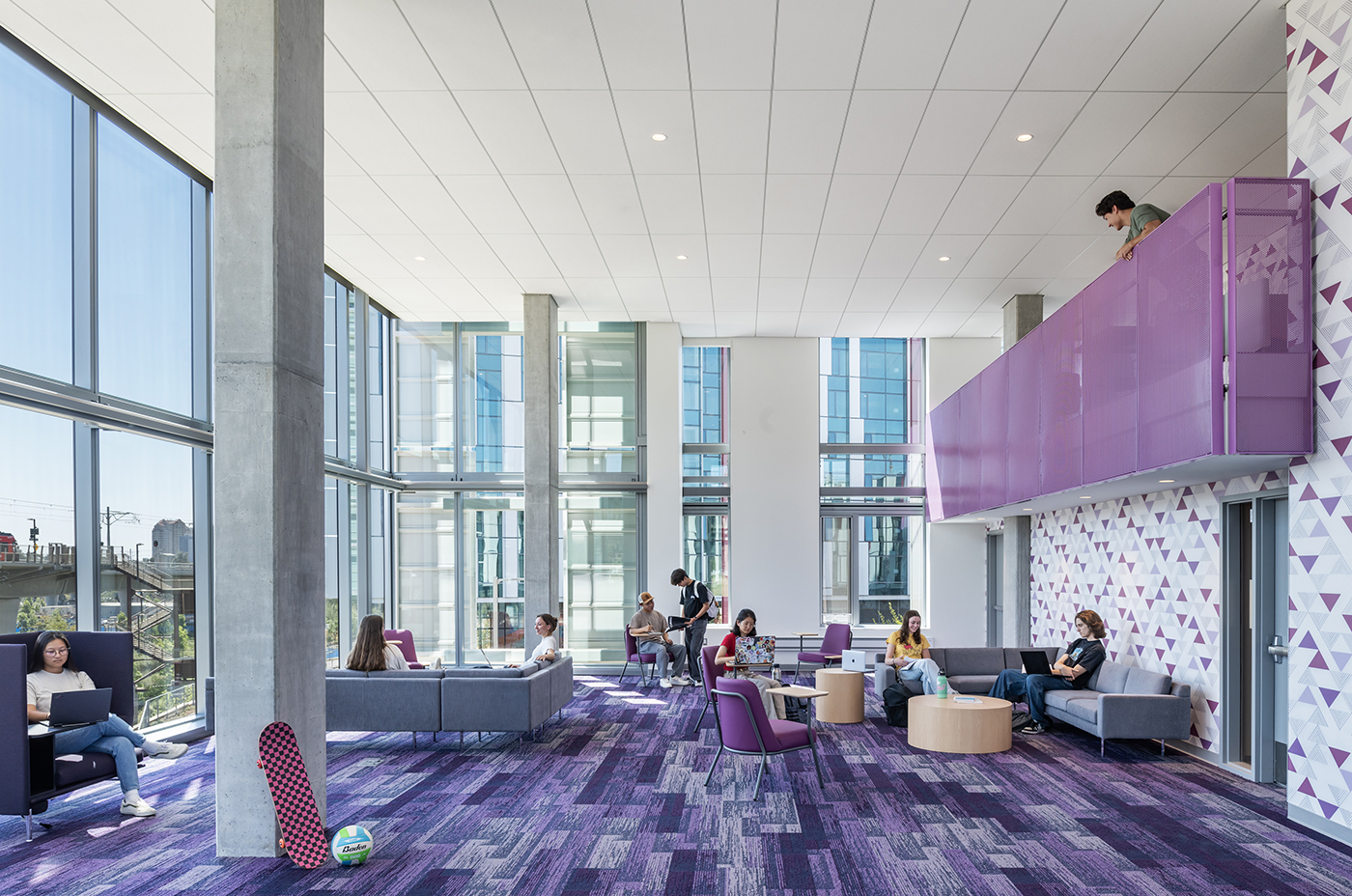
Pepper Canyon West, an award-winning living-learning neighborhood at the University of California, San Diego (UCSD), adds more than 1,300 beds for upper-division students spread across two towers, along with retail and student amenity spaces. The progressive design build project, designed by Perkins&Will’s Seattle and Boston studios in partnership with Clark Construction, was partially funded by the State of California’s Higher Education Student Housing Grant Program and offers affordable rental options, improving access in one of the country’s most expensive housing markets.
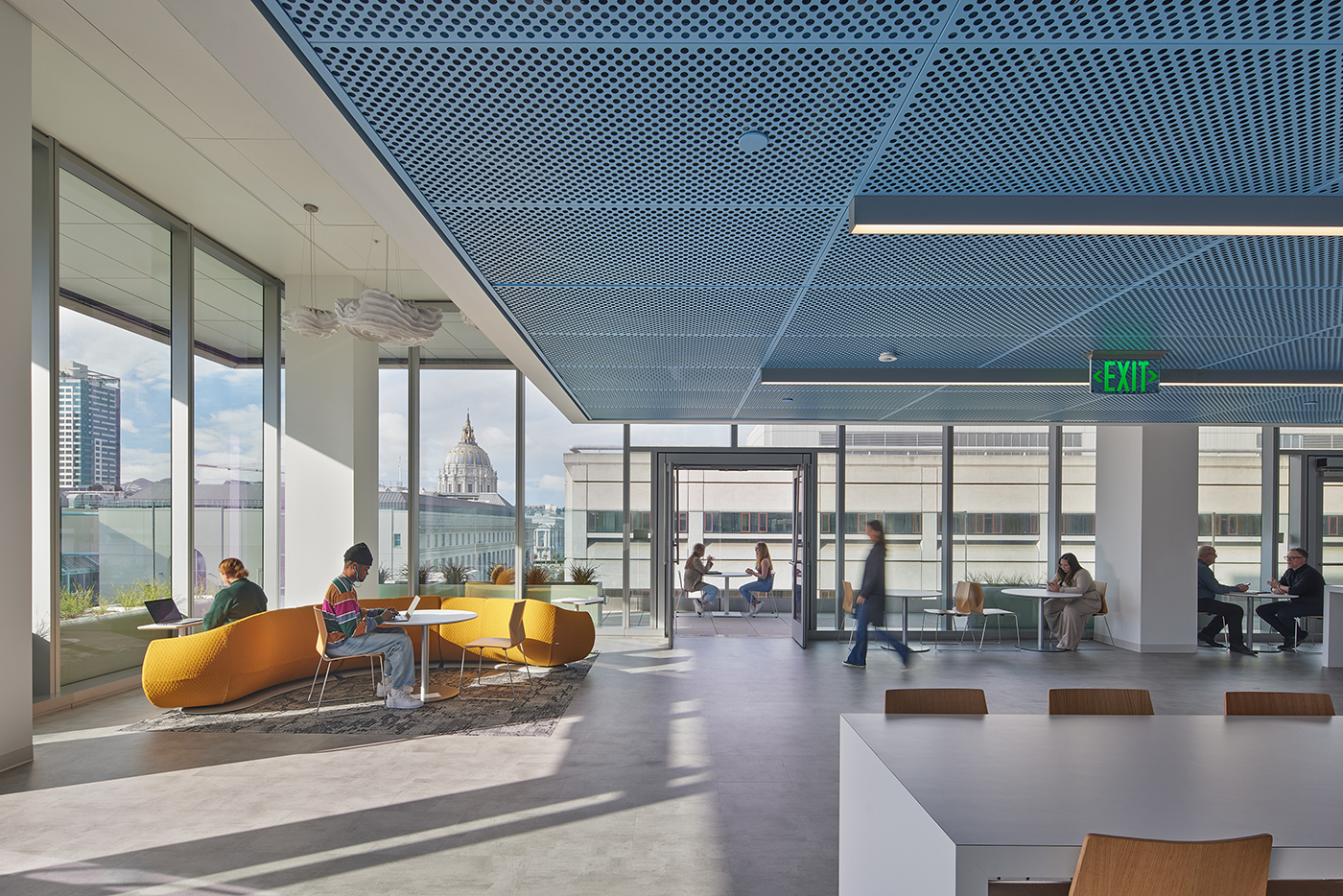
A similar approach was taken by UC Law San Francisco (UC Law SF, formerly UC Hastings). The Academe at 198, financed through a public-private partnership with Greystar, anchors an emerging “Academic Village” in the city’s Tenderloin neighborhood. The multi-disciplinary hub’s 656 below-market units are available to students from higher education partners across the city, including the University of California, San Francisco (UCSF), the University of San Francisco (USF), and San Francisco State University (SFSU).
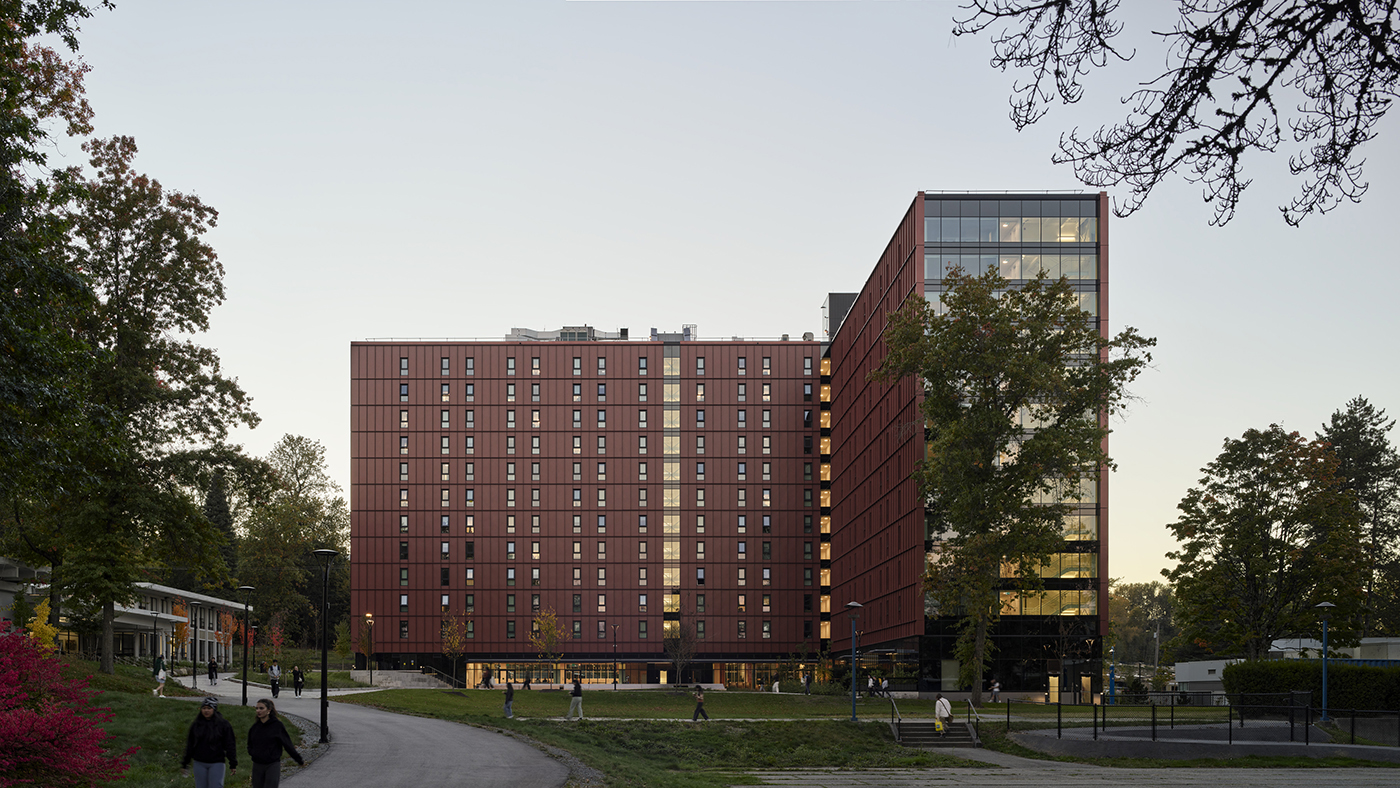
Closer to home, the Tall Timber Student Housing complex at British Columbia Institute of Technology (BCIT) is a fully electric, zero-carbon mass timber building that more than doubles BCIT’s on-campus housing capacity, adding 469 beds. The school cited a growing student population, low vacancy rates in surrounding cities, and limited housing near campus as drivers of the project.
STRATEGIC DELIVERY AND PREFAB ELEMENTS
Strategic delivery methods and prefabrication of repetitive parts can support affordability goals by shortening timelines, reducing on-site waste, and lowering labor costs.
In the Tall Timber Student Housing project, Perkins&Will used locally sourced cross-laminated timber (CLT) and a design-for-manufacture-and-assembly (DfMA). Additionally, prefabricated steel cores accelerated assembly and reduced on-site labor requirements.
Pepper Canyon West and the Academe at 198 also feature prefabricated elements — for kitchen and washroom wet pods and facade cladding, respectively — that introduced efficiencies to the schedule and enabled continuous cost estimating, early subcontractor engagement, and expedited construction.
ENHANCED STUDENT EXPERIENCE
Access to public transit, community-building amenities, and intentional spatial planning are a few areas in which housing can significantly enhance the student experience.
At Pepper Canyon West, terraces, outdoor courtyards, and the adjacent canyon provide students with abundant access to nature, nestled within the center of campus and near UCSD’s central light rail station. A six-acre Open Space Preserve connecting the residence towers features native plantings, art, walking trails, outdoor study spaces, and extensive stormwater mitigation areas.
Apartment-style suites are complemented by community-building programs, including co-working, wellness and socialization spaces.
In addition to fully furnished studios and suites, the Academe at 198 offers common spaces, academic classrooms, two mock courtrooms for law students, and food and retail options. Recognizing that students from partner institutions may study diverse disciplines and travel across the city for classes, Perkins&Will developed a layout that prioritizes areas where residents can “cross-pollinate” through casual encounters and provides immediate access to multiple public transit options.
BCIT’s Tall Timber Student Housing supports the school’s ambitious goals to reduce its carbon footprint and showcase innovative, sustainable building techniques. As an institute focused on applied technology, BCIT approached the residence as a learning platform. Information on the prefabrication process, envelope performance, and operational strategies informs future projects and learning, supporting BCIT’s Living Labs sustainability initiative.
WHAT’S NEXT?
As housing pressures intensify across the West Coast, institutions that invest thoughtfully in student housing stand to gain a competitive edge in recruitment, a stronger campus culture, and a more equitable academic environment.
The most successful projects share a common thread — they treat housing as both a strategic asset and an operational necessity, weaving together affordability, sustainability and community-enhancing design.
Ryan Bussard is a principal and design director in Perkins&Will’s Seattle studio, with more than two decades of work including higher education and student life facilities. Anders Carpenter is Perkins&Will’s West Coast higher education practice leader, managing complex stakeholder processes, unique building programs, and specialized design solutions. David Damon is Perkins&Will’s firmwide higher education practice leader, specializing in helping colleges and universities transform living spaces into active, mixed-use hubs for student success.
Other Stories:


