 |
Subscribe / Renew |
 |
Contact Us |
| ► Subscribe to our Free Weekly Newsletter | |

Construction Bids
| home | Welcome, sign in or click here to subscribe. | login |


 print print  email to a friend email to a friend  reprints add to mydjc reprints add to mydjc |  |
 |
June 25, 2026

Sink
|

Kiel
|
For decades, higher education could afford to think of campus buildings as long-term solutions to well-defined needs. A library housed collections. A residence hall provided beds. A classroom building delivered instruction.
Capital projects were designed around a single function with the expectation that the institution around them would remain relatively stable.
That assumption is becoming harder to defend.
Construction costs have risen dramatically, while tuition has outpaced wage growth for many American families. At the same time, colleges and universities face enrollment uncertainty, changing demographics, and increasing competition for students. Workforce demands continue to evolve, and expectations around wellness, belonging, and campus life now extend beyond the classroom.
Together, these forces are changing how institutions think about the built environment. The question is no longer whether a building fulfills its original purpose, but whether it can support multiple institutional priorities over time.
Flexibility is often used to describe this shift, but the larger objective is resilience. A resilient campus can adapt as academic programs, student expectations, and workforce needs evolve, continuing to deliver value long after the ribbon cutting.
EVERY SQUARE FOOT HAS A JOB TO DO
Enrollment forecasts have become less predictable, while students evaluate colleges through a much broader lens than they did a generation ago.
Academic reputation still matters, but so do community, career preparation, campus culture, wellness resources, and the overall student experience. For many families, choosing a college is an evaluation of whether the investment feels worthwhile, and the campus itself often shapes that decision.
Students notice whether public spaces feel welcoming, and where people gather, collaborate, and spend time between classes. Authentic experiences can influence enrollment decisions as much as a viewbook or ranking, making facilities an active part of recruitment and retention strategies.
This shift also challenges a long-standing planning metric.
Historically, institutions measured buildings by square footage and utilization. Those metrics still matter, but they no longer capture the full value of a campus investment. Colleges are increasingly measuring space by outcomes. Does a building improve retention? Strengthen belonging? Support workforce readiness? Create opportunities for collaboration and community?
In an era of constrained resources, the most valuable buildings are the ones that accomplish several of these goals at once.
THE GROWING COST OF SINGLE-PURPOSE BUILDINGS
Higher education has always planned for the long term. Buildings are expected to serve campuses for decades, while funding cycles often require years of preparation through bond measures, state appropriations, philanthropy, or institutional reserves.
Student expectations, however, do not operate on the same timeline.
Academic programs change. Technology evolves. Workforce demands emerge. Support services expand. Campus priorities shift.
Buildings designed too narrowly can struggle to keep pace.
A highly specialized facility may be difficult or expensive to adapt when institutional needs change. Underutilized square footage becomes more than an operational concern. It becomes a financial liability, especially when colleges are expected to maximize the value of every capital investment.
Instead, institutions are seeking environments that can evolve, accommodate multiple functions, and remain relevant over time.
Few places illustrate that transformation more clearly than the campus library.
FROM REPOSITORY TO PLATFORM
The modern library reflects a broader evolution occurring across higher education.
Students no longer come to campus to access information. Digital technology has changed that equation. They come for experiences that cannot be replicated elsewhere: collaboration, mentorship, community, opportunity and connection.
Libraries have adapted accordingly.
What was once primarily a repository for books may now include tutoring, advising, digital learning resources, collaborative work areas, quiet study environments and student support services. These spaces often function as crossroads where students from every discipline can interact and build relationships.
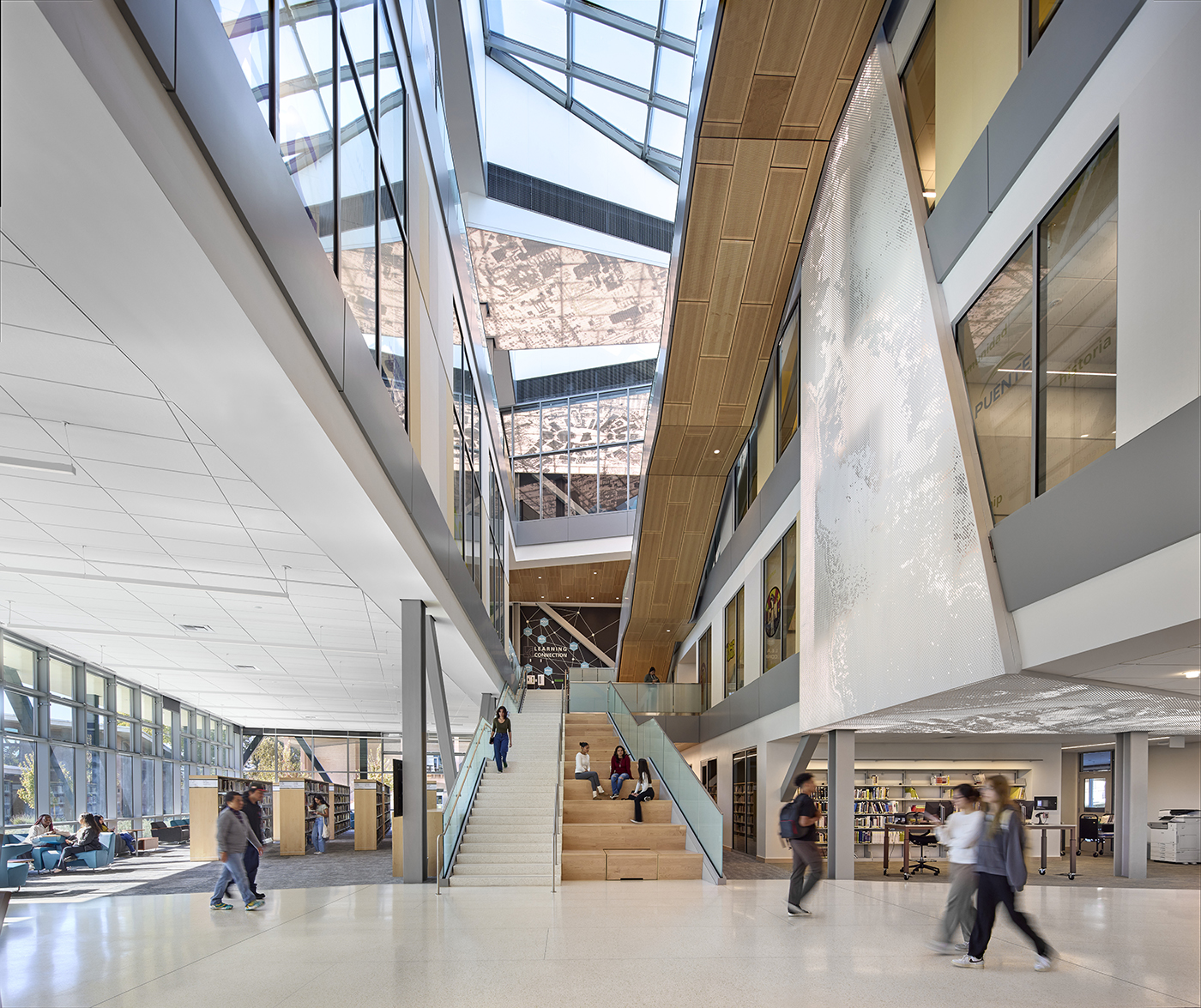
The recently completed Chabot College Library in California’s Bay Area illustrates how dramatically those expectations have changed. Designed as more than an academic resource, the building serves as a shared campus destination where students can study, collaborate, seek support and build a sense of community. Since the library’s opening, campus leaders have noted that students quickly embraced it as an academic home, reinforcing the idea that successful learning environments create opportunities for connection and wellness as much as instruction.
That evolution reflects a growing recognition that belonging is an institutional priority. Students who feel connected to a campus community are more likely to persist and succeed. In that sense, facilities contribute directly to retention strategies.
The library has become evidence that buildings can support multiple outcomes simultaneously.
SUPPORTING THE WHOLE STUDENT
Research continues to reinforce what many institutions already understand: academic success is influenced by factors beyond the classroom.
Housing insecurity, social isolation, mental health challenges, long commutes, and the absence of meaningful community can all affect persistence and graduation rates.
As a result, colleges increasingly seek environments that integrate living, learning, wellness and student support.
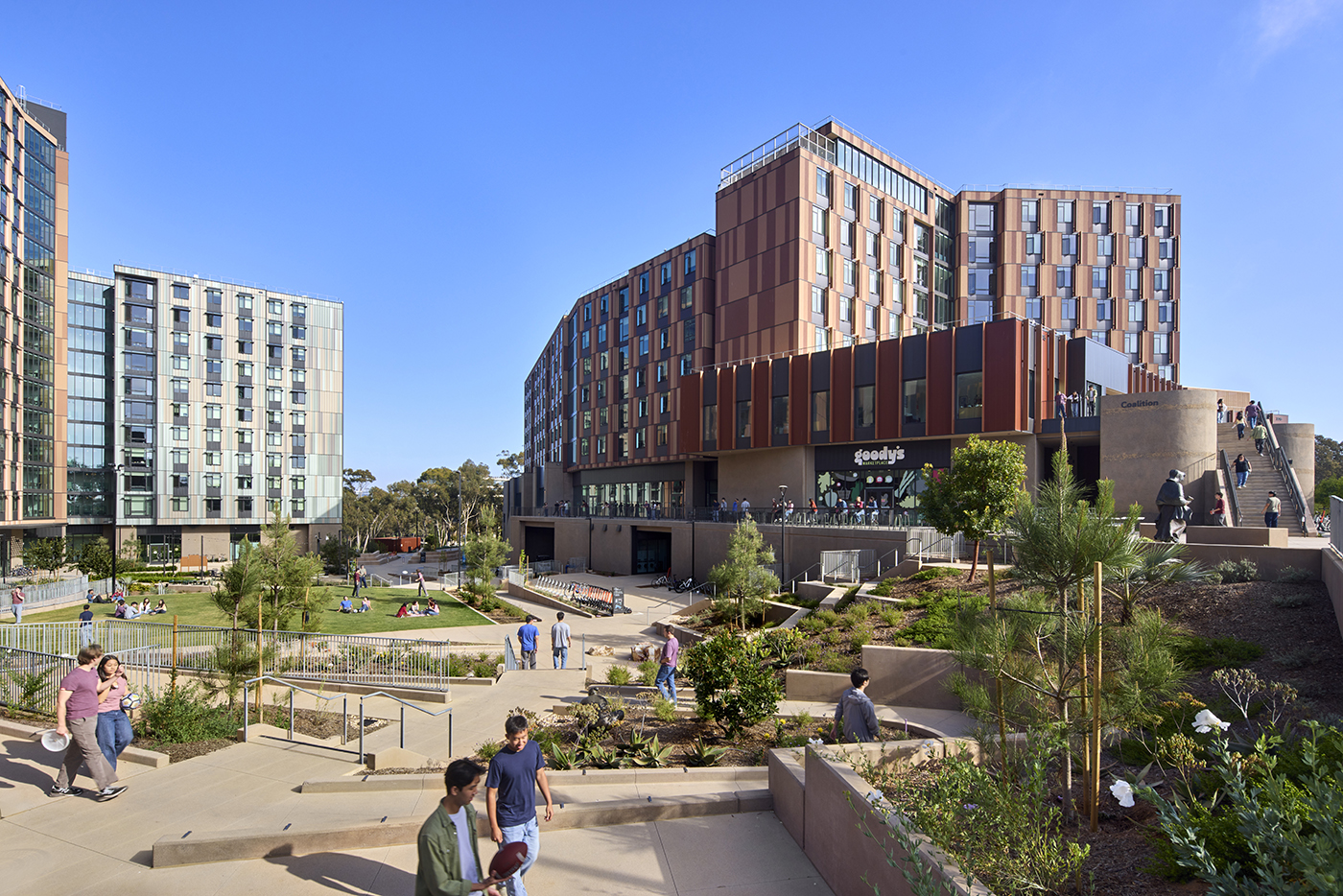
UC San Diego’s Ridge Walk North Living and Learning Neighborhood demonstrates how a single project can address multiple institutional goals at once.
The development combines student housing with academics, gathering spaces, dining, retail, student services and wellness resources. Rather than creating isolated destinations across campus, it establishes an active environment where education and daily life intersect.
Housing becomes more than residential infrastructure. It supports recruitment by strengthening campus appeal, encourages belonging by creating opportunities for interaction, contributes to retention by connecting students with the resources they need, and reinforces institutional identity by fostering a shared sense of place.
The project reflects the broader trend across higher education that buildings are expected to address multiple challenges simultaneously.
PREPARING FOR A WORKFORCE THAT KEEPS CHANGING
Educational facilities have traditionally been designed to last for generations. Industries, however, can change in only a few years.
Emerging technologies continue to reshape advanced manufacturing, transportation, construction, health care and the skilled trades. Even occupations considered resistant to disruption are evolving through automation, software integration and digital workflows.
Educational environments must evolve alongside them.
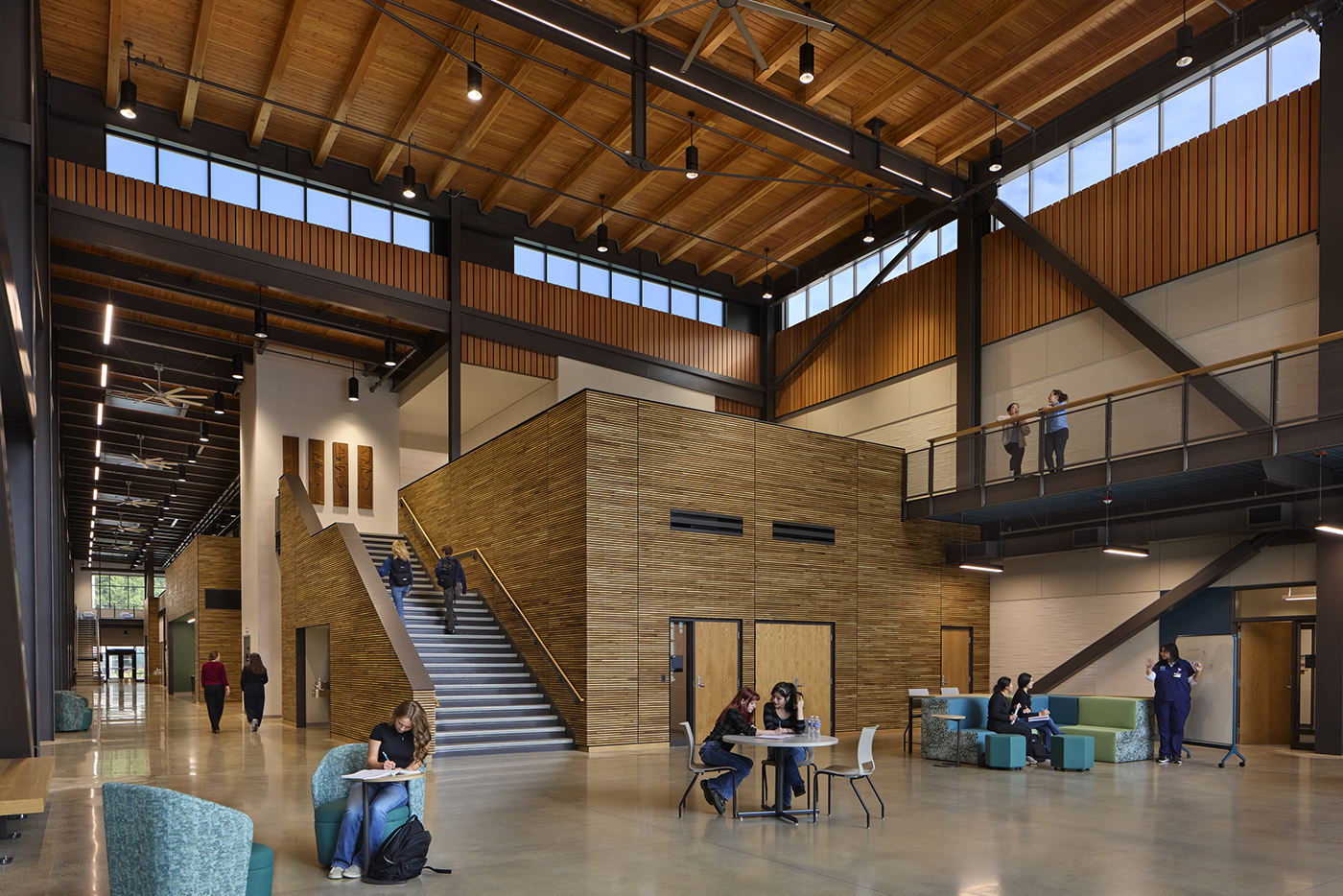
West Sound Technical Skills Center in Bremerton offers an example of how adaptable facilities can support changing workforce realities. Learning spaces designed with long-term flexibility allow programs to incorporate new technologies and instructional approaches without requiring complete replacement.
Although rooted in career and technical education, the underlying principle applies equally to community colleges and universities. The careers students pursue will continue to change, and the spaces that prepare them for those careers must change as well.
Many institutions are responding by focusing on renovation, adaptive reuse, and deferred maintenance strategies that maximize existing assets instead of relying solely on new construction. The emphasis is shifting from building for a single college or department to thinking of the campus as an interconnected ecosystem.
BUILDING FOR AN UNCERTAIN FUTURE
Higher education has always adapted to social and economic change, but the pace of change is accelerating.
Demographic shifts, evolving student expectations, technological disruption, and financial pressures will continue to challenge traditional assumptions about how campuses operate.
Successful institutions will not necessarily be those that build the most, but those that extract the greatest long-term value from what they build.
That requires a different approach to facilities planning. Rather than evaluating projects solely by present-day needs, colleges and universities should consider how effectively a building can support changing priorities over decades of use.
Adaptability is more than a design strategy. It is a form of institutional risk management.
The future of higher education may be shaped by buildings that serve multiple roles, strengthen the student experience, support evolving workforce demands, and help institutions remain competitive in an uncertain environment.
Rather than measuring buildings by the square footage they add, institutions should measure them by the outcomes they make possible. In an era when every investment carries greater consequence, resilience may be one of a campus’s most valuable assets.
James Sink is higher education practice leader for HMC Architects. Jordan Kiel is a principal-in-charge for Bassetti Architects, a design studio of HMC Architects.
Other Stories:


