 |
Subscribe / Renew |
 |
Contact Us |
| ► Subscribe to our Free Weekly Newsletter | |

Construction Bids
| home | Welcome, sign in or click here to subscribe. | login |


 print  email to a friend  reprints add to mydjc |  |
 |
November 19, 2026

Caulfield
|

Johnson
|
In 1962, Seattle Center was the world’s window into the future. Nearly 10 million visitors came to the Century 21 Exposition for a glimpse into what the decades ahead might hold.
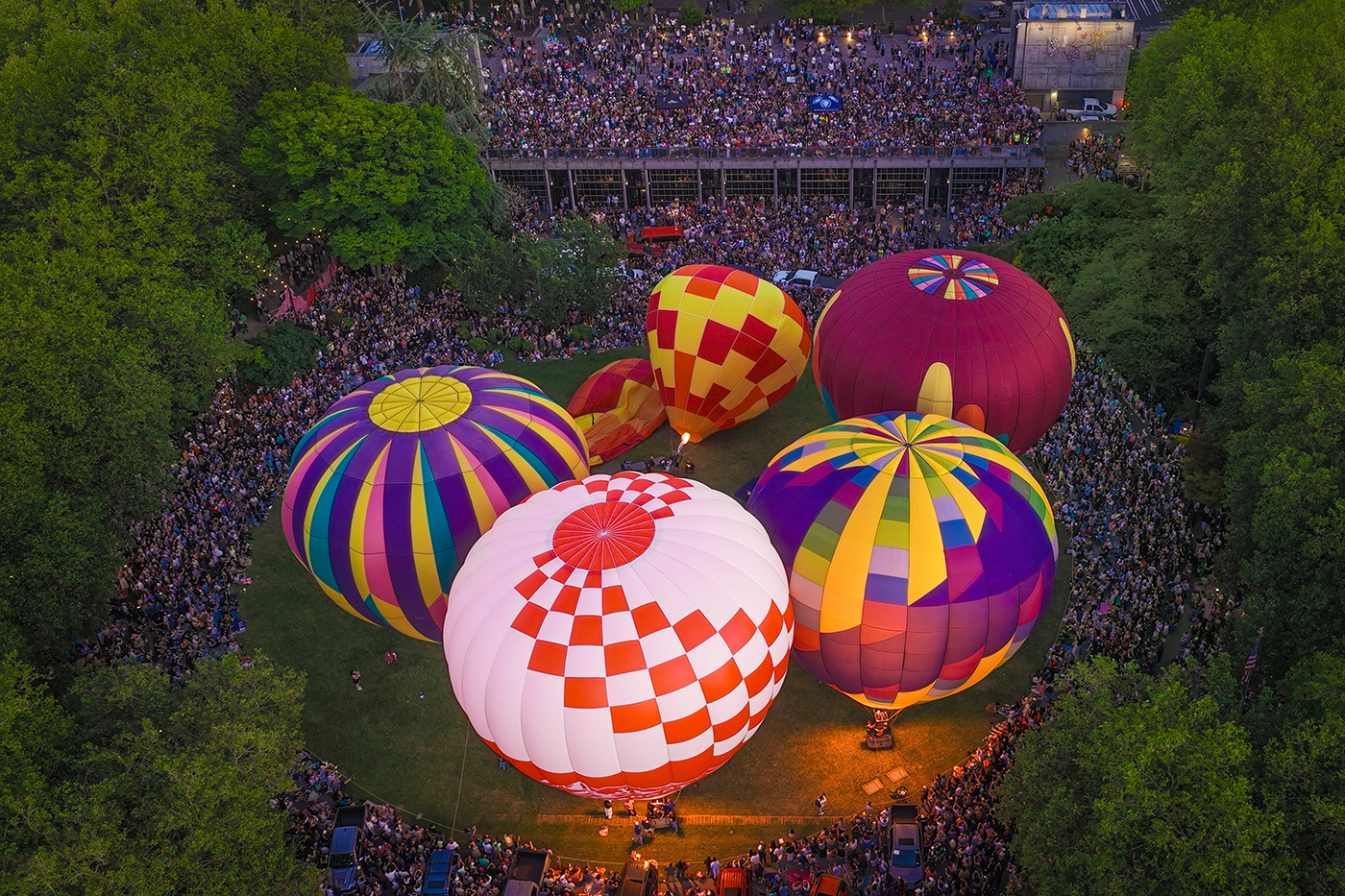
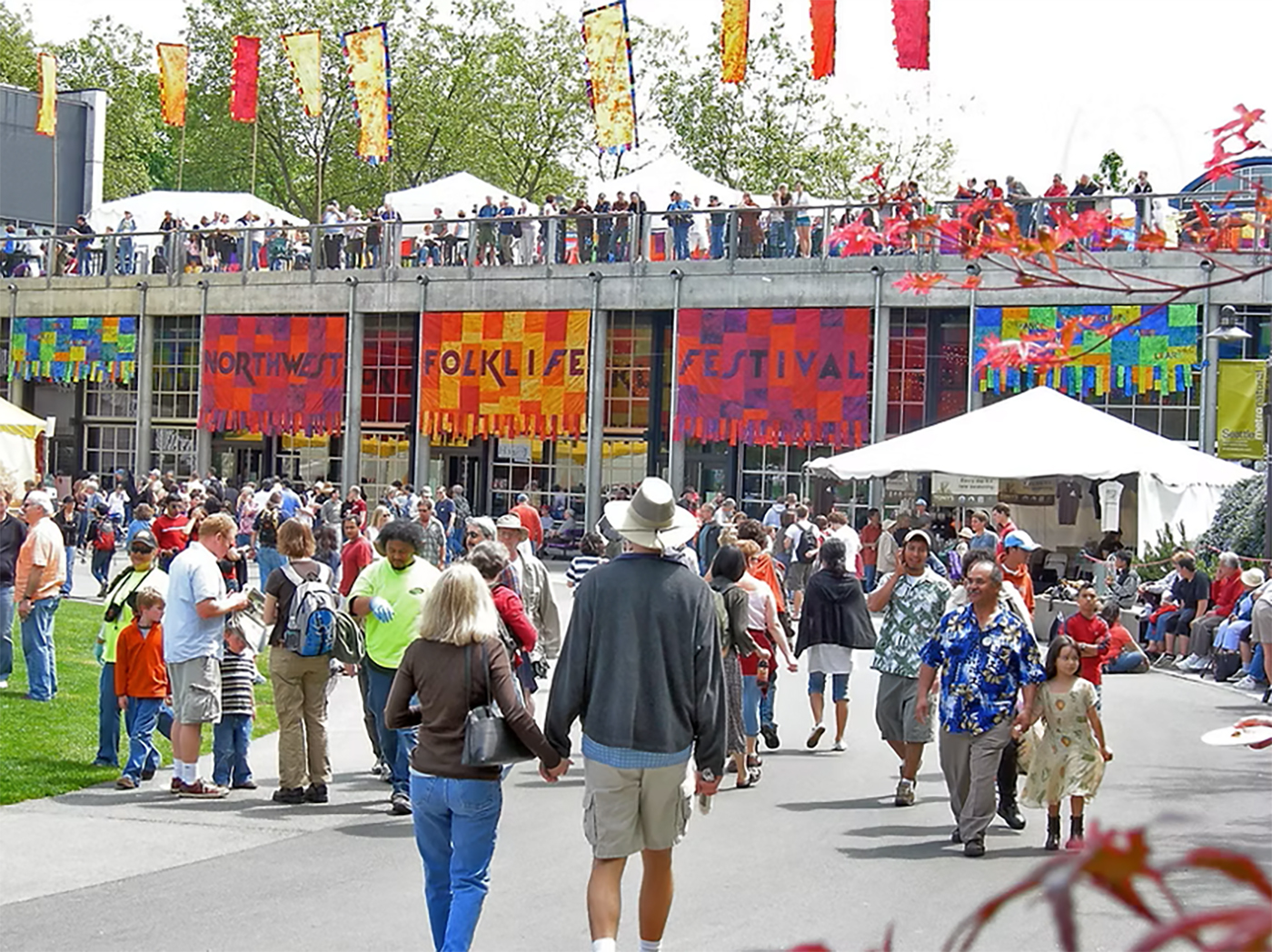
Today, Seattle Center serves as the community’s cultural and civic hub, welcoming nearly 12 million visitors annually for festivals, concerts, sporting events, and more. Yet over these past 65 years most of our campus remains untouched, and buildings meant to last just 36 months are showing their age.
Years of underinvestment have led to maintenance backlogs, failing systems and rising emergency repairs that put this iconic place at risk. Projects such as Climate Pledge Arena, Seattle’s Waterfront Park, and recent FIFA activations show how partnership, creative spirit and placemaking can be transformative. A voter-approved bond measure in 2027 could restore this vital arts-and-culture destination and deliver on the promise of Century 21.
The first step to a zero-carbon future is rethinking how buildings are heated and cooled. Rather than replace the campus’s aging gas-fired steam plant with more of the same, we plan to replace it, building by building with cleaner, more efficient systems.
A CENTURY OF BUILDINGS, ONE STEAM PLANT
Seattle Center’s buildings span nearly a century of history. The Armory, our campus’ oldest building, was constructed in 1939 during the run up to World War II. Fisher Pavilion, one of the newest buildings, arrived in 2002.
Despite their different eras and uses, what ties them together is the aging gas-fired steam plant.
Today, that plant heats nine buildings and is beyond the end of its life. Energy is lost in underground pipes or through old, uninsulated walls before it reaches a stage or lobby. That gives us a chance to increase efficiency and reduce costs as we transition to clean energy sources.
BUILDING ON PROGRESS
This work builds on a broader commitment to sustainability. Buildings account for 41% of Seattle’s core greenhouse gas emissions. At Seattle Center, public and private projects are showing what’s possible.
When it opened in 2021, Climate Pledge Arena became the world’s first certified net zero-carbon arena, eliminating ~5% of the city-owned building emissions by going all electric and installing solar panels adjacent to the landmarked historic roof.
At Seattle Public Schools’ new Memorial Stadium, set to open in late 2027, rubble from the original 1947 stadium was crushed on site, with 13,000 tons of material reused as backfill, while preserving the landmarked Memorial Wall.
Those projects have paved the way forward to the next big opportunity: transitioning our aging, inefficient, and carbon-intensive gas-fired steam system into a zero-carbon campus.
ONE CAMPUS, TWO PATHWAYS
Between 2022 and 2024, two engineering studies funded by Washington state and Seattle City Light grants weighed converting buildings one at a time against a campus-wide district energy upgrade. With about 30 resident organizations on campus, any transition must keep performances, exhibitions and festivals running. So, our plan combines both approaches.
Most buildings will leave the steam and chilled-water lines, one at a time, for their own heat pumps, with construction coordinated to maximize community programming. They include the Northwest Rooms (home to KEXP, The Vera Project, and SIFF), Fisher Pavilion, Armory Food & Event Hall, Seattle Rep and Seattle Children’s Theatre.
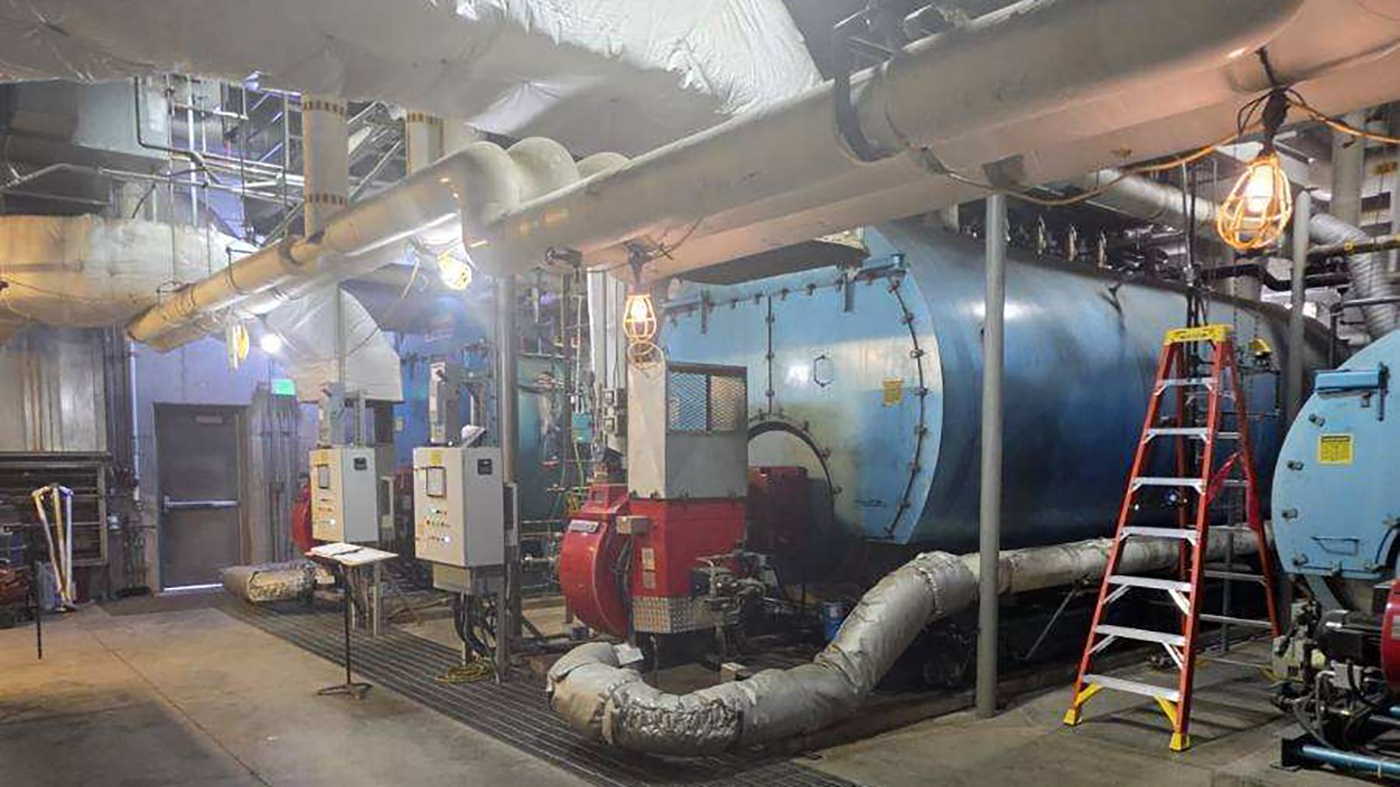
At the heart of Seattle Center’s theater district, an upgraded smaller thermal loop will serve McCaw Hall, Phelps Center, Exhibition Hall and Cornish Playhouse. Water-source heat pumps will replace the gas-fired steam plant. Corroding underground steam pipes will be upgraded to reduce the heat loss that troubles the system today.
Construction is phased to finish by 2037. By 2038, energy use intensity for the connected buildings is projected to drop 39%, and annual emissions from roughly 2,030 tons to about 190.
FISHER PAVILION LEADS THE WAY
The 21,000-square-foot Fisher Pavilion and its 20,000-square-foot rooftop host galas, weddings, trade shows and festivals, and it doubles as a backup emergency shelter for up to 1,000 people. Sitting at the far end of the steam line, it is a natural to disconnect first.
Today, Fisher Pavilion emits about 88 metric tons of carbon a year, more than twice the average for a building its size and well above its 2035 target under the city’s Building Emissions Performance Standard (BEPS). Because the building is nearly 25 years old, aging systems will be renewed at the same time, saving cost and time.
Rooftop air handlers will give way to advanced energy-efficient HVAC technology. Water heaters, power distribution and operable glass walls will be upgraded, and the building will be solar-ready for future solar array installations on campus.
A $2 million state grant is funding design, with construction targeted for 2028, fueling local hire and apprenticeship opportunities thanks to Seattle’s community workforce agreement and strong partnerships with labor organizations.
Fisher Pavilion is more than the first building in line. It’s a chance to showcase climate leadership in action and the benefits that come from healthier, greener and more efficient buildings.
LEADING BY EXAMPLE
Seattle Center’s plans reflect a broader shift in tackling the climate crisis. Seattle’s BEPS requires owners of large buildings to reach net-zero emissions by 2041 to 2050, and the city aims to take its own buildings off fossil fuels by 2042.
Seattle Center will demonstrate what that transition can look like — on a campus that is anything but standard.
A MORE SUSTAINABLE FUTURE
The benefits reach beyond carbon: cleaner indoor air during wildfire smoke, reliable cooling during heat waves, and emergency shelter for a safer and more resilient community.
Future phases of decarbonization as part of an overall modernization of the Seattle Center campus would be funded through a proposed 2027 voter-approved bond measure, alongside state, utility and philanthropic support.
In 1962, Seattle showed the world a vision of a brighter future. Today, building a more sustainable Seattle Center calls for that same spirit of possibility — and it will take everyone showing up again: architects, engineers and builders, partners and neighbors, and the millions who visit every year.
Michelle Caulfield leads partnerships and sustainability in Seattle Center’s Planning & Capital Development division and most recently served as deputy director of Seattle’s Office of Sustainability & Environment. Rob Johnson, executive director of Seattle Center Foundation and a former Seattle City councilmember, first volunteered for Earth Day in 1990 at age 12 — and 30 years later led sustainability efforts at Climate Pledge Arena.
Other Stories:


