 |
Subscribe / Renew |
 |
Contact Us |
| ► Subscribe to our Free Weekly Newsletter | |

Construction Bids
| home | Welcome, sign in or click here to subscribe. | login |


 print  email to a friend  reprints add to mydjc |  |
 |
November 19, 2026

Spiritos
|
In real estate, sustainability is often treated as an extra: design elements added on top of the baseline if the budget allows, and the first to be value engineered out when the cost estimate exceeds the budget.
In Seattle, the baseline is already high. Our energy codes mean operational efficiency is baked into the design of every new building.
So why spend a constrained budget going above and beyond? Because sustainability isn’t only about operational carbon. We are learning that the materials we build with, and the carbon embodied in them, also meaningfully affect the environment.
But materials matter in another way, too. There is a facet of sustainability that is less often prioritized and budgeted for: the impacts that our buildings have on the people inside them.
Taking a step back, we intuitively know that our surroundings impact our health. This is the underlying premise of forest bathing, which studies have associated with lower cortisol levels, heart rates and blood pressure. This research falls under the domain of environmental psychology, a field that studies how our physical surroundings (natural and built) affect behavior, emotion, cognition and wellbeing.
Extrapolating, it makes sense that just as our outdoor environment impacts our health, so do our interior environments. A related field, neuroarchitecture, focuses on brain and nervous system response to built space. Neuroarchitecture helps explain why soaring ceilings feel the way they do: a 2007 study found that higher ceilings were associated with more abstract, expansive thinking. It also helps explain Roger Ulrich’s landmark 1984 finding that surgical patients with a view of trees had shorter hospital stays.
How often, when designing a building, do we think about what the building will do to us? As much as we think about what purpose it serves, or how it looks? And why does this matter?
According to the EPA, humans spend, on average, 90% of their time indoors. If the research on how our built environment impacts our biology, physiology, and psychology is true, then these spaces have tremendous potential to promote health, which is its own form of sustainability.
Most wellness features in buildings are additions: a living wall, upgraded finishes, a meditation room. Like other sustainability features, they sit on top of the baseline and are vulnerable when budgets tighten.
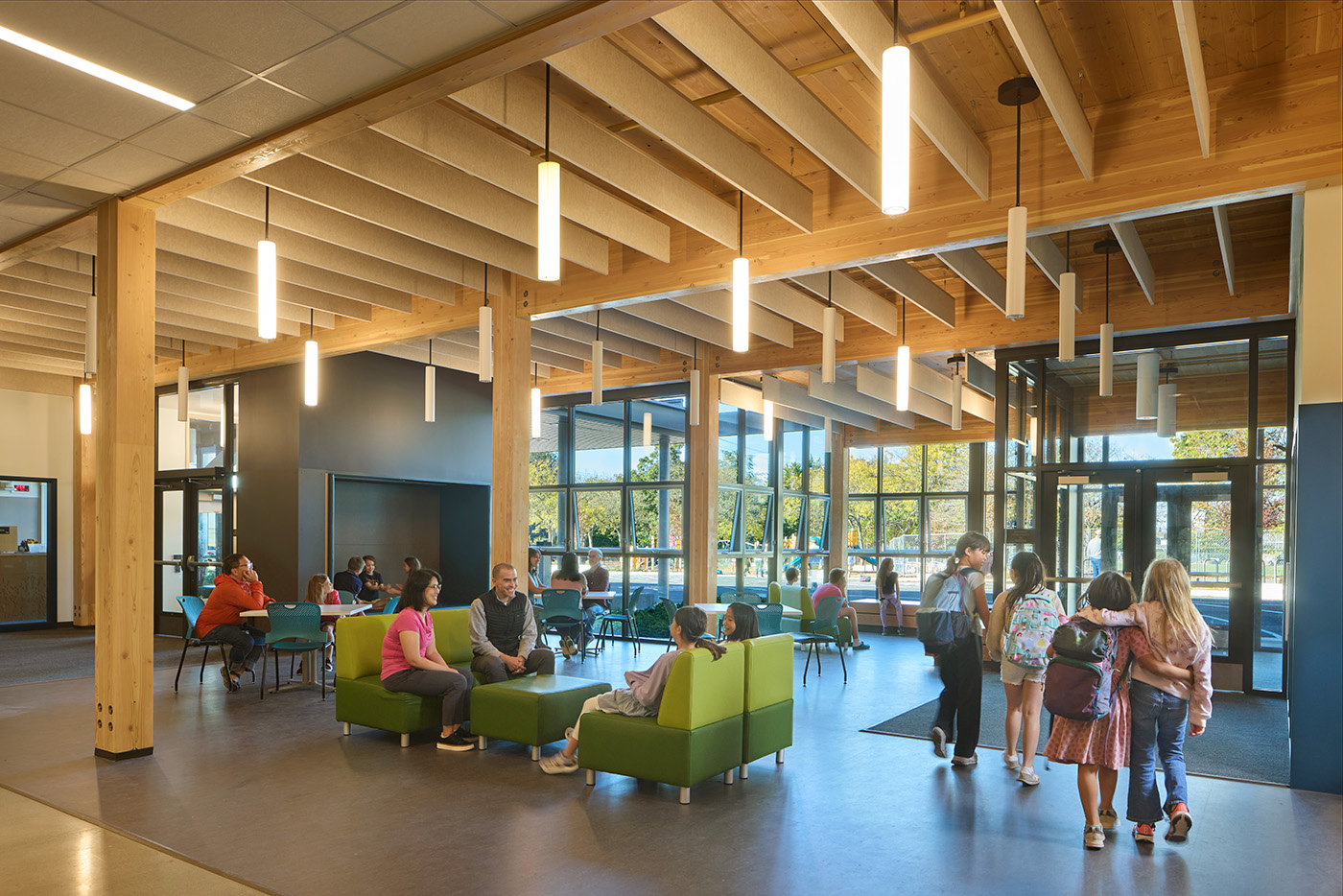
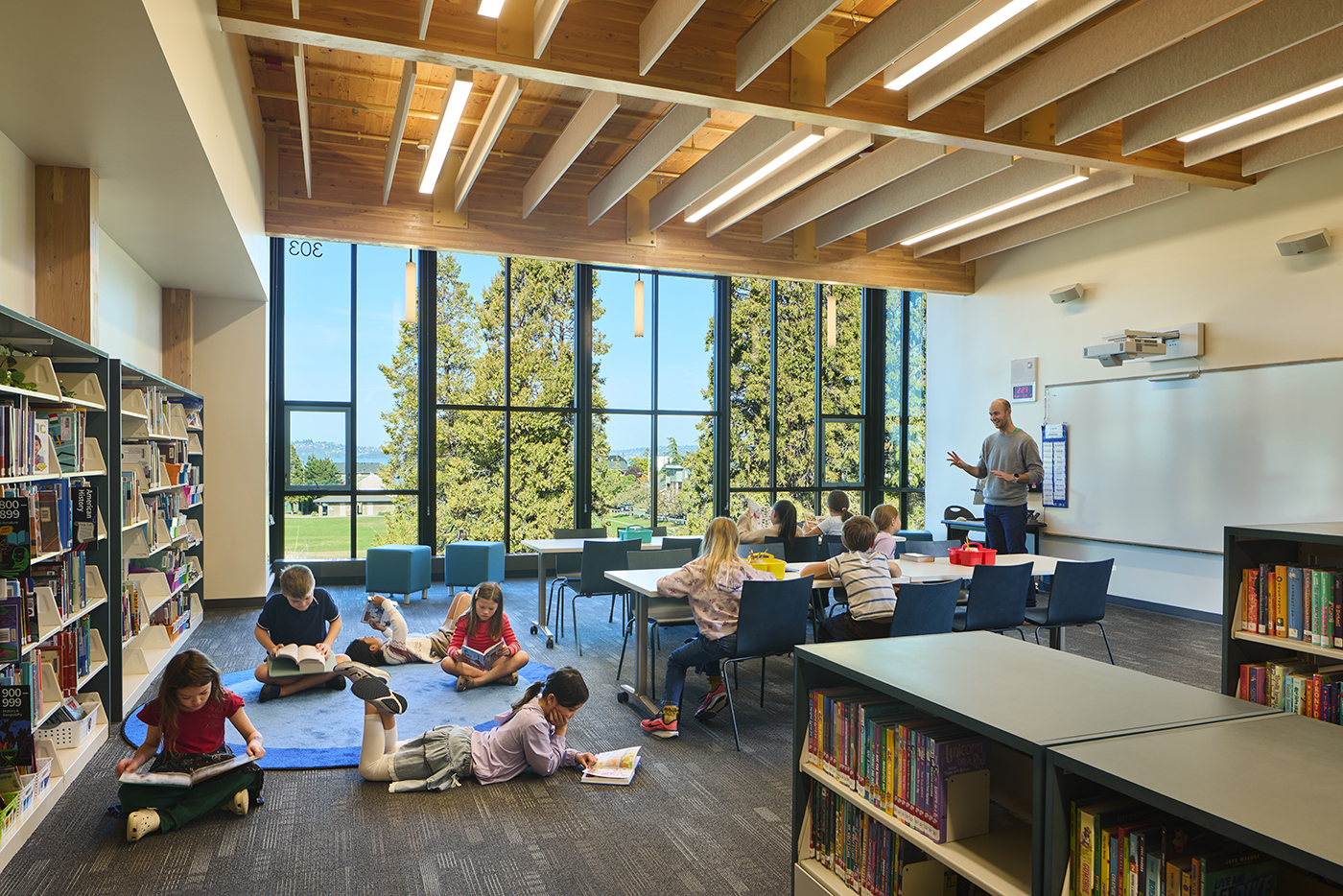
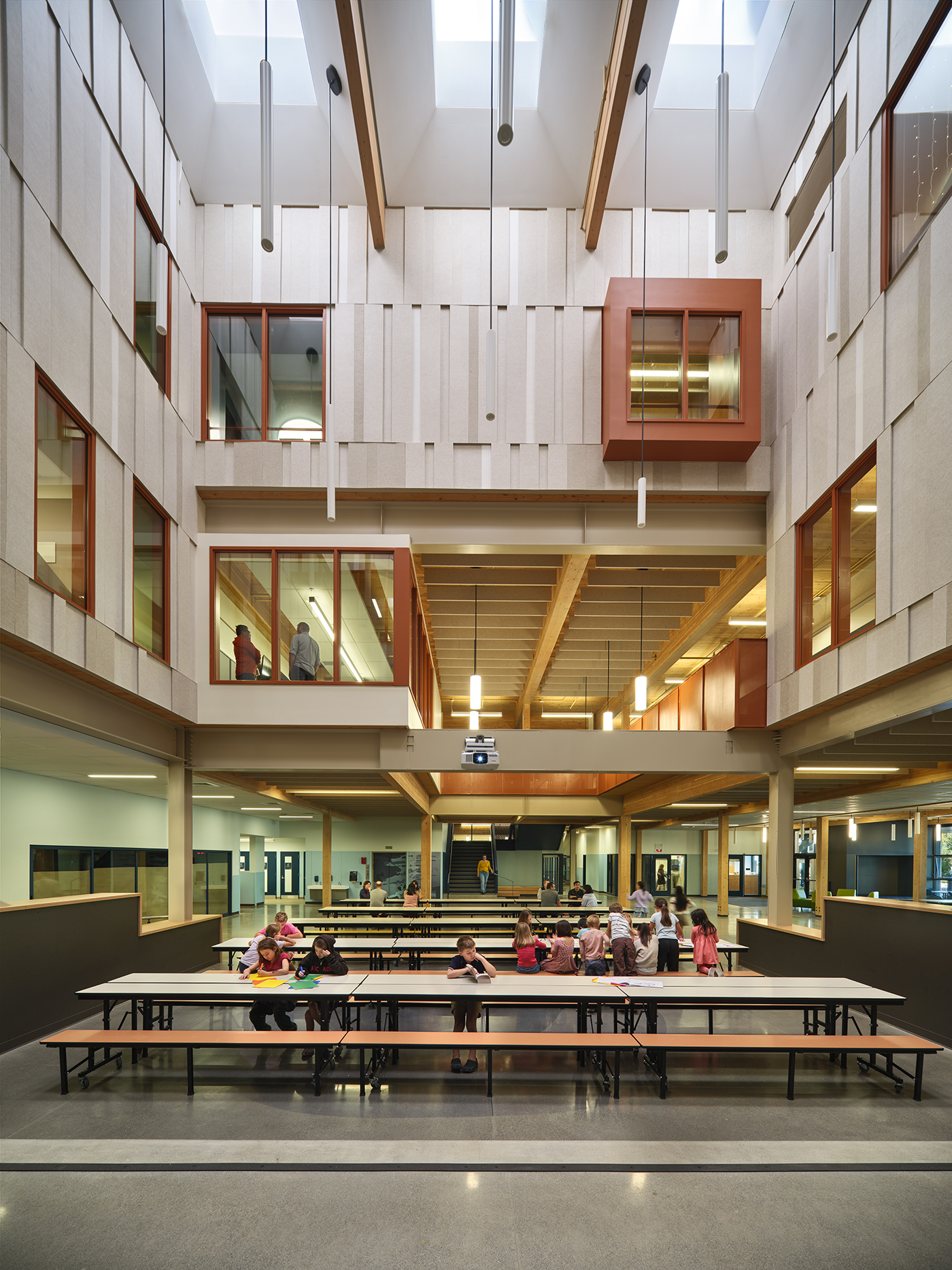
Mass timber offers a different proposition. In a mass timber building, the columns, beams and panels that serve as the structure, the bones of the building, can also be the surfaces people see, touch and live alongside every day. The structure itself becomes a natural material at room scale.
A growing body of research suggests that exposure to wood in indoor environments may have measurable effects on human well-being. A 2026 review by the Dutch firm ORGA architect, drawing on more than 100 studies, highlights several promising findings. In a University of British Columbia study, participants in offices with visible wood showed lower physiological stress responses. A Slovenian study found lower cortisol levels in rooms furnished with oak.
Researchers at the University of Padova found that people who took a break in a wood room performed better on attention tasks afterward, while those who rested in a non-wood room did not. That finding echoes Attention Restoration Theory, which suggests time in nature helps restore our ability to focus.
There are physical benefits to explore as well. Exposed wood absorbs and releases moisture, which can help moderate indoor humidity fluctuations and contribute to occupant comfort. A 2022 U.S. study found that mass timber walls reduced uncomfortable temperature hours by 31 to 46 percent compared with lightweight framing, thanks to the thermal mass of the wood.
The research is still young. Many studies are small and take place in labs rather than occupied buildings, and most tested wood furniture and finishes rather than structure. The researchers are the first to call for larger, longer-term studies in real buildings. But the direction is encouraging, and the market is already responding.
Architects are increasingly turning to mass timber in part for its potential to create healthier, more restorative environments. Major institutions, from Microsoft to University of Washington, have chosen to build with timber partly with an eye to the talent they want to attract and retain. If we are making that investment for employees and graduate students, what are we doing for kids?
Washington is leading the nation in bringing mass timber to K-12 facilities. More than 25 of the state’s 295 school districts have built a new facility with some amount of mass timber structure.
This year Seattle Public Schools opened its fourth mass timber school, Alki Elementary in West Seattle, and SPS has dedicated a full-time position to studying how exposed wood may be affecting student health and academic performance. That is exactly the kind of real-world, long-term research the field has called for, and Seattle is positioned to help provide it.
Children today are growing up surrounded by screens, and youth mental health struggles have reached concerning levels. Students spend more than 1,000 hours a year in school buildings. We owe it to them to ask not only what our schools cost and how they function, but what they do for the people inside them.
A sustainable city is one that sustains its people too. When a building’s bones can support both the planet and the children learning within them, health is no longer an extra. It becomes part of the structure.
Erica Spiritos is executive director of the Washington Mass Timber Accelerator (MASSTAC), a nonprofit advancing the adoption of mass timber in Washington, and previously helped establish Swinerton’s mass-timber division, which became Timberlab.
Other Stories:


