 |
Subscribe / Renew |
 |
Contact Us |
| ► Subscribe to our Free Weekly Newsletter | |

Construction Bids
| home | Welcome, sign in or click here to subscribe. | login |


 print print  email to a friend email to a friend  reprints add to mydjc reprints add to mydjc |  |
 |
August 27, 2026

Mitton
|
Some of Seattle’s public spaces matter well beyond their footprint; they’re the parks, plazas and streets that quietly stitch our neighborhoods together. Commuters weave through, neighbors gather, visitors form first impressions and events unfold. These spaces require calibration over time; continuous investment to keep them in tune with the needs of the city. Westlake Park had reached such a moment of need.
Completed in 1988, the park occupies one of the most prominent public spaces in downtown Seattle, sitting squarely between Pine and Pike on Fourth Avenue. The park had gradually fallen out of step with the city around it — aged infrastructure, limited technological amenities, trees maturing beyond the conditions they were planted in.
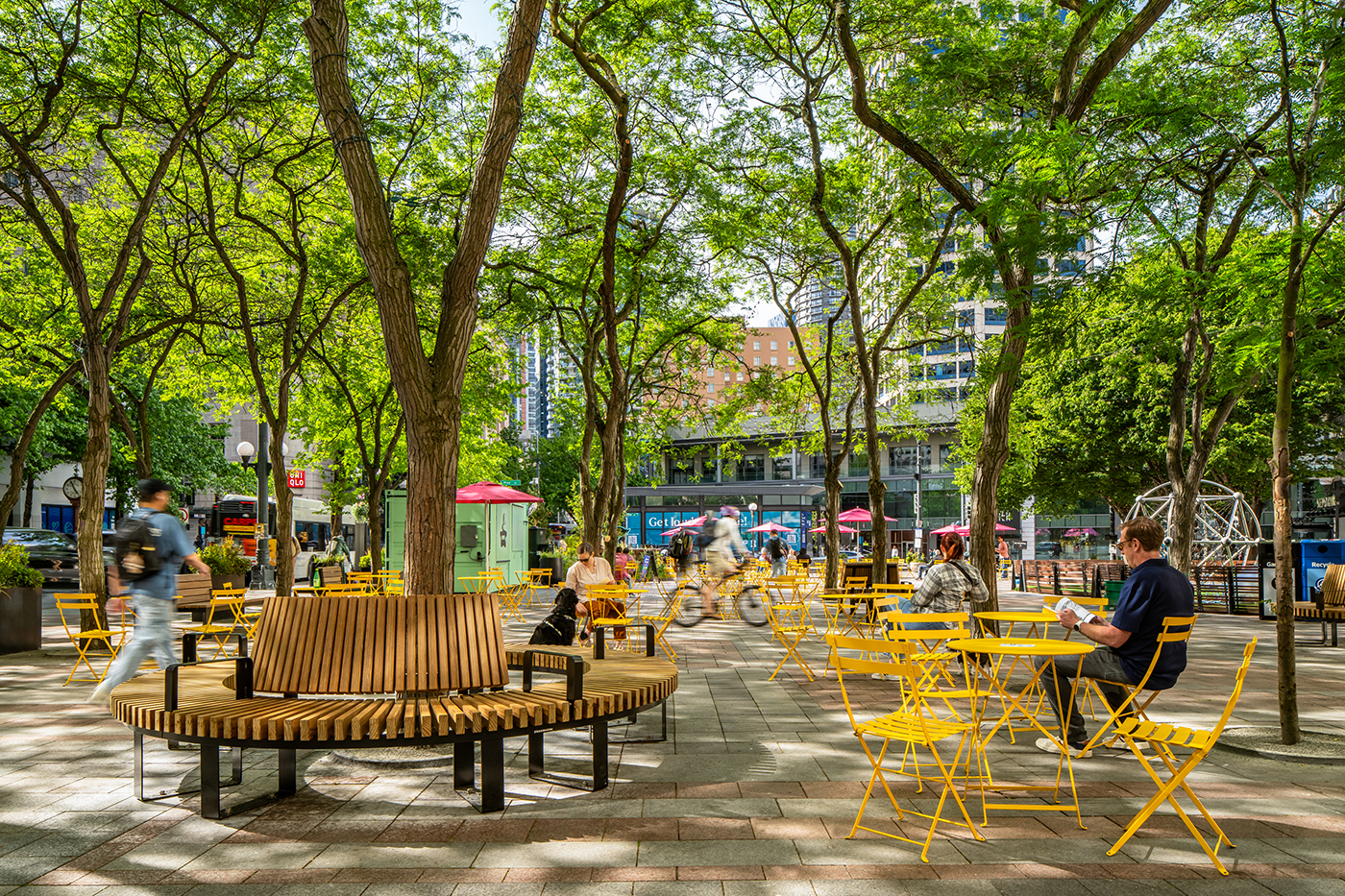
Community conversations revealed that while Westlake remained central to downtown, it no longer fully reflected how people wanted to use it. As Seattle prepared for the 2026 FIFA World Cup, the renovation of Westlake Park offered an opportunity not simply to refresh the park, but to consider the role civic spaces play in the health of our downtown.
Working alongside Seattle Parks Foundation, Seattle Parks & Recreation, Sellen Construction, Pine Street Group and a broad cross-section of community stakeholders, Berger Partnership led a design process that reconciled competing priorities: preserving what made Westlake Park distinctive while adapting it to meet the needs of a changing downtown.
“Westlake Park has an important dual role. It’s the neighborhood park for a growing downtown residential community, but it’s also Seattle’s gathering place for major civic moments,” said Rebecca Bear, president and CEO of Seattle Parks Foundation. “Our goal was to invest in the infrastructure, comfort and flexibility that allow the park to succeed in both roles, every day and during the city’s biggest events.”
The design focused on three priorities: reconnecting Westlake Park to the surrounding city, strengthening its ecological resilience, and upgrading the infrastructure needed to support everyday use and large civic events.
RECONNECTING THE PARK AND THE CITY
Removing the non-functioning fountain and reconfiguring the stage reconnected the park to surrounding streets, opened sightlines throughout the space, and created new green space for the community to enjoy.
LANDSCAPE IMPROVEMENTS
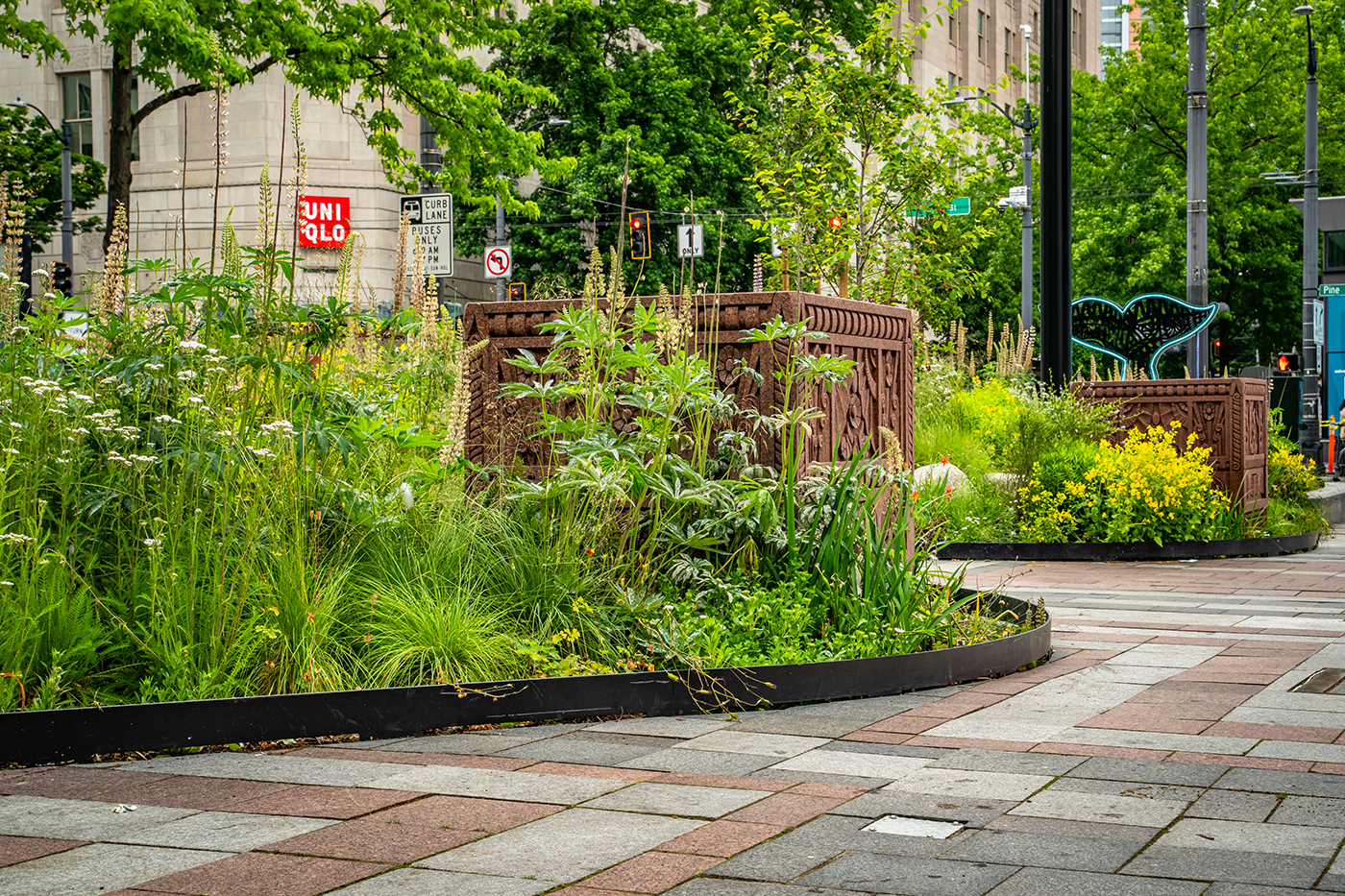
New native planting areas strengthened the park’s green character while improving growing conditions for mature trees, allowing 34 of the site’s 35 existing trees to be preserved. New planting areas, composed entirely of native species, create seasonal interest while supporting the long-term health of the landscape.
INFRASTRUCTURE & IDENTITY
Upgraded electrical infrastructure, Wi-Fi, improved accessibility and new power connections created a park capable of supporting larger events and everyday programming alike. Carefully salvaging and replicating the park’s signature basketweave paving preserved an important part of Westlake’s identity while repairing decades of wear and accommodating healthier growing conditions for mature trees.
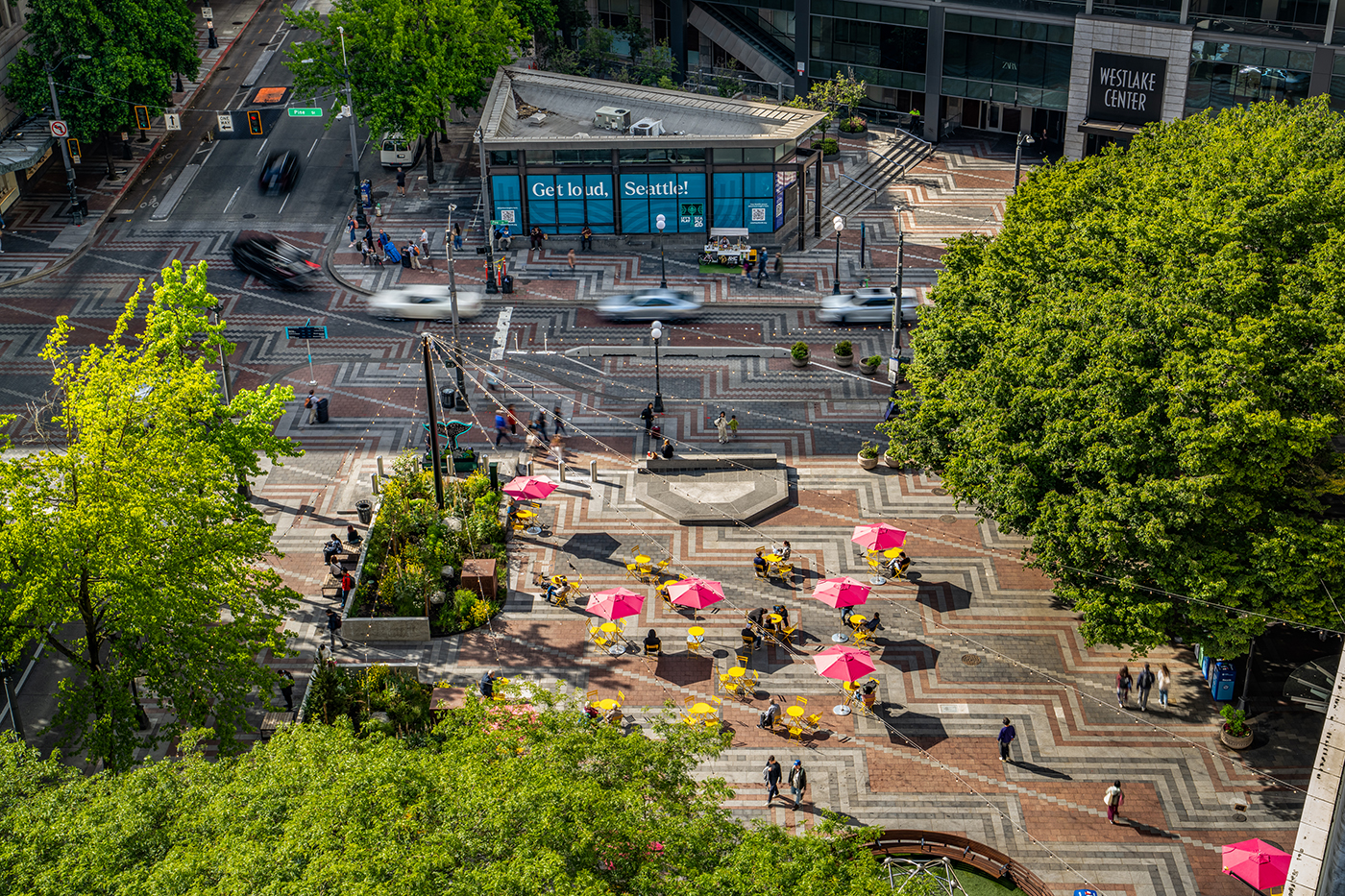
“Colorful chairs, tables, and ping pong games with eager players and onlookers have brought wholesome activity to what was a misused and sterile public space,” said Evelyne Rozner, a Downtown Seattle resident and park neighbor “I, with scores of other residents, property owners, retailers, and park goers participated in many public input forums hosted by the Seattle Parks Foundation. And the Berger Partnership and Sellen Construction brought that input to life.”
“I’m delighted to see that a space defined by unrelenting hardscapes is now greener, safer and more welcoming,”Rozner said.
Following a sharp post-pandemic rebound, Westlake Park saw steady year-over-year growth in visitation through 2023. With the renovation now complete and the park once again fully available for programming, there is good reason to expect that momentum to continue.
Since the park’s completion, thousands have gathered there for World Cup watch parties and Downtown Summer Sounds free concert series; with more events to follow in the coming months. The improved infrastructure and opportunity has been felt by many already.
“I think my new favorite thing about the Park is that I can really see the community’s input: from the preservation and reinvention of the free speech stage, to adding green space with a holiday tree, to increasing safety,” Julia Beabout, Downtown Core resident and chair of the Downtown Community Council. “The project is a great example of the power of public-private partnerships and the value of centering of community in that process.”
What emerges is a reminder that successful public spaces are rarely defined by a single design gesture. They succeed because countless physical, operational and social considerations work together to support everyday life. The infrastructure that powers a food truck, the seating that encourages someone to stay, the healthy trees that provide shade, the open sightlines that improve comfort and safety, the flexibility to host both a neighborhood lunch break and a citywide celebration — these are not separate investments. Together, they make up more than the sum of their parts, creating a park that contributes to the health of our downtown long-term.
Westlake Park’s renewal also reflects the strength of the public-private partnership behind it. Seattle Parks & Recreation, Seattle Parks Foundation, the Downtown Seattle Association and the broader project team worked together throughout the design process, pairing long-term stewardship with operational experience and community input. DSA’s years of programming and activating the park helped shape decisions that support both everyday use and major civic events, ensuring the renewed park would continue to draw people long after construction was complete.
That investment is already contributing to a broader downtown success story. During the FIFA World Cup, The Athletic ranked Seattle as the No. 1 stadium experience among host venues, while Sports Illustrated ranked Seattle No. 2 among all 16 host cities, citing the downtown experience, transit access and surrounding amenities.
That momentum doesn’t have to end with the tournament. Jon Scholes, president and CEO of the Downtown Seattle Association, has pointed to free and affordable events, from watch parties and walkable fan zones to Downtown Summer Sounds, as ways to sustain the energy that filled downtown during the World Cup. Westlake Park, renewed with the infrastructure and flexibility to support both everyday use and major civic events, is well positioned to play an important role in that future.
As cities continue to invest in their downtowns, Westlake Park offers an important lesson. Long-term urban vitality depends not only on creating new destinations, but on renewing the public spaces that connect them.
Andy Mitton is a principal at Berger Partnership in Seattle, specializing in culturally and historically significant landscapes and public parks.
Other Stories:


