 |
Subscribe / Renew |
 |
Contact Us |
| ► Subscribe to our Free Weekly Newsletter | |

Construction Bids
| home | Welcome, sign in or click here to subscribe. | login |


 print print  email to a friend email to a friend  reprints add to mydjc reprints add to mydjc |  |
 |
August 27, 2026

Stumpf
|

Huff
|
Affordable and senior housing developers often seek sites that help residents stay connected to the services they use every day. Walkable neighborhoods, access to public transit, nearby healthcare, schools, grocery stores, employment centers, and other community amenities all contribute to housing that supports long-term quality of life. As housing needs continue to evolve, development opportunities are increasingly evaluated not only for the characteristics of the property itself, but also for how well a location will serve the needs of the people who will live there. Many of those opportunities, however, come with history.
Properties in established neighborhoods may have supported commercial or industrial activities long before they were considered for housing. While those previous uses are not always visible today, they can leave environmental conditions that need to be understood before redevelopment begins. The goal of environmental planning is to understand these properties well enough to redevelop them with confidence rather than block the opportunity to provide much-needed modern housing.
UNDERSTANDING WHAT’S BENEATH THE SURFACE
Documenting environmental conditions is often a requirement for financial institutions and investors and provides key information regarding potential environmental liabilities that may need to be resolved and integrated into the redevelopment process.
Before a property changes hands or design work begins, environmental professionals research its history by reviewing historical records, permits, previous environmental reports, regulatory records, and past land uses. This process, known as environmental due diligence, helps determine whether additional investigation is warranted to better understand potential risks and costs to cleanup and/or mitigate impacts to soil or groundwater from historical land use in conjunction with redevelopment.
Working with a local environmental professional who is familiar with regional history and has experience developing strategies to investigate, cleanup, and obtain closure with the local regulatory agency will increase your success in navigating a project with environmental impacts. Their local expertise can also help developers avoid project delays, better manage environmental liabilities, and navigate the broader development process.
The information gathered during environmental due diligence helps developers better understand a property’s environmental conditions before making major investment decisions. It also documents that appropriate steps were taken to identify potential concerns before acquisition, helping reduce project risk if previously unknown contamination is discovered later.
Because affordable and senior housing projects often rely on multiple competitive local and state funding sources, understanding environmental conditions early also helps project teams anticipate costs, coordinate schedules, and support funding applications. Environmental planning is most effective when it is integrated early alongside developers, architects, and engineers, rather than treated as a regulatory step after key project decisions have already been made.
PREPARING SITES FOR THEIR NEXT CHAPTER
Every property is different, but redevelopment can reveal environmental conditions associated with previous uses. Common examples include contaminated soil or groundwater associated with former underground fuel tanks, imported contaminated fill material, or releases of chemicals used in historical commercial or industrial activities. Identifying these conditions early allows project teams to develop strategies and budgets to clean up or mitigate environmental impacts while ensuring the long-term protection of human health and the environment.
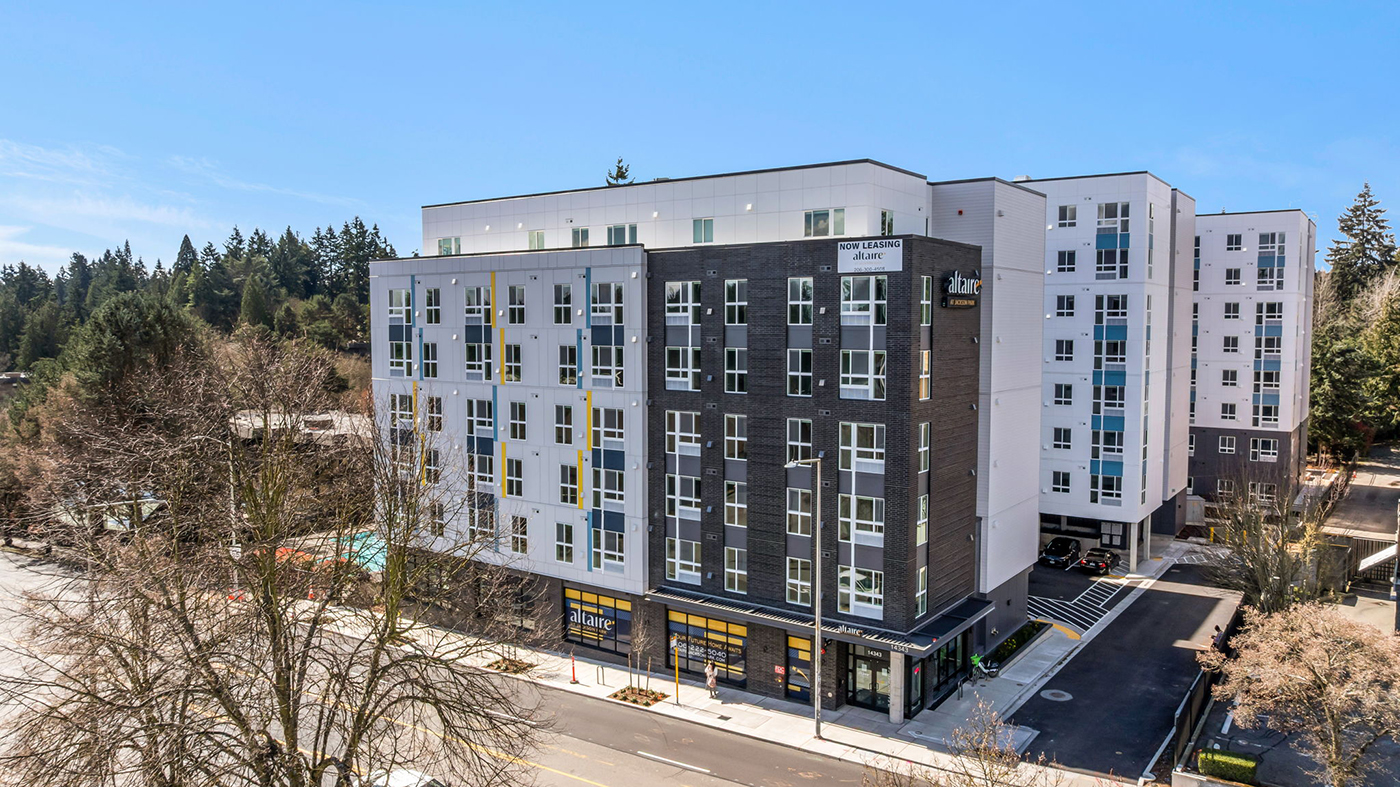
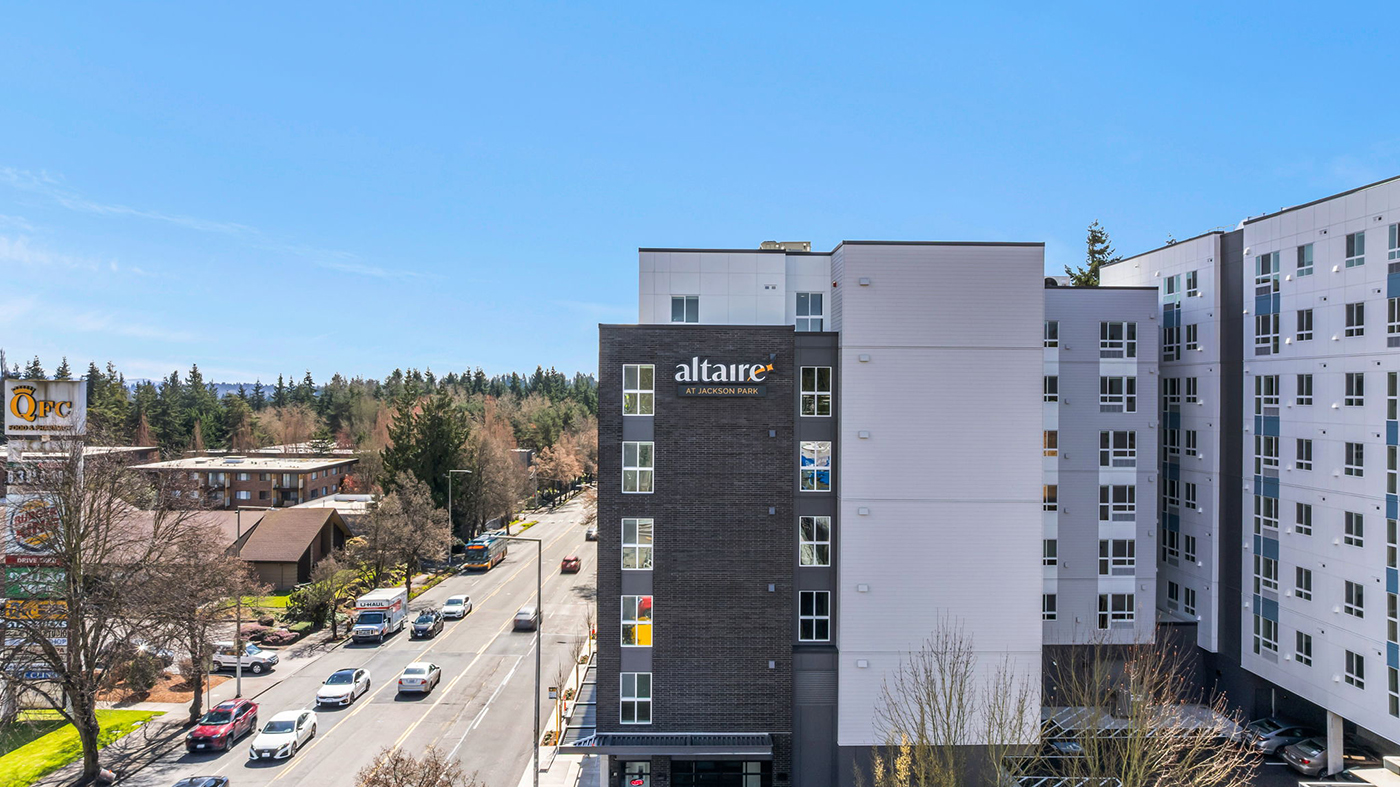
One example is Altaire at Jackson Park, a 207-unit affordable housing community developed through a partnership between SRM and the Urban League of Metropolitan Seattle.
Working in tandem with the Washington State Department of Ecology, the project cleaned up a previously contaminated site by excavating contaminated soil and installing a barrier system to protect future building occupants and treat residual soil and groundwater impacts, transforming the property into affordable housing located near transit, schools, parks, employment centers, and other neighborhood amenities. As SRM describes the project, “Through the project’s partnership with the Department of Ecology, we were able to transform a contaminated landscape into a thriving affordable housing community.”
The appropriate solution depends on the property. Some projects require contaminated materials to be removed. Others rely on engineered barriers, protective caps, groundwater treatment, or building systems designed to prevent soil gases from entering occupied spaces. Rather than becoming obstacles to redevelopment, these measures allow sites with complex histories to be safely prepared for residential use.
PROTECTION THAT EXTENDS BEYOND CONSTRUCTION
Environmental planning does not necessarily end when construction is complete. Some redevelopment projects include long-term monitoring to verify that cleanup systems continue to perform as intended. Depending on site conditions, monitoring groundwater quality, inspecting protective barriers, or evaluating other engineered systems over time may be needed.
Whenever possible, remediation strategies are designed to provide durable, long-term protection while minimizing future maintenance requirements. The objective is not simply to meet regulatory requirements at the time a project is completed; it also helps to ensure the property continues protecting the people who live there for years to come.
BUILDING HEALTHY COMMUNITIES FOR THE FUTURE
Affordable housing and senior housing ultimately serve people who expect their homes to be safe, healthy places to live — a requirement that extends beyond the building itself. It includes the ground beneath it, the outdoor spaces surrounding it, and the confidence that future residents can enjoy their homes without concern about the property’s past.
Whether it is a courtyard where neighbors gather or a playground where children spend an afternoon, the success of redevelopment is measured not only by the housing that is created, but by the lasting protection that allows communities to thrive there for decades.
Demand for affordable and senior housing continues throughout the Puget Sound region, even as other areas of development experience slower activity. As the region’s population grows and ages, redevelopment of previously developed properties will remain an important opportunity to create housing in locations that are already connected to the services and infrastructure residents rely on every day.
By integrating environmental planning early in the development process and working with experienced local professionals, project teams can better position themselves to navigate complex funding requirements, manage risk, and move redevelopment projects forward with confidence.
Suzy Stumpf is a principal engineer and Tina Huff is principal regulatory specialist at Farallon.
Other Stories:


