 |
Subscribe / Renew |
 |
Contact Us |
| ► Subscribe to our Free Weekly Newsletter | |

Construction Bids
| home | Welcome, sign in or click here to subscribe. | login |


 print print  email to a friend email to a friend  reprints add to mydjc reprints add to mydjc |  |
 |
August 27, 2026

Knapp
|
Right now, it’s all about Baby Boomers when it comes to senior living design. As the earliest of this generation reach 80 this year, we’re seeing a surge in demand for senior housing. With 20 straight quarters of growth, and occupancy averages reaching 90% at the end of last year, demand is picking up. Those who have been successfully aging in place are transitioning to a higher level of day-to-day care, and it’s only going to continue.
We are seeing many senior living facilities refresh their spaces to meet this influx, and whether we are renovating or designing for new developments, meeting the needs of this growing demand means appealing not only to residents, but to their families as well. Designing for resident families, consisting of multiple generations, means designing for a healthier and happier life for the residents.
DESIGNING WITH FAMILY IN MIND
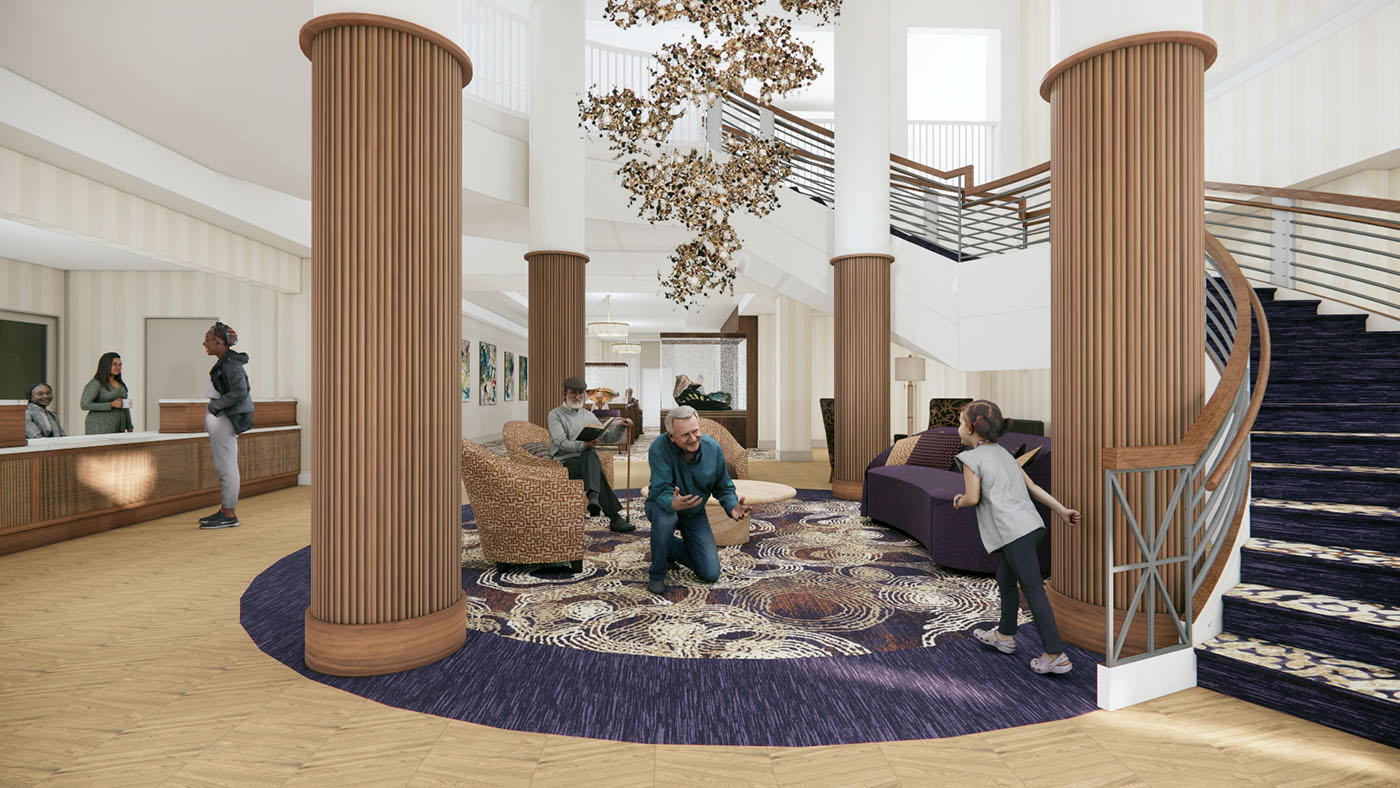
Why focus on appealing to families and multiple generations? Conventional wisdom in senior living design is to appeal to the eldest daughter. Statistically, she will do the lion’s share of caregiving and decision-making when it comes time to move parents into a senior living community. As designers, we must recognize the complexities of family dynamics in this decision-making process and consider the adult children of future residents.
This is about more than smart marketing. Yes, a beautiful first impression is a must-have, but whenever my team helps a senior living client with a renovation or a new project, we’re doing more than simply updating the materials and finishes of a space. We’re designing environments that encourage family members to visit more often and stay longer, providing compounding benefits to residents’ health.
When family members feel comfortable visiting their loved ones, they’re likely to visit more often. Research links stronger connections made through consistent social visits to positive health outcomes for older adults, including mobility retention, cognitive resilience, and even increased lifespan.
While there are many variables to consider in determining why these close relationships play such a significant role, two recurring themes stand out in the research: informal caregiving and optimism.
INFORMAL CAREGIVING
Informal caregivers fill the gaps between the duties of paid care staff and the functional limitations of senior residents. Even in a fully staffed assisted living community, visiting family members contribute to a network of informal caregivers that provide additional monitoring, health advocacy, stress-buffering, and support for day-to-day personal tasks. For example, an adult child with a long-standing history with their parent and who’s familiar with their idiosyncrasies is better-equipped to notice a subtle change that seems outside of the norm. This level of familial intimacy leads to earlier advocacy and improved health outcomes.
OPTIMISM AND RESILIENCE
Older adults with higher optimism have a greater probability of living to age 85 and beyond, and they’re not just living longer; they’re remaining independent longer and actively engaged. This doesn’t have to be an embedded personality trait to see the benefits of its influence; in fact, it may look less like “everything will all work out” and more like, “I have the support of my family to weather this hardship.”
There is a direct connection between the involvement of an older adult’s support system, specifically with close family members, and their perceived resilience and sense of security in the face of medical events and long-term physical impairments. Optimism has a real impact on actual health; when we believe we can, we make choices that support our expectations.
DESIGNING FOR CONNECTION
So how does this tie back to design? As designers, we have an opportunity to create senior living communities that feel welcoming and comfortable for residents and visitors. That has been our goal from the beginning, and the research is clear: when we encourage friends and family members to visit loved ones in senior communities, residents live longer, better lives.
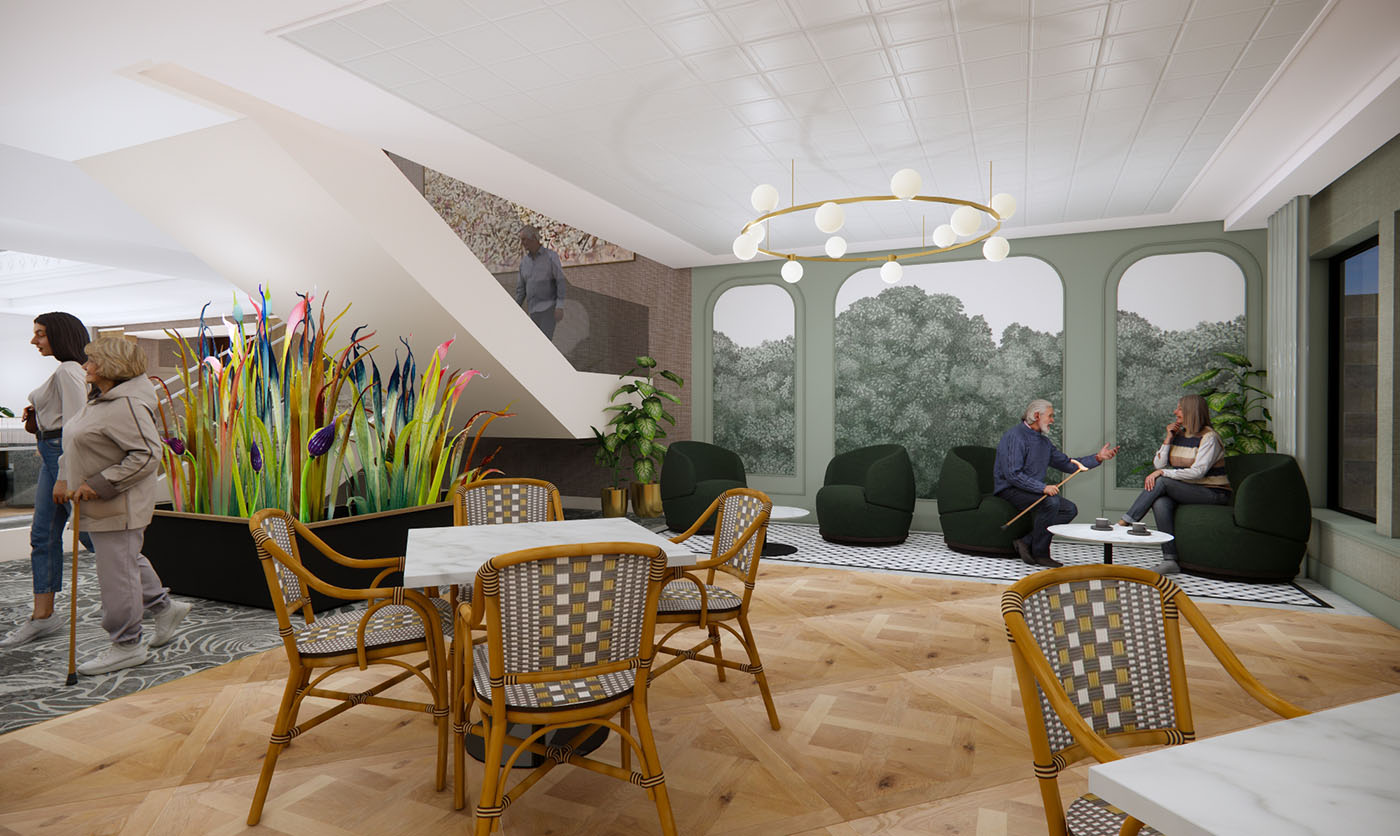
To support those connections, flexible spaces that are thoughtfully distributed throughout the community and programmed alongside other shared amenities are key.
Family members should not feel limited to the 800 square feet of their loved one’s apartment when they visit. They should feel comfortable lingering at a community bistro table, joining their dad in the theater, or perhaps enjoying a glass of wine with their mom at the piano bar. These spaces are designed to feel like home, but also withstand heavy use.
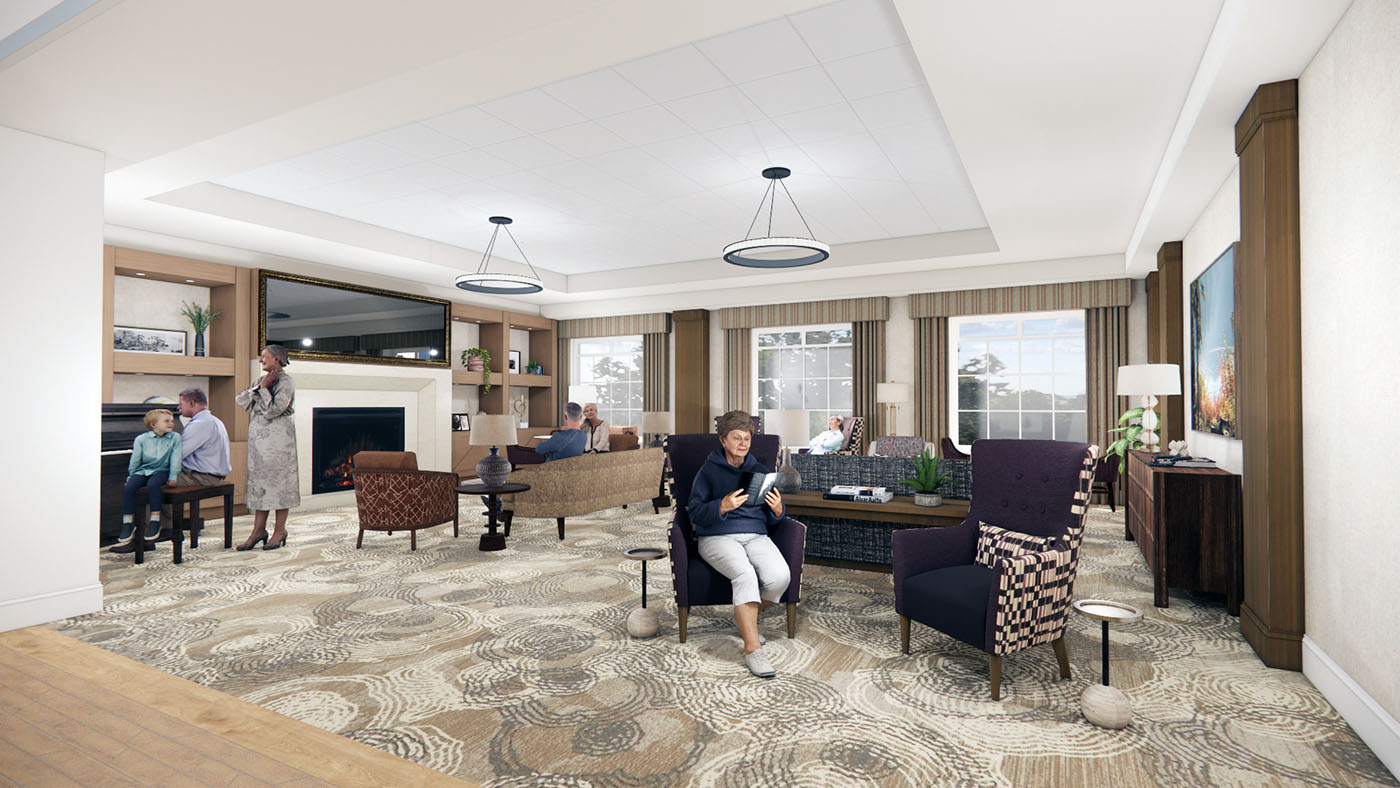
For example, in a fireside lounge, a variety of seating options and cozy groupings welcome people of all shapes, sizes, and mobility levels to sit and stay. With seniors in mind, furniture should be built to last with carefully considered dimensions and materials like beautiful velvet that can endure heavy use, clean easily, and still look residential. A space should feel elevated, but lived in.
Access to natural light is always preferred, and when selecting lighting, standardize as much as possible. Environments feel more comfortable when the lighting is even, the color temperature is consistent, and fixtures are adjustable to accommodate the varying needs of residents and families. It’s also important to consider a mix of hard and soft surfaces to manage a room’s acoustics. A little chatter can make a room feel activated and create a level of conversational privacy in a public setting, but a cacophony of sound can be disorienting; it’s a balance.
MAKING VISITS FEEL JOYFUL
Creating a place that family and friends look forward to visiting is the first step in nurturing connection and improving the quality of life, and longevity, for senior residents. The more we create compelling spaces that are comfortable for seniors and their families, the more we set up residents and loved ones to experience the kinds of moments where visiting feels natural, meaningful, and joyful; for years to come.
Monica Knapp is an interior designer at Weber Thompson, designing senior living environments that support dignity, comfort, and meaningful connection for residents and their families.
Other Stories:


