|
Subscribe / Renew |
 |
Contact Us |
| ► Subscribe to our Free Weekly Newsletter | |

Construction Bids
| home | Welcome, sign in or click here to subscribe. | login |


 print print  email to a friend email to a friend  reprints add to mydjc reprints add to mydjc |  |
 |
August 27, 2026

Ray Johnston
|

Mary Johnston
|
The Methow Valley has always done things a little differently. This isolated rural valley in north-central Washington is, for permanent residents, a tough place to live. Those who grow old here face the prospect of slippery winter driveways, hot summers, isolation — and lack of caregivers.
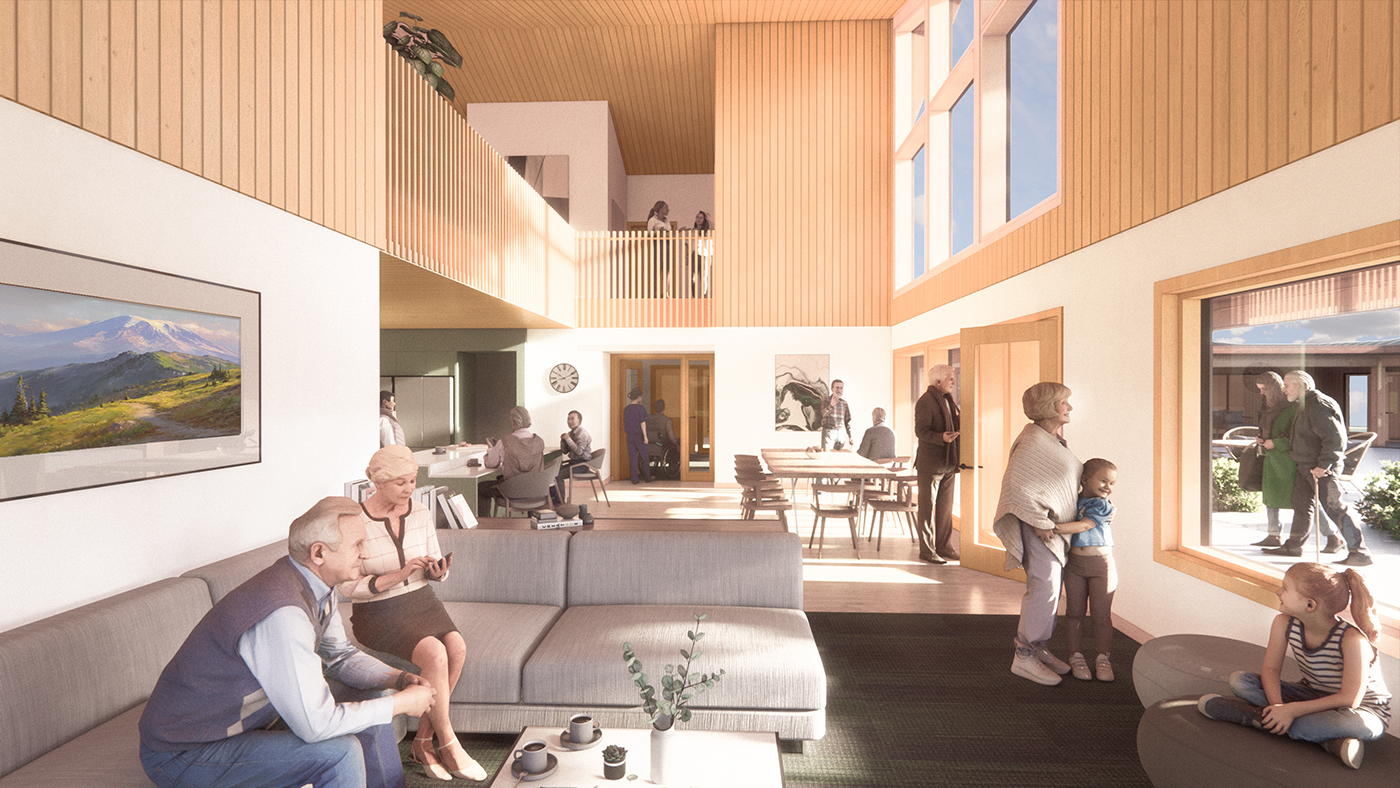
Jamie’s Place, an elder-care group home, was founded almost 20 years ago as a response to those challenges and as an alternative to the common end-of-life care institution. It sought to respond to the values of the community, a “we take care of our own” mentality, and it sought to create a home-like environment for elders to age gracefully in the place that they loved. After many years, Jamie’s Place needed a major upgrade, and Johnston Architects was chosen to design a new facility that doubled capacity from 12 to 24 rooms for residents yet kept the home-like environment that made Jamie’s Place so special.
A new Jamie’s Place presented a great opportunity for the designers. Typical assisted living institutions follow a formula: rooms are all identical, and room clusters are designated by level of care. Meals are at specific times and prepared by staff. In for-profit facilities, decisions are made with efficiency, and not necessarily resident preferences, in mind. This was not the Jamie’s Place model or ethic. The designers were tasked with making a home where everyone’s needs were addressed, and the rhythms of daily life were respected and accommodated.
THE GREEN HOUSE MODEL
Jamie’s Place was originally modeled on the Green House project, an alternative to a traditional nursing home setting, founded by Bill Thomas, M.D.
The project aims to replace institutional nursing homes with small “intentional“ communities where elders and staff focus on living full and vibrant lives. Residents live in cottages with private rooms and baths, and the project has spread to 27 states.
The Green House Project is now allied with Aging In.
The primary goal of the Green House Project is to emulate as closely as possible the experience of “home”. Rooms are aggregated in “houses,” each occupied by 6-8 residents. Each resident has an ensuite bed/bath, and each “house” has a great room and other amenities.
Houses do not seek to lock residents in. Food is prepared by staff and residents who wish to participate, and residents can eat when they want. Staff are available to assist in basic tasks and to provide responsive care when problems arise. It is most commonly a non-profit model relying on a monthly fee and supplemental philanthropy.
THE PAST AND THE FUTURE
Longtime Methow Valley resident Jamie Finlan gifted her estate to The Cove, a food bank, with the intention of creating a meaningful project for her beloved valley. The Cove envisioned a care facility for local elders,?so that?they could remain near family and friends.?The original Jamie’s Place opened in February 2007, and Mountain View, a second house located on the same property,?opened in February 2009. In 2013, the Methow Valley Family Home Center Association was established?and is the?non-profit?organization operating as “Jamie’s Place.”
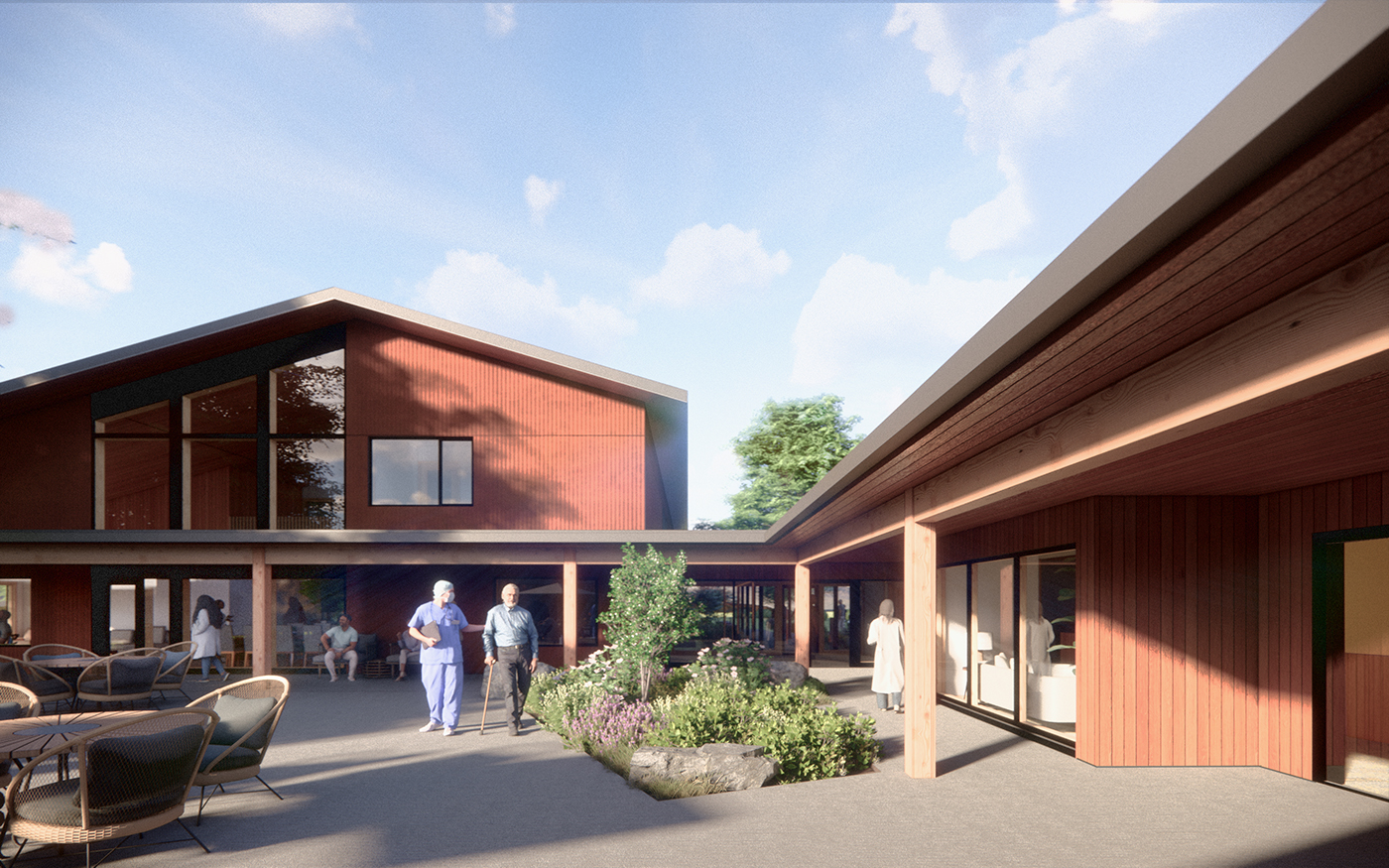
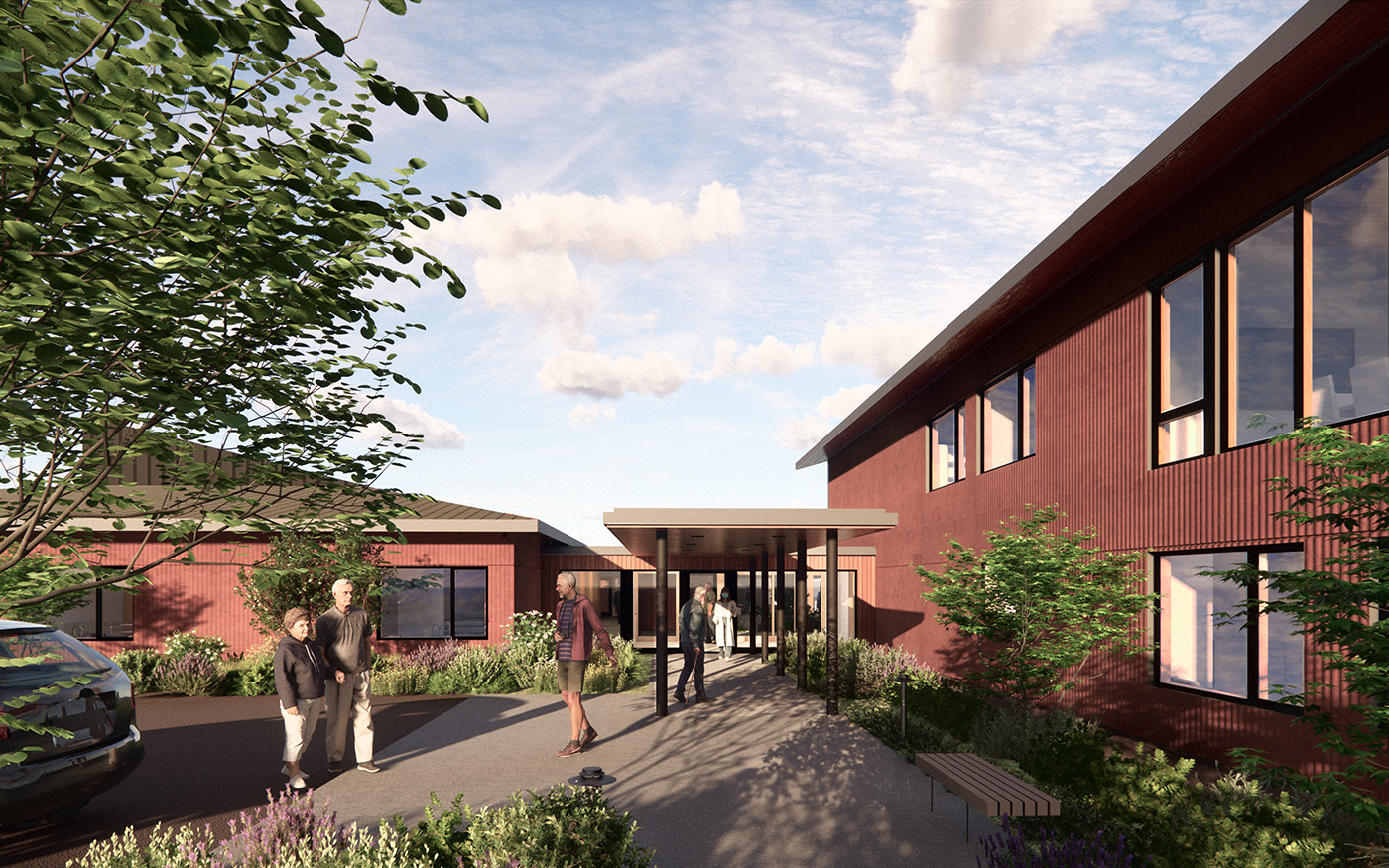
After a series of mishaps that typically befall aging structures — burst pipes, failing heating and cooling systems — the time was right to replace the original structures. The new Jamie’s Place was relocated to a flatter site that was more accessible. The new facility consists of three houses with eight residents each, and provides training opportunities for local aspiring caregivers.
The three houses connect with the surrounding environments in various ways, incorporating views, outdoor courtyards and other amenities. They are named for their surroundings: the Mountain House, the Meadow House, and the River House. In addition to administrative staff, each house is managed by two caregivers available around the clock.
SUBSIDIZING COSTS
Cost is a significant factor for anyone needing long-term care, but especially in rural communities. Monthly fees at Jamie’s Place are modest compared to for-profit facilities, but still, those who have been challenged by the cost of housing may not be able to afford the full cost.
To that end, the Jamie’s Place board determined that it would subsidize a quarter of its resident rooms for Medicaid recipients. While those residents receive governmental contributions to cover fees, there is still a delta between what Medicaid provides and the actual cost of housing and care. At 24 residents, and with a supplemental endowment, Jaime’s Place has balanced the equation.
BUILDING UP THE WORK FORCE
A perpetual problem for institutions like Jamie’s Place is finding adequate staff to fulfill the mission. Jamie’s Place is committed to training staff for various caregiver certifications. Last year, without a true facility for this effort, leadership at Jamie’s Place helped 30 individuals receive certifications.
A PARTICIPANT IN TOWN LIFE
The new property is adjacent to the downtown core of the town of Twisp and its emerging Creative District. Sited between this vibrant part of the valley and the Methow River, the location will help to integrate residents with citizens and visitors to Twisp.
Jamie’s Place will incorporate the work of local artists into each residence and will include places for music and spoken word performances. The site is wrapped by a pedestrian trail. The arts program will include pieces that are visible from the trail, and that will extend the effective area of the Twisp Creative District to include the facility.
A FUTURE WE ALL WANT
As Baby Boomers age, there will be increasing demand for elder care, expected to peak in 2030. The Green House Project, the ethic that Jamie’s Place is based on, is an appealing alternative to what we all fear — the warehousing of our elders, and eventually, ourselves.
It is said that a community is judged by how they treat their most vulnerable members. If that is true, then places like Jamie’s Place can lead the way to a more just and kind future for us all.
Ray Johnston and Mary Johnston are the founding partners of Johnston Architects, with work spanning the Northwest including single-family, public, multifamily/mixed use, workplace and commercial projects.
Other Stories: