 |
Subscribe / Renew |
 |
Contact Us |
| ► Subscribe to our Free Weekly Newsletter | |

Construction Bids
| home | Welcome, sign in or click here to subscribe. | login |


 print print  email to a friend email to a friend  reprints add to mydjc reprints add to mydjc |  |
 |
August 27, 2026

Ishizaki
|

Oien
|

Barnett
|
Transit Oriented Development (TOD) has become one of the most important tools for addressing the challenges facing Washington communities — from housing production and inclusive mobility to transit connectivity and economic development. As communities across the state update comprehensive plans and zoning codes to implement new housing and TOD requirements, they have an unprecedented opportunity to shape compact, connected and resilient neighborhoods around major transit investments.
Yet effective TOD requires more than adding density near transit. It requires careful coordination between community priorities, urban design, transportation and infrastructure. It often means taller buildings in low-rise neighborhoods that may be wary of change.
Growth can occur in areas that may not yet have the infrastructure, walkability or public services to support it. Coordinating transit delivery, public improvements and private development is also a major challenge, as each follows different timelines and fummnding cycles.
The following examples highlight lessons learned from TOD projects along the West Coast. Each example highlights a different theme, scale, and delivery approach. Together, they illustrate how thoughtful design and community-centered development strategies can help transform our communities into places that are connected, inclusive and resilient.
KAPUSO AT THE UPPER YARD, SAN FRANCISCO
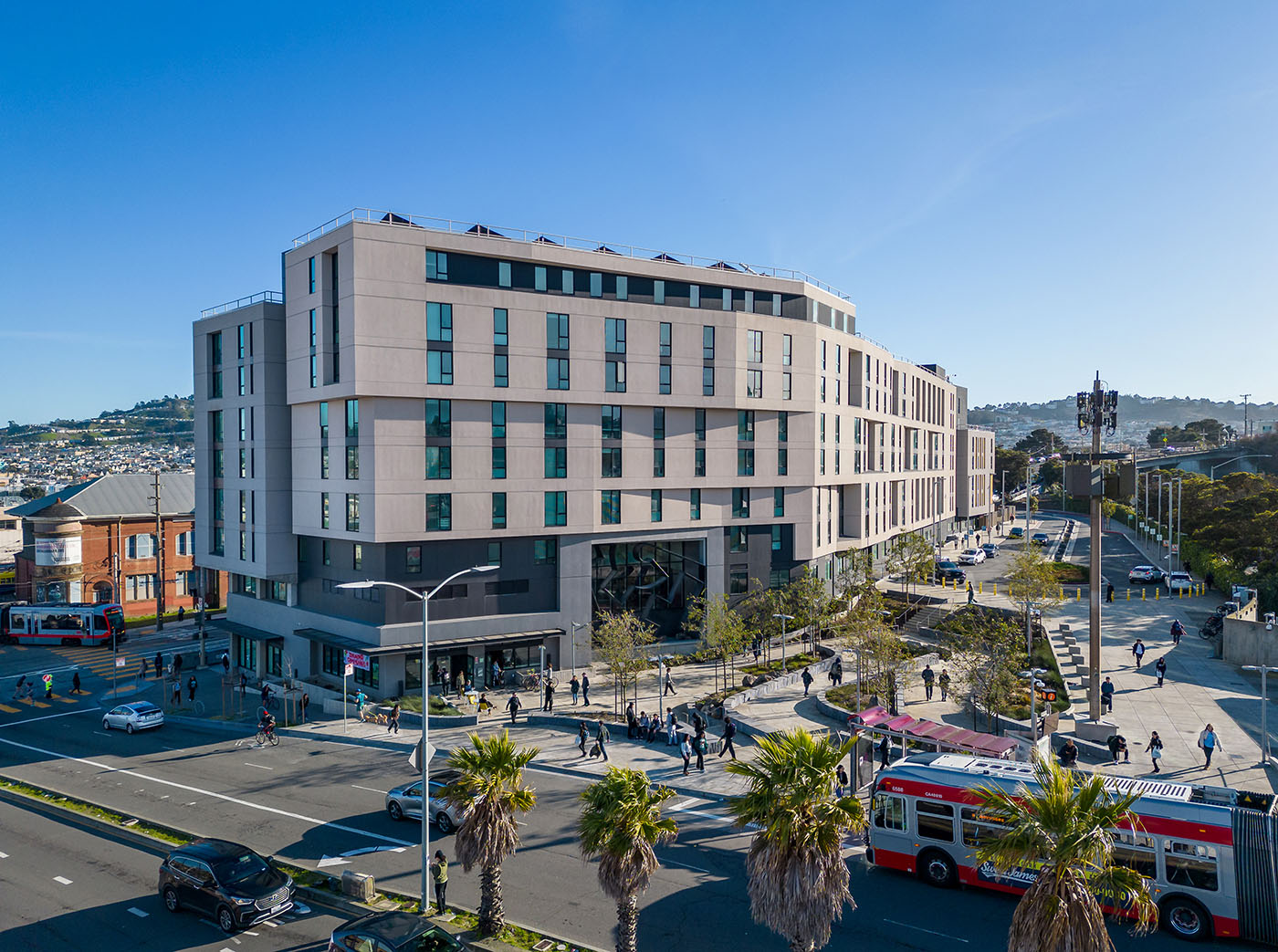
Kapuso at the Upper Yard is a 131-unit affordable housing project on BART-owned land at the Balboa Park BART station in San Francisco. The project weaves together a complex transit environment that includes a BART station, multiple MUNI bus and light rail lines, the 280 freeway interchange and nearby dedicated bike lanes.
One lesson from this project for Washington state is the importance of working closely with transit agencies to integrate transit functions and access into the design of the site. Ground-floor uses reinforce the transit-hub function with active, community-serving programming: a café, an arts hub, YMCA childcare and a community bikeshare (Bicis del Pueblo).
A plaza connects residents and visitors to a high-capacity bus stop and transit functions such as a passenger pick-up/drop-off loop are tucked into the site without disrupting pedestrian routes or access to other transit modes. Each of these features works together to transform this former parking lot into a community gathering place and mobility hub that connects the neighborhood to the region.
BYLINE AT PRESS BLOCKS, PORTLAND
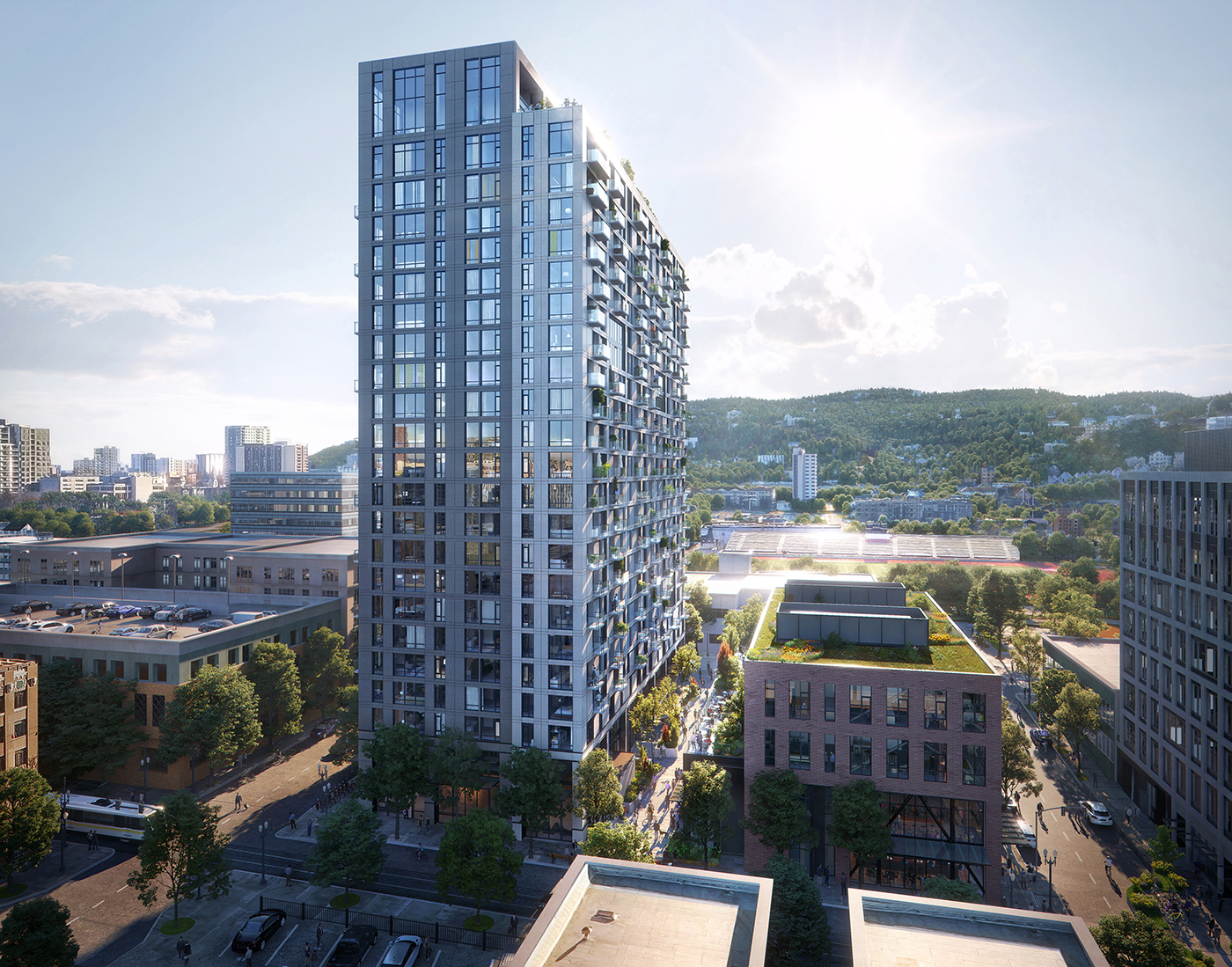
Byline at Press Blocks demonstrates how higher-density development can reinforce an evolving neighborhood through thoughtful urban design. Located adjacent to Portland’s MAX light rail in the Goose Hollow neighborhood, the project breaks down a formerly inward-facing newspaper campus into a walkable, mixed-use district. The development adds 341 apartments, creative office space and neighborhood-serving retail, in a location supported by transit, walkable streets and nearby amenities.
Significantly increasing height for the area, the 24-story tower introduces the scale of development needed to support TOD while sparking community conversation about neighborhood change. The project responds with careful attention to the pedestrian experience, including active ground-floor uses, a public plaza, a midblock connection and a welcoming streetscape that integrates the two buildings into the neighborhood.
For Washington state, Byline demonstrates that well-designed TOD can evolve established neighborhoods while strengthening the qualities that make them walkable, connected and distinctive.
SUSTAINABLE LITTLE TOKYO, LOS ANGELES
Sustainable Little Tokyo demonstrates that effective TOD is measured not only by new housing and density, but by its ability to strengthen existing communities over time. In anticipation of Los Angeles’ Regional Connector light rail, a community-led vision plan responded to concerns that rising land values would displace residents, legacy businesses and one of the nation’s last historic Japantowns.
Rather than resisting growth, the plan integrated higher-density development with affordable housing, public realm improvements, green infrastructure and cultural preservation. It also paired physical investment with neighborhood activation, heritage interpretation, wayfinding, cultural programming and coordinated support for legacy businesses. The vision directly informed the First Street North project, creating 248 units of affordable and supportive housing for veterans and 40,000 square feet of community-serving commercial space, while influencing Metro’s joint development process through community partnerships.
For Washington state, the key lesson is that TOD succeeds when it sustains the people, businesses, and cultural identity that make neighborhoods distinctive — not simply the buildings around transit.
LESSONS FOR WASHINGTON STATE
Putting these lessons into practice, the city of Kirkland’s NE 85th Street Station Area Plan demonstrates how Washington communities are already preparing for a new generation of transit-oriented growth. Developed in coordination with Sound Transit and WSDOT, the plan aligns land use, transportation and infrastructure to support a future Bus Rapid Transit station while strengthening walking, bicycling and regional transit connections.
It establishes a clear framework for growth through new zoning, a Tax Increment Finance (TIF) district to fund public improvements and affordable housing requirements that could deliver more than 600 income-restricted homes. Together, these strategies provide a framework for realizing the full benefits of the public’s transit investment.
Transit-oriented development is ultimately about more than where growth occurs — it is about how communities shape growth to create lasting public value. These examples from across the West Coast, together with Kirkland’s station area planning, demonstrate that TOD depends on integrating housing, mobility, public space, economic opportunity and cultural identity into complete neighborhoods through thoughtful planning and collaboration among communities, agencies and the private sector.
As Washington communities implement new TOD requirements, the greatest opportunities will come from pairing supportive zoning with high-quality urban design, infrastructure investment and meaningful community engagement. When approached holistically, TOD can do more than deliver new housing near transit — it can advance equitable growth, reduce emissions, strengthen local economies and create connected, resilient places where people and communities can thrive.
Mithun partner Erin Ishizaki leads the firm’s Districts, Neighborhoods, and Campuses integrated design practice, working with cities, agencies, institutions and developers to create people-first places through transit-oriented development, healthy housing and high-performance districts. Mithun partner Heidi Oien is an architect and urban designer who leads TOD projects ranging from significant mixed-use vertical developments to helping transit agencies understand the capacity of surplus land. Mithun associate principal and urban designer Brad Barnett works with cities and community organizations across the country to create strategies to reposition and reimagine urban sites and districts.
Other Stories:


