 |
Subscribe / Renew |
 |
Contact Us |
| ► Subscribe to our Free Weekly Newsletter | |

Construction Bids
| home | Welcome, sign in or click here to subscribe. | login |


 print print  email to a friend email to a friend  reprints add to mydjc reprints add to mydjc |  |
 |
September 26, 2024

|
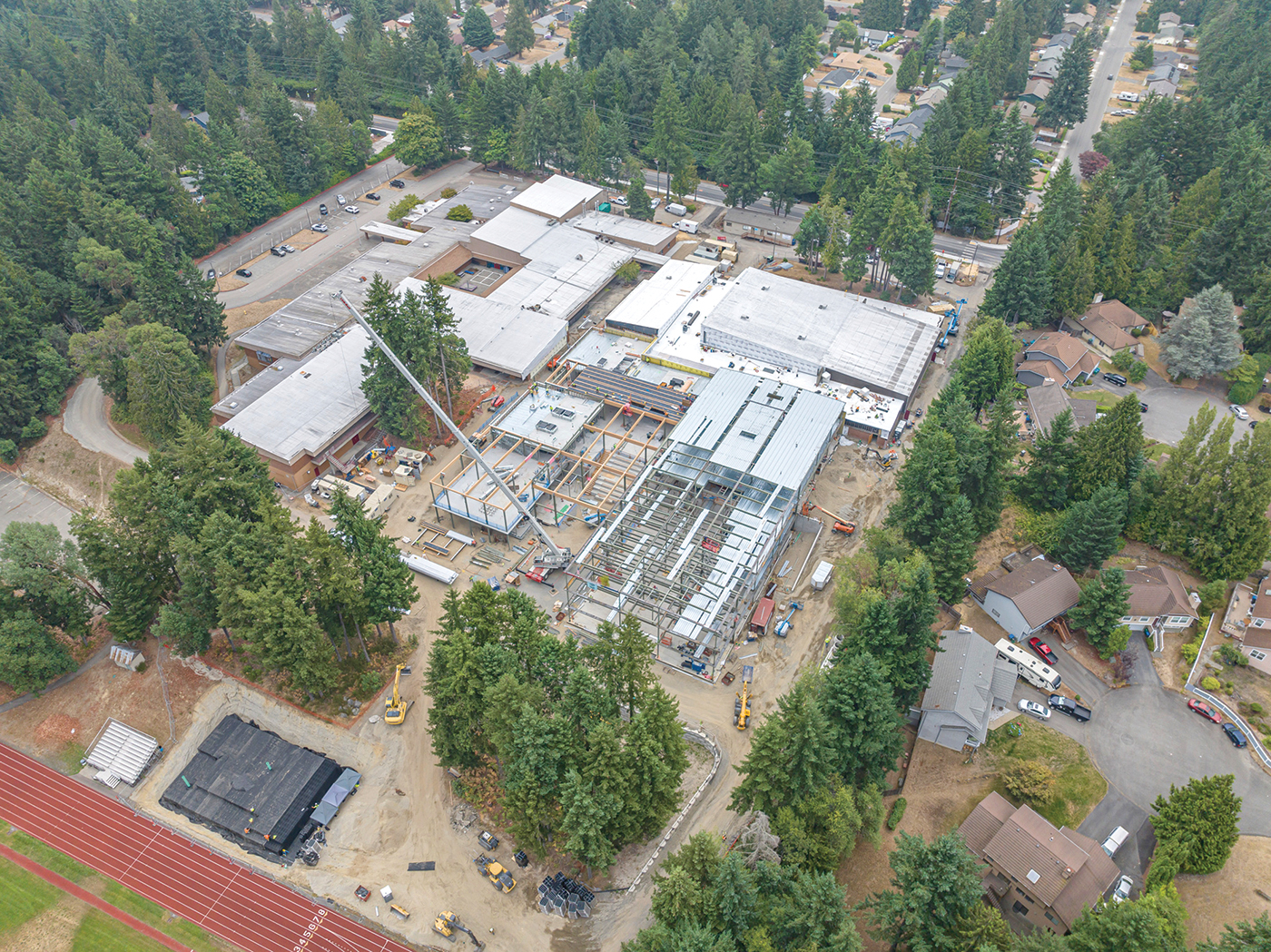
Over the last two years, Skanska has worked on the Fairview Middle School project in Bremerton, involving the construction of a new school adjacent to the existing one, while simultaneously renovating parts of the existing structure. This approach required that the school could continue operating during construction, with the old and new buildings eventually being integrated into a cohesive campus.
Given the need to integrate new and existing construction, Fairview’s progressive design-build approach — where the architect and design team work directly under the contractor and are hired as a team — helped enable efficient solutions to a challenging project. This approach allowed for early and continuous collaboration between Skanska, Bassetti Architects and other partners, streamlining both program and design development.
This project has involved significant demolition, renovation, and new construction during both the school year and summer breaks. This required the team to develop innovative solutions to address the project’s unique challenges. Here are a few lessons we’ve learned.
PLANNING, COMMUNICATION WITH PROJECT TEAM, SCHOOL
Mastering logistics and communication is essential when constructing a school next to one that’s in session. Our work at Fairview Middle School required robust planning and communication to ensure synergy among the crews, faculty, students, parents and guardians, and the surrounding community. Flexibility in adjusting plans for unforeseen circumstances was vital, with contingency plans every step of the way.
To foster transparent communication, Skanska held weekly OAC (Owner, Architect, Contractor) meetings with the school’s principal in attendance, ensuring alignment on construction and school timelines, helping to avoid conflict with school activities. Additionally, we utilized newsletters, emails, and social media to provide timely logistic updates to the community. We needed to be aware of everything from pick-up and drop off times to sporting events on campus to kitchen delivery schedules — even the repaving schedule of the county’s nearby street work — so we could plan our work accordingly.
From a logistics standpoint, coordinating with subcontractors also was critical. Given the limited space on campus, subcontractors were required to comply with strict schedules to avoid obstructing student and bus drop-off.
REDUCING NOISE, CONSIDERING ACADEMIC SCHEDULE
Managing noise and disruptions was essential to avoid disturbing the learning environment. Significant noise and vibration-making construction activities were scheduled outside school hours as much as possible to reduce interference, with major demolition and renovation tasks planned during summer breaks.
During the school year, the construction team implemented noise barriers and soundproofing measures to mitigate disruption. Coordination with the school ensured that any particularly loud activities were communicated in advance, allowing the school to make necessary adjustments. Additionally, the school informed us of major testing periods so we could avoid noise disruption during these sensitive times. This proactive approach minimized the impact of construction sound on the learning environment.
Additionally, the team utilized summer break to perform extensive work on the largest and most disruptive areas, such as the orchestra rooms. These spaces required significant work, including removing old concrete risers and adding large windows in the CMU walls to bring in natural light.
CONTINUITY OF ESSENTIAL SERVICES DURING UPDATES
General contractors must ensure continuity of essential services like water, internet and power in occupied buildings while construction is underway.
During summer break, the team installed and tested all critical systems such as HVAC, plumbing, and electrical services to ensure these essential systems operated smoothly, avoiding disruptions that could have significantly impacted the school’s activities.
Modernizing existing facilities brought its own set of challenges. For instance, the old fire alarm system at Fairview Middle School needed to be updated while keeping the existing system operational. Careful planning guaranteed that there were no periods when the building was without a functional fire alarm system. Upgrading existing facilities also meant dealing with unexpected issues, such as outdated wiring that needed replacing to meet current building codes. These efforts were essential to bring the facilities up to current standards and enhance the overall environment. The project team worked closely with the school to schedule upgrades during times that would cause the least disruption.
SAFETY PROTOCOLS ARE ESSENTIAL
Safety and security are paramount. At Fairview Middle School, the construction area was securely separated from the school with fencing to prevent any interaction between students and construction crews. Skanska trained the construction crew on safety protocols and emergency preparedness to ensure they were well-equipped to handle any incidents.
During construction, safety protocols were strictly enforced, with regular inspections to ensure compliance. The construction team coordinated with the fire marshal to establish clear emergency access routes and conduct regular drills. Temporary walls and clear signage were used inside the building to separate construction areas from occupied spaces. By maintaining stringent safety measures, Skanska safeguarded the well-being of the community.
HIGHLIGHTING BIOPHILIC DESIGN TO INSPIRE WELL-BEING
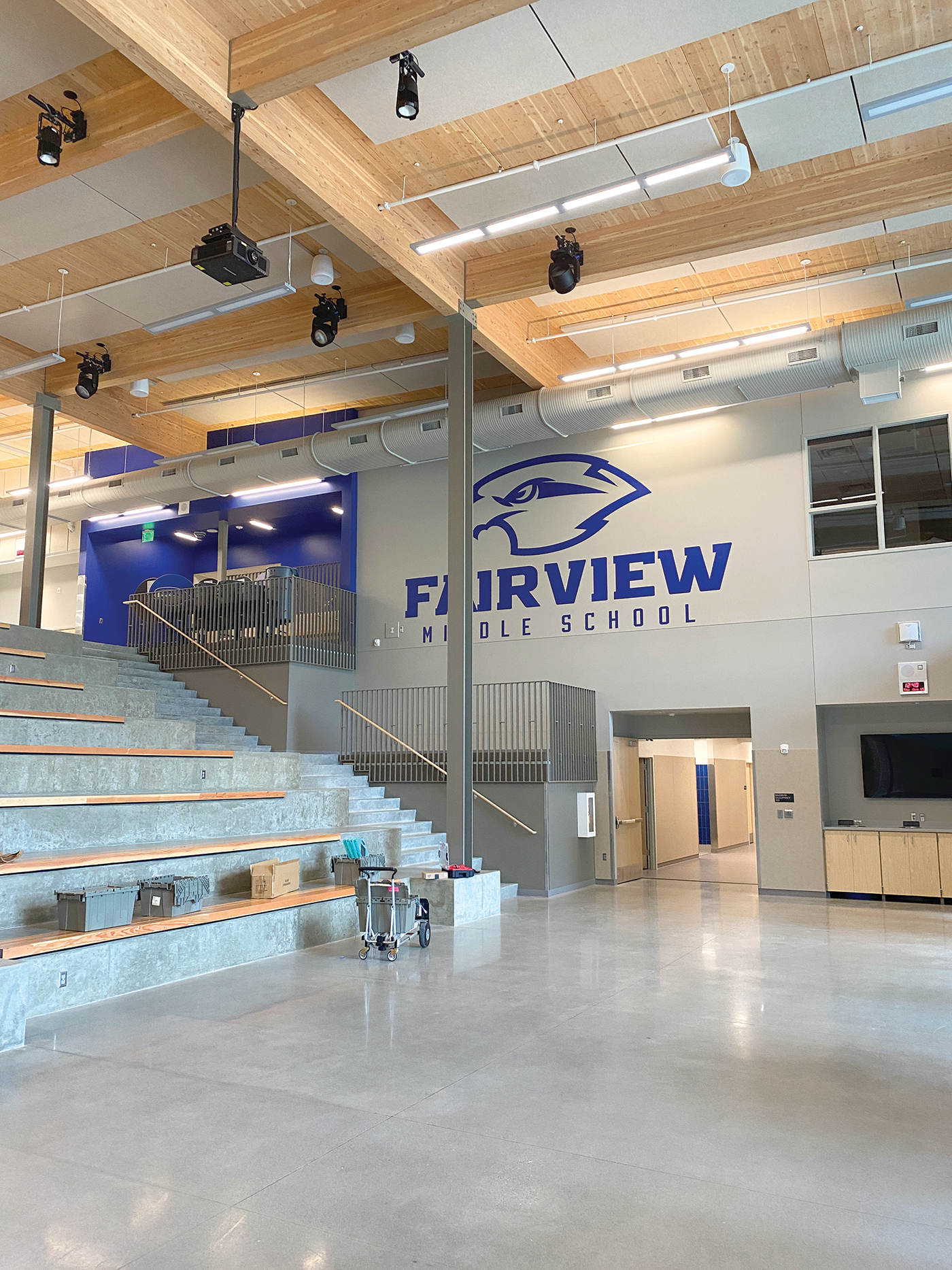
Sustainable design methods, such as the use of mass timber, can create inspiring environments that boast many benefits. Mass timber components, such as a CLT (Cross-Laminated Timber) structure in the building’s common areas at Fairview Middle School, reduces the building’s environmental footprint, and offers biophilic benefits, creating healthier and more inspiring environments.
During the design phase, Skanska collaborated closely with the district to ensure that both the new building and the renovated spaces incorporated similar modern design elements, making the renovated areas feel fresh and desirable. This included adding new windows, updating flooring, and using contemporary materials and finishes. The goal was to create a cohesive and inviting environment that blended seamlessly with the new construction, enhancing the overall appeal and functionality of the entire campus.
LOOKING FORWARD
This project highlights the complexities of building next to an operational school. Through meticulous planning, robust communication and innovative solutions, the construction team successfully overcame these challenges, delivering a transformative school that will make a lasting impact on the Bremerton community.
Brian Urban is an account manager at Skanska with more than 30 years of experience in the industry, providing strategic leadership to the company’s K-12 practice.
Other Stories:


