 |
Subscribe / Renew |
 |
Contact Us |
| ► Subscribe to our Free Weekly Newsletter | |

Construction Bids
| home | Welcome, sign in or click here to subscribe. | login |


 print print  email to a friend email to a friend  reprints add to mydjc reprints add to mydjc |  |
 |
September 26, 2024

Comer
|
Building a school on an occupied campus is a unique challenge that demands a balance between construction efficiency and the safety and uninterrupted education of students. After 21 years with Cornerstone General Contractors, I have seen firsthand how essential it is to maintain this balance.
Our primary focus when working on an occupied campus is to ensure the safety of students and staff while maintaining the educational experience. We achieve this through careful planning, efficient construction practices, and strategies that limit the need for temporary facilities or portables. By focusing on these areas, we can deliver high-quality projects that meet the needs of the school community without disrupting the daily operations of the campus.
PRIORITIZING SAFETY AND EDUCATION
Safety is non-negotiable in any construction project, and it takes on an added dimension when working on an occupied campus. Our approach begins with developing an extensive safety-and-access plan tailored to each specific project and the unique needs of how the campus operates. This plan is designed to protect students, staff, workers and the general public.
For example, at Lake Stevens High School, we planned and implemented construction over multiple phases to complete their modernization and addition project. This involved constructing a new three-story addition, new athletics wing, and significant existing building renovations, all while ensuring that school operations continued smoothly. Our detailed logistics plan maintained safe travel paths and minimized disruptions, allowing the educational process to proceed without significant interruptions.
ENHANCING CONSTRUCTION EFFICIENCY
Efficiency in construction is not just about speed; it’s about smart planning and execution. On an occupied campus, this means carefully coordinating construction activities to align with the school’s schedule and operations. Our experience with phased construction projects has taught us the importance of planning ahead and anticipating challenges.
At Woodinville High School, we executed a three-phase project that included renovation, modernization and expansion on an occupied campus. By working closely with the Northshore School District and school staff, we minimized disruption and ensured that the project was completed efficiently. This included prioritizing the main electrical room, boiler room, and other critical infrastructure in the early phases to support existing facilities while facilitating the construction of future phases. Careful planning of utility upgrades and structural retrofits was integrated into the design from the start.
LIMITING SPENDING ON TEMPORARY FACILITIES
One of the significant challenges of building on an occupied campus is the potential need for temporary facilities, which can be costly to implement as well as disruptive. At Cornerstone, we strive to limit this need through strategic planning and innovative construction methods.
During the Juanita High School project, we analyzed several approaches and ultimately implemented an alternative phasing plan that allowed students to remain in the existing building while construction was underway. This approach eliminated the need for a larger temporary camp of portable classrooms, saving the Lake Washington School District approximately $5 million. These savings were redirected to enhance the project’s program scope, which ultimately benefited the educational environment for both the students and staff.
COMMUNICATION AND COMMUNITY ENGAGEMENT
Effective communication is critical in any construction project, but it is particularly vital when working on an occupied campus. We maintain two-way communication with district staff, ensuring that everyone is informed about construction activities and their potential impact. This includes clear communication of bell schedules, restricted delivery times and changes in access routes.
Moreover, we believe in being a positive presence in the community. This involves planning for critical campus activities, such as testing, parent-teacher conferences, and student events, to ensure they are not disrupted by ongoing construction. By engaging with the school administration and local community, we can align our construction activities with the school’s needs and priorities.
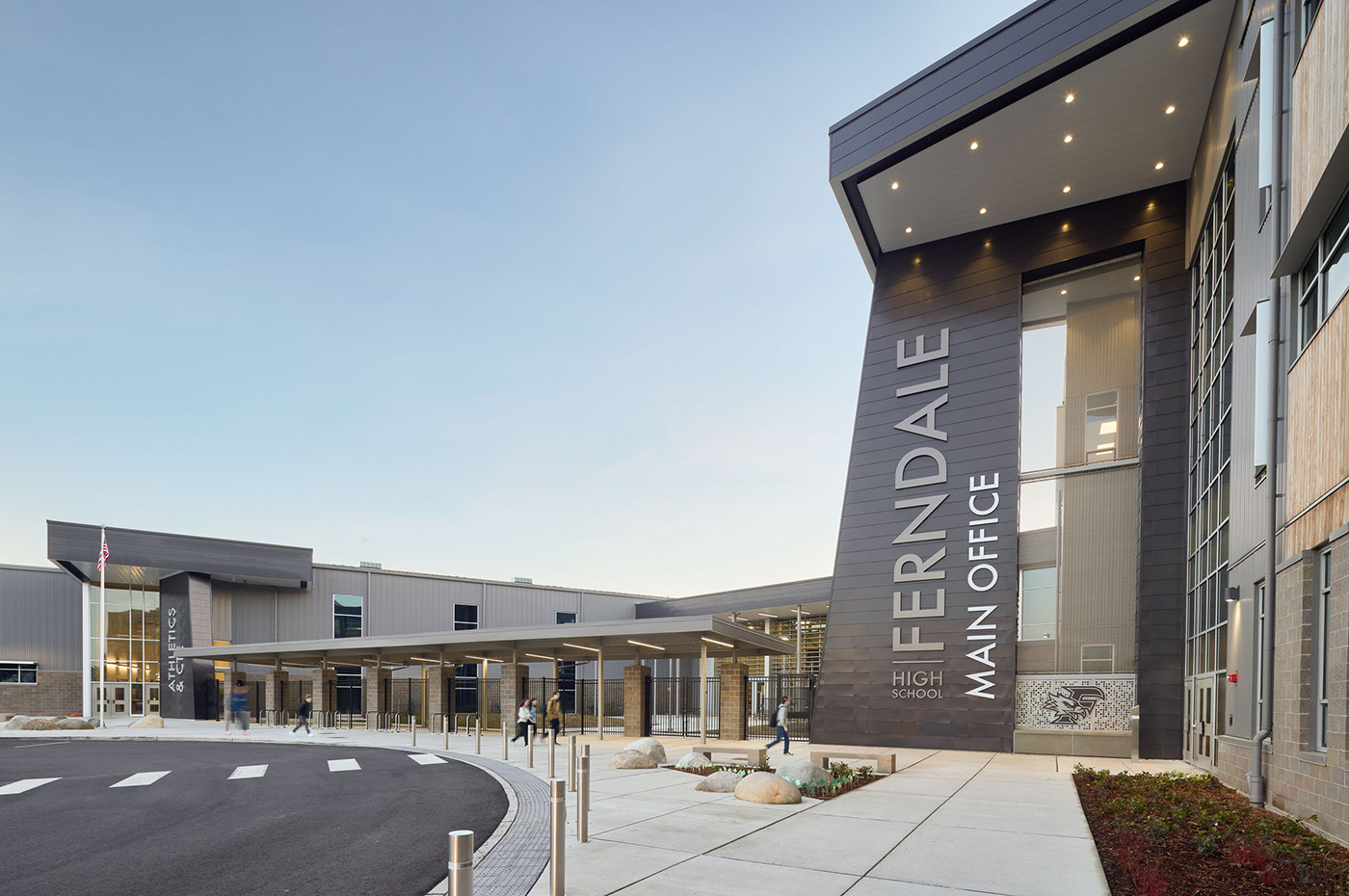
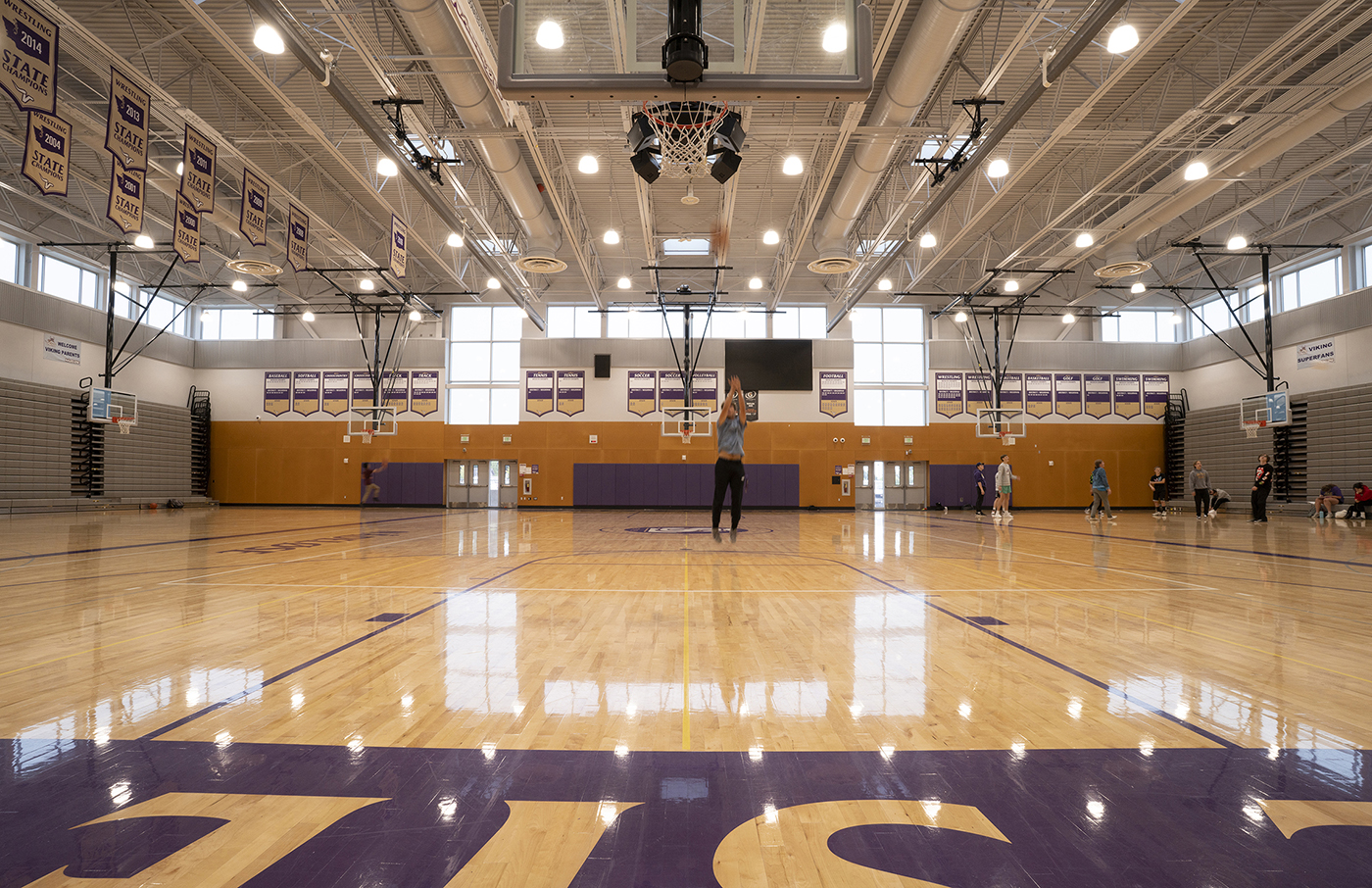
A great example of Cornerstone’s approach to community engagement is our work at Ferndale High School. We faced the challenge of constructing a new 212,000-square-foot building on a fully operational campus. Our creative “build-demo-build” phasing plan allowed us to place the new building in the desired location without encroaching on required buffers.
In addition to addressing these logistical challenges, we saw the construction project as an opportunity to engage with the student body and integrate the project into their learning experience. We organized site tours, presentations, and Q&A sessions where students could learn about various aspects of the construction process, from design and engineering to safety and project management. This hands-on learning approach allowed students to see real-world applications of their classroom lessons, fostering a deeper understanding and appreciation of the skills and knowledge required in the construction industry. We hope to contribute to inspiring the next generation of builders!
Building on occupied campuses requires a unique blend of safety, efficiency and community engagement. We have honed our approach to meet these demands, delivering projects that enhance educational environments while maintaining safety and minimizing disruptions. Our commitment to these principles ensures that we can continue to build impactful community spaces that serve the needs of our clients and the broader community.
By focusing on safety, construction efficiency, and cost-effective solutions, we can achieve exceptional results that benefit everyone involved.
As one of the company’s two vice presidents, Sam Comer has led or contributed to the construction of more than 40 educational facilities during his career at Cornerstone General Contractors. He was also a nominee for this year’s Puget Sound Business Journal’s 40 Under 40.
Other Stories:


