 |
Subscribe / Renew |
 |
Contact Us |
| ► Subscribe to our Free Weekly Newsletter | |

Construction Bids
| home | Welcome, sign in or click here to subscribe. | login |


 print print  email to a friend email to a friend  reprints add to mydjc reprints add to mydjc |  |
 |
September 26, 2024

Murphy
|
In September of 2020, as virtually every other school and child-care facility in the State remained closed due to the Covid-19 pandemic, seven new early learning programs opened for business. Located from Ellensburg to Olympia, the first full-day outdoor preschools in the country were licensed under a pilot program of the Department of Children, Youth, and Families (DCYF). With outdoor gathering considered low-risk for viral transmission, the program proceeded unhindered by the widespread shutdown of traditional early learning centers.
Outdoor preschools — sometimes known as “forest,” “nature,” or “farm” schools — are growing in popularity throughout the United States. A growing body of scientific literature demonstrates significant benefits to young children from nature-based education. Some of these evidence-backed benefits are seemingly self-evident, such as increased physical activity correlating with lower levels of childhood obesity and enhanced motor-skills development. Constantly changing weather is a direct stimulus that develops resilience and self-regulation. Regular exposure to nature is widely recognized as reducing stress levels in people of all ages.
Research suggests outdoor preschools provide a broad range of less obvious developmental benefits to children as well. Studies have connected nature-based education in young children to enhanced brain development; improved academic performance and educational outcomes; improved executive function; enhanced communications skills, emotional resilience, and socio-emotional health. Spending more time in natural environments has been shown to help reduce the negative symptoms of ADHD, and to provide therapeutic benefits to neurodiverse children
The state of Washington — like much of the United States — is facing a childcare crisis. In King County, the average cost of full-time preschool care for one child is 35% of the median family income. For nearly half of unemployed parents in Washington, finding child care is a barrier to seeking full employment. Already acute, the shortage of affordable child care was further exacerbated by the Covid-19 pandemic. In much of the state only 30-50% of estimated demand for child care is currently being met. Large areas of both eastern and western Washington continue to be “extreme childcare access deserts.”
A major limitation on the quantity of new childcare capacity is the high cost of construction and the long-time horizon for building projects. Rapidly increasing the number of outdoor preschools has been proposed as one strategy to address the ongoing childcare shortage. There is almost unlimited potential to rapidly deploy low-cost outdoor classrooms at the neighborhood level wherever there is demand. Even the smallest parks and green spaces provide ample opportunities for exploration and learning for young children.
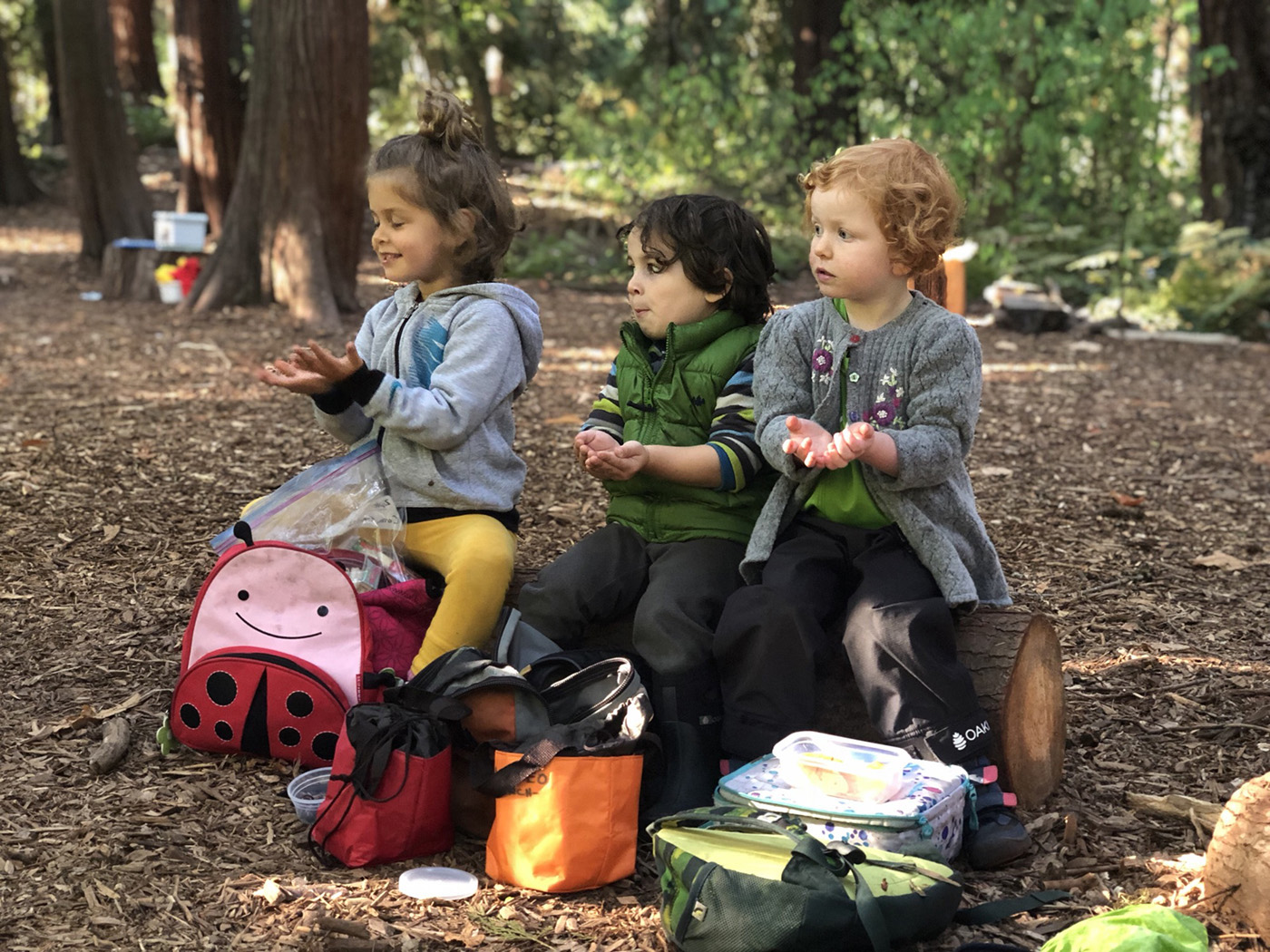
Perhaps the biggest challenge for significantly increasing the capacity of outdoor preschools is the most obvious one: they are outdoors. Dealing with variable weather is an inherent part of nature-based education, but extreme heat or cold can make full-day programs impractical for both children and educators. Fully outdoor preschools may need to close suddenly in the face of high winds, thunderstorms, or poor air quality during wildfire season.
For many families with non-flexible working hours, particularly lower-income families, this level of unpredictability is a dealbreaker. All of the successful full-day outdoor programs in DCYF’s pilot program had access to some type of indoor facility as a backup when invoking their “extreme weather protocol,” such as an adjacent community center gymnasium, an existing preschool building, or in one case, an unused parks department greenhouse. These “backup” spaces allow outdoor schools to match the reliability of traditional indoor programs.
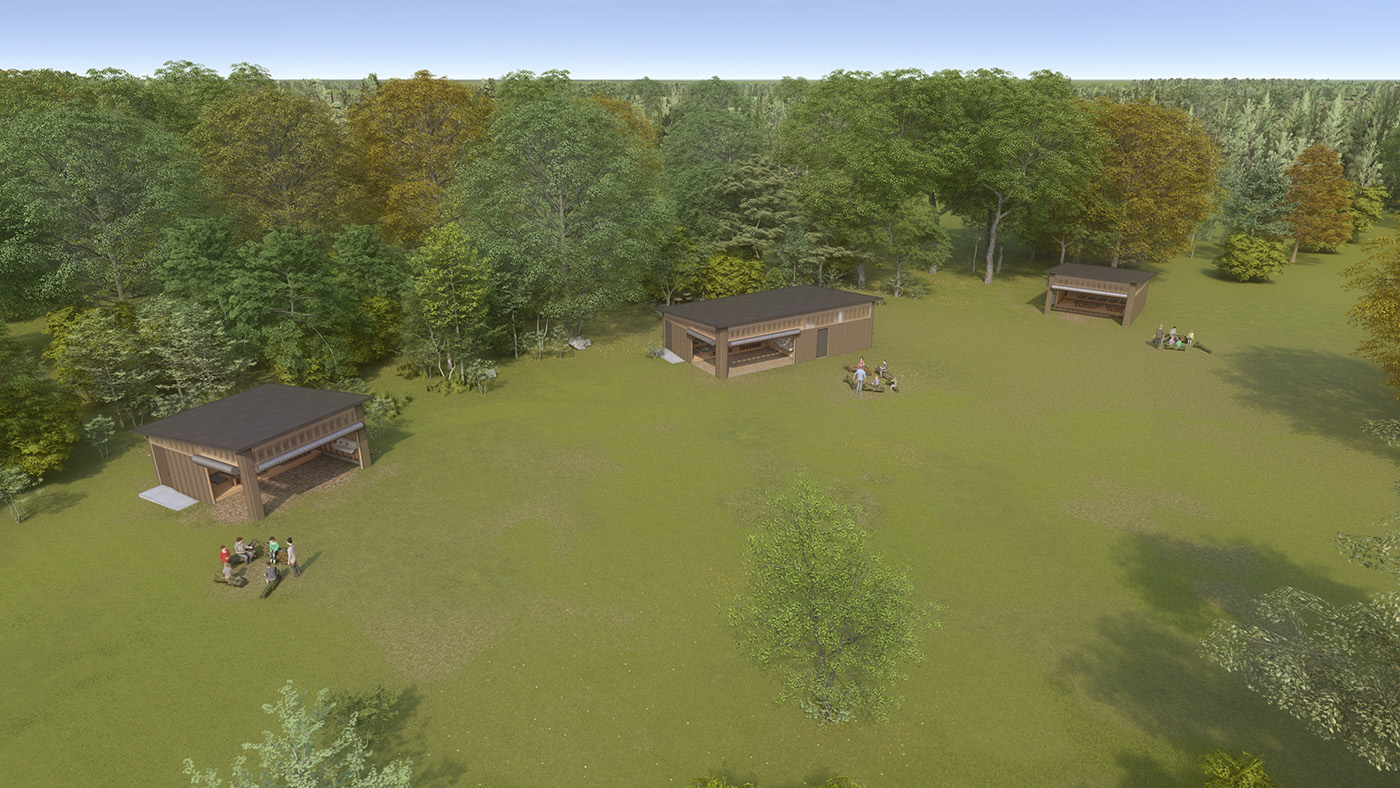
Working with Maddie Cole, director of Fiddleheads Forest School, Seattle firm CAST architecture has developed a prototype for a very simple support structure that would bridge this gap, making it feasible for nature-based preschools to be more widely and equitably adopted. Our analysis shows that ongoing operational costs and net income are roughly similar between the two models. However, the average initial capital cost per child to set up the proposed hybrid outdoor schools is only 25-50% that of comparable indoor programs. A rollout of hybrid outdoor schools at scale by a school district or umbrella non-profit agency could serve many more children for the same initial investment.
The basic module of the design is a pavilion-like structure with roll-up doors allowing it to become fully enclosed during bad weather and to prevent unauthorized use outside of school hours. It is sized so that when buttoned up, it exactly meets DCYF’s minimum area requirements for child care, allowing it to operate continuously through most weather events. Full climate control is not required; outdoor schools regularly operate at temperatures between 20 to 90 degrees. Closed doors moderate the extremes of temperature, and can be supplemented by low-capacity radiant heat panels or portable air conditioning units if necessary.
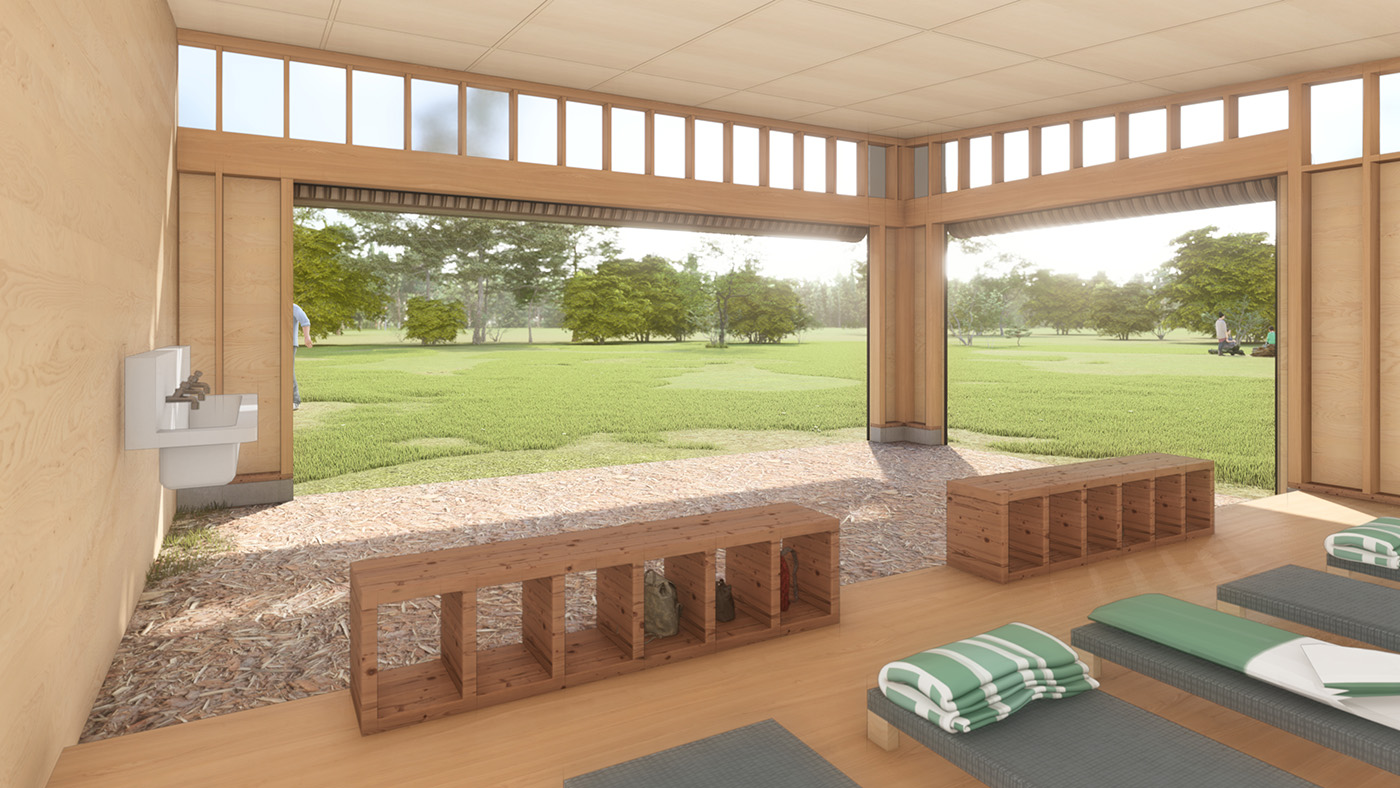
An outer portion of the shelter provides covered outdoor space for everyday classroom activities over a dirt or wood fiber floor. An inner portion of the shelter, enclosed on three sides, accommodates portable napping cots on a raised floor. In one scenario, the shelter can include screening for portable toilets, and hot meals can be provided by an off-site kitchen or third-party provider. Alternately, where utilities are available, a slightly larger structure can accommodate fully-plumbed restrooms and a simple on-site kitchen serving as many as three classroom shelters.
Importantly, the structure is small enough to be placed singly or in unobtrusive groups in many public green spaces. The design is flexible enough to be repurposed as a picnic shelter or for other uses if desired in the future.
A white paper containing additional details on the prototype design, financial analysis, and additional references is available for download at: https://www.castarchitecture.com/early-learning
Forrest Murphy is a principal at CAST architecture, recognized as a regional leader in design for early childhood education.
Other Stories:


