 |
Subscribe / Renew |
 |
Contact Us |
| ► Subscribe to our Free Weekly Newsletter | |

Construction Bids
| home | Welcome, sign in or click here to subscribe. | login |


 print print  email to a friend email to a friend  reprints add to mydjc reprints add to mydjc |  |
 |
September 26, 2024

Bowman
|
According to the National Center for Educational Statistics (NCES), approximately 80 percent of school buildings were built prior to 2000. This may partially explain why the American Society of Civil Engineers gave schools a D+ in the 2021 Infrastructure Report Card — stating most needed to update or replace multiple building systems.
As schools begin making these recommended updates to their buildings, they may also consider improving their campus’ level of security. For these project types, there are several ways to achieve a safer school design, including using secure entry vestibules and improving access control throughout the built environment. While it might be difficult to determine which security measures are best suited for a particular campus, project stakeholders can look to best-practice recommendations and real-world examples as guides.
RECOMMENDATIONS FOR SAFER SCHOOL DESIGN
The Partner Alliance for Safer Schools’ (PASS) Safety and Security Guidelines for K-12 Schools remain the most comprehensive set of information available for securing schools — from the district level to the classroom. Among policies and protocols, PASS K-12 recommendations include architectural features like code-compliant locking hardware, secure entry vestibules, video surveillance and applying crime prevention through environmental design (CPTED) principles.
A renovation of an elementary school in Oregon City provides a key example of how elements within the PASS K-12 guidelines can help enhance a school’s safety and security. The main office and secure entry vestibule in this elementary school are of note.
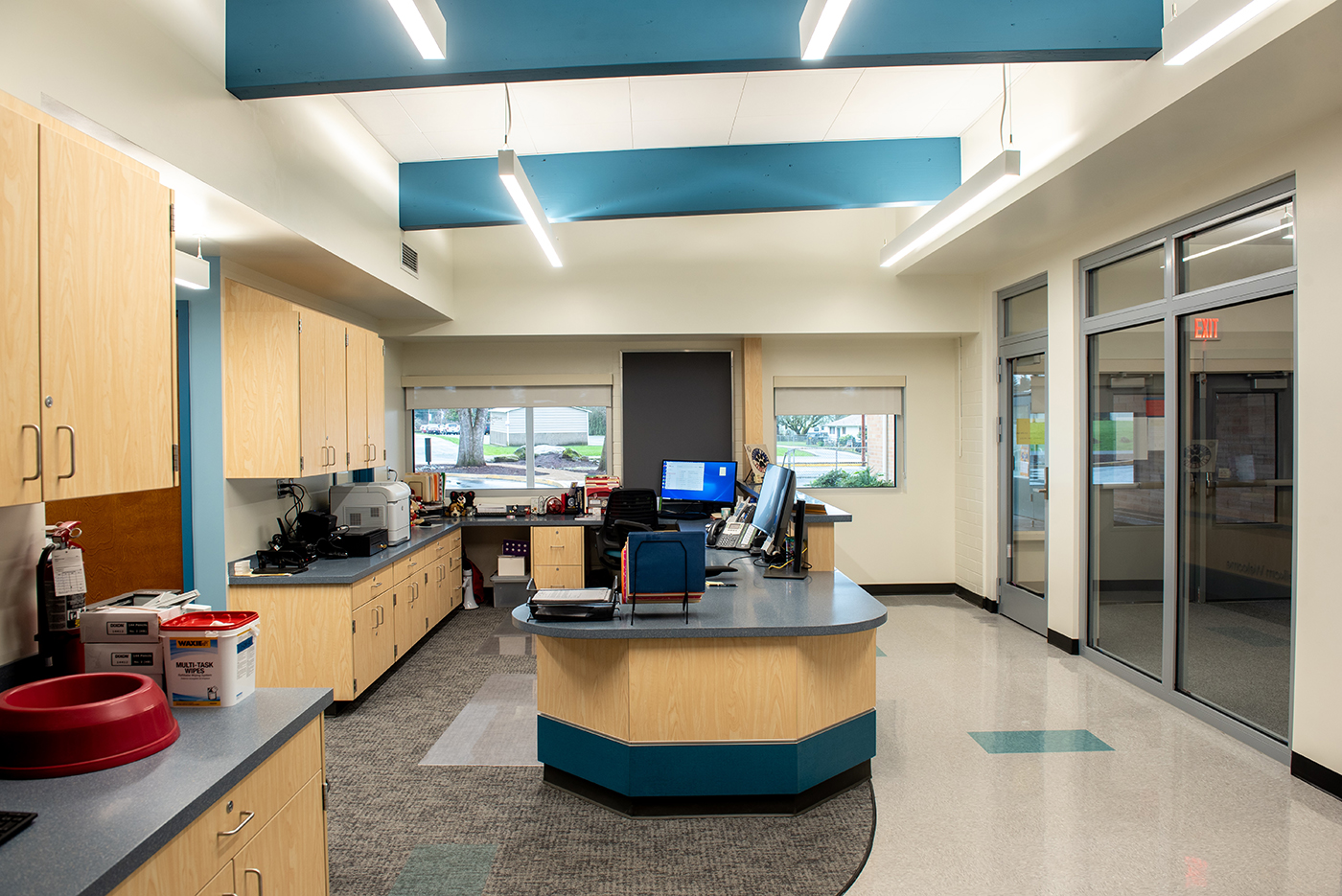
Relocated and reconfigured to improve monitoring efforts, the main office shares a wall with a secure entry vestibule. This wall and its door were specified with transparent, forced-entry rated glazing, which allows staff to visually assess visitors and control access.
In addition to supporting clear sightlines between multiple areas, the forced-entry rated glazing can resist physical attack for up to 12 minutes. As such, it provides a barrier that gives occupants time to alert first responders and take appropriate action during an emergency.
WHEN FIRE SAFETY AND SECURITY GOALS OVERLAP
While the forced-entry rated glazing components support enhanced security, the specifiers for the Oregon school also needed to meet local building codes. Specifically, they needed a system that could maintain free egress in the event of a fire. The forced-entry rated glazing of the door and shared wall also achieves fire ratings that fully comply with local code requirements.
Although the particulars of this project may not translate to every school, the need to comply with code requirements remains central to safer school design. Given the National Fire Protection Association (NFPA) estimates there to be over 7,000 fires on school grounds annually, protecting egress is as important as controlling access in terms of occupant safety and security.
Areas where multiple protective concerns overlap can occur throughout a school building. For these spaces and designs, it is important project stakeholders choose systems that can achieve security goals without compromising code compliance.
THE IMPORTANCE OF COMPONENT COMPATIBILITY
Building a multifunctional, fire- and security-rated glazing system may seem as simple as marrying fire-rated glass with security-rated components, but, in reality, it is much more complicated due to the various materials involved and the lack of testing protocols for multifunctional systems.
Many of today’s security-rated products are plastic-based. As such, they can burn quickly and intensely, potentially surpassing the temperature rise and max temperatures used in the fire test. This can reduce or entirely negate an assembly’s ability to safeguard occupants during a fire. Currently, there are no codes or set protocols for testing assemblies meant to provide multiple protections simultaneously.
For these reasons, it is important to specify systems that use components known to be compatible or are tested as a complete system. Doing so will provide confidence that the system will perform as intended, whether that’s in a fire, lockdown, active shooter or other emergency event.
Although enhanced security is not currently required within model building codes, many states are pushing for school security standards. In fact, since 2023, over 380 bills related to school safety and security have been introduced, according to the National Conference of State Legislatures. As schools modernize their buildings, addressing school security may help them stay ahead of future building requirements.
Devin Bowman is General Manager of Technical Glass Products (TGP) and AD Systems, has over 20 years of industry experience, and sits on the Glazing Industry Code Committee.
Other Stories:


