 |
Subscribe / Renew |
 |
Contact Us |
| ► Subscribe to our Free Weekly Newsletter | |

Construction Bids
| home | Welcome, sign in or click here to subscribe. | login |


 print print  email to a friend email to a friend  reprints add to mydjc reprints add to mydjc |  |
 |
September 26, 2024

Bello
|
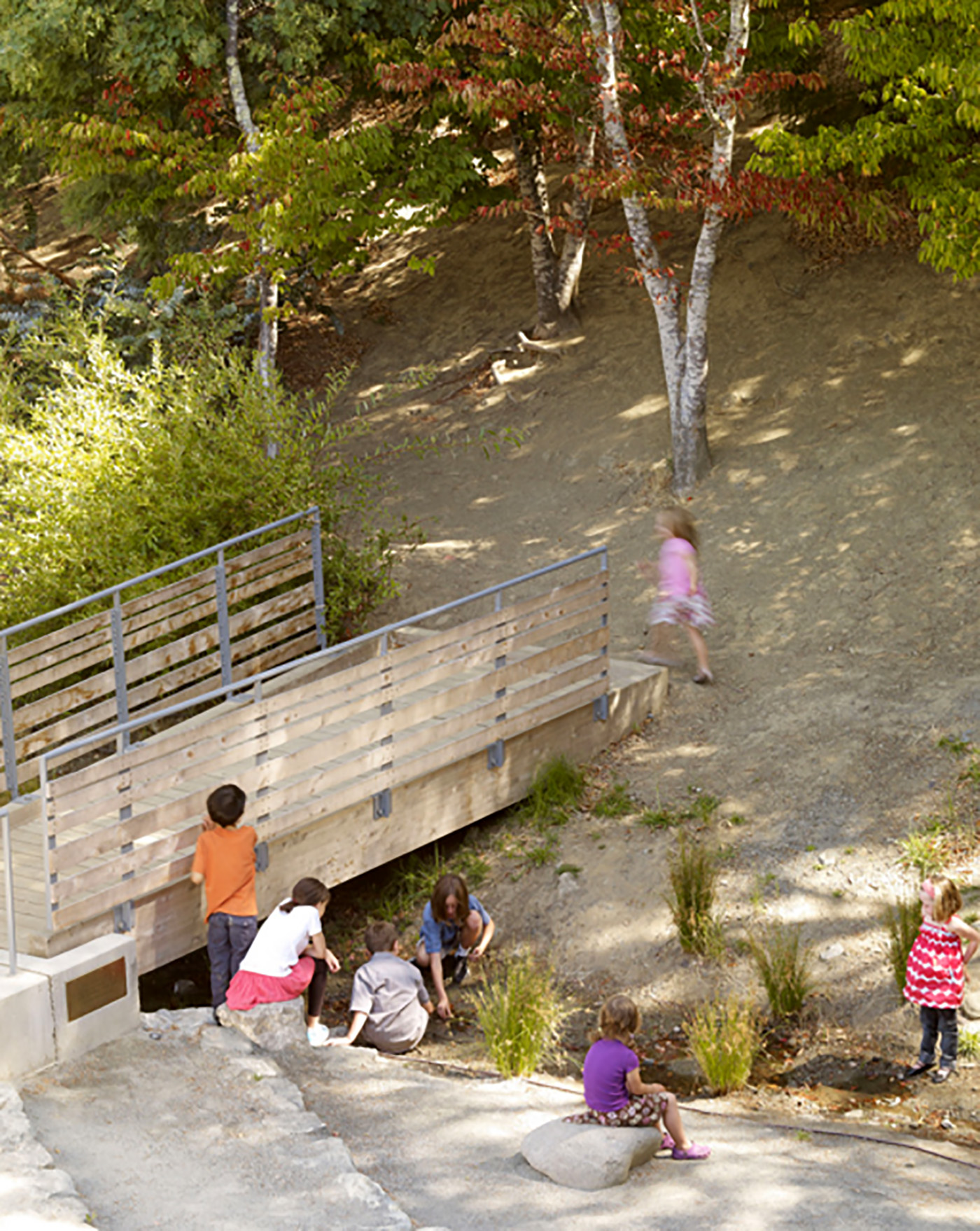
Marin Country Day School, a lower and middle school, is nestled in the valley of Ring Mountain in Nothern California, just north of the San Francisco Bay. A seasonal creek that runs along the school’s eastern edge eventually makes its way to the nearby bay. Student life at the school is anchored to this creek. Lines of muddy rain boots mark the entries to lower school classrooms, and middle school students often sit in small groups on the rocks lining the creek’s edge.
When EHDD began designing a new campus learning commons and classroom building, the creek needed help. To protect the neighboring hillside from erosion, the upper section had been routed into a concrete culvert. The lower section had been battered into a skein of shallow, muddy strands that threatened to flood the nearby classrooms during heavy rains.
The easiest way to protect and rehabilitate the creek would have been to block it off from student use. But, as in many of our school projects, we learned that meaningfully involving the students in solving design problems always leads to more creative and impactful solutions.
As the design process for the new project began, we held a joint meeting between students, project managers from the Department of Fish and Wildlife, and our landscape team from CMG Landscape Architecture. The students shared stories about playing and exploring in the creek. In turn, the project managers recalled and shared stories from their own youth spent digging and exploring creek beds. The dialogue shifted from keeping the students away from the creek to finding ways for students to be its stewards and helping to restore it.
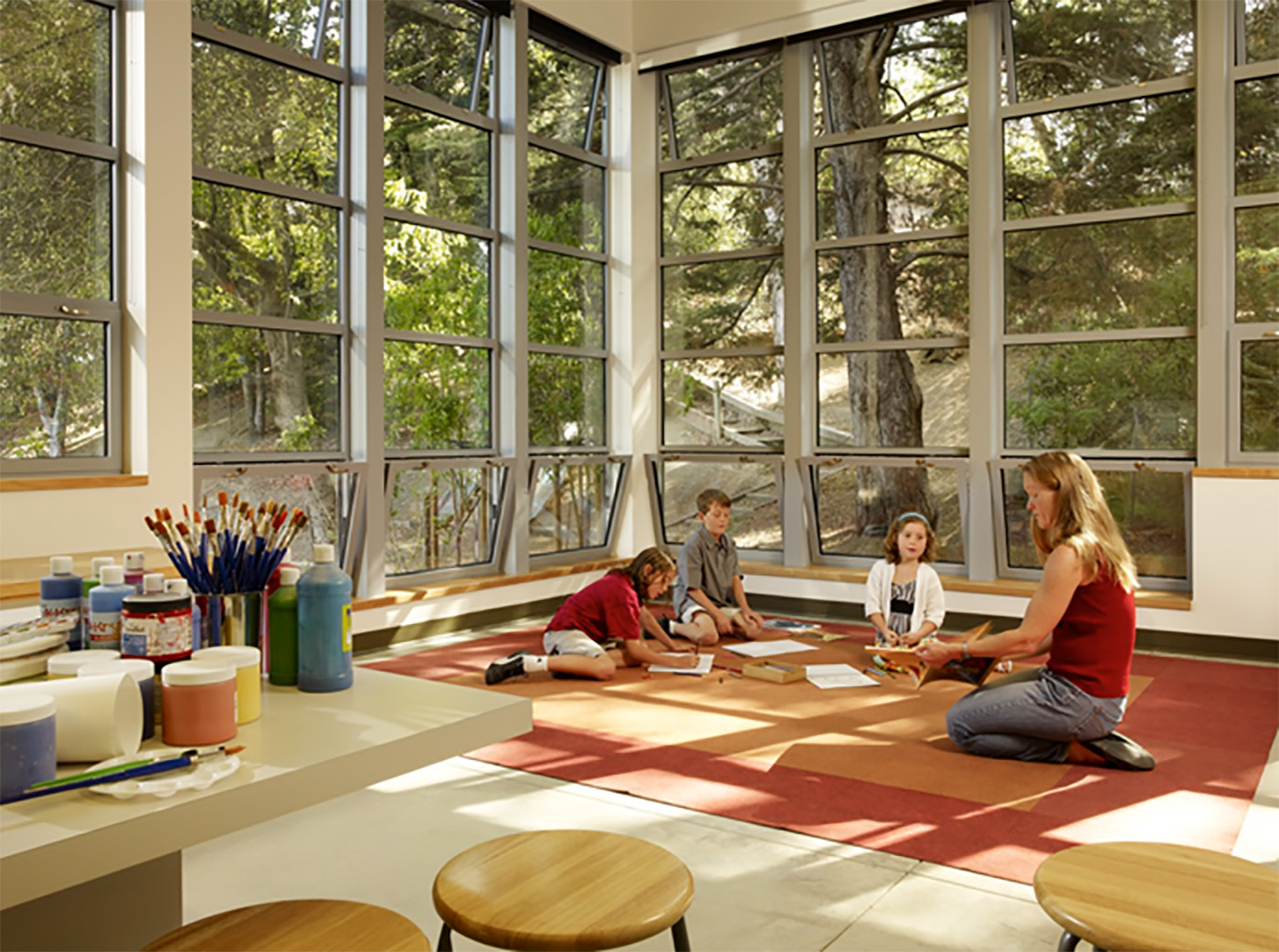
As part of the new building project, students helped to plant and rebuild the creek bed. To this day, each grade level has a different role in stewardship of the creek — from weeding to tracking invasive species and monitoring water quality and erosion. A problem quickly turned into a lasting and powerful educational opportunity once students were empowered to solve it.
UNCOVERING IMPACTFUL STUDENT INSIGHTS
Students are the experts on their campuses. Involving them in the design process creates designs that are more impactful by reflecting a unique sense of place. But all feedback is not equal. Sending students home with fill-in-the-blank surveys or setting out suggestion boxes won’t yield the type of eye-opening insights that shift designs for the better.
The more we work with students, the more we realize that using the right tools and asking the right questions are essential to uncovering meaningful results. This means thinking ahead about the type of feedback that may be most helpful given the constraints of the project, and making sure students are given real agency to impact the design while it is still malleable. This takes time, but the impact is well worth the effort. Here, we share a few of the strategies that EHDD’s K-12 Design Studio has found to yield the most impactful insights from students.
CAMPUS MAPPING EXERCISES
Understanding the hidden patterns of a school campus, the flows and special places visible only to those who know it well, can be difficult. We’ve found that the best strategy is to go right to those who know it best: the students. A lonely bench may be a special place where a beloved biology teacher used to sit in the afternoons. A damp and decaying log at the edge of the soccer field may be the favorite hangout for 2nd graders at recess. By asking students open-ended questions and using fun and engaging tools, a campus can come to life in a whole new way.
When developing a new campus plan for the Nueva School, we had the opportunity to engage nearly every student on campus in mapping exercises. The middle school students traced their daily paths through campus, earmarking their favorite hangouts, the spots they avoided, and why. Lower school students talked about their experiences, placing heart stickers on places they liked and putting “x” stickers on places they didn’t. As a class, students discussed their answers to our questions: Where do you feel welcome or nervous? Where is it hot or cold? Where is it windy or muddy? Where do you like to play or hang out? We synthesized this data and reported our findings back to the students.
We learned that the middle school’s social hubs were scattered across campus — there was no central hub or center of gravity for the middle school students. We were surprised to discover some of their favorite “secret” hideouts. We discovered wind tunnels or muddy areas that emerged at different times of year, turning certain zones into uncomfortable, underutilized places year-round. Each of these discoveries became opportunities to seize or problems to solve with the new campus plan — opportunities and problems that would have gone unnoticed without the exercise.
STUDENT EXPERIENCE MAPS
Sometimes working with large student groups isn’t feasible. For those instances, student experience maps can be an effective tool in the design process. We collaborate with a representative group of students or instructional leadership teams to outline the unique student experiences on a campus based on a range of ages, interests, needs, and learning differences. Through this process, design teams can understand students’ daily experiences and preferences, the in-between spaces they seek out, and the support structures they rely on.
At Chartwell School, we used student experience maps to gain a better understanding of the needs of students with learning differences. Through that process, we learned that we needed to be thinking far beyond the classroom walls to best support students. The entire campus is a tool for learning, connection and self-regulation. The instructional leadership team discussed how sometimes students need to take a quick break and run around the nearby basketball court to get back into a mindset for learning. Other students may need time between classes to sit alone, quietly, perhaps in a wellness room or under a tree, to be able to tackle a difficult next class. We learned that a campus should include a whole ecosystem of environments, indoor and out, to support students throughout the day.
DESIGN THINKING GAME
Building empathy is a powerful tool in decision-making. Last summer, EHDD’s K-12 design studio received a grant to develop a fun engagement tool that helped students reimagine their school libraries. Working with several groups of students across the US, we collaboratively developed a board game based on the design-thinking process. It’s both a board game and a tool to teach the design-thinking process. Through a series of ideation sessions and test-runs, we discovered together that tough constraints and working collaboratively make the game more fun.
The game begins with students gathered around a game board choosing tiles and inspirational images about their ideal learning commons. Each student has an opportunity to talk about what is important to them and what types of spaces they prefer. Then they are asked to imagine the needs of another student not represented at the table. Collectively, the students choose three words that best describe their shared vision for the space. The group populates the learning commons with images and descriptions of their imagined environments.
Eventually, players must draw a budget card. Working together, they prioritize the environments they most want to include and set aside the ones that don’t meet the budget. As moderators of this game, members of our K-12 design studio have noticed an inspiring effect: starting the game with an exercise in empathizing with the needs of fellow students, the students work together to choose design options that support the largest number of students and achieve a shared vision.
CO-CREATION IN EDUCATIONAL DESIGN
The school years are a time of discovery. By involving students in real-world problem-solving, designers can ignite interests and passions in students that they may not have otherwise explored. By embracing co-creation, students realize their voices matter and that they have the power to make a real impact; when given the opportunity to dream and contribute, they generate transformative ideas. Empowering students in the design process not only creates spaces that truly reflect their needs but also nurtures a sense of ownership and stewardship, resulting in learning environments that are both practical and inspiring for everyone involved.
Emily Bello leads the School Design Studio at EHDD Architecture, creating flexible environments that reflect a unique sense of place and serve schools for generations.
Other Stories:


