 |
Subscribe / Renew |
 |
Contact Us |
| ► Subscribe to our Free Weekly Newsletter | |

Construction Bids
| home | Welcome, sign in or click here to subscribe. | login |


 print print  email to a friend email to a friend  reprints add to mydjc reprints add to mydjc |  |
 |
September 26, 2024

McClure
|
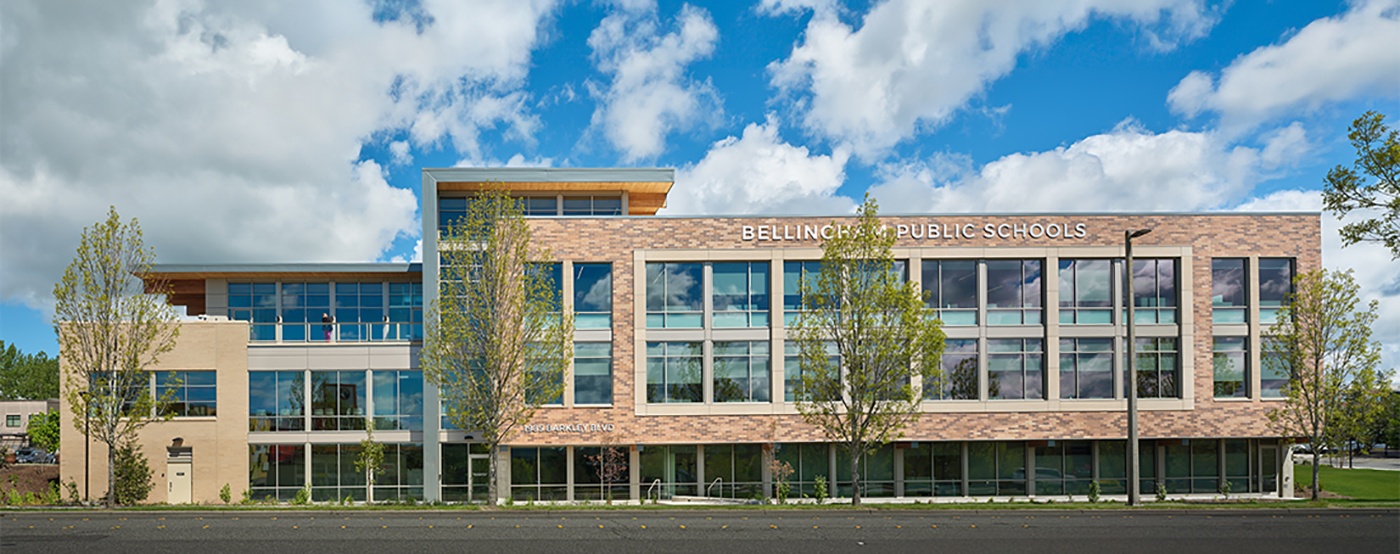
When Bellingham Public Schools (BPS) approached RMC Architects to design their new administrative office building, they had several key goals: to create a mobile, open-office work setting; to promote sustainability, health, and well-being within the building; and to ensure that the result was an environment that not only welcomed the community but demonstrated the district’s stewardship of community assets. In addition to the open workspaces, the three-story, 53,000-square-foot building includes multiple professional learning and conference rooms, an early learning center, a wellness room, a bike storage area and a central common space with a cafe. The building supports 11,000 BPS students, their families and all district employees.
A MOBILE WORK ENVIRONMENT
BPS was formerly located in a historical elementary school near Bellingham’s downtown core. The 1908 building lacked sufficient daylight, suffered from major structural deficiencies, and could no longer support the district’s needs. The relocation of their office to the new building in Bellingham’s Barkley District provided an opportunity for BPS to rethink their operations. The first was to go paper-free to eliminate the need for excessive storage spaces, and the second was to make all technology mobile. From cell phones to laptops, employees are now free to work virtually anywhere they choose in the building. The open office plan is arranged in pods of four workstations, each with a table in the center for collaboration. However, community spaces, private offices and most of the meeting rooms are designed to be interchangeable for workspaces and for when employees need privacy.
While transitioning staff from an old space with individual offices to a new, open office environment can at times be challenging, we found that an inclusive process mitigated any concerns BPS staff had. Along with our interior designers, Walker Group NW, we brought in furniture samples, stand-up desk options, and a variety of chairs for people to test and select. One of their biggest concerns was how noisy an open office environment might be. Working closely with acoustical designers at Coffman Engineers, we were able to alleviate these concerns by creating an integrated lighting and acoustic panel system that mitigates noise efficiently from station to station. Overall, this kind of attention to detail early on made the transition seamless for BPS employees.
SUSTAINABILITY, HEALTH AND WELLBEING
Health and wellbeing were a driving factor in the design, and RMC went through a design charrette with the district to incorporate aspects of Fitwel standards into the building. Fitwel, a commercial building rating system, provides guidelines on how to operate healthier buildings with criteria that includes more than just green building design. Some of the Fitwel categories are based on walkscore, views, stairs as an option to elevators and access to alternate forms of transportation — all criteria that the new BPS offices meet.
The project’s Barkley District location made it easy to fulfill the walkscore criteria. The pedestrian-friendly area is within walking distance to many neighborhood eateries, shops, and businesses. Bike lanes also play a front and center role in the Barkley District, and the project was designed to provide plentiful bike storage as well as showers and locker rooms.
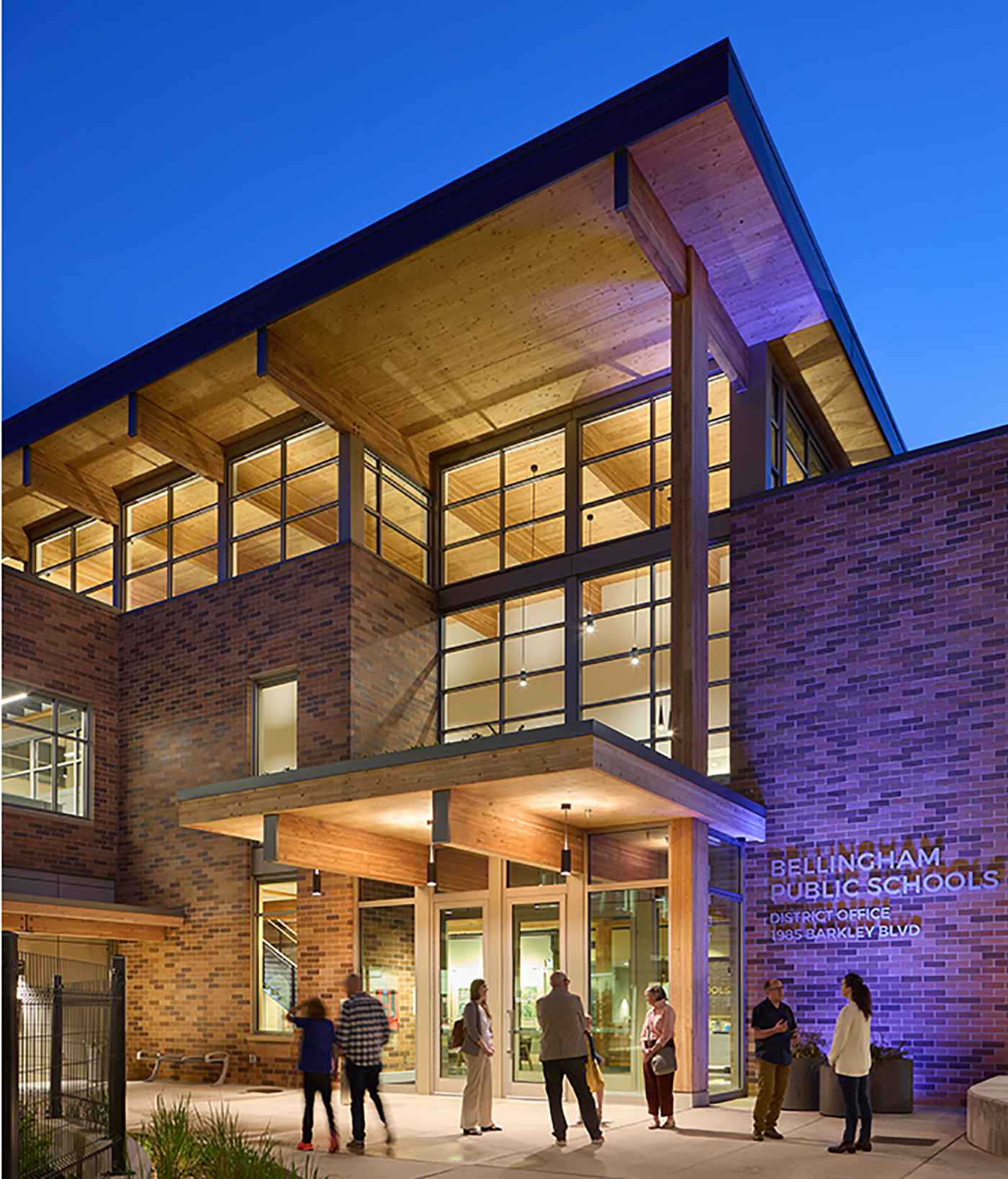
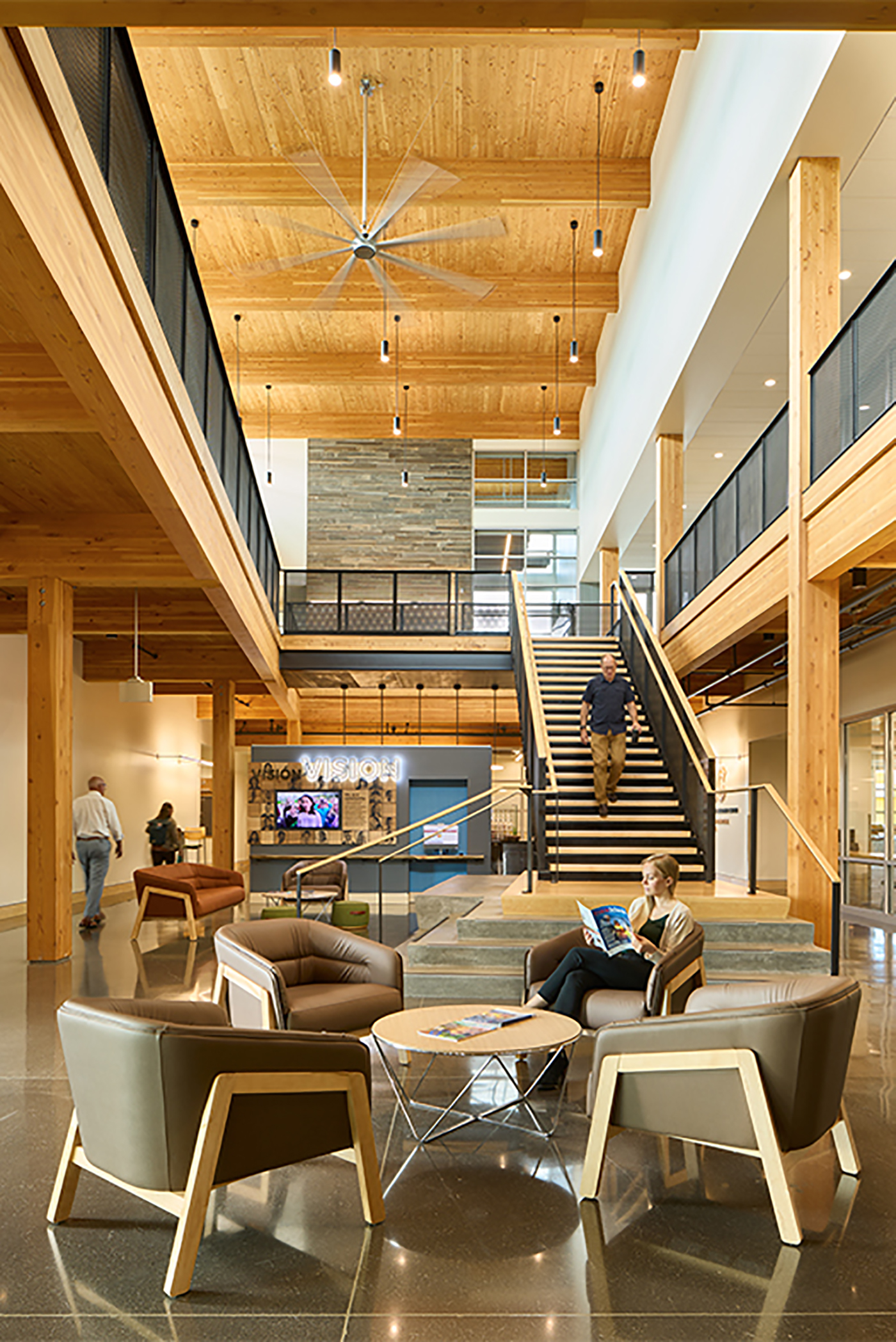
The architecture invites the building users to opt for stairs over the elevator. Surrounded by natural light and cross-laminated timber (CLT), along with the generous use of space, the feature stairway is the primary point of circulation in the building. The implementation of CLT was a big step towards the district’s sustainability, health and wellbeing goals, and can act as a prototype for inclusion in future school designs. From a sustainability standpoint, wood reduces carbon emissions; supports biodiversity; improves forest and human health; is more flexible, efficient, and cost-effective in design and construction; and is more fire and earthquake resistant than other building materials.
There are a range of psychological benefits wood brings to health and wellbeing, including lowered blood pressure and heart rate, increased activation of the parasympathetic nervous system, a calming perception of warmth, expressed visual preference for the space, and a feeling of connection to living things. In short, the use of CLT created a warm, desirable environment for both staff and visitors.
By locating the private offices away from the perimeter, the design facilitates maximum and equitable use of daylight and views for all. Even the interior walls for the offices are glass storefronts. Other energy savings measures include the elimination of natural gas in this all-electric building, a first for the district. Heat pump technology provides heating and cooling for the entire building and offers myriad options for control, including individual control in the open office spaces, lighting controls, and plug-load controls (where non-essential technology automatically shuts off at a certain time each day). Vehicle charging stations support the district’s fleet of electric vehicles and are available for employee use when on the clock.
A BUILDING FOR THE COMMUNITY
Public schools, including administrative and support facilities, are considered community assets. The district felt a keen responsibility to honor this with an inviting building that welcomed everyone and put people at ease. We designed the entries to feel like community spaces — the warmth of the CLT and light-filled interior animated by glass that allows visitors to see the inner-workings of the building assist in creating this ethos. The innovative addition of a café furthered the community vibe, and people who shop and work in the area frequent it along with BPS employees. Comfortable furnishings and artwork from children throughout the district complete the space.
The project includes Professional Learning Centers on both the main floor for BPS staff and on the upper floors, which are available for community use. The space has direct rooftop deck access and the CLT construction is on full display.
Ever mindful that the project is owned by the community, the design respects this in its simplicity. Using enduring materials and calling in natural resources like wood and daylight as primary design elements helped us honor the budget while creating something both contextual to our city and of high quality as the district’s home for the next century.
Jeff McClure co-established RMC Architects in 1986 and focuses his practice on projects that build community through context-sensitive design.
Other Stories:


