 |
Subscribe / Renew |
 |
Contact Us |
| ► Subscribe to our Free Weekly Newsletter | |

Construction Bids
| home | Welcome, sign in or click here to subscribe. | login |


 print print  email to a friend email to a friend  reprints add to mydjc reprints add to mydjc |  |
 |
September 26, 2024

Eaton-Colles
|
Over 67% of children encounter at least one traumatic event before age sixteen (SAMHSA). Untreated trauma at any age affects learning and critical thinking abilities, mental health and serious long-term physical conditions. The brain is exposed to chemical changes that are often lifelong, impacting a person’s ability to function fully. How can we design spaces that uplift and support individuals from all walks of life, at every stage?
FUTURE-LEARNING READY
Trauma-Informed Design (TID) requires intersectional solutions, especially as children are coming of age in the Fourth Industrial Revolution — a period characterized by the confluence of physical, digital and biological realms. To further complicate issues, the Fifth Industrial Revolution — tentatively coined the “Cognitive Revolution” looms on the horizon.
As a society, we are still learning the bounds of a world punctuated by Artificial Intelligence (AI) and the effects this has on communication and connection between humans. For students, increasing speeds of delivering information means more access to content as well as the tools to interpret it. But it may come with a price — too much information requires students to be more engaged in their own learning to ensure that they are focused.
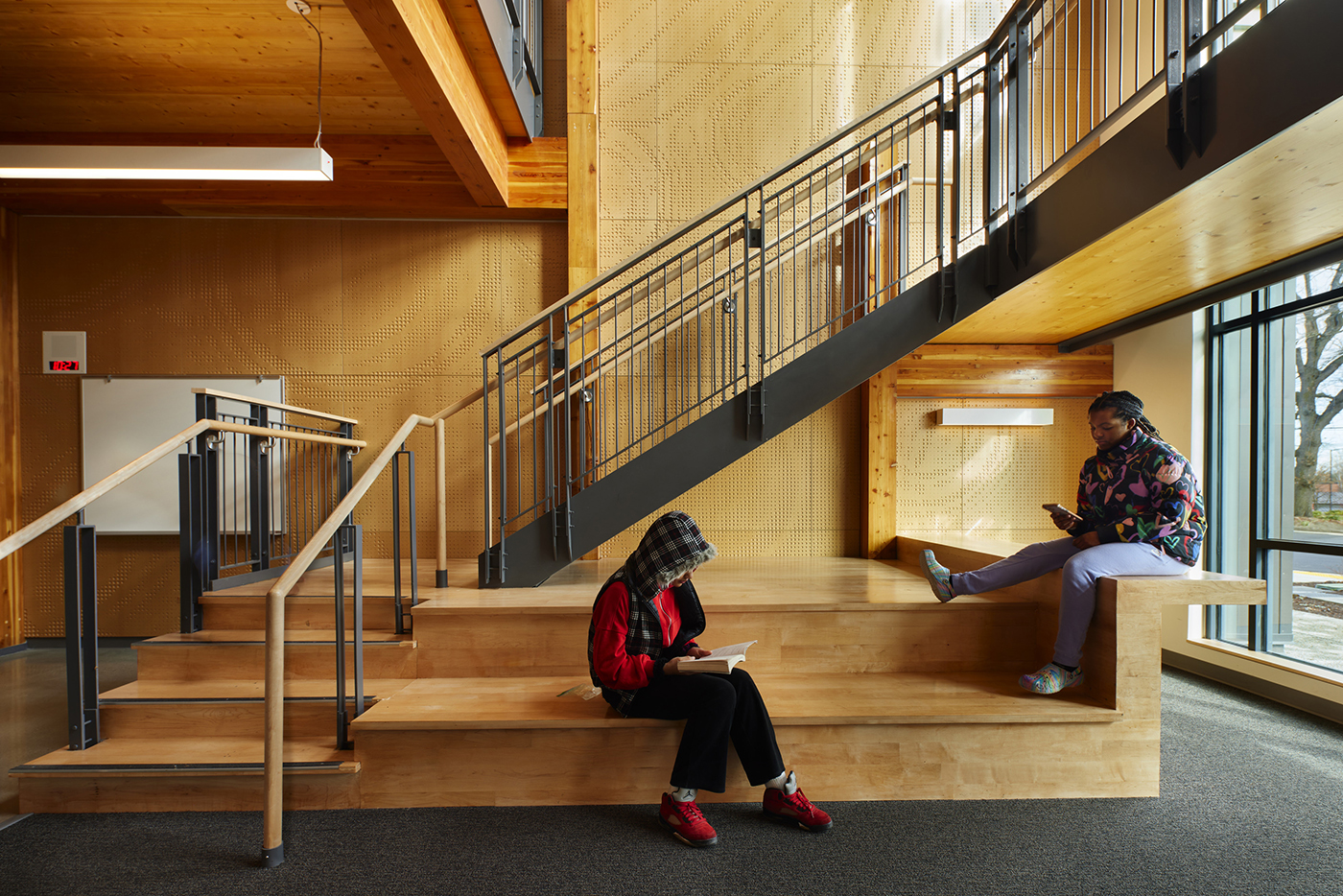
Students who have experienced trauma often operate in survival mode. Whether their reaction manifests as hypervigilance, viewing the world through the lens of survival, or hypovigilance, retreating inward and withdrawing from the world — a traumatized brain is not capable of absorbing or processing new information. In these states, the capacity for learning is disengaged. Trauma causes chemical changes to the brain and though one may find moments of peace and resilience, there is no cure. It can take but a single experience or moment for symptoms to re-manifest themselves.
In today’s rapidly evolving world, we can no longer rely on learning a single thing and depending on that knowledge for our entire lives. We need the skills to engage in lifelong learning, collaboration, adaptation and resilience. In a revolution that is characterized by leaps in AI, robotics, the Internet of Things (IoT), genetic engineering and quantum computing, resilience and self-awareness are essential in navigating a world where change is the only constant.
HEALING-CENTERED DESIGN
Healing environments begin by incorporating Trauma-Informed Care (TIC) systems that “realize the long-term effects of trauma, recognize the signs and symptoms of trauma, and respond by implementing systems that seek to resist re-traumatization.” (http://www.traumainformedcare.chcs.org) To incorporate TID into a design that supports healing and resilience, it is essential to develop Guiding Principles for each project, drawing from TIC principles: Safety, Trustworthiness and transparency; Peer support and mutual self-help; Collaboration and mutuality; Empowerment voice, and choice; and Cultural, historical, and gender issues.
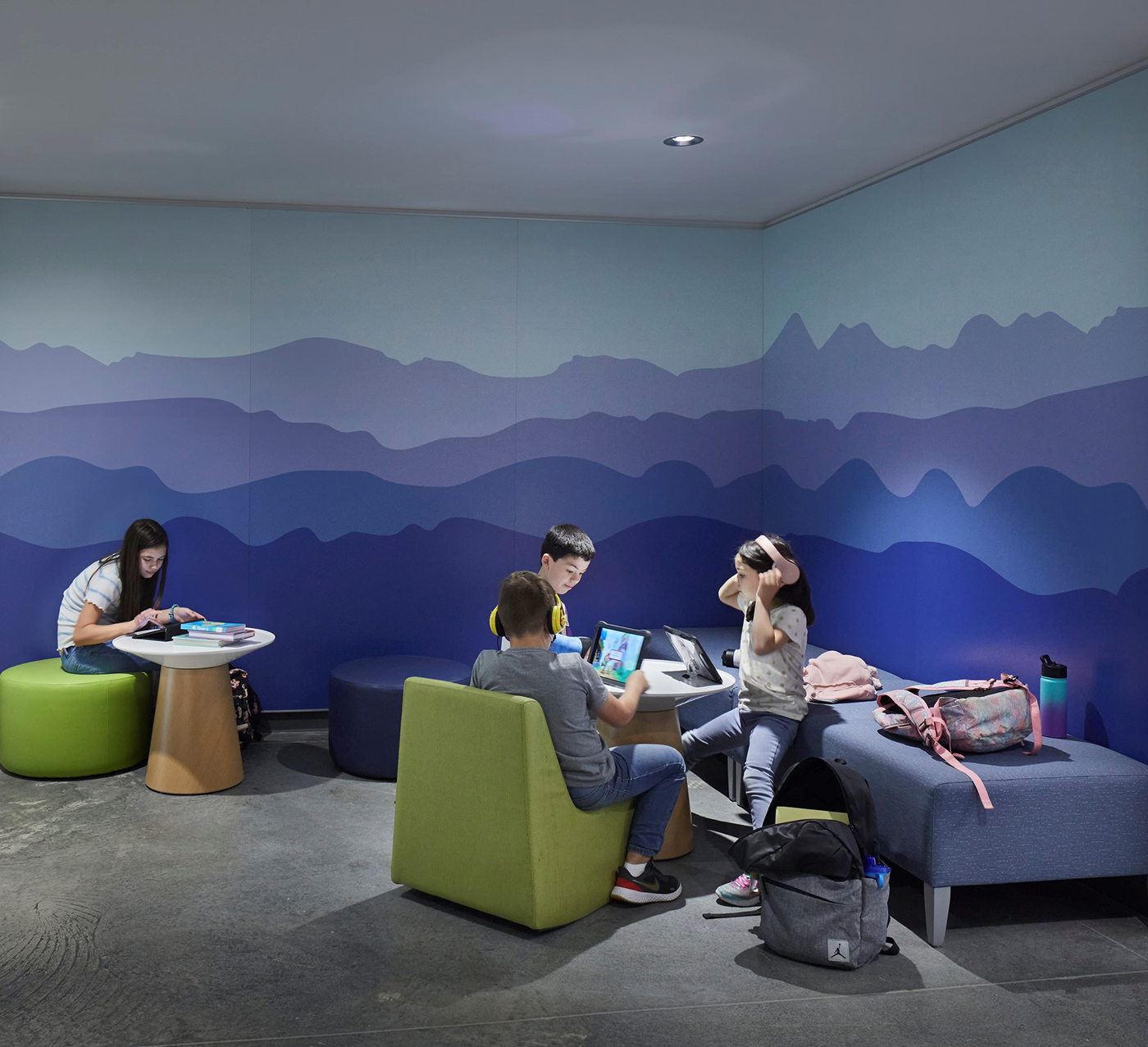
Guiding Principles are big-picture ideas or goals that frame projects and help prioritize decision-making. Developed in collaboration with stakeholders from the onset of the design process, they serve as a reference point to ensure goals are being met.
Each project’s Guiding Principles will vary, tailored to the specific needs of its users and typology. We build on the principles that guide TIC by adding others relevant to the project, such as Lifelong Learning, Sustainability, and Flexible /Adaptable.
In the design of educational facilities, it is important to engage educators who use Social-Emotional Learning (SEL) to create spaces that support our young vulnerable populations. Yet, as we look ahead, the realization that trauma’s effects are lifelong is paramount. Children with adverse childhood experiences (ACEs) grow into adults who are challenged with the same battles. Moreover, adults can experience traumas beyond ACEs. With the launch of Bassetti’s fifth version of their TID Workbook, we expand on our work in schools to explore Guiding Principles, design characteristics and spaces that integrate TID into any project type.
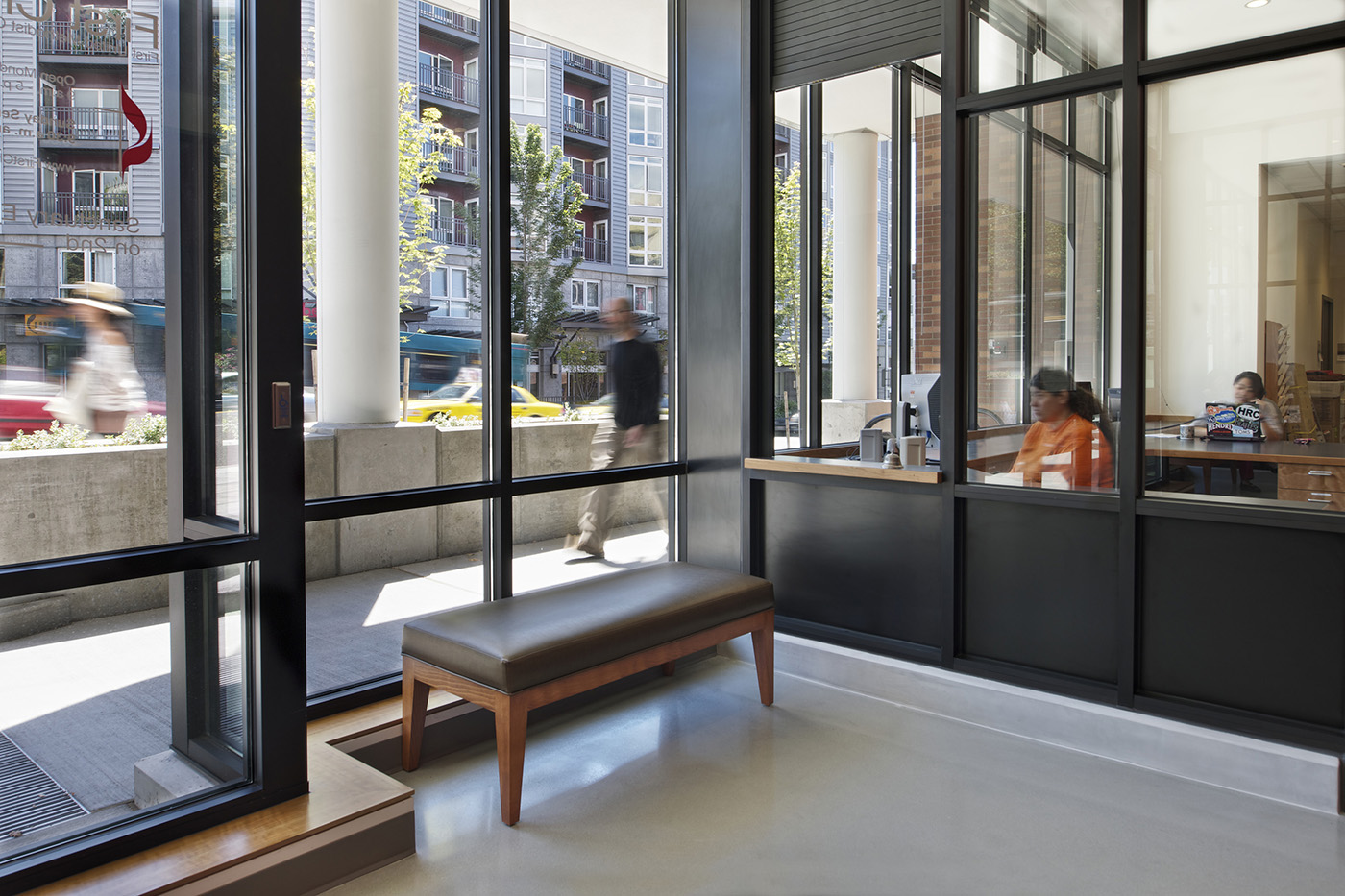
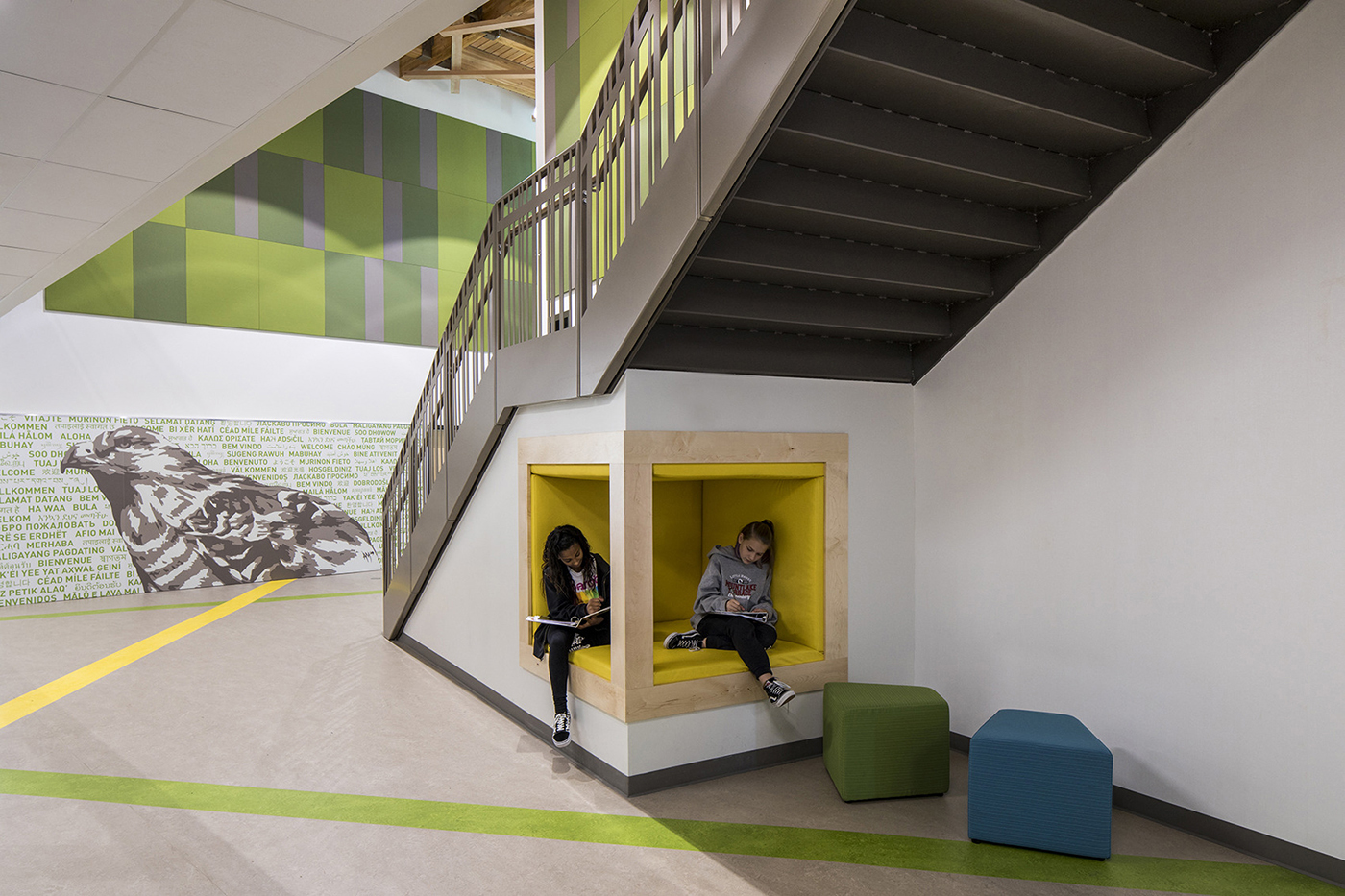
In addition, version five of the TID Workbook will take a deeper look at how trauma affects the senses. Sight, sound, touch, taste and smell all play an integral role in how we experience space, with no two people having the same experience. Proprioception, often considered the sixth sense, is as equally affected by our own bodies as it is by our environments. Guiding principles, design characteristics, and spaces need to acknowledge that color, sounds and textures, for example, may not play a role in everyone’s experience of a space. How, then, can Healing-Centered Environments be developed when each person’s experience is unique?
Meant to be an open resource for design professionals, through the encompassing engagement of our senses and acknowledgement of relevant challenges facing our students, we can explore timely addressment of these issues through TID and how its principles can be applied through a wider lens of project type.
Dena Eaton-Colles, a planner & programmer at Bassetti Architects, champions the firm’s Trauma-Informed Design initiative, advancing TID research through white papers, the firm’s TID Workbook, and presentations, including at the 2024 AIA National Conference in Washington, DC.
Other Stories:


